Forged: Timeless Ways of Living
In this podcast, Dr. Brian Williams of the Templeton Honors College interviews men (and some women) to learn how they seek to forge meaningful lives of at work, home, and in the broader culture.
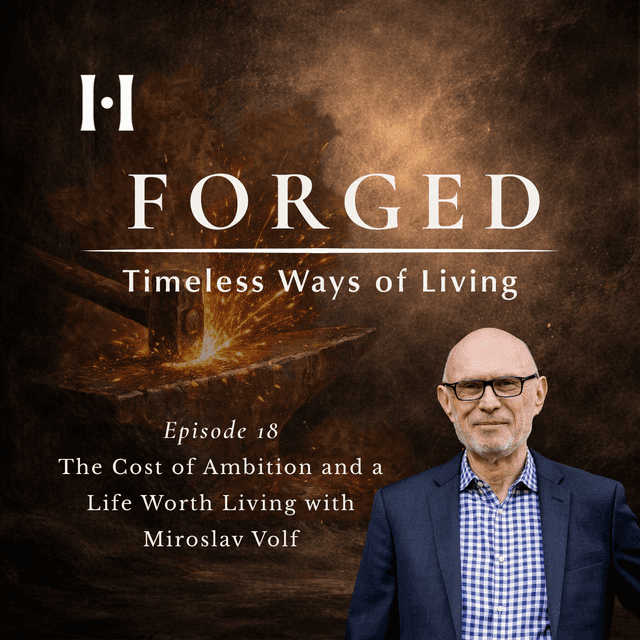
The Cost of Ambition and a Life Worth Living with Miroslav Volf
What happens when your sense of worth depends on being better than the people around you? And what changes when you stop asking how you rank and start asking what kind of life is actually worth living? Brian Williams talks with theologian Miroslav Volf about the difference between excellence and superiority, the fragility of a self built on achievement, and the possibility of receiving our lives as gifts rather than projects of endless comparison. Drawing on Life Worth Living and The Cost of Ambition, they consider education, vocation, place, gratitude, contentment, and the communities that help us discern what we are for. Listen for a hopeful account of how we can pursue meaningful work and genuine excellence without making success the measure of our worth. Along the way, Volf reflects on growing up in Yugoslavia as the son of a Pentecostal minister, discerning his calling as a theologian, the disciplines and delights that sustain his ordinary life, and the writers who have helped him think about contentment, vocation, and hope.
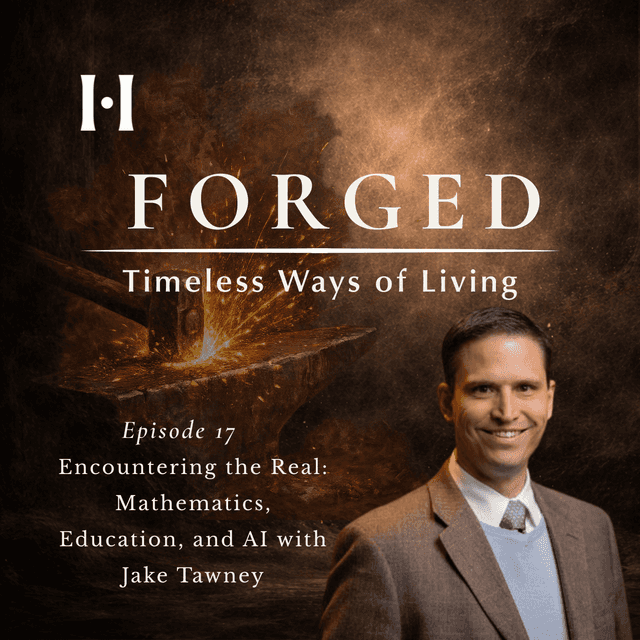
Encountering the Real: Mathematics, Education, and AI with Jake Tawney
What if mathematics is not merely a tool for solving problems, but a way of encountering reality? In this episode of Forged, Brian Williams talks with mathematician and educator Jake Tawney about the beauty of number and shape, why wonder belongs at the heart of education, and what we risk losing when technology begins doing our thinking for us. From Euclid and fractals to calculators and artificial intelligence, Jake makes the case that education should begin with real things worth knowing and loving. Their conversation ultimately turns toward a larger question: What habits, practices, and encounters help us become more fully human? Jake and Brian explore why mathematics has so often been reduced to computation, how teachers can invite students into genuine wonder, and why AI raises deeper questions than efficiency alone. Jake also reflects on the practices that have shaped his own life as a husband and father, including prayer, cooking, wine, reading aloud, and the conviction that our first calling is to give ourselves for the good of others. Books & Resources Mentioned Another Sort of Mathematics: Selected Proofs Necessary to Acquire a True Education in Mathematics by Jake Tawney Euclid’s Elements A Mathematician’s Lament by Paul Lockhart The Lion, the Witch and the Wardrobe by C. S. Lewis Gaudium et Spes (Pastoral Constitution on the Church in the Modern World), especially paragraphs 22 and 24
Junius Johnson on Learning to See the World as Wild and Wonderful
How do fairy stories prepare children for a world of suffering, courage, beauty, and surprise? And what happens when adults lose the imagination to see rain, trees, music, and ordinary acts of making as anything more than useful resources? Dr. Junius Johnson joins Brian Williams to explore how fantasy gives us categories for facing real danger, recognizing evil, practicing courage, and remaining open to wonder. Drawing from Tolkien, C. S. Lewis, George MacDonald, The Neverending Story, and his own life as a musician and father, Junius argues that good stories do more than entertain us. They train our affections and help us become the kind of people who can enter the world with wisdom, desire, and hope. Their conversation moves from dragons and unicorns to grief, beauty, friendship, music, and the work of making. Along the way, Junius offers a practical invitation: read stories that enlarge your moral imagination, make something beautiful even when no one is watching, and resist the habit of calling the world “merely” ordinary.
Hope Is a Practice: Dr. Lydia Dugdale on The Lost Art of Dying Well
How can we prepare for death without becoming consumed by it? And what might the lost art of dying teach us about living with greater wisdom, agency, and hope? Dr. Lydia Dugdale joins Brian Williams to recover an older vision of mortality, one in which preparing for death meant tending to our relationships, forming our character, asking ultimate questions, and learning when medical technology helps or harms. Their conversation offers a practical invitation: rather than leaving our final decisions to fear, haste, or unfamiliar institutions, we can begin now to live the kind of life that makes dying well possible. Lydia and Brian discuss hope as a virtue that can be practiced rather than a feeling we must wait to receive. Lydia identifies five practices that help us resist despair: lament, endurance, imagination, confidence formed through gratitude, and the sustaining love of community.
Elliot Ackerman on Fatherhood, Friendship, and the Habits That Shape Men
How does a father help his son become a good man? In this episode of Forged, Brian Williams speaks with Marine veteran, novelist, and journalist Elliot Ackerman about the small habits and embodied patterns that shape a man’s life and form the next generation: wearing a suit with intention, writing a thank-you note, keeping a friend, caring for meaningful objects, reading deeply, and learning to live with purpose. Drawing from Ackerman’s series “A Man Should Know,” the conversation explores why fathers, coaches, mentors, and male friendships matter in a culture where many young men are left to make it up as they go. For fathers seeking to lead their homes with wisdom, steadiness, and hope, this conversation offers a clear reminder: formation often begins in the little things. Ackerman also reflects on the Marine Corps, the influence of his own father, the meaning carried by inherited objects, the discipline of writing, and the quiet work of raising children with both acceptance and standards. Together, Brian and Elliot consider how fathers pass on more than advice. They pass on habits, stories, loves, friendships, and a way of seeing the world.
Why Making Things Matters: Andrew Peterson on Beauty, Discipline, and Hope
What kind of person is formed by songs, stories, gardens, books, and the patient work of making? This episode is a living picture of classical education beyond the classroom. In this conversation, Brian Williams speaks with singer-songwriter, author, and Rabbit Room founder Andrew Peterson about how truth, goodness, and beauty are carried through embodied practices: reading aloud, making music, gathering around tables, learning from creation, and practicing a craft over time. Andrew invites parents, educators, and ordinary makers to recover the courage to begin badly, the discipline to keep going, and the joy of telling the truth as beautifully as we can. Together, Brian and Andrew explore the Rabbit Room as a “wayside inn” for artists and readers, the formative power of handmade work, the goodness of amateur creativity rooted in love, and the danger of bypassing craft. This conversation offers a hopeful vision for homes, schools, and communities where beauty is not an extra, but part of how children and adults become fully human.
How Young Adults Can Recover Hope, Friendship, and Vocation with Anna Moreland
What happens when young adults have been taught how to achieve, but not how to work, love, and rest like whole persons? In this episode of Forged, Dr. Brian Williams speaks with Dr. Anna Bonta Moreland about The Young Adult Playbook and the ordinary habits that help men and women build lives of purpose. Their conversation moves from Argentine family dinners and a different relationship to time, to the loneliness and risk-aversion many young adults feel around dating, vocation, and leisure. Along the way, Dr. Moreland offers a hopeful vision for recovering agency through embodied friendship, honest conversation, good work, Sabbath-shaped leisure, prayer, and practical courage. This is a conversation for young adults, parents, teachers, and anyone who senses that achievement alone cannot form a life. Dr. Moreland helps name the fear many students carry into adulthood, then points toward a better way: not escape from responsibility, but a deeper education in how to live.
Rusty Reno on The Ordinary Practices that Shape the Soul
What does it take to form a life with roots, discipline, and courage in an age of distraction and drift? In this episode of Forged, Brian Williams talks with R. R. Reno about the ordinary practices that shape the soul: family dinners, church, books, marriage, friendship, cooking, architecture, and the demanding craft of rock climbing. Reno reflects on growing up in Baltimore, learning endurance in Yosemite, finding stability in marriage and worship, and pursuing excellence as a teacher, writer, and Christian. Along the way, he considers why beauty trains our affections, why embodied disciplines matter, and what it means to “do battle without hatred.” The conversation moves from childhood rhythms and the gift of rootedness to the spiritual trial of physical risk, the public nature of architecture, and the vocation of First Things as a guide for readers seeking clarity in a fractured cultural moment.
-1-1400x1400_Z1mLYm6.png)
Festival as a Way of Life: Father Nathan Carr on Joy, Time, and Christian Formation
What would it mean to practice festival at home, in school, and in church? In this episode of Forged, Brian Williams speaks with Father Nathan Carr about the posture and practice of festival as a way of living with joy, gratitude, and holy attention in the midst of ordinary time. Drawing from his work as priest, headmaster, husband, father, and author of Festive School, Carr reflects on Christian calendars, prayer books, school feasts, household rituals, and the slow formation of children who learn not merely to observe the good, but to receive and name it. This conversation is an invitation to recover joy as discipline, delight as formation, and celebration as a serious part of Christian life. Together, Brian and Father Carr consider how homes, schools, and churches can resist anxiety, urgency, cynicism, and suspicion by learning to inhabit time differently. From Benedictine hours and red-letter feast days to hidden Wise Men during Advent and children serving in the liturgy, this episode explores the small, concrete practices that teach us to see the world as gift.
Sara Hall on the Love of the Grind
What does distance running teach us about the body, failure, and the long work of becoming whole? In this episode of Forged, Brian Williams speaks with American distance running legend Sara Hall about the discipline and delight of a life spent running, competing, recovering, parenting, and learning to receive her identity from God rather than performance. On her 43rd birthday, Sara reflects on more than twenty-five years in elite running, the injuries and disappointments that reshaped her, the joy of competition when it is rightly ordered, and the deeper love that has sustained her through the grind. The conversation also turns toward family, marriage, adoption, Ethiopia, and the work Sara and Ryan Hall have pursued through the Hall Steps Foundation. Sara offers a grounded picture of vocation in motion: a life shaped by training, service, sleep, dinner around the table, and the steady grace of being loved apart from achievement.
Makers by Nature: Bruce Herman on Art, Beauty, and the Call to Create
What is art for, and why does beauty awaken deep longings within us? In this conversation, Brian Williams joins artist, Bruce Herman, in his studio to explore the human calling to create, the role beauty plays in shaping the soul, and the discipline of learning to see. Herman argues that we are not merely consumers but makers by nature, and that art at its best is a form of hospitality that invites others into a meaningful encounter. Through stories of childhood wonder, reflections on modern art, and the language of longing, this episode offers a compelling vision of everyday creativity, from painting and poetry to spreadsheets and shared meals.
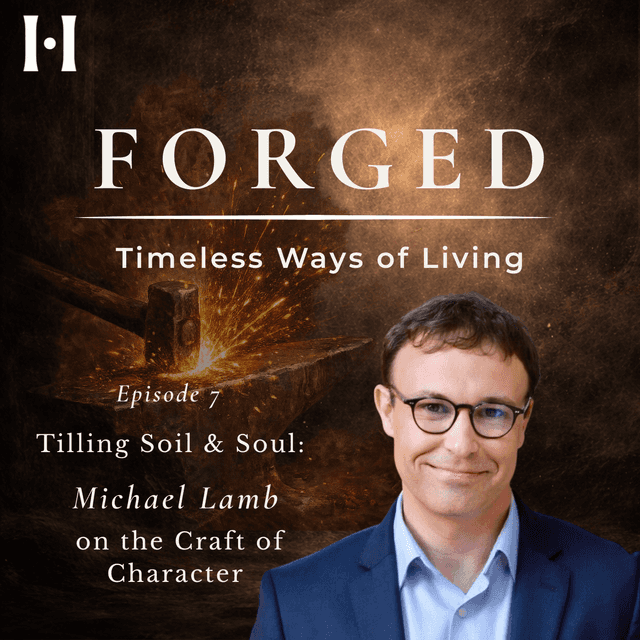
Tilling Soil & Soul: Michael Lamb on the Craft of Character
What forms a life of character? In this episode of Forged, Brian Williams talks with Michael Lamb about the moral formation that happens through work, friendship, habit, and hope. From Lamb’s childhood on a Tennessee tobacco farm to his work helping universities cultivate virtue, this conversation explores how people learn discipline, responsibility, humility, and shared purpose. It is a rich reflection on education, moral ecology, political hope, and the slow work of becoming the sort of person who can love the good and pursue it with others. Along the way, Brian and Michael consider what today’s families and schools can learn from agrarian life, why friendship and accountability matter for both adults and students, and why poetry can train us to pay attention. They close with Seamus Heaney’s “Digging,” a fitting meditation on inheritance, vocation, and the probing work of the pen.
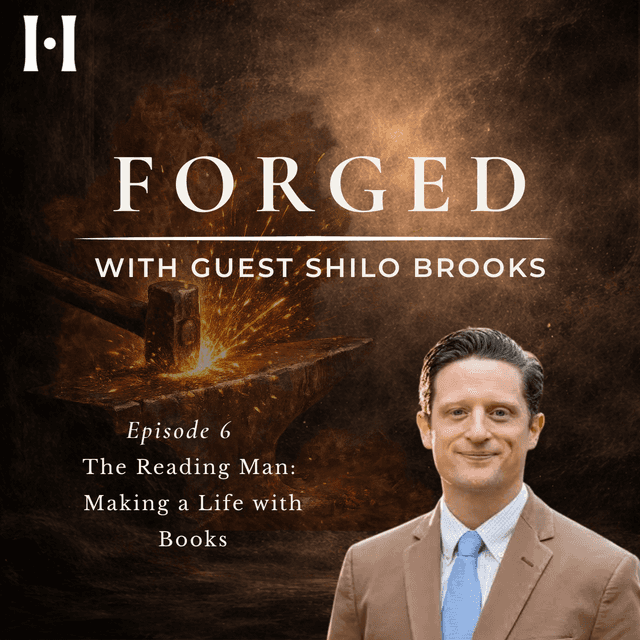
The Reading Man: Shilo Brooks on Making a Life with Books
What do books do to a man? In this conversation, Shilo Brooks and Brian Williams discuss reading, ambition, teaching, and the making of a life. Brooks reflects on growing up in West Texas, discovering the great books almost by accident, and learning to read not merely for school or profession, but for wisdom, courage, and the ordering of desire. Together they consider why men stop reading, what is lost when they do, and why the best books are not simply objects of study or instruments of advancement, but companions in the long work of formation. They do more than convey information. They enlarge the soul, sharpen judgment, deepen wonder, and usher us into a richer and more serious way of being in the world. Along the way, Brooks discusses the teachers who first put serious books in his hands and the books that shaped him, from Fitzgerald’s This Side of Paradise to Xenophon’s Education of Cyrus. The conversation ranges from landscape and longing to teaching and apprenticeship, and from the allure of ambition to the discipline of moderating it through wisdom. This is a conversation about books as guides for life, about the formation of men, and about the kind of education that moves from the classroom to the soul.
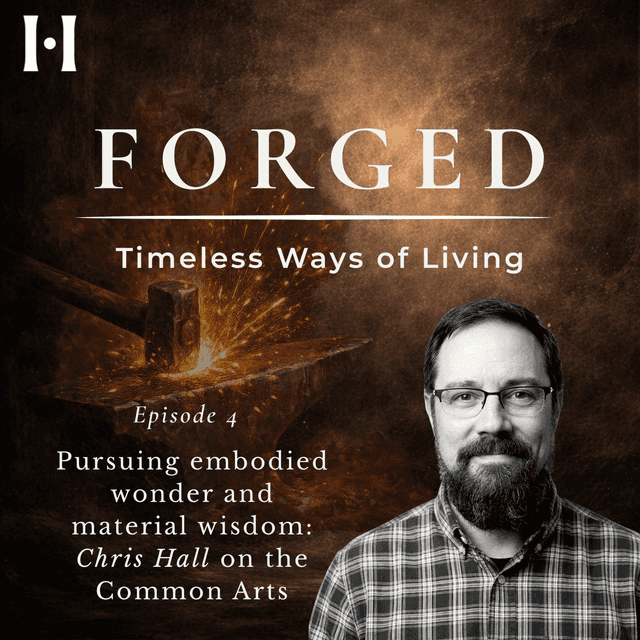
Pursuing Embodied Wonder and Material Wisdom: Chris Hall on the Common Arts
In this episode of Forged, Chris Hall reflects on the formative power of the “common arts”—the ordinary skills and embodied practices that introduce us to the givenness of the world and manifest our humanity. Drawing on stories from the classroom and the farm, Hall argues that formation and education flourish when intellectual study is joined to hands-on craft, inviting students into apprenticeship, real responsibility, and attentiveness to the natural world. He also addresses the cultural divide between academic learning and vocational skill, urging a recovery of an older vision in which the liberal arts, practical arts, and fine arts enrich one another for the sake of a fully embodied, fully aware human life of discipline, delight, craft, and calling.
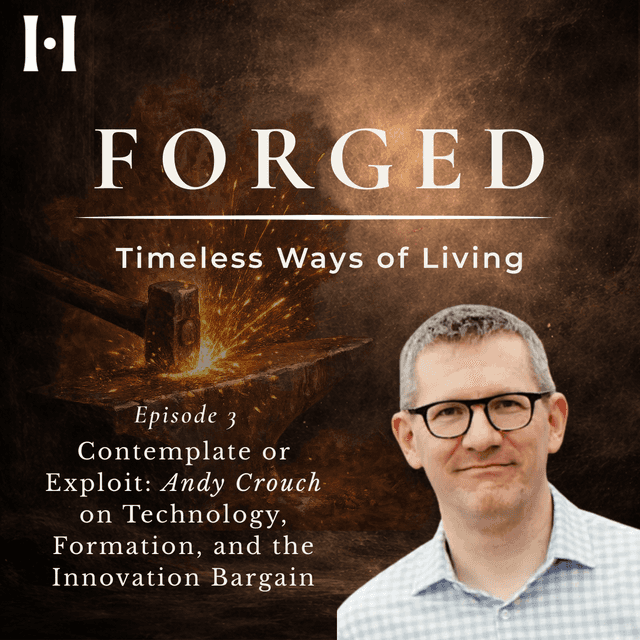
Contemplate or Exploit: Andy Crouch on Technology, Formation, and the Innovation Bargain
In this Forged conversation, Andy Crouch argues that “we either contemplate or we exploit”—a bracing claim that frames his vision for stewarding our humanity in an age of technological convenience. Drawing on a biblical account of the human person as heart, soul, mind, and strength, he contends that genuine flourishing is found through the relational, embodied labors of home, church, and school. Crouch names the “innovation bargain” as a crucial lens for reckoning with technology’s costs, and he calls listeners back to shared household rhythms and focal practices as ordinary disciplines for becoming more fully human.
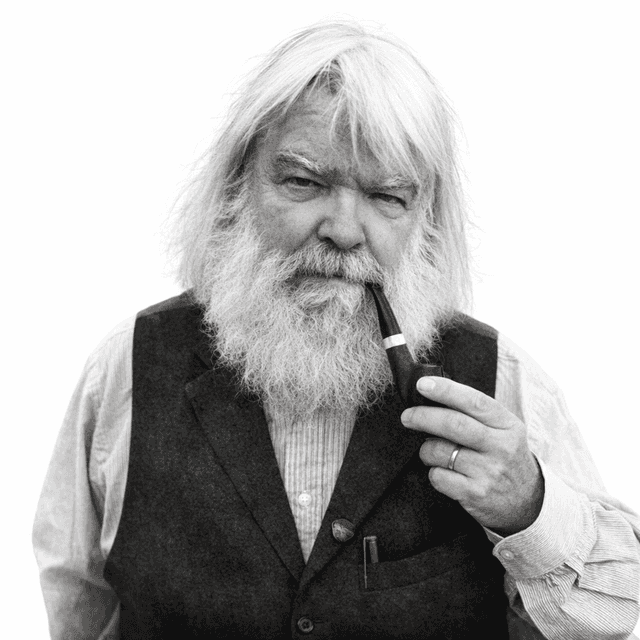
Crafting a Poetic Life with Malcolm Guite
Poet, priest, and professor Malcolm Guite invites us into a conversation that moves from the Arthurian legend of the wounded king and ruined land to our own modern struggle to see the world as meaningful and alive. He shares how a childhood encounter with the Grail stories taught him that one reckless act can wound a whole world, and how healing begins with recovering wonder. Guite makes a compelling case for poetry and story as wisdom-bearers that help restore our vision. He closes with his radiant poem “O Sapientia,” a final invitation to recognize hidden wisdom “disguised as everything.”
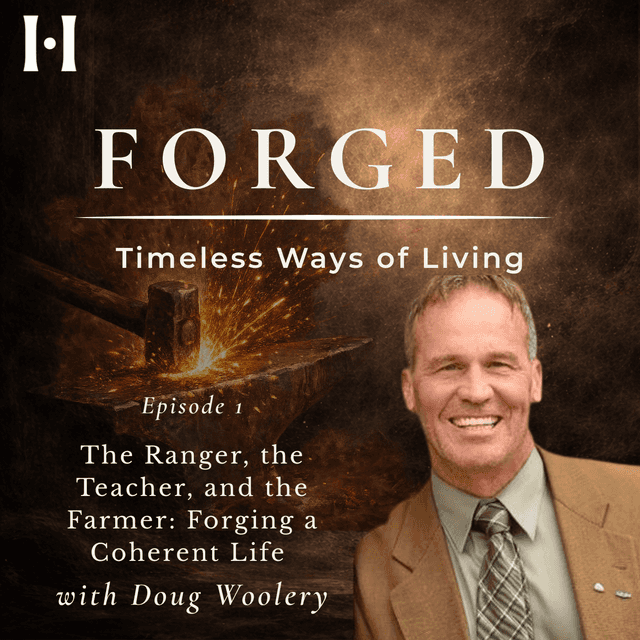
The Ranger, the Teacher, and the Farmer: Forging a Coherent Life with Doug Woolery
In this episode of Forged, host Brian Williams speaks with Doug Woolery—Army Ranger, teacher, coach, and farmer—about a life shaped by service, learning, and faith. Doug reflects on his journey from the military to the classroom, the impact of male educators, the importance of parental involvement, and the quiet lessons of farming. Drawing on his experiences as a parent and grandparent, he shares insights on coherence, contentment, and living a well-rounded life.