Where to Begin
Selected episodes that capture the vision of a truly human education
Explore real stories of families and schools pursuing wisdom, virtue, and meaningful education.
Selected episodes that capture the vision of a truly human education

What happens when your sense of worth depends on being better than the people around you? And what changes when you stop asking how you rank and start asking what kind of life is actually worth living? Brian Williams talks with theologian Miroslav Volf about the difference between excellence and superiority, the fragility of a self built on achievement, and the possibility of receiving our lives as gifts rather than projects of endless comparison. Drawing on Life Worth Living and The Cost of Ambition, they consider education, vocation, place, gratitude, contentment, and the communities that help us discern what we are for. Listen for a hopeful account of how we can pursue meaningful work and genuine excellence without making success the measure of our worth. Along the way, Volf reflects on growing up in Yugoslavia as the son of a Pentecostal minister, discerning his calling as a theologian, the disciplines and delights that sustain his ordinary life, and the writers who have helped him think about contentment, vocation, and hope.
-1400x1400.png?v=20260221163025-hqqh)
What if a flourishing family life depends less on doing more and more on recovering rhythms of work, rest, attention, and belonging? Christine Perrin talks with Dr. Kerry Hasler-Brooks about the life she and her family have built on a small Pennsylvania farm, where agricultural seasons make limits, dependence, and renewal impossible to ignore. Their conversation explores how parents can create room for boredom, Sabbath, reading, meaningful work, and life together, even without radically rearranging their circumstances. Kerry also reflects on technology, simplicity, literature, and the formative power of returning to the same places and texts over time. For families feeling crowded by schedules and competing demands, this conversation offers a hopeful vision of choosing what to value and making space to live accordingly. Along the way, Kerry considers the sustaining power of literature, from Zora Neale Hurston to Emily Dickinson, and the way reading can help us attend more deeply to ourselves, one another, the natural world, and God. Her reflections suggest that formation often happens through ordinary practices repeated faithfully: walking the same ground, rereading a beloved poem, sharing work with children, welcoming others, and protecting stretches of time in which nothing has been planned.

What if mathematics is not merely a tool for solving problems, but a way of encountering reality? In this episode of Forged, Brian Williams talks with mathematician and educator Jake Tawney about the beauty of number and shape, why wonder belongs at the heart of education, and what we risk losing when technology begins doing our thinking for us. From Euclid and fractals to calculators and artificial intelligence, Jake makes the case that education should begin with real things worth knowing and loving. Their conversation ultimately turns toward a larger question: What habits, practices, and encounters help us become more fully human? Jake and Brian explore why mathematics has so often been reduced to computation, how teachers can invite students into genuine wonder, and why AI raises deeper questions than efficiency alone. Jake also reflects on the practices that have shaped his own life as a husband and father, including prayer, cooking, wine, reading aloud, and the conviction that our first calling is to give ourselves for the good of others. Books & Resources Mentioned Another Sort of Mathematics: Selected Proofs Necessary to Acquire a True Education in Mathematics by Jake Tawney Euclid’s Elements A Mathematician’s Lament by Paul Lockhart The Lion, the Witch and the Wardrobe by C. S. Lewis Gaudium et Spes (Pastoral Constitution on the Church in the Modern World), especially paragraphs 22 and 24
Dive deeper into the ideas driving the renewal of classical education
In this podcast, author and poet Christine Perrin interviews women (and some men) to discover how they have composed a life of meaningful patterns and routines that give life to themselves and their families.
In this podcast, Dr. Brian Williams of the Templeton Honors College interviews men (and some women) to learn how they seek to forge meaningful lives of at work, home, and in the broader culture.
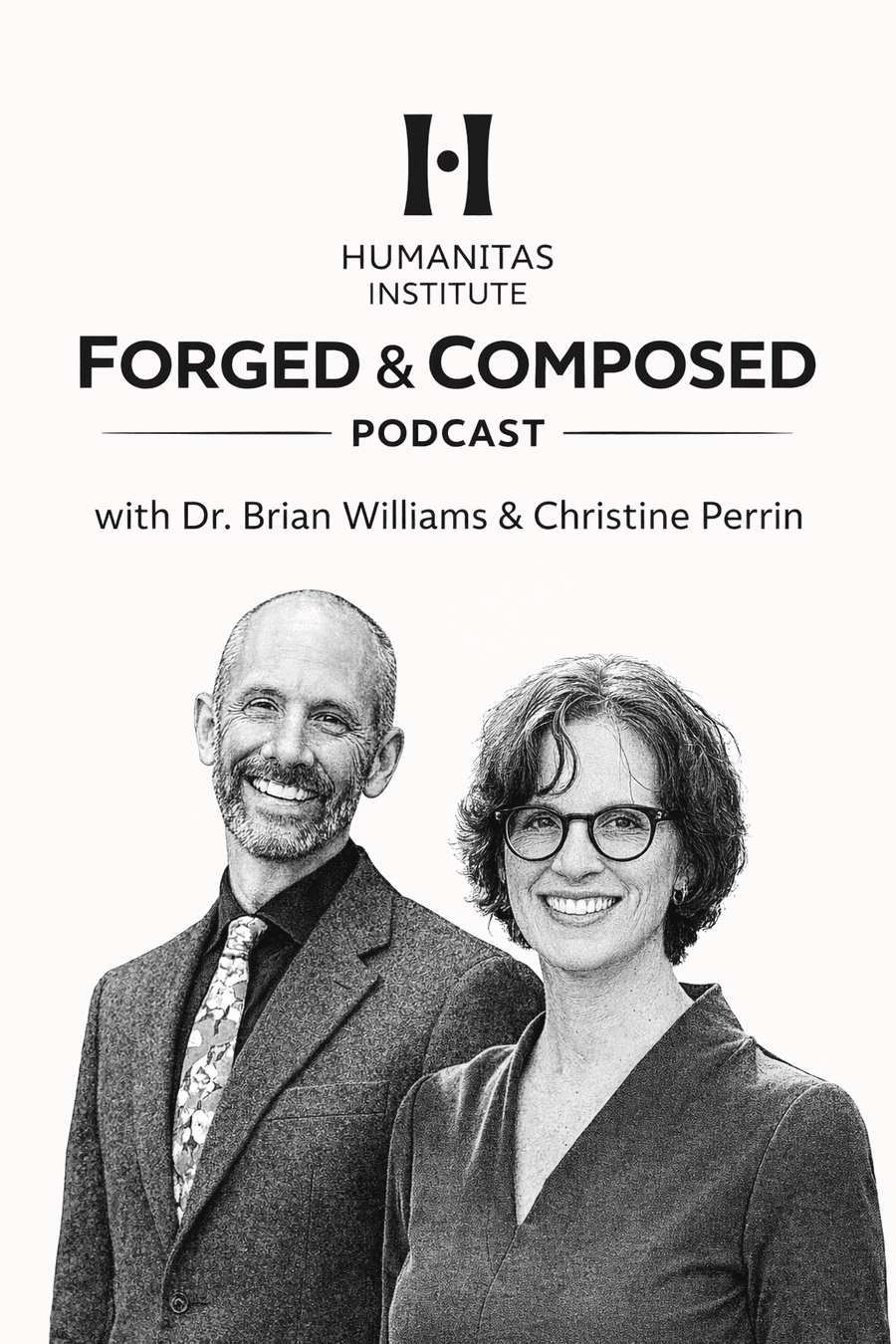
A co-hosted podcast featuring Forged host Brian Williams and Composed host Christine Perrin.

What happens when your sense of worth depends on being better than the people around you? And what changes when you stop asking how you rank and start asking what kind of life is actually worth living? Brian Williams talks with theologian Miroslav Volf about the difference between excellence and superiority, the fragility of a self built on achievement, and the possibility of receiving our lives as gifts rather than projects of endless comparison. Drawing on Life Worth Living and The Cost of Ambition, they consider education, vocation, place, gratitude, contentment, and the communities that help us discern what we are for. Listen for a hopeful account of how we can pursue meaningful work and genuine excellence without making success the measure of our worth. Along the way, Volf reflects on growing up in Yugoslavia as the son of a Pentecostal minister, discerning his calling as a theologian, the disciplines and delights that sustain his ordinary life, and the writers who have helped him think about contentment, vocation, and hope.
.png?v=20260221163025-hqqh)
What if a flourishing family life depends less on doing more and more on recovering rhythms of work, rest, attention, and belonging? Christine Perrin talks with Dr. Kerry Hasler-Brooks about the life she and her family have built on a small Pennsylvania farm, where agricultural seasons make limits, dependence, and renewal impossible to ignore. Their conversation explores how parents can create room for boredom, Sabbath, reading, meaningful work, and life together, even without radically rearranging their circumstances. Kerry also reflects on technology, simplicity, literature, and the formative power of returning to the same places and texts over time. For families feeling crowded by schedules and competing demands, this conversation offers a hopeful vision of choosing what to value and making space to live accordingly. Along the way, Kerry considers the sustaining power of literature, from Zora Neale Hurston to Emily Dickinson, and the way reading can help us attend more deeply to ourselves, one another, the natural world, and God. Her reflections suggest that formation often happens through ordinary practices repeated faithfully: walking the same ground, rereading a beloved poem, sharing work with children, welcoming others, and protecting stretches of time in which nothing has been planned.

What if mathematics is not merely a tool for solving problems, but a way of encountering reality? In this episode of Forged, Brian Williams talks with mathematician and educator Jake Tawney about the beauty of number and shape, why wonder belongs at the heart of education, and what we risk losing when technology begins doing our thinking for us. From Euclid and fractals to calculators and artificial intelligence, Jake makes the case that education should begin with real things worth knowing and loving. Their conversation ultimately turns toward a larger question: What habits, practices, and encounters help us become more fully human? Jake and Brian explore why mathematics has so often been reduced to computation, how teachers can invite students into genuine wonder, and why AI raises deeper questions than efficiency alone. Jake also reflects on the practices that have shaped his own life as a husband and father, including prayer, cooking, wine, reading aloud, and the conviction that our first calling is to give ourselves for the good of others. Books & Resources Mentioned Another Sort of Mathematics: Selected Proofs Necessary to Acquire a True Education in Mathematics by Jake Tawney Euclid’s Elements A Mathematician’s Lament by Paul Lockhart The Lion, the Witch and the Wardrobe by C. S. Lewis Gaudium et Spes (Pastoral Constitution on the Church in the Modern World), especially paragraphs 22 and 24

What helps a child learn, a family flourish, or a community grow strong? Elizabeth Lynn suggests that the answer often begins with things that can seem almost invisible: order, repeated rhythms, presence, attention, and the willingness to delight in one another. In conversation with Christine Perrin, Elizabeth reflects on the “liturgy” of a classroom, the surprising gift of being known by name, and why beauty and rest depend on patterns that make room for genuine learning. She also considers the challenge many families know well: how to cultivate an inner life when the tempo of the world refuses to slow down. For Elizabeth, Scripture has become a lifelong anchor, calling her again and again toward humility, stillness, gratitude, and a life attentive to God and neighbor. Their conversation offers parents and educators a hopeful picture of formation. The small practices of showing up, praying for people by name, making room for wonder, and refusing to let busyness dictate our deepest commitments can slowly shape the atmosphere of a home, classroom, and community. It is a vision closely aligned with the Humanitas Institute’s commitment to education as formation through relationship, beauty, truth, goodness, and wonder.

How do fairy stories prepare children for a world of suffering, courage, beauty, and surprise? And what happens when adults lose the imagination to see rain, trees, music, and ordinary acts of making as anything more than useful resources? Dr. Junius Johnson joins Brian Williams to explore how fantasy gives us categories for facing real danger, recognizing evil, practicing courage, and remaining open to wonder. Drawing from Tolkien, C. S. Lewis, George MacDonald, The Neverending Story, and his own life as a musician and father, Junius argues that good stories do more than entertain us. They train our affections and help us become the kind of people who can enter the world with wisdom, desire, and hope. Their conversation moves from dragons and unicorns to grief, beauty, friendship, music, and the work of making. Along the way, Junius offers a practical invitation: read stories that enlarge your moral imagination, make something beautiful even when no one is watching, and resist the habit of calling the world “merely” ordinary.

What we attend to quietly shapes the people we become. In this episode of Composed, Christine Perrin speaks with Nadezhda Gribkova about beauty-first education, the patient work of looking, and the relationships that make genuine learning possible. Drawing on Dostoevsky, Rowan Williams, Jane Jacobs, sacred icons, and her own experiences as a student and teacher, Nadezhda explores why formation cannot be reduced to transferring information. Her own education, as a fifteen year old in a new country, significantly shaped her life. Her teachers, she explains, took her seriously by tackling difficult books in conversation and asking good questions toward the person she would be but was not yet. She offers simple practices for recovering attention, including memorizing poetry, observing art without rushing to interpret it, and returning to the patterns that remind us what is true. Their conversation invites parents and educators to consider how beauty can deepen family culture, strengthen human connection, and orient an ordinary life toward flourishing. At the heart of the conversation is a hopeful claim: beautiful things are not luxuries reserved for experts. They are gifts that can ground us, enlarge our vision, and help us remember how to live.
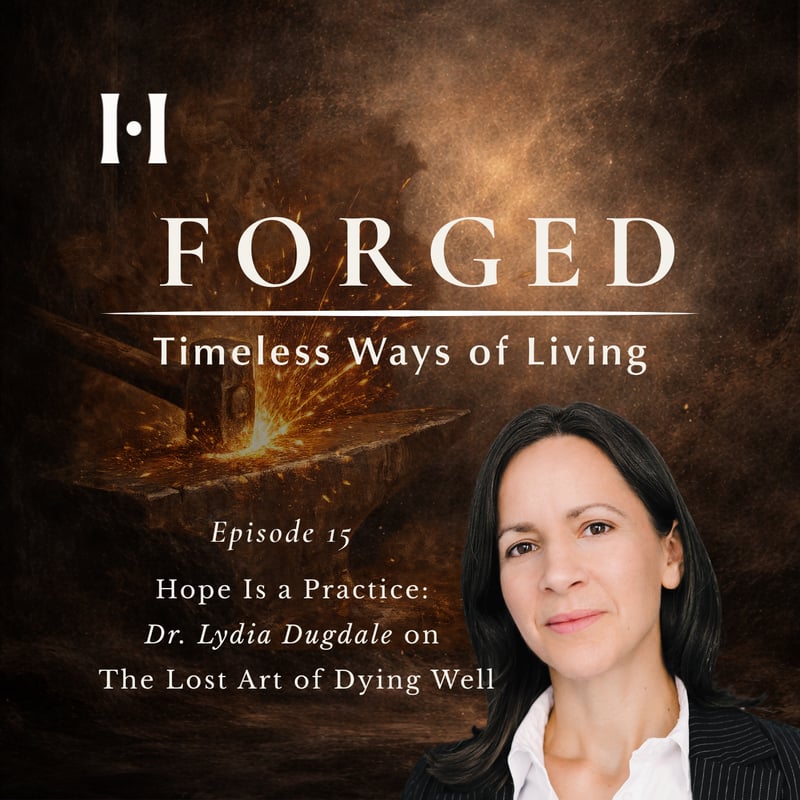
How can we prepare for death without becoming consumed by it? And what might the lost art of dying teach us about living with greater wisdom, agency, and hope? Dr. Lydia Dugdale joins Brian Williams to recover an older vision of mortality, one in which preparing for death meant tending to our relationships, forming our character, asking ultimate questions, and learning when medical technology helps or harms. Their conversation offers a practical invitation: rather than leaving our final decisions to fear, haste, or unfamiliar institutions, we can begin now to live the kind of life that makes dying well possible. Lydia and Brian discuss hope as a virtue that can be practiced rather than a feeling we must wait to receive. Lydia identifies five practices that help us resist despair: lament, endurance, imagination, confidence formed through gratitude, and the sustaining love of community.
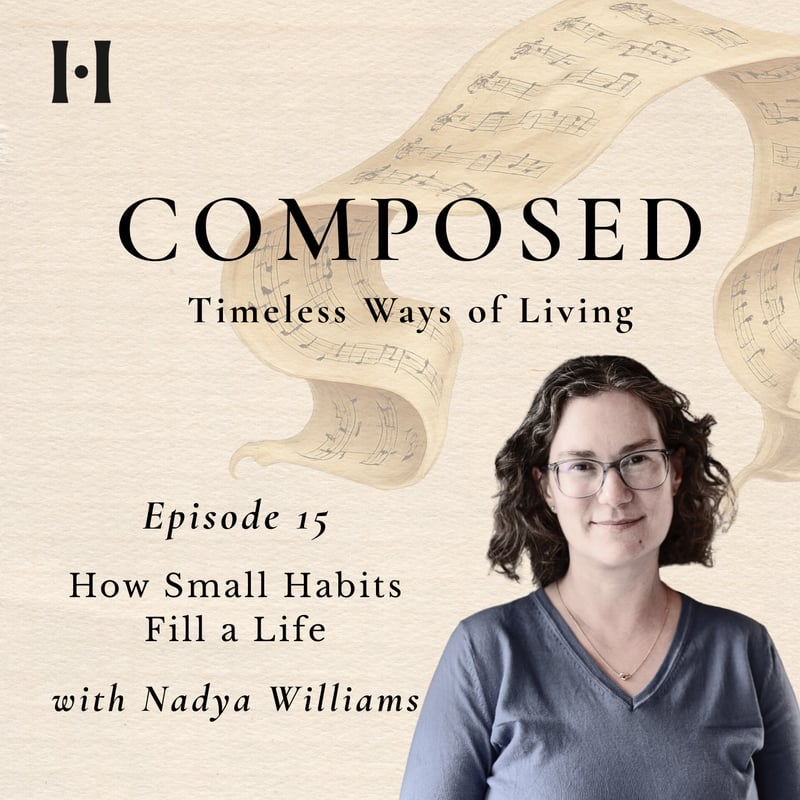
What if the life you long for is formed one teaspoon at a time? In this episode of Composed, Christine Perrin speaks with classicist, writer, and homeschooling mother Nadya Williams about the small patterns that fill a life: reading aloud on the couch, gathering friends around books and snacks, welcoming children into imperfect homes, and writing in the margins of family life. Together they explore motherhood, Christian human dignity, education, AI, and the hope of building a humane culture through local, faithful, ordinary practices. For mothers who feel stretched thin and are hungry for wisdom, this conversation offers a gentle invitation to begin with one small good thing.
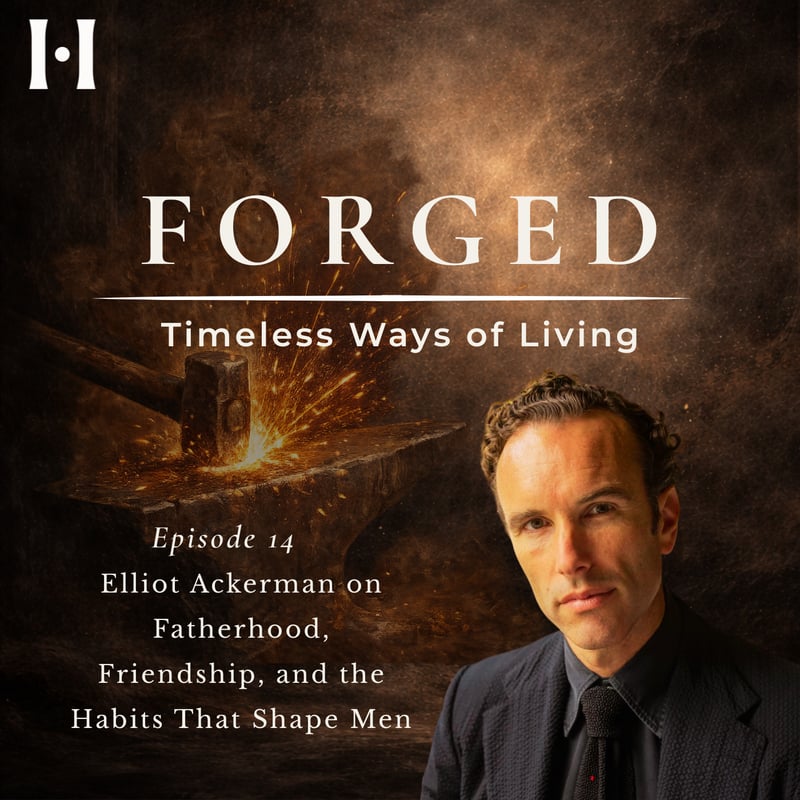
How does a father help his son become a good man? In this episode of Forged, Brian Williams speaks with Marine veteran, novelist, and journalist Elliot Ackerman about the small habits and embodied patterns that shape a man’s life and form the next generation: wearing a suit with intention, writing a thank-you note, keeping a friend, caring for meaningful objects, reading deeply, and learning to live with purpose. Drawing from Ackerman’s series “A Man Should Know,” the conversation explores why fathers, coaches, mentors, and male friendships matter in a culture where many young men are left to make it up as they go. For fathers seeking to lead their homes with wisdom, steadiness, and hope, this conversation offers a clear reminder: formation often begins in the little things. Ackerman also reflects on the Marine Corps, the influence of his own father, the meaning carried by inherited objects, the discipline of writing, and the quiet work of raising children with both acceptance and standards. Together, Brian and Elliot consider how fathers pass on more than advice. They pass on habits, stories, loves, friendships, and a way of seeing the world.
“Classical education introduces students into a tradition of inquiry that explores the enduring human questions in deep and beautiful ways.”
Dr. Brian Williams

Occasional stories, reflections, and resources to support your exploration of classical education.