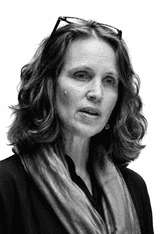
Christine Perrin: This is Christine Perrin, host of Composed, A Timeless Way of Living, a podcast of the Humanitas Institute that explores living patterns of virtue, craft, community, and delight, and draws the classical tradition into contemporary times. Welcome to Composed. This is Christine Perrin, and I'm interviewing Lynette Hall today. Lynette, welcome to Composed. I'm so happy to talk to you, and I wonder if you could just begin by telling us a little bit about your life leading up to Icon writing and your life since.
Lynette Hull: Hey, Christine. It's great to see you. Happy New Year, by the way.
Christine Perrin: You too. Thank you.
Lynette Hull: So, before icons, I was a fairly committed evangelical slash Presbyterian who was living in New Jersey at the time, and I had been homeschooling my three children. My oldest daughter was at a boarding school, a Christian boarding school, and I had two kids at home. So it it was the summer, and I took an icon class, which was completely random for me because I didn't know much of anything about icons at the time, and I didn't know much about the Orthodox Church. I knew what it was. I knew people who were interested in it, yourself included, but I didn't know much about it.
So anyway, I saw this advertisement, took the class, fell headlong in love with icons, and, kept doing it. After years, I kept taking classes. So after about, three or four years, I converted to Orthodoxy, and I continued to study with the Russian master that I had studied with, Vladislav Andreyov, for another technically, I think I'm still studying with him. And, yeah, that's my life.
Christine Perrin: Yeah. It it is, although there's so much more. I think one of the things before we even talk further about icons and your work, which I just spent the last week reviewing. I had it was the second time around for me with all the material, but, what a pleasure it was to see the tracks that you've laid down, for others. But before that, you dedicated your life to educating your children.
And I observed this, and you spent a great deal of time thinking about what they needed in the world and really wholeheartedly, I would say, how old were you when you made this transition to icon writing?
Lynette Hull: Yeah. Actually, was in my forties. And, I mean, it took a while because I had my first class in 2004, actually, or 2003, one of the two. And, you know, I still had kids at home. And I basically would take one or two classes a year because that's all I could manage.
And then as my kids transitioned out of the house, I e out of homeschooling, I was able to take more and more classes. So I would be taking four, five classes a year. They were week long classes, intensive workshops. And then I started going to visit Vladislav once a week. I would drive three and a half hours up to his house, from my house in New Jersey.
I would paint with him for seven hours, and then I would drive home for three and a half hours. And I did that for seven years, actually. And it wasn't every week because I was still taking classes and, you know, their holidays and whatnot, but it was a lot of a lot of weeks in the year I was doing that. And what that afforded me was the chance to just be mentored by somebody who as a nonorthodox American person, to be able to spend a lot of time with somebody who grew up in Soviet Russia, but had been pursuing God and also pursuing iconography slash iconology, he it it was just an enormous blessing. It was a way that I was molded in a way, not just artistically, but obviously spiritually because, you know, I'm I'm not the great icon writer.
I and I never will be, and that's okay. But what in the postprone school, the idea is not so much whether you can write an icon, but it's whether your life becomes an icon. I mean, we are all icons. So the postprone school talks about every person is an image of God. That's what the theology of the Orthodox Church is.
So when you write an icon, you're having the opportunity to explore what does it mean to be made in the image of God. And then how is your image reflective of that or not? And the deeper you get into it, the more you begin to see, overlap and analogies, and you learn how to change, mold, become more like the icon of Christ, who is the first image of God.
Christine Perrin: It strikes me. I I wanna go back to the homeschooling, educating your children, but it strikes me that one of the things that I've heard so much in sort of twentieth and twenty first century artistic life is this sort of proverb, you know, you can have perfection of the life or perfection of the art. You can't have both. Essentially, you have to choose. And what you're describing seems like such a revolution, really, of that mindset that, suggests that, no, your art and your life are one in the same.
And that as you're trying to make this thing of beauty, trying to follow this path of beauty, you're also trying to bend yourself towards it. Did that strike you when you began to make that art just given the world that you had grown up in?
Lynette Hull: Absolutely. I, never considered myself an artist. I didn't study art in college. I I never did art classes, although I loved the idea of doing something creative. You know, my impulse for creativity was always there.
I just I don't think I found the expression of that until I found iconography. And once I found iconography, then everything else seemed to fall into place. And which is why I converted is because to me, iconography is the expression of the Orthodox Church, and that expression is the whole person. It's not just it's not just a category or a box, and and and things aren't walled off. So that was part of the reason why I fell headlong in love with iconography was because it was something that I realized brought everything together.
When I first took my first class as a good Presbyterian, you know, the material world was evil. It had all fallen, and there was a problem with the material world. But I realized as I was working on my first icon that I was there to make something beautiful, and I had to use material things to do that, to accomplish that. So if I was using material things to make something beautiful, how could the material world be completely fallen? Obviously, there is something inherent in the material world that was still beautiful that we could use to create beauty.
And so, I realized that the bringing together of everything, didn't I no longer needed to separate my everyday practical life from the life of faith. Somehow, you know, in my Protestant world, I thought of faith is something that you do that you apply over your material world, your relationships. It's it's another layer. But, in fact, what happened with iconography that changed me was actually the material life led into and was a part of the spiritual life already. I didn't need to add a layer.
I didn't need my layer of my ego, in a sense, overlapping everything. I could remove that and just engage and find who I am, what is my image, you know, what what is that image of God in me.
Christine Perrin: It strikes me that in your materials that, in your book, for instance, wrestling with angels, you say something similar about the relationship between the symbolic and the natural or the material. Mhmm. That you're you're recasting that in your own life, but you would say the same thing about icons. Can you say more about that relationship?
Lynette Hull: Sure. So and, you know, this is particular to the prosoponed school. I don't know if everybody who in fact, I know that not everybody who's an iconographer would say this. But for the postponed school, the idea symbol is a joining of the material and the spiritual. So it's a joining of the immaterial world with the material world.
We've just, finished Christmas nativity, which is the incarnation. And so this notion that God became man, that changed the material world. And and and now we're coming up to Theophany where Christ is baptized, and, you know, the material world rejoices at that and is changed at his baptism. And so in the symbol, and we have lots of symbols in the Orthodox Church, but the icon, which is unique to the Orthodox Church, is is one of the main symbols in which we see the union of the material and the spiritual. And so if we're icons ourselves, then that union has to also occur within us.
And it occurs when we are baptized and brought into the church, that union. It occurs when we take communion every Sunday or during feast days. And, you know, it it occurs for every, sacrament of the church. So repentance and confession is one of the ways where that that union continues. And as we are more fully united, the symbol becomes more manifest.
Christine Perrin: I love the way that you articulate that literally when you talk about the clay and the gold leaf being put on top of each other. Can you explain that process?
Lynette Hull: Yeah. That's one of the wonderful it it always gets gas from people when you show people in every class or in any lecture or anything. So what happens is is you put down a layer of of clay, which is called bowl, and it's not just simply clay because it also has a little bit of rabbit skin glue in it. And once you burnish it and make it flat so that it's it's, doesn't have a lot of ripples on it or anything, you sand it, then you burnish it, you can apply a piece of gold leaf to it. And how you do that is you breathe on it very closely, like you take the clay and put it very close to your mouth and you breathe.
And if you do that with just your hand and breathe out, you can feel the moisture from your breath because every breath has that moisture in it from our life. And that moisture opens up the clay so that when you put the gold on it, the gold will stick. And it is this idea of an image of when God breathed life into Adam because the word Adam is Hebrew for clay. And so you have this idea, and gold is what represents the immaterial world, the spiritual world. So you've got this union of the clay of Adam with the immaterial world of the gold joined because of the breath.
And, you know, obviously, was the breath of God at that time. But when you make it on the icon, you're realizing that. I mean, that's a powerful image
Christine Perrin: to cartoonish It is astonishing. I I rewatched the YouTube film that you did, with Vladislav doing that. And we will have those links in the notes so that people can watch that. But it's I mean, it's tear worthy, really, just to see and imagine what was given to us by God.
Lynette Hull: Yeah. No. It really is. I think that was also one of the things when I first took the class as a Presbyterian to realize, you know, God really breathed life into our human clay. And when we understand the power of that life, which I don't I think we really don't understand what the meaning of that life is, honestly.
I think that the life of God is way more energetic than than we can understand in our limited human minds. But that energy of life doesn't it doesn't wanna go away. You know? And it's an amazing thing that God gave that to us.
Christine Perrin: It's really amazing. I also noted that you said over and over again, we're so used to the rational. We're so used to thinking that we have to think in order to know. And you explained the noetic and which I'll ask you to explain again. But what you just described, when you encounter something directly, like, you know, in the natural world, in the physical world, breathing on clay and gold leaf and having them join, and then experiencing that direct realization of God's breath in us and thinking through.
And, like, as you're saying that, I'm thinking about the outside of the cathedral in Orvieto and, you know, the scene of that happening. And it's in stone. It's not even in clay and gold. It's just in stone. But other images, you know, because this has been depicted in art.
But for you to to encounter that in your body and then come close to what it might have meant for God to do that with humankind and to be doing that in your own life and, you know, to be sustaining all life that way still continually. Can you say what that process was like of encountering that idea that we could directly perceive spiritual things and how how you were able to over time acquire that or understand that or, I don't know, live with that?
Lynette Hull: I still don't really understand it. I don't know. I can't say. I mean, to I think a person who actually understands that they're encountering these spiritual things as a saint. I think that our ourselves are so fallen and covered with the weight of sin that it's really hard to kind of get to the point where you can perceive it.
I think we get glimpses of it a lot. I think that every time you go to liturgy and depending on how how you're able to focus or not, I think you can get it when you're reading or, I mean, walk I mean, you know, anytime. I mean, the heavens declare the glory of God. The firmament showeth his handiwork. We all know that verse.
And and we can see God anywhere. But do we perceive him? Do do we actually come to know the meaning of what that is? And I think that there are layers and layers and layers where we come to know who God is. I just had this amazing experience.
I was actually, I went to Greece for, Christmas, and I was there for ten days in a monastery. And on the last day, the nuns, took me to a church that has been built that is a mini replica of the Hagia Sophia. And it's it's beautiful. And the priest there is a real character. He's done much of the work himself.
He's a Mo priest, and he's a very sweet man in his mid fifties. And he had some relics that he brought out to show us. And one of these relics was a bone that was about six inches long, and I believe I'm not a 100% certain because I don't speak Greek, but I believe that these relics were from bishops. This place had been the seat of the Metropolitan for years before World War two. And they had found just in the past fifteen years, the bones of five bishops that were buried under the church.
So I believe it was one of these bishop's bones. Anyway, he took this bone. Right? And he went out to where there was a faucet, and he wet it. And then the bone became oily and was like streaming mirror.
And he rubbed it, like, all over, and he rubbed it. There were about four of us there, five of us, And he rubbed it on everybody. And I had the scent of myrrh on me from that bone for a week where it didn't it didn't leave. It was just there. And, you know, that is that is a a gift from God.
It it's it's a blessing to show us that, you know, the material world is imbued with the spiritual And we need to have eyes to see it, but we often don't. We can't.
Christine Perrin: I love what you're saying about layers. I also have a story I'm trying to remember in my mind where it came from, one of two books. But, it's of some monks that were, you know, taking some bones out of the earth and and to put in the ossuary. And, they were digging and they they kinda struck the body. And even though it was many, many years old, it started to bleed, because it was incorrupt.
And they went to the to the abbot and and told him. And he said, put him back. Don't disturb him. This is not a surprise. You know?
This is sort of what we expect. But, as you're talking also, I'm thinking about the process of making an icon and I'm thinking about, well, you're saying it takes layers and layers. It takes, for us to, like, slowly take on a certain kind of knowledge. But I'm thinking about the way you describe the layers, in the video, but you describe it throughout your work of the different layers that go on top of each other to make the saturation and the meaning that we encounter when we spend time with an icon that's been made that way. And the way that the uncreated light is last, the the the tracing in white.
It it sounds very much like the language of your experience has just become a part of the way you think of the world. The language of your experience of making.
Lynette Hull: Mhmm.
Christine Perrin: Can you say a little bit more about those layers? Because, again, I'm just sensing that something natural is very telling about the supernatural.
Lynette Hull: I think an image that you've often used is the idea of the onion. We we keep peeling things back, and those are the same sort of layers. Like, each time we come to, I mean, TS Eliot. Right? We come there and we see it for the first time.
We come around every week to divine liturgy, but each time we come to divine liturgy, we're a different person. And it's the same with an icon when you're making an icon. There are different layers. I mean, if you if you step back, you're making an icon. That's what you've done.
And you don't have to notice the layers. You don't have to understand that each thing is a layer. But if you take your time and really try to discern, then each one of those layers that you bring that you have to do, that you have to work creates an opportunity for you to notice yourself and to have a new challenge, a new growth, a new opportunity to see the same thing, but you see it in a different way with more maturity. I remember I was in one icon class with Vladislav, and we were doing a very complicated icon. It was the icon of Pentecost, and, you know, I was a pretty young iconographer and not very good.
And I spent a lot of time watching him work. And how he worked was you have, you know, the apostles all sitting in an arch, and he would go just back and forth to different apostles at different times. It was all the same layer, but he was working on highlights. And so he would he would work on one apostle, and then let him dry, and go work on another apostle, and let him dry, and go back. And he kept going back and forth, and I thought, you know, this is just brilliant.
I mean, it's like the gentleness of letting someone come into who they need to be. And literally, you were letting the apostles grow into the shape that they were going to become. But he did it with such gentleness. So he didn't just work on one apostle and finish it. Boom.
I'm done. I'll go to the next one and go all the way around. He kept just and it was all in relation to the other. You need to do something here on Peter, and then you gotta do something on Andrew, and, you know, Bartholomew. And you just sort of go back and forth.
And eventually, it all becomes the layer, but you've allowed the layer to develop and to do it in a way which has sensitivity to each individual part. And I think that when you're making an icon, that willingness to let the icon grow and to observe it and to be sensitive to what's happening on the board, you know, maybe the paint that you've chosen doesn't work great in this side, but it works great on this other side, And you sort of nuance it and and coax it into becoming, what ultimately, you know, the telos is, what you know it's going to be, but it it doesn't necessarily become what you determine it to be.
Christine Perrin: That seems like such a lost, even a lost goal, lost concept in our current moment that has that linear, rational, outcome oriented focus. You know, we we are afraid to waste time. We're afraid to, linger. We we maybe don't remember that contemplation is a part of a good life. It makes me think also about all the talk you do about the spiral in your work and in you know, that that the spiral, there's this bending that's happening of the figure.
And, I wonder if you could talk some more about how the visual as a portal into, this reality that we're trying to remember or maybe acquire or, acknowledge, how that opens a new kind of access. I mean, in your TED talk, I think that was in was that in 2017?
Lynette Hull: Actually, you know what? It was 2012.
Christine Perrin: Oh, goodness. Okay.
Lynette Hull: I know. The years When I sent it to you, I was like, oh my goodness, I can't believe it was that long ago.
Christine Perrin: Ugh. But in it, you talk a lot about the fact that we're a visual culture. We've become a visual culture that has kind of vacated the beauty and the quality of the visual space. So we do live with imagery, with visual imagery, but, we're not careful about what imagery that is. And so it's almost like the emptiness is filled with, poor quality imagery.
And I'm just wondering what, in your estimation, the visual aspect of our life, particularly if we're careful about it, what it offers us, how, placing the icon in your visual field, what that affords you in your contemplative life, in your life of trying to see and understand what's real.
Lynette Hull: Yeah. Well, I mean, I think the church is gives us amazing gifts. And I I think there are many ways in which the church is trying to help us come into a relationship with God. And chief among those is the icon. And I the reason why the icon is so important is because of humanity's visual nature.
I mean, the church fathers, they will talk about the five senses and how we have five material senses, and they talk about the parallel with the material senses to the immaterial, the senses of the soul. And sight and hearing are the two most important. So we've got, you know, we've got icons, and we've got scripture, the church has, which we use in order to come to know God. So visually, what happens is there's a couple things that happen. I mean, people will say, especially Protestants will say, oh, well, the icon's good because it you know, nobody everybody was illiterate and they couldn't read, so they had this fallback on the icon.
And that way, they could know the stories about what was happening in the Bible. And on the one hand, that's very true. That that's a true statement. But on the other hand, there's a lot that you can portray in an icon that would take chapters and chapters and chapters to write down and express in the Bible or in any book. And so the icon is doing something different.
It's it's it's working on those multiple layers to bring you into you know, give you opportunity to come to know God more. So for instance, if you are a person who gets easily distracted and you're in church and you're looking at the paintings on the wall, it it's a way for you to refocus. Like, you might be looking at the theophany image, and you think about the angels, and then, you know, go to the angels over the altar, and then go, oh, wait. Church is happening. I need to pay attention.
And so, you know, there's this way. I mean and that that's just a very simple way of saying, well, the icon's valuable, but it helps us focus. Further down the road, perhaps the icon is something that's a consolation. When you're just sitting in front of an icon of a Theotokos, and you are, you know, understanding and noticing the nuances of her expression and, you know, the Christ that's in her arms and, you know, their interaction and exchange. And that becomes a way for you maybe it it's more poetic, but it it becomes a way for you to engage with God.
And so it I think that visually, because it's focused on things that are pertain to who God is, that's one thing. But I think actually the practice helps us train like an athlete to to remember and to focus on looking at God. You know, our brains don't want to we're rational, and and that's the and and we live in such a rational culture. We don't want to get out of that. And the other thing that we have that we don't often talk about is part of our rational mind is our ego.
And our ego is at work. It it's it's a battle. Our ego is battling us not to focus on God because our ego is not sustained once we die. Once we die, the ego is gone, and we just have ourselves. But while we're alive, the ego is the thing that is working to keep us focused on what the ego wants, whether I wanna be wealthy or popular or, you know, whatever it is, you wanna be powerful, whether you need to have more things.
The ego supports that. And so by looking at the icon and really focusing on the icon, the ego can't insert itself on an icon. It you know, the ego is you. It it's part of you, and the icon is outside of you. So when you focus on it, the icon looks at you and begins to strip away your ego.
It begins to actually speak to you and say, you know, look at that. You selfish person.
Christine Perrin: Makes me think of a definition that I heard of chaste eros or that sort of desiring love as mad self forgetting. Mhmm. This sort of posture self forgetfulness that takes so much to get there. But in some ways, it's the thing we want more deeply than whatever that ego on the surface is clamoring for. You're also reminding me about some of the differences between the viewer of Western art, even if it were a crucifixion scene or deposition scene, and, the viewer of the icon.
It seems like the icon is inviting a certain kind of participation that I don't know. Sometimes that there are ways in which looking at art that does not invite participation that makes you feel a little lonely or at least a little independent and isolated. Like, you can have your own relationship. And I I've taken to going to museums with others and looking at something together and and trying to have the experience with someone else because it almost feels so lonely to do by yourself. But there's something about an icon that seems to invite participation to be thinking about you, to be beckoning you.
How would you talk about that? Is that language accurate? Is participation a word that you've thought about in your increasing relationship to iconography?
Lynette Hull: You know, that's interesting because I wonder if if the icon I mean, look. I I love icons, and I use them, and I I make them, and I live with them all the time. So it's hard for me to say, oh, yeah. No. It's not.
But I can imagine. Was just putting myself as you were asking that question in the shoes of somebody who's non orthodox, not religious, couldn't care about icons at all. If they went to a museum and sell an icon versus a piece of western art, a great art, would they feel like the icon beckons and the other doesn't? And I'm not sure, honestly. I mean, I think a lot of times the icon, I mean, we all know that there are famous stories, you know, Saint Vladimir goes in Hagia Sophia, and how he converts in September and, you know, Metropolitan Callissa Square.
He goes in a church and sees the icon and it really draws him. And, you know, there are instances of that, but I I wouldn't say that it's universal. And I think it's not universal because we're just different people. We're all made differently in the image of God, and not everybody has I have a friend who is a priest who is a scholar, and he's just like he's Orthodox. And he's like, yeah.
You know, icons never really made sense to me. And I'm like, how can you say that? But yet as he's Greek, and this is what he says. So okay. Yeah.
So, you know, do icons beckon us? Do they I I think if you're open to it, they do. I think if if you're looking for it, and it doesn't necessarily mean that you've articulated in your mind, ah, I need to go find an icon, and therefore, I will have this relationship. But I think that if we're hungry until we find our place in God. Right?
That's what Augustine says. And so we we we have these holes. We have a god shaped vacuum. And I think that for some people, that god shaped vacuum begins to be understood when they come into the presence of icons.
Christine Perrin: You came to iconography in your mid early to mid forties. You spent fifteen years probably focusing entirely on educating your children. I mean, you did other things as well, and you were involved in many things and you read many books. I think there'd be a lot of people interested in hearing about that period of time that you spend educating your children and what relationship it has to this other part of your life. And also I think that people would be interested in hearing about the fact that, you know, you didn't know this was waiting for you, but there was something on the other side of that time and maybe you wish you had come to it earlier, I don't know, But you came to it at a time when it could really blossom in your life.
And so I'm just thinking of, you know, mothers and, people who are, having young children. And would you talk about that part of your storyline for us a little bit?
Lynette Hull: Yeah. Yeah. Yeah. Know, I graduated from college and didn't know what I wanted to do with my life. I had a BA in English literature.
I grew up in a world where women could be teachers or decorators or homemakers, and those were your options. And I got married and actually after doing a fair bit of research and and actually being in the interior decorating field for about, I don't know, a year, I decided that I just we, my husband and I, really wanted to have kids. So my career was gonna be the kids. And then right away, we pretty much knew that we were gonna homeschool. My husband went to business school, and when I was looking at sort of possible daycare, it was so expensive.
I just thought, nah. I can't we we can't go into debt while my husband's in business school for daycare, for preschool. So, I just started doing stuff, and that was the beginning of homeschooling for me. So my middle daughter had a viola teacher who would say something which I think was very wise, and she would say, you know, you can have it all, you just can't have it all at once. And for me, when I I would repeat that to myself when I would feel frustrated or feel like I wasn't doing anything with my life, that it was just all the same things, to say, at some point, I'm gonna be able to do something.
I think young women today have a really hard time because of the pressure of getting educated. And then once you're educated, to stop suddenly and not pursue the career doesn't make any sense. So pushing the family back, I think, is hard on everybody. It's hard on the kids. It's hard on the parents.
And then I think that not pursuing your career is also hard. I mean, you yourself were doing something that was really hard, being a teacher and having children at home and trying to parent them and and give them enough attention and and yet maintain a career. Know?
Christine Perrin: A half time career. Half time full time.
Lynette Hull: Well, you know, but you were writing and you were also teaching, and and and that's just it's a lot to ask a person to do. Mhmm. When when my kids were going off to school so by that, I mean, my son went to he went one year to public high school, and then he went to the same Christian boarding school my older daughter went to. And then my middle daughter was going to college, and my older daughter was already in college. I'm like, what am I gonna do with my life?
And my husband said, well, look. You have this amazing opportunity to to study with a guy who's like a saint. Most people don't have that opportunity. You should go ahead and pursue that, which I think was very generous of my husband, actually, to to say to do that. And I'm really glad I did, because I do think that it's been just an incredible blessing for us in so many ways, but it's not something that we planned.
You know? I didn't I'd I mean, look. A BA in English literature is not gonna get you any career. You've gotta make the career from that. And, you know, at 40, when I was starting to do iconography, if I had wanted to go back to school and get a degree in something, I could've and had a decent career.
I I think as a culture, and everybody knows this, this is not new, but we we don't honor relationships, really. I mean, I could take care of myself, and I could pursue something that I'm interested in, and that would be great. And people would go, oh, isn't that nice for you? But the reality is there's lots of bodies on the ground when you do that if you're a mother. And now I'm a grandmother, and honestly, everybody needs help.
You know? I have a mother who is in a nursing home. I have to go help her. I have all three of my kids are having babies this year. You know, everybody needs help.
And I'm really grateful that I can be able to be there and and participate in the lives of my grandchildren. Would it be better to be a a famous politician? Would it be better to be, you know, have my own business and be a wealthy business person? I don't know. You know, of my own career sort of thing.
Something that I did. Entrepreneurial career that I started. Would that be better? Maybe. But then all the other wonderful things that happen because you opt not to do that are allowed to blossom.
And I hate to use the word trade off because I don't really think it's a trade off because the thing is is I didn't know something could happen. I think what happens when you
Christine Perrin: When you give yourself to the needs at hand. Right? Not knowing what will come of it all.
Lynette Hull: And and that's okay. I mean, I've been recently thinking about just I love to, like, make a schedule, and my schedule is really important. Part of the reason why I managed to homeschool and sort of how I protected our family was through the schedule. Like, if if we made the schedule and we planned the schedule, and that was sacrosanct. And then everything else that we could do, we could fit in.
If there were things that seemed like they might be good but possibly not, well, the schedule would rule. And and honestly, I think that while it's important to schedule, I think that, again, that's kind of my rational mind working, assuming this is how we're gonna do it all. And there has to be a balance. And I think that if you're a mother with, you know, three babies crying, a four year old, a two year old, and an infant, you know, the idea of a schedule seems what do you mean? But you do have a schedule.
Mean, you have a schedule. You have food and nap, and you've got clean clothes every once in a while in there.
Christine Perrin: Well, something that I remember about your young motherhood is that material culture was really important to you. I I think you more than anyone I had met, you loved beauty and you loved reality. So, you know, you spun wool and you, you always tried to make beautiful material culture birthday parties. I mean, all these things, like, you know, real trees with lights in them inside the house in January. I I wonder if yeah.
I wonder what you would say about that because it seems like, you know, now we can look back and we can say, oh, that love of material culture. I mean, you also love to make good food and to to make beautiful gifts and gardens. It it does seem like all the way along, that would be a theme for you that blossomed into this more direct and specific place that is so acknowledging and so celebrating and so, coming into contact with material culture and and in so doing reality. But do you do you ever see things like that as a theme? I mean, maybe you can only see that in someone else's life.
But to me, it's a very strong theme in your life.
Lynette Hull: Yeah. I mean, I certainly agree with that. I think for me, it's always been very important to have integrity, I would call it, between the my space, my my actions, and my life. The things that I want to do need need to be expressed by what's around me. I I can't have a disjunction.
So, you know, it's really hard for me to, paint if my icon table is completely disordered. If I'm making an orderly thing like the icon, I can't have piles and piles of books around on my icon table. And so I think the theme would be to have sort of the integrity between and matching up between what you see on the outside and what you see on the inside. Mhmm. When when I was growing up, you know, our household was very chaotic, and my mother didn't like to clean.
And so the house would get cleaned if we had people coming over, and beforehand, it would be just chaos beforehand. And I always wanted I aspired when my kids were little, didn't happen all the time, to have at least an orderly enough house so that when people came over, they would see I I didn't need to clean up that much. Now, that was the aspiration. Didn't always happen. But so, you know, there's like this integrity, but that aspiration to sort of present who you are on the outside with who you are on the inside has always been something.
And so, you know, I love things that are beautiful. I I I think that it it makes people happy. Part of hospitality to me is having people enjoy the space and giving people a gift of something that's it's calm and beautiful and well presented.
Christine Perrin: Well, I think your hospitality is, I've learned more from it than, probably anywhere else. I I can think of many occasions of your hospitality. And I'm interested in when you're making icons and you're traveling or studying seven hours traveling three on either side. How, you know, how do you how does that rhythm fit with the rhythm of that hospitality? Or is that a moment in which you were receiving hospitality that kind of filled your sense of what hospitality was?
That's part a of the question. Then part b is it's very noteworthy to me that you decided to create a legacy for someone else in your icon journey, that you decided to preserve Vladislav's prosopohn school, as a kind of life work, as a kind of offering. So anything in that what I'm saying that that you'd like to respond to, I'd love to hear about.
Lynette Hull: Yeah. Well, number one, when I would drive up to Vladislavs, I get up pretty early in the morning because we're supposed to be there by ten, 10:30, and I'd have to leave at about 06:30. So it would usually be cold, and it's hard to get out of the house, and, you know, the roads were busy. But so at that time, there weren't podcasts, not the way we have today. I would listen to I know.
Right? I would listen to, father Thomas Hopko on ancient faith radio. Or I would you know, and I'd spend, like, three and a half hours really just kinda meditating, driving up there, listening to different people. And then we'd have seven hours. And, you know, Vladislav had this idea that teaching was not just confined to the art form, but it was really molding the whole life.
So we would work, and then we would break and have a cup of tea. And at tea, you know, you'd make a table, and everybody would bring something, and we'd have coffee and enjoy, you know, not talking about icons for a few minutes. And then we'd go back to work for a while. And so often, his wife Olga would invite us over, and we ended up not going over back to work. We just have a special meal at their house together.
And then I drive home. But when I would leave there, I would feel like I was flying because I had received hospitality. It was true hospitality, which was so soul nourishing that, honestly, it wouldn't be until I crossed over into New Jersey and had another forty five minutes home where I'd suddenly get exhausted.
Christine Perrin: That's remarkably beautiful.
Lynette Hull: Yeah. You know, I remember driving through Pennsylvania and the Poconos and, you know, I see like three rainbows altogether. I try to snap a picture of it. And stuff like that would happen. I would be like, oh, you know, this is amazing.
But I don't know. I mean, being in the presence of somebody who's truly generous and and and, you know, for Vladislav, he wasn't he wasn't gaining anything by having, you know, four or five women there learning icons. None of us are gonna be masters like him. And we were all just kinda hanging out, but he was giving himself. And and that sort of generosity of spirit to to help people learn who God is is something that it's the same thing you feel at the monasteries.
When you go to a monastery where you get to know the monastery, there's this generosity that it doesn't make sense in our culture. It's not transactional. You know, we live in a culture where you do something for me and I'll do something for you. You know, if you're good, that's great. And, you know, nowadays, kids don't even earn and employers don't even respond.
You apply for a job. You don't even get an email back saying, you know, you're rejected. Just silence. And so we we don't honor each other. But when you go to a monastery or spend time like I did with Vladislav, you know, this is a person who is honoring you as an individual to be there and and very generously giving of themselves, which that reflects the love of God.
And when you encounter that and when you're in the presence of it, it's healing.
Christine Perrin: Has he told you anything about his life that would suggest how that developed in him or what was given to him by way of hospitality or what lacked that kinda created that generosity? Because it seems like a almost like a torch you pass from person to person.
Lynette Hull: Yeah. That's a good question. You know, he grew up in Soviet Russia. He he it was the war, World War two for his first, like, six years. He his grandmother's house was burned down, and he he and his sister and grandmother ended up living in, like, a cave towards the end, and they had no toys.
I mean, he'd said, look, I I didn't have any toys. I had stones and sticks. That's all I had. So why did he be I think Vladisov and and this is pure speculation on my part, but I think his searching for God to come into the Caucasus Mountains where he lived with some monks who were later rounded up by the Soviet authorities. And he lived with them for a year.
So you had to climb up into the mountains when it was fall, bring enough supplies for the year, and the snow would sort of prevent you from leaving. And then you could go out in the spring. And that's what he did, and he was off the grid in Soviet times. So he went, and he he was doing something very illegal. If you watch that movie, he says, you know, that's where he met silence.
And I think when he what he's talking about is he met God. He he really believed that he, you know, he came to the his interior self and there's there's no distraction. It's all white snow. And you you face yourself. And in in light of that, you know, who are you?
Christine Perrin: You know, as you're talking, it it I'm reminded that the icon that you have in this book, wrestling with angels, is about silence. Can you talk to us about that icon and your I mean, you've you've mentioned your experience of silence several times, his experience, your experience. But maybe just talk a little bit more even even just for people who really are afraid of silence about that that entry point. What might make it possible, or what would be a way to begin having that as part of your life?
Lynette Hull: Well, I mean, the icon, Hesychia is called that means silence. And the angel of silence, which is silence as an energy of God, where we don't think we don't think of silence as an energy, and yet it really is an energy of God because it's not natural to us as humans. Our rational brains like to think and like to process and observe. And then and on top of that, you you know, you've got, like, all the distractions of the world. You've got the demons who happily help you.
Yes. Your iPhone. So, you know, why where do where do you find silence and how do you get there? And one of the things that you can do is sit with an icon, for sure. Another thing is you can sit with the icon and say the Jesus prayer.
And I think you have to start very, slowly because we we have to train just like you're gonna run a 32 mile race or whatever. You've got to train for it. And so silence needs training.
Christine Perrin: Can you say what the Jesus prayer is for those who
Lynette Hull: don't know? The Jesus prayer is the saying, Lord Jesus Christ, son of God, have mercy on me, a sinner. And you say that as a way to train your mind to think one thought. And then as you as you begin to be able to focus on that thought and not think about the dishes or or the taxes or whatever it is you have to do, you know, you you are able to just focus on God, and then you let that go. And then there's silence.
And the saints do this. And I I think what we don't understand in our culture is that when somebody becomes famous, we think of them as a saint. And so somebody converts, and they instantly go online and tell you about it, and then tell you how to be famous. But and how to be good and do all this stuff. And and that's just not learning about who God is, that's learning about that person.
The saints, on the other hand, all spent years in the desert taking time to prepare and learning the silence, and then they come out of the desert for a little period of time. You know, usually, if you look at the lives of the saints, it's not very long, a year to five years, some maybe more, but generally, it's not a long time. And then they either die or go back into the desert. And so, you know, that silence is what is supposed to sustain us to be able to do the will of God. You look at Saint Gregory Palimas, he stayed in a cave for three years praying over and over, most holy Theotokos, enlighten my darkness.
Three years, he stayed in and he said that over and over and over again. Most holy Theotokos, enlighten my darkness. And, you know, we don't do that. We don't do that at all. So, you know, I can't say that I've achieved it at all, but it's something that I think that as a Orthodox Christian, it's certainly something that I think that all of us need to practice.
Christine Perrin: Was encountering that in Vladislav something that made you inspired you to preserve his legacy?
Lynette Hull: I mean, for sure. I think Vladislav's ideas about iconography and iconology and his iconography is underappreciated in many ways by the Orthodox Church. I think Vladisov, and my theory is my thesis is that he is an expression of American orthodoxy, primarily because he came here as an immigrant. And it was here in America that he started making icons. So his icons are distinctive.
They don't look like Russian icons per se. They don't look like Greek. They don't like Romanian. But they definitely have, like maybe is it a Vladislav flair or is it an American flair? I don't know.
But I do think that his creativity is stunning. And if you spend time really looking at his icons, no image that you see can actually do justice to the real thing because of the translucent layers. I tried really hard in the catalog to get photographs that would accurately confess the icon, so to but I think you need to spend time in front of the icons to see the energy that's there and to see I think to me what's remarkable about Vladislav is that as a painter, as a person, he he never stopped exploring and trying to grow and trying to articulate visually what he was learning theologically. So it's not like he graduated from school, got a PhD, and said, now I know this, and this is what I'm gonna teach. He was always learning and and then teaching what he was learning.
And so that growth, I you can see in his icons. I have one of his early icons, and I have his very last icon. And the change and the development is remarkable. It's not that artists don't develop, they do. But Vladislav's development had to do not with just his own personal, oh, let's try this.
Let's try that. But he was trying to articulate the theology that he was understanding. And as he grew theologically, as he as he got into a deeper relationship with God, he was always trying to articulate that visually.
Christine Perrin: Can you see what it means to be creative when you're practicing a traditional art where you're trying to conform to, you know, protocols and and types and forms?
Lynette Hull: Sure. That's a good question because a lot of people ask that. And creativity has to do with how how do I, as a person with limited capacities, a limited palette, maybe a limited sized board? How do I do all those requirements within these limitations? And and that challenge is something that requires human creativity to figure it out.
It's a puzzle. So every icon is gonna be different. And while you may use sort of a, cartoon, they're called, where, okay, this is the Theophany, and I have my image that's line drawing of the cartoon. Well, it turns out, you know, it's gonna be in the church in a certain way, so it has to be like this rather than like this. And and and that requires problem solving.
It requires creativity to figure out how to do it. I run out of a certain kind of pigment, so therefore, I need to use these other pigments. How am I gonna do that? So every icon has, you know, what about where am I gonna place the lines for the eyes? Where am I gonna place the the highlights on the shoulders?
Should I make it lower or higher? All of those questions you're asking yourself, and that's that's what creativity is. It's problem solving and and making an icon, an image with the materials that you have right at hand.
Christine Perrin: Again, quite a testimony to the thing that we're always doing in life as well. The given and the made. And
Lynette Hull: Yeah. Yeah. Yeah.
Christine Perrin: That's really beautifully articulated. You said you have the last icon that he made?
Lynette Hull: I do. Last year, I well, the year before, I commissioned him to do an icon of the Ecumenical Council, the first Nicaea, because it was the seventeen hundredth anniversary of Nicaea last year. So I asked him to do that because years before, he'd always said, you know, there's not really a good image of the Ecumenical Council, so I'd really like that challenge sometime. And he just never did it. So I finally decided that, you know, I'm just gonna challenge him to do it.
And he did. He came here. He worked on it at my house for about a month, which is really fun. And he made an image of the icon. And it it's amazing.
It has more faces than any icon he's ever done.
Christine Perrin: Why was it his last?
Lynette Hull: Because he his wife died three years ago, and he's been going back and forth to Russia. And he's always said that he wants to die in Russia. And he has just said, I'm done. I'm not gonna make any more icons. So I asked him to make this icon, and he said, yes.
Now, he's working he's, doing, paintings that are illustrations for a book he wants to do on Song of Solomon. Mhmm.
Christine Perrin: How wonderful.
Lynette Hull: Yeah. And the illustrations are incredible. I mean, his he he's using, like, salt on the paper and putting paint on, and it creates these really cool kind of, forms. And then he draw you know, makes those forms into part of the illustration. It's it's it's amazing.
They're beautiful.
Christine Perrin: I have seen
Lynette Hull: some of these illustrations. It's not it's not He's not doing icons.
Christine Perrin: Okay.
Lynette Hull: Will he ever do one? Maybe he will, but he's turning 90 this year. So Amazing. Getting pretty.
Christine Perrin: Amazing. Can you tell people about the museum, the tiny museum that you created? And, you know, even if if people wanted to see that or or commission that to be where they were, how that would work?
Lynette Hull: So, before COVID and sort of trying to figure out what was the prosopen school gonna do, I, commissioned the teachers and some of the advanced students to do an icon that I put together as a permanent collection of icons from the postponed school. And that exhibit is called wrestling with angels. We had an exhibit at the Museum of Russian Icons, which is now Icon Museum and Study Center, and that was in 2019. Then, COVID happened, and so I very naively thought that this exhibition would be able to go to different places easily. And I had worked with you, and, you know, we ended up not being able to get the exhibit there.
It it turned out my idea was more naive. Museums don't really want icons that are contemporary because they're religious art. Nobody likes that. They're not actually Byzantine art. Even though they sort of fall in that category, they're not old.
So since there's no category I mean, you could I would call them outsider art, but nobody who does outsider art is gonna call icons outsider art. So museums were remarkably uninterested in hosting an exhibition. And then with COVID, everything shut down. I thought, well, what are we gonna do? So, I came up with the idea of having a mobile museum that was traveling that was half of the icons.
And I found a guy in Virginia on the Eastern Shore who was making tiny homes, and I commissioned him to make a museum, a tiny museum. It ended up taking four years to to get the project done. And even now, I still have a fair bit of work to do with it, but it's mostly done. And so it's half of the icons. It's it's twenty twenty icons that are in the museum that are they're affixed to the walls.
And the idea is that I could drive somewhere, set up the museum, open it up, and people could come through it and leave. So nobody has to hang icons. We don't have to worry about lighting. We don't have to worry about theft. We don't have to I mean, you always have to worry about theft, but they're sort of affixed in a way where you'd have to be really serious about giving getting them off the wall.
So the idea is to go around and have the opportunity, give people the opportunity to stand in front of the image of God outside of church. Because, you know, in America, we we don't most Americans don't know what icons are. If they know what icons are, they think of them as just religious art or maybe it's a Catholic thing. So the idea is for churches to be able to use it or schools or universities. Now how could people, seminaries, whatever.
How could people find out about it? I I have a website built, and I'm hoping to get that up. And then once that's up, I can start figuring out a schedule. My husband and I went to Trenton, New Jersey with the ICON Museum in October at for a church there, Saint Vladimir's. It was their 100, and we opened up the Icon Museum.
So that was our first celebration. Oh, it was amazing. In fact, the priest who's been there, who's, I think, he's a 102 now, he father Paul was there, and father Paul's amazing. But, anyway, it was really a good thing to do. It was eye opening.
I now have, I think, a plan for how we're gonna manage to do this and sort of what works for people. My original idea is completely not gonna work, but it will vary. So once I get my website up and start talking to people, I'm hoping that I could come
Christine Perrin: to
Lynette Hull: Pennsylvania, and then I'm hoping I can sort of do that in conjunction with going to New Jersey again because there's a couple people who are interested in New Jersey.
Christine Perrin: Do you have the the name of the website so that people could contact you there? Or should we put your email address on this web page of this podcast? Or what's the best contact?
Lynette Hull: Well, the the website's gonna be iconsforamerica.com. Okay. And I don't really have a good contact at this point yet. So but it will be if people wanna look for it in a week or maybe two. If they Google iconsforamerica, it should be up.
Christine Perrin: That's great. And I know this is a bit of a funny question when it comes to iconography, but if people wanted to see more of your work, where would they see it?
Lynette Hull: They need to come to my house? Yeah. I mean, there's different icons that have been around. I did several icons for the chapel at Princeton at the university, host, and OCF, and I did several icons there. But mostly, most of my icons are with friends and family.
Christine Perrin: Okay. Well, I I'm so grateful for your laying this open to us. I I think it's so much to talk about, and I hope that people have their appetite has been wetted because there's so much more that Lynette has done publicly that you can access. And we will have that on our, webpage in conjunction with this podcast. Thank you so much for your generosity, and I think just work in this regard on behalf of, you know, those of us who are can profit from it.
I really feel the good of it.
Lynette Hull: Well, thanks for having me on, Christine. It's been wonderful talking. I appreciate it. It has.
Christine Perrin: Thank you. You've been listening to Composed with Christine Perrin, a podcast of the Humanitas Institute about composing well lived lives of virtue, craft, community, and delight.