Brian Williams: Hey, folks. This is Brian Williams, host of Forged, a podcast of the Humanitas Institute about forging well lived lives of discipline, delight, craft, calling. Today, on a special birthday edition of Forged, I'm joined by American distance running legend, Sarah Hall, celebrating her 40 birthday today with us on Forged. So happy birthday, and welcome to the show, Sarah.
Sara Hall: Thank you. Thanks so much for having me on today.
Brian Williams: Thrilled to have you here. Now for those of you who don't know Sarah, let me just give you a little bit of a background before we jump into our conversation. Sarah has been one of America's top elite runners for over twenty five years. As a high school student, she was a California state champion, I think, all four years, won the Foot Locker Cross Country National Championship, six time all American at Stanford before she went on to win, gold at Pan American Games, multiple US cross country and road races, and in 2020, finished second in the London Marathon in one of the most dramatic and inspiring finishes you'll ever see. So listeners, go look that up.
And especially if you can find video of her husband Ryan Hall screaming his lungs out like a madman on the sideline as Sarah came from third to to finish second. Sarah's PR, if I'm if I'm right, came when she won the 2020 marathon project in a time of 02/2032. And for those of you who are mere mortals like me, that's under a five twenty two mile pace for 26 miles. And earlier this year, Sarah finished second in the Houston marathon and is running the Boston marathon next Monday. So Sarah is obviously a professional athlete, very serious now in her 40 of life.
But Sarah's also a mother. She's a mother of four daughters adopted from Ethiopia, wife of American running legend Ryan Hall, cofounder of the Hall Steps Foundation, and the author of a brand new memoir, which comes out on Tuesday, the day after Boston, called For the Love of the Grind. So, Sarah, I got lots of things I'd love to talk about. Let me just start with a direct question. Why do you run?
Sara Hall: Oh, man. You know, I feel like I just was born with a love for pushing myself, and I realized now having kids that maybe it's not not everyone loves the Grind maybe quite as much as, like, my husband and I, but, you know, I just loved being outside from a young age, and my sister was very academic. She was, you know, doing lab samples in her microscopes and stuff, but I just loved being outside, being competitive with an older, like, more athletic neighbor boys, and then just found that I could explore the giant state park across the street from my house, and I just loved being out in nature. I loved just seeing the correlation between what I put into running and what I got out of it, and and then I got hooked on the competing part of it. I won my first race in a sprint finish, and and I was hooked.
But it's it's all those things that still keep me going to this day. Like, I still love to challenge myself. I love to explore and be in nature, and and share the journey with other people is a big part of it too.
Brian Williams: Yeah. Totally. So where where did you grow up? You're in California. Where where are we where are we imagining young Sara Bay, I think.
Right?
Sara Hall: Yeah. I was in Northern California in Santa Rosa, so it's like wine country area, giant redwood trees, incredible running just everywhere.
Brian Williams: That's amazing. Okay. Hey. So I'd love to love to talk just about, like, being bodies, because I think it's one of the fascinating things about human being that we have these bodies, or we are these bodies. So what were some of your earliest memories of enjoying living in your body as a young kid?
Sara Hall: That's really interesting. Yeah. I I felt like sports really gave me a good relationship with my body from a young age. It made me feel strong and powerful. It made me feel confident.
Yeah. I I just loved the feeling of trying to do something really hard. Like, I would just wake up and be like, I'm gonna try to rollerblade to the beach today, which would be like 30 miles from my house. But and then I would I'd get out there, this is like pre cell phones, and be like, how am I gonna get back? And we will, like, think through that part, you know.
But I think just that feeling of anything I wanted to do, that my body could do it, you know, and it would rise to the the challenge. So so, yeah, I feel really grateful for running in that way and sports in general.
Brian Williams: Yeah. Okay. So 30 mile rollerblade to the beach. Do you have other moments where you're like, yeah, climbing a tree or or running a race so that you remember thinking, I I like the way this feels.
Sara Hall: Yeah. So many. You know, my family, we'd go on mountain bike rides together, and I would like to them, it wasn't a race, but to me, it always was, you know, and I'd be trying to ditch my older sister, Amy, up to the lake, and yeah, I think just I learned about myself in middle school as I started running, started going to practice, and we'd do hill sprints, and soon it wasn't enough. I would do hill sprints on the way home from practice or to practice, and I would I'd start doing things on my own, and I think, like, it just helped me kinda find my own fire. You know, at that point, you're kinda along through the ride, your parents have you just kind of shuttling you around to different places, and it was the first time I really, like, took ownership over something that I really wanted to see, like, where I could take it.
You know?
Brian Williams: Yeah. So when did you realize you were fast? When did you realize you you you were faster than other kids, or faster than the boys, maybe?
Sara Hall: Yeah. Maybe in soccer and basketball, even before I started running. They used to call me, like, Breakaway Bay was my maiden name, Bay. And I would, like, I love stealing the ball in basketball and taking off down the court, and I wasn't always the most accurate shooter, but for me, like, the layups, you know, that was my my moment. And same with soccer.
Like, I I kinda lacked skill, but I could run someone down the field, and yeah. So my dad was quite fast. He played baseball at Stanford, and he was really known for, like, stealing bases and stuff, so I think I got his fast twitch muscle fibers.
Brian Williams: Yeah. Yeah. On the soccer bit, I always said that I had a lot more aggression and drive than skill when it came to soccer. Thankfully, my my son has the skill to go along with it, but I I resonate with that. Question for you.
As a as a runner who lives in your body and has lived in your body for a long time and aware of your body, and as somebody who's who thinks about these kinds of things, do you think of it as living in your body or as a body? Because, you know, when you're running, sometimes you have those moments in races when it's almost like your conscious mind, like, sinks into your body at the the you know, to the end of a race where you're really not sometimes being conscious of yourself as a self, and you're just pushing yourself. But do you think of it? How do you answer that question? Do you think of it as living in your body or as a body?
Sara Hall: Yeah. I would say now I think of it more as me as my body, but there was more of a division, I would say, growing up. And I think sometimes in the church, just how language would be, or even in the Bible and how I interpreted it in my mind was that, you know, the flesh is bad and the spirit is good, you know, and that kind of dichotomy. And almost, you know, in the church it was like your fleshly desires, you know, the things you're you're craving, like, don't listen to those, you know, like, listen to the spiritual things. And I I mean, I understand what they're saying, and, like, I agree with that to this day.
Right? But I think it did create a little bit of not trusting your body or trusting your desires are good, and I think I had to figure that out later in life. And and it's funny, in my book, actually, I talk about going through this period of injuries where I lost trust in my body. Like, I had always trusted it to be able to handle whatever crazy in my head, whatever training I threw at it, and then all of a sudden it was failing me, and I was totally broken. And and and in that way, I think I did feel kinda outside my body in a way where I was just victim to it failing, you know?
And and it really took partnering with my body and giving it what it needed, and treating it kindly and everything to to realize, yeah, this is we're we're in this we're a team, like, we're, you know, the same the same person in this together.
Brian Williams: Yeah. You don't really think about your little toe until it's broken. Right? And it's just part of your body, right? And then all of a sudden, you're like, I can't walk actually.
Yeah. So how has that been for you? Because I know here at my university, I teach a lot of college athletes and here in the Honors College, and I have conversations with them. And I think one of my my senior lacrosse players now, he was a lacrosse star through high school, but then was injured his entire senior year and had to set it out. Another student of mine, he's a really, really fantastic athlete and soccer player, but again, had hip issues, and so I had to step away from it.
And all of a sudden, your body, yeah, it's not cooperating with you. So how do you how do you think your way through that, or how how do you how have you managed that when you're dealing with your body that won't cooperate anymore?
Sara Hall: Yeah. It's tough. I think, especially the injuries I had, they're ones it's not like a broken bone where you know it's gonna heal, and it has a timeline. Sometimes IT band syndrome or these tendon injuries can be career ending, you know, they just don't really have a timeline. And so fortunately, worked with a really talented bodyworker chiropractor that really guided me through the rebuilding process.
I had to really change the way I was moving, changed my running form, which you think like that's not possible, right? I'd been doing this sport for twenty seven years I think at the time, and you're like, you know, yeah, my form's quirky, but that's just how it is. It's it's inevitable, you know? But actually, it was amazing to see that I could make changes even in a small period of time, and and running felt more efficient, more smooth and fluid, and so it really was the injury process that forced me into that, but it also gave me something I could control. Right?
I was trying everything I could control as far as the injuries healing, but nothing was working, so this gave me something I really could pour myself into. And also, it was just finding joy in the grind during that time of what can I do? So I just got really into the stair mill, which I don't know if you've seen that. It's like an escalator, basically.
Brian Williams: I'm after step mill. I know it all too well. Yeah. I've suffered on it several times.
Sara Hall: Okay. So you know the torture, and especially altitude. I mean, anyone that goes upstairs at altitude, you get winded, and then you think you're just doing that for hours. It's just so challenging. So but that, you know, really in the thick of the injuries, I felt like God was telling me, I'm gonna use this injury for your breakthrough, and it was and there are different different reasons I saw that play out later, but I think the step mill and discovering that and implementing it into my training, I did really see a huge breakthrough in my marathon times from implementing that.
And then then also, yeah, the changes in my form and everything have been just paying it forward in my career. So I think God does work all things together for good if you just are willing to put in the work and do what you can in those moments.
Brian Williams: Yeah, and one of the challenges, right, is that some runners experience those kinds of injuries and don't come back, you know, and aren't able to be able to come back like you've had with such success. And so it's it's that grappling, right, with how do I how do I think about myself now that I've poured myself into this, and here I've experienced this this kind of maybe maybe career ending, you know, whether whether you're high school or or not. For you, I I assume you probably have, but have you have you struggled with the temptation, if you will, to kind of collapse your identity into that of athlete or that of runner? But as I think that if you're really committed to something, no matter what level, you you experience some version of this probably, don't you?
Sara Hall: Absolutely. Yeah. I think that's a common experience, and I think it's almost like it's a rite of passage or something that everyone goes through, especially at a certain time of life. Like, I feel like in that where you're built in your identity when you're young and stuff, and I think for me, I didn't realize I'd built an identity around being successful as an athlete until I started experiencing a lot of failure. And during that time, I yeah.
All of a sudden, I felt like my identity, love, belonging was on the line every time out when I ran, and the joy of competing, and that kind of started to go away, and I started to be really afraid to fail, and my performances started tanking even more, and it's, you know, it's a cycle going down that way. God really used that time to get my identity rooted in who I was outside of running, and how loved I am outside of my performances. Because, yeah, there are gonna be people that don't care about you as a person, that just care about the sport, that they are gonna treat you differently when you win versus you lose, but there is gonna be your family and God, that I love you unconditionally through all of that, and I had to get more rooted in that love and acceptance that wasn't on the line every time, and and that changed my career for sure.
Brian Williams: But talk me through that a little bit. I'd love to slow slow down and kinda just like like hear that process from you, because when you're competing at any level, especially if you've had success, right, high school level or college level, and you've received a little bit of acclaim, it's pretty easy to predicate your kinda sense of self and your well-being on your your performance there. And I mean, I see something comparable to this when I have, say, accomplished academic students, you know, come to the Honors College and they get a c for the first time or a d or they fail a class. And then all of a sudden, it's I don't know who I am anymore. Right?
And that self is kinda dismantled, and they have to find their way through it, they or they don't. What was that like? What was that moment like for you? I mean, when you have your when you come across real either failure or your first sense of like, I don't know who I am anymore.
Sara Hall: Yeah. It was tough. I mean, I would call that now like an ego death. Right? So the ego is your sense of self, your separateness from other people, what makes you unique and special, and what gets celebrated, you know, like all of those things.
And it can be pride too, right, like we think of that with the ego, like, he has a big ego, someone that's really prideful, but it doesn't necessarily have to manifest in that way. Could just be, yeah, how your your identity, right, how you're identifying yourself from other people. And I think as I started to experience failure and go through that kind of ego death, I realized how much I craved love and belonging from other people through what I was doing, and how really that was a big motivator for what I was doing. And, yeah, I I do love the process, and I love racing and all of that, but they'd kinda just become intertwined, right, where it wasn't just about that anymore. It was like I had to prove myself too.
So, yeah, I mean, it it was very difficult in college. I started underperforming there, and and my coach, he I was a Foot Locker champion, as you mentioned. We had gotten the Foot Locker champions from all the previous years, and the women champions hadn't gone on to continue to improve and really perform at the level they should have in college. And and so I heard overheard my coach say to someone, like, we don't want any more Foot Locker champions. You know?
And, like, in that moment, without knowing it, I shifted from trying to become something to trying not to become something. You know? Like, I had a before, was always very vision focused on who I was trying to become, and instead I became, okay, I don't wanna be a Foot Locker champion that doesn't wanna go on to perform, you know? And it was it was more fear based versus, like, love based, you know, which I think either everything can be boiled down to love versus fear, you know? And instead of my my love for the sport, my love for what I was doing, driving everything, it was more the fear of of not being successful.
So yeah, it took a long a long time. I I write a lot about this in the book with some of my spiritual experiences I had where I really encountered God in the moment, and I'd always heard about his unconditional love, but it took getting to like a place of a lot of failure and just broken down to really integrate it into my heart to feel, to actually feel it, and to have it go deep in my heart. And I I would like to think that I could have gotten there without all the failure, but I don't know. I think that's the ego death process a lot of times is is how we are open enough and humble enough to to really receive it. You know?
Brian Williams: And I think some of us who have strong drives and like to accomplish, for some of us, that's the way we experience that. I think other people probably do get there easier and faster, but I I'm a driven person who likes to accomplish, and that that's when it's happened, I think, when when people like that are are are kinda broken down. Did you have people around you speaking into that experience? Or or, you know, were there people around saying, hey hey, Sarah. Now's a moment for you maybe?
Sara Hall: I did have mentors at every step that I would kind of process with, but I don't think they kind of identified it as that necessarily. I think I was still very much, I would say, in a place in religion and spirituality where I was really focused on humility, so I almost saw it as a good thing at times, like, because it was humbling me and stuff. But I see things a little differently now where I think, yeah, a lot of that was unnecessary if I was more grounded in who I was, and if I had learned these things earlier, you know, I probably wouldn't have had to go through that stuff, but yeah.
Brian Williams: Were were you ever embarrassed to win?
Sara Hall: Sometimes, yeah. I think it was both, because I I would see winning as an opportunity to share Jesus with people, and so I'd see that as like a good thing. But then sometimes, yeah, like, you always try to deflect to other people and stuff. You know, I think I was raised to really try to prioritize humility, and like, deflect as much as you could kind of.
Brian Williams: Yeah. So what have you passed on to your girls? Because your girls, your your your four daughters, you know, they've had some success in running. How what have you told them? How have you had to, like have you tried to frame success and failure for them?
Were you framing it in the same way it was framed for you? Or, you know, in your many years of wisdom, did you think, we could maybe do this a little better or different?
Sara Hall: Yeah. It's slightly different for sure. My parents did an amazing job, and they loved me really well and unconditionally, but I would say they did put a big focus on trying your best, you know? And sometimes I would like, truce a small dual meat because I didn't wanna run all out every time, and they were like, hey, you need to like give a 100% effort, you know? And and now I I see similar, like, how I experienced that and how I saw Father God at the time was constantly striving to do things for God, to like, to give my best effort for God and all of those things, which was was good coming from a good place, but it was also like a place of performance.
And again, like, I hadn't had that revelation of, actually, I don't have to perform for God. Like, he's gonna love me unconditionally no matter what. And so I've really tried to come from that angle of, hey, you know what? If you get last place in this race and get lapped 10 times, like, we couldn't love you anymore, you know, and like, just like really make sure I drive that down in them. And anytime maybe they aren't giving their best effort or something, it's more like starting with, hey, I love watching you run or I love watching you play, like, so much, you know, and that's always the starting point.
And and my kids, you know, they were adopted from Ethiopia older. My oldest was 15 when we adopted her, so she had this whole history before us, and she experienced really having to perform for her parents, perform for love, and so that's something we I have to be, like, extra extra careful with with her because she already leans that way that she's, like, insecure attachment, you know, all of those attachment things, and so so, yeah, it's, you know, it's an ongoing process, and I I haven't always gotten it right. My kids have given me a lot of grace to to learn and stuff, but trying, you know?
Brian Williams: That that's great. This makes me think of Sabrina Little's book. Do you know Sabrina Little? No. Sabrina Little, I think multi time ultra running champion in The US.
She's a Christian. She's also a philosopher. She got a PhD from Baylor in philosophy, and she has a great book called The The Examined Run, Why Good People Make Better Runners. Listeners, after you read Sarah's book, For the Love of the Grind, you should pick up Sabrina Little's book called The Examined Run. She's got this great concept in there of performance enhancing vices.
And the whole book is about, like, developing character and the virtues and vices, but she's got a long section on performance enhancing vices, and I wonder if that phrase resonates with you.
Sara Hall: Yeah. I don't know how she's applying it, but as a Christian athlete, I found at times I thought I was at a disadvantage in a way because boosting your ego can help performance. Right? Like, I had a teammate that was like, I just have to not like my competitors on the starting line. Like, that helps me beat them, you know, and she was actually a Christian at the time, and she was kinda conflicted by this, but she was like, it works.
You know? But here, we're like, we're supposed to be, like, loving our our competitors, love our enemies. Like, and at competitors, you aren't they aren't even really enemies. Right? Like but I personally find my performance is enhanced the most by positive things.
So so like fear of your contract being reduced or fear of of losing people's love and belonging, like, those can be motivators, but to me, I'm more motivated from a place of being filled up by love by the peep my team around me, like, by feeling like my job is secure, and I get to run from a place of security, and so so even though I do think those vices might be performance enhancing, like, I do think you can find ways to make godly aspects performance enhancing as well.
Brian Williams: Agreed. And that that's kinda Sabrina's point in this book. But, I mean, she does she does reflect as a professional runner. Now she's a professional philosopher. Just on exactly what you just described, that there are certain vices that do that can enhance your performance.
The the kind of toxic competitiveness, the the fear of failure, you know, the drive to superiority, not just excellence, that some of these are really performance enhancing vices that we would want to avoid in our lives otherwise. But as an athlete, you do find yourself sometimes moving towards them, recognizing, yeah, these might make me a little faster as a runner, but might make me a little, you know, worse as a person.
Sara Hall: Yeah. Yeah. That's an interesting point. I think you have to really look back at, like, at the end of the day, what are you getting most out of the sport too? You know?
Like, even if maybe you were one spot behind, but you your experience was so much more enriched by being friends with your competitors, like, encouraging them along the way, you know, I think that those are like yeah. In the end of the day, I'll look back and be thankful for that.
Brian Williams: Yeah. So that's a lot easier for someone like me running races, that I imagine someone like you as professional runner. Right? So if I'm running a race or, you know, when I'm running an ultra marathon or a marathon, I'm chatting with the people next to me. I'm getting to know them.
I'm checking out everybody's calf tattoos because apparently every ultra runner has to have a calf tattoo. Right? And sometimes when you're running through the night, your headlamp, all you see are the calf tattoos in front of you. So but I'm I'm chatting them up, you know, right? And then you get to the final race, you know, the final mile or three or 10.
And, I mean, there there's there's a little bit of competitiveness, but not really, because you're really just out there trying to get each other across the line. But that's gotta be different for the professional athlete, you know, whose livelihood depends on it, whose career depends on it, and and, you know, you're competing at a level I've never competed at.
Sara Hall: Yeah. I would say, yes, it's different. But what's interesting is those moments where you take your eyes off yourself, it can actually help your performance. And and it's amazing. Like, Ryan has a lot of stories of his race was kinda going south.
He was feeling sorry for himself, and and then he just started trying to encourage people around him, and all of a sudden, he started feeling better, and and he would end up moving up in the race. And you think of Des London when she won the Boston Marathon. You know, she was gonna drop out, and so she's like, well, since I'm gonna drop out, I might as well help Shalane maybe do well. So she helped helped slow the race down while Shalane took a bathroom break, helped her catch back up, and in the end, it kept her in the race. She won the Boston Marathon, the most breakthrough moment of her career.
So so yes, I would say maybe our our minds aren't thinking that always out there, but I I would I would say I'm trying to remember that, and I do try to encourage competitors because and and not just from a selfish way that it will help me, but it does. Right? Like, it it helps that man. It helps you in the end. And so running's a long time to be inside yourself.
I think it's those moments of getting outside your focus off of how you're feeling, and your endless thoughts, and things like that that can really help.
Brian Williams: You can't really be kind in a utilitarian way, I don't think. And what you just brought up is something I try to explain to people who aren't distance runners. I said, you know, training your body is part of it, but you gotta figure out what to do with your mind for for two hours, or for me, three and a half, four hours, or twelve hours, however, seventeen hours, whatever it happens to be. So so yeah. You gotta you gotta figure out what to do with your mind, and getting out of your mind can be a very good thing.
But I'd love to hear you can I get you to reflect just a little bit more on com competition? So I teach a class here to graduating seniors called the ordinary life. And every because they're getting ready to leave, and we just think about all the the elements of the ordinary life they're gonna pursue in the future, you know, job, love, sex, money, friendship, beauty, these kinds of things. And one of the one of the evenings, we reflect on play and sport, and the goodness of play and sport. And so two weeks ago, we have this really engaging conversation about the goodness of competition and how to think about it, you know, morally, theologically, as Christians, how do we think about the goodness of competition?
Is it is it a good? It does it, you know, lend itself towards a kind of toxic competitiveness? Now we came to some conclusions, but I wonder how you think about that. Like, the idea of, like, you're out there to beat other people. That's what you're doing day in and day out.
Right? How do you think about is is competition good?
Sara Hall: Yeah. I really wrestled with that a lot in my pro career and college career. I would say yes, because I I think I look at what I do now as like, it's a game at the end of the day, and you think of kids, and what's fun as you're a kid is competing. Right? It's like, it's not fun if there's nothing on the line or you're not trying to do something in the game, but but I think the difference is you look, and you know, Jesus is always telling us to be childlike, but kids can just play all out and like lose, but then, you know, they're it's it's over they're over it.
Like, they can just move on to the next game or the next thing, and so I think that's where when we our identity really wrapped in it, that competition can all of sudden become more toxic because, yeah, we're like more win at all costs because there's more on the line, or like, yeah, we don't wanna encourage the people around us because they're taking from this pie, finite amount that the scarcity that we are all fighting over, you know? And when you're seeing it that way, I think the feeling of competition feels different, but but, yeah, I think there's a way to do it that's childlike and playful and and where it just, like, brings fun to life. Right? Like, if there's if you're not trying to, like, do anything in the race, it's it's just a different type of race, right, than if you're trying to see where you match up, and and at the end of the day, just being okay with wherever that is.
Brian Williams: Yeah. I that that's right. That's kinda where we came to, that it's it's it is kind of a game that we all agree to play, And that there's some for some reason, we seem to take delight in competing against one one another. You know? And and maybe it's part of the challenge.
And so I think what you know, it can become it can become problematic when well, on the one hand, you turn things that shouldn't be competitions into competitions, right, like keeping up with your neighbor, or in academia, grades, or whatever it happens to be, right? Those are never supposed to be competitive kind of things. On the other hand, my family tries to get me to play this game sometime. I don't remember what it's like everybody's trying to help each other else get off an island that's, like, sinking, and everybody's working together. I hate it.
I absolutely hate it because there's no there's no winner. And I think, you know, you actually don't need me here to play because you just tell me what I'm supposed to do, and it's it's not a whole lot of fun. Or I have a friend who, whenever we play board games, she wants to make sure that everybody else does really well. And you just find yourself going, stop it. You know?
We're we're trying to compete here. That's the fun. Right? But for whatever reason, we, as humans, seem to enjoy this kinda this competition. But holding it loosely as a game, I think, probably is the the discipline that we have to adopt.
Sara Hall: Yeah. That's really interesting. I wonder why we're hardwired for competition. You know? Yeah.
If there's, like, a biological thing really or something where yeah.
Brian Williams: Yeah. I think so. And and, you know, trying to keep it in that that kind of playful game like posture. I I I think that's probably the way to think about it. I think that that that's great.
Hey. Can I get you to reflect just a little bit from the book? I really enjoyed the book. Like I said, For the Love of the Grind, it comes out next Tuesday, which is April 21. Kinda like April 21.
Okay. And you did the audio version of the book. Right?
Sara Hall: I did. Yeah.
Brian Williams: Yeah. How was that?
Sara Hall: It was a grind.
Brian Williams: Oh, yeah. Was it?
Sara Hall: It was tough. Yeah. They were like, we need thirty hours. And I was like, yeah, and as a mom, like, I know where else was gonna find that kind of time, and plus, it almost felt like you're acting, like, where you really have to manipulate your voice and hit the emphasis where you want it, but the fun part was I got to really put the sarcasm where I wanted to, or like pronounce the Empoweric Ethiopian words that, you know, someone some professional audiobook person wouldn't know how to pronounce, and I think oh, I I did listen to a couple memoirs in in the author's voice. I feel like it really just made a huge difference.
I thought it was worth the grind for sure.
Brian Williams: Yeah. Just on that note, I recorded an audiobook that somebody else had written, and it was one of those awkward things I've ever done because I didn't know where to put the emphasis on which syllable. Right? Because you were like, I'm not sure how this person, you know, speaks. And so it was a very, very awkward experience.
What what prompted you to write the book though, For the Love of the Grind? I mean, you're still a professional athlete. You're a mom of four kids, you know, wife, you know, friend, whatever. Why take the time to write this book?
Sara Hall: Yeah. It was really just wanting to share with people the things I've learned throughout my career that I feel like have allowed me to have longevity in what I do. So this is my twenty first year running professionally, and that's pretty rare. I've been with the same sponsor, E6, the entire time, and and I would have never guessed I'd be doing it this long. I was really struggling early on as a professional runner.
I wanted to do missions work and development work internationally. It was my dream, and at the time, my husband was like he was setting American records. He was living his dream as a professional runner, and so this was our life. Like, we weren't gonna move to East Africa and do what I dreamed of doing. But yeah, it was in that span of the time, it's just all the things mentally, emotionally, physically that I've learned that have kept me loving the sport.
Like, I love what I do so much, and I feel like that's if I could give that to people, runners, non runners in what they do, yeah, I'd just be it'd be so worthwhile. So that's that's why I wrote it as well as just just wanting to I think we also have are wired to wanna be known, you know? I think there's something about us that like wants to share our stories, and I think when we share those with vulnerability, we can all like, we all should ideally share our stories, you know? I wanna learn from other people too, so
Brian Williams: I think you accomplished that, Sarah. I mean, it's a really compelling story, and you you tell it with with real candor and forthrightness, and you allow people into some difficult moments and pain and struggles and and finding God in the midst of those. So I was grateful for it, and I think it's gonna resonate with lots of people once they get their hands on it. So I think you should feel really good about it, I hope you do.
Sara Hall: Oh, thank you. That means a lot. I really appreciate you taking the time to read it.
Brian Williams: No. Very much. Very much so. It was it was it was great. One of the compelling things in your memoir is, I mean, a little bit what we've been describing here, the fact that you were a professional runner, you know, in high school, lots of, you know, success in in college there, and all of a sudden, you do find yourself, you know, girlfriend then wife of somebody who was achieving real success in the sport.
And that's when both of you came on my radar in the kinda early two thousands, mid two thousands, seeing, you know, Ryan. I mean, that amazing run when he won the US Olympic trials marathon in Central Park. I mean, just one of the most, you know, kinda dominant dominant performances I've I've ever seen. But in your in your memoir, clearly, you're more than just an athlete, and you're more than just, you know, wife to Ryan. You know, you're your friend, you're Christian, you're involved in church.
And so I love how you really honor all of these goods that you're trying to pursue in in your life. But I wonder, could you reflect just a little bit about that experience of trying to pursue all of these goods? You know, these kind of like roles, you know, as a professional as a professional athlete yourself, but then also trying to figure out like, how do I be a wife to this guy who's also achieving success and then also be involved in my church? I mean, just just tell us a little bit of that that story for you, Sarah, and and how you managed some of that.
Sara Hall: It was tricky, I would say. I had a lot of self condemnation at the time about not doing something of more service when I was running, and so it just really felt selfish to me. It wasn't, again, what I really envisioned doing. I felt like a professional athlete lives a very, like, myopic self centered life to be good, and and there's an element to that. I mean, even to this day, I still have to really take care of my sleep and nutrition, and even as a mom, like, my kids know sometimes they have to flex towards what I need, which is hard, you know?
You wanna just be feel like the church really holds up being selfless as especially as a woman as, like, a huge idea. And so so, yeah, I've really struggled, and I think what helped me was starting our charity, the Hall Steps Foundation, then I was able to really tangibly do something of service in these areas I really cared about. So right now we're doing stuff with children living on the streets in Ethiopia, and so even though, you know, we're living this comfortable lifestyle that was very much eat, sleep, run, I in my off hours, I could still invest in something I care about, and that was hard. I mean, it it didn't affect my running. I was doing a lot of meetings, I was traveling and stuff at times where it would have been better to rest, but to me, I was not I wasn't happy just focused on running.
To me, I needed the other other things in my life, having a big spiritual part of my life, because I I believe are body, soul, and spirit, and and when you're neglecting one of those, like, your physical is gonna suffer, you know, if you're if you're not living in the spiritual at all, and mine was, and I really had to seek out how to build my spiritual life. I I did school of ministry in Mammoth Lakes, then we moved to Reading for a church community and did school of ministry there, and and that made life really crazy when you're trying to go to school on top of being a professional athlete, but but it all I ran better that way because I was happier. My life felt more well rounded, and I felt like I was growing in these other areas, which I I really craved. So so, yeah, it's it's been a learning process of figuring out how to also be okay, lest going fully into something too, which I think can be a holy pursuit. And I think that's what I talk about in the book, just my relationship with how I viewed my career evolved over time where I saw the work itself as sacred, like, and I saw the ripple effect of my career on other people.
I saw my kids, you know, with kids more as cotton tops, so they're watching me. I'm modeling stuff to them through my career. So I began to just see more value in a lot of aspects of that, and I I didn't have to do as much hands on service stuff to to feel like I was still making a positive impact on other people. And then you become a mom, and of course, that fills a lot of that time for you, you know? So that's not hard to integrate into your life at that point.
But but, yeah, it's it's been a journey, and I think I'm still figuring it out, really. My heart burns for people living in extreme poverty, and it just doesn't make sense to me that there's people starving to death every day all around the world when we have such abundance here, and like that disconnect and how to change that, and that that really is like has marked my life, and so I still still wanna do more than I'm doing in these areas, and trying to figure out how to do that.
Brian Williams: Yeah. And and and I think that really comes through the book, and I think I I one of the things I appreciated about it, just seeing you over time sort that out, You know? And because anybody who's done an academic career like me, and pursued a PhD, there are times when you do feel myopically focused on one thing. You know? When I would spend like twelve hours in the Bodleian Library in Oxford, I'm like, oh yeah, I also, I have a family, and I have a wife, and I have kids, and I have a body, and there's God.
And I haven't really thought about those because I've been myopic. And then you realize, oh, I need to I need to rebalance here a little bit. Even if it means I don't pursue maybe I don't accomplish what I might accomplish in that one area, it means I'm better as a person because I'm attending to to kinda all of these areas. But also, I mean, here here's a question I'd love to hear you you comment on. What's next for Sarah Hall?
When running is not your profession, what what what does Sarah Hall do?
Sara Hall: I'm trying to figure that out right now because I always pictured myself living in East Africa, now specifically Ethiopia because of my kids, and doing the work myself, and and we do have a we're growing relationships over there. We're learning how we could make a difference uniquely versus just empowering local people or, you know, or maybe it's we're starting a project and hiring all local people. Or so, yeah, I I think we're still in the early phases of figuring that out and, like, kind of how it could look, but I also think maybe the the solution is to be able to make wealth here in The US and donate that or, like, you know, I think it can look a lot of different ways. So, yeah, I I would say it's definitely gonna be more of an emphasis though on on the charity work and trying to really, yeah, just tackle some of the underlying causes that are just creating these cycles of poverty that I know, and God has the solutions to that. I know his heart is to see on earth as it is in heaven, and that's not happening, you know, in these in these ways, and so
Brian Williams: yeah. How'd you end up falling in love with Ethiopia? Were you training there? Like, were you joining Ethiopian runners and fell in love with the country?
Sara Hall: Yeah. So I wrote a lot in my book about all the time I spent training there, and joining in with a team, which is really fun. And then at the time, were Ryan and I were wanting to adopt internationally, and Ethiopia had the healthiest adoption program at the time, so we already had a connection to the culture through running, and so then when we decided to adopt our girls, and like the full full story of how we met them and all of that is in the book, but we spent every other month over in Ethiopia just getting to know them, like, on their turf in the orphanage as we kinda waited for the process to finish, and and in that process, just got to know Ethiopia really well as a country. It's just a really easy place to fall in love with. They're very welcoming of foreigners.
They're extremely spiritual. They are one of the only countries never to be colonized, so they really preserve their unique culture and language and bible times, you know, language. And they're really proud of their connection to Christianity with the queen of Sheba visiting Solomon back in the day and all of that, and Paul, Ethiopian eunuch. And so they have this real like, amazing history, and it's just it's a beautiful country. It's, like, the perfect weather.
It's just so many things about it are really special.
Brian Williams: Yeah. That's great. I haven't been yet. I mentioned I I worked with an educational organization called Rafiki, and I've been to Kenya, Uganda, and then was recently in in Nigeria. But they also have school in Ethiopia that I hope to visit.
If for no other reason, because is there a better food in the world than Ethiopian? Right?
Sara Hall: Oh, I'm glad you like Ethiopian food.
Brian Williams: That's Absolutely adore Ethiopian. When I go to Kenya, I go to Ethiopian restaurants. Right?
Sara Hall: That's awesome.
Brian Williams: Who makes the injera in your in your in your house? Who makes the Ethiopian? Do you girls or have you, you know, picked it picked it up?
Sara Hall: Oh my gosh. Well, we've kinda given up on the traditional injera. For some reason, we cannot ferment it well in The US, and I don't know. It's strange, because Ethiopians do it all the time in The US, but we end up buying the injera when we can, or making our own kind of pancake version, and then the skis we kinda all all coordinate on. But yeah.
Brian Williams: So good. I had a couple Ethiopian students two years ago here where I teach, and they were pointing out to doctor Williams all the best Ethiopian restaurants in Downtown Philadelphia. So I'm working my way through them still, which is great. Now just tell us a little bit more about the the Hall Steps Foundation, would you? I mean, I'd love just to hear a little bit more as we you know, we'll eventually wind our way down here.
But just tell us about the work that you and Ryan have been doing in Ethiopia.
Sara Hall: Well, started back in 2009, and at the time, we were helping World Vision fundraise for clean water throughout Africa, but we felt like we could do more with our own organization. And, yeah, we funded hospitals in different countries in Africa, clean water, orphan care projects, famine relief, a number of things mostly in East Africa, and and right now we're really focused on the children living on the streets in the capital city of Addis Ababa in Ethiopia, and unfortunately, there's 60,000 kids living on the streets just in the capital city alone, which is hard to fathom, and the government at times just rounds them up and throws them in a warehouse to just get them off the streets if there's gonna be a diplomatic meeting in town or something, and they don't want the look of of kids living out there. And and just the we drive by this warehouse to go to training, and it would just bother me that there's a thousand kids there, like, you know, just with unlimited potential, but just trapped in there and just so, yeah, right now, we're we're funding organizations that put them through a rehabilitation process because a lot of them kind of get addicted to sniffing glue and things on the streets just to kind of survive, and so rehabilitate and get them on a better track, like housing, food, education, work, training, like in a career.
So yeah, that's that's our focus right now, and you know, I see these kids, I see my kids, you know, like they they may have been homeless, like we don't know like what would happen to them, because international adoption closed soon after we finished the process. So it's definitely a deeply personal cause, and and one that our girls really care about as well.
Brian Williams: Yeah. And so it sounds like that that might be something you pour more of your time and energy into in in the in the years ahead. How often are you back in Ethiopia? Do you guys have a chance to go back and have the girls? I assume the girls have all been back with you?
Sara Hall: Yeah. We've all been back a number of times. We were there a year ago for Christmas break, and to me, it's really good for them to stay connected to their culture, but also for me, it just reenergizes me in the work because I think when you get detached, it just feels like a problem that's so large, so far away, it's easy to just forget about or lose motivation, just apathy about it, and to me, it just motivates me to not give up and and to keep finding ways to to take a step, which is why we called it the Hall Steps Foundation is, like, I think global poverty just feels so overwhelming that apathy can create inaction, but it's like, just take one step, whatever your step is. You know?
Brian Williams: That's great. And I think it's pretty hard for most of us who only live in North America to to imagine what it's like in some places unless you've been there. Right? Unless you've driven down those dirt bombed out, traitor streets, unless you've seen the kind of life there. It's it's a little hard to imagine.
But I mean but again but then also, it's hard to imagine the the beauty, and the love, and the hospitality that that you see in, you know, Eastern Africa too. Right? I mean, it's such a wonderful place with such wonderful people that it's not hard to fall in love with it as you guys obviously have. Hey. Before I wrap up with a couple questions, one of the things I I love to think about are the kind of rhythms and practices of our life that sustain our lives, you know, the kind of focal practices that that really form a kind of structure to our lives.
Are are there certain things that the whole family does that have kind of structured your lives? You know? Is that like, you know, family dinners together? Is that like Friday night sing along? Is that, you know, church on Sunday morning?
What are what are some of those practices for you guys that, you know, have provide structure to to what can sometimes be a crazy life, I'm sure.
Sara Hall: Absolutely. Yeah. I would say one is nature. Just we really prioritize being in nature. I feel like, for me, it's just such a spiritual thing to be in God's creation and experiencing there, and I think that's how he made it.
And so, yeah, I think our kids have gotten that from us. Like, even if they get home from school and they're tired and they don't wanna exercise, it's like, just go for a walk on the trail at our house, you know, and just get into the forest. And and then, yeah, we do do family dinners. Like, I've tried to really prioritize having those as a time where I really like hear my kids' hearts, because I feel like that's something that, you know, you can do a lot of things for your kids. You can drive them around everywhere and buy them all the things and help with their school and all this stuff, but like, I really wanna know my kids.
I want them to feel known by me and to feel comfortable being vulnerable with me, and you know, as I'm doing this career as a mom, like, there's been a lot of things I don't do. Like, I don't volunteer at school. I don't I'm not always the one driving them or things like that, but that's something I really, like, prioritize, and we we pretty much always do. And then, yeah, we really love to travel too. I feel like I've really passed that on to my kids, my love for adventure and, like, learning from other cultures, and I think for them too, getting in the developing world is important to even though my older daughters really grew up there, but it's funny you can forget, you know, and you can take for granted the things you have now, even even coming from a culture like that, and so that's something we've tried to prioritize too.
Brian Williams: That's that's great. And a a question about you and Ryan. How do you guys maintain connection, like, in the midst of all of this travel? I mean, because a lot of our listeners, you know, I'm I'm married with three kids and a lot of us because I can sometimes find with my my wife, we're pouring a lot of energy into our kids and doing these kind of things, and maybe sometimes lessen to, you know, each other. But how have you guys maintained kind of focal practices for the two of you over the years?
Sara Hall: Ryan and I had ten years without kids before we adopted the girls, and our work was the same. So we would run together. We'd come home. We were together all day. We'd run again together.
You know, it was very unusual, but we really formed a foundation of friendship and I think really learned to enjoy each other in a way that I think we're coming up on being empty nesters in three years, which is pretty crazy, and I worry about that at all because even, you know, we had that time as well as we've taken weeks, you know, a couple times a year to go do a training camp together somewhere or travel to a race and extend the trip, and, yeah, we still just love hanging out together. But, yeah, it's it's I I write a lot about in the book about, you know, Ryan continuing to evolve as a person. Like, he's such an extreme person. He was the best marathoner in The US for a while, and then he stopped running altogether and completely built his body into like a bodybuilder physique, and then now he's running like twenty four hours in the mountains of the Grand Canyon, you know, for multiple days. So he's he's all over the place, and so when you're tethered to someone else, like, and you feel like you don't know where they're headed next, sometimes you can feel a loss of control or feel like you wanna control them because it ultimately reflects on yourself, and for me, it's it's been a process of learning to just love him in all the different stages and let go of all know he's gonna be him and, like but trusting his character, right, which is why I married him.
And, like, amidst all of the changes, like, his character is the same. And so, yeah, it's it's constantly yeah. Just evolving, like, how you find time for quality time. He used to be running, and he didn't run at all. And now all of a sudden, we didn't have that quality time.
We had to find what do we enjoy doing together in this season? You know? And I think that's that's a big focus for me both with the kids and with Ryan is enjoying them. I think when we focus on enjoying our kids, like, that does something to them. Like, they feel it.
You know? And and your spouse too. And it's like, as a parent, you wanna do all the right things for their future, for, you know, everything, but really, like, the biggest thing is that they feel enjoyed by you. You know?
Brian Williams: Nah. That's beautiful. That's really beautiful. Hey. Alright.
So let me let me draw us to a close and and rapid fire questions real quick. On this podcast, I reflect on discipline, delight, craft, and calling all the time. So so what's a what's a what's a discipline you pursued that has sustained you? And I'm gonna say besides running.
Sara Hall: First thing comes to mind is sleep. Like, I'm very disciplined with my sleep and protecting that.
Brian Williams: That's great. I love to sleep. You're the first person to say sleep as a discipline, but it is. So that's great. Okay.
Discipline. Delight. What what especially delights you, Sarah Hall?
Sara Hall: I would say just deep connections with friends, like, just where you really know each other's hearts and can be vulnerable with each other.
Brian Williams: Okay. What about a craft? Is there is a craft you you've you've taken up and and pursued?
Sara Hall: Well, running is the obvious one. I would say outside of running, I don't know.
Brian Williams: Okay. If you could pick up a craft, is there something that you'd love to pick up in the future?
Sara Hall: I mean, I would love to just learn more about international development. Like, I wish I'd studied that at Stanford and really, yeah, I just wanna learn more from what's working, and how to sustainably help people in an empowering way that, yeah, is sustainable.
Brian Williams: Okay. So discipline, delight, craft, and calling. What's your calling?
Sara Hall: Oh, I think my calling is to be the best mom I can be and and wife, but also to help people that are living in extreme poverty.
Brian Williams: Okay. Hey. And I I love to end by asking guests if there's a a poem or a passage or something that's become meaningful to them over the years. Is is there a is there a paragraph or a passage that has, you know, been significant for you?
Sara Hall: I've I've really been impacted by reading Eckhart Tolle's A New Earth. And so this he talks a lot about the ego in there, and and to me, it just hit me at a time where I was experiencing, you know, I'm aging as an athlete, like, my performances aren't always what I want them to be and realizing, like, how much of that is ego. So I'll read this right now. The decision to make the present moment into your friend is the end of the ego. The ego can never be in alignment with the present moment, which is to say aligned with life, since its very nature compels it to ignore, resist, or devalue the now.
Time is what the ego lives on. The stronger the ego, the more time takes over your life. Almost every thought you think is then concerned with past or future, and your sense of self depends on the past for your identity and on the future for its fulfillment. Fear, anxiety, expectation, regret, guilt, anger are the dysfunctions of the time bound state of consciousness.
Brian Williams: Alright. What resonates with you about that passage?
Sara Hall: Yeah. It made me think about just how much anxiety in my life, stuff I talk about in the book, really comes down to the ego and not living in the present moment. It's living in the past or living in the future, worrying about the future. Like, I'm not gonna be ready for this race, or I'm not, you know, gonna be prepared for this, or I might fail. People might not love me, you know, and then the past, like, with regret and, yeah, just fear missing out, like, all of these things.
And so it just made me realize the present moment is really what we have, you know, and how to just go fully into that, and that that's the most important thing, and and that when we can do that and not live within, like when we can identify our ego for what it is and kind of detach from that and be more in the present moment, then we're able to live with, the peace, the past is understanding, like, you know, like, we're not distracted by these negative emotions that come so easily.
Brian Williams: Well, beautifully said, so thank you for that. That's great. And with that, we'll wrap it up. So folks, I've been talking with Sarah Hall about the pursuit of excellence, identity, moral pressures of ambition, the stewardship of the body, and the faithful pursuit of life's many goods in God's good creation. So I'm very grateful for this conversation.
Thank you, Sarah. And, again, happy birthday.
Sara Hall: Thank you so much. It was great to be here with you.
Brian Williams: So great. And and, what's the Amheric word for for run strong?
Sara Hall: Well, they say Birchie is like be strong is how they
Brian Williams: strong. Alright. Well, put Birchie on Monday. I hope the Boston Marathon goes well. And folks, go find a way to watch Sarah Hall compete in the Boston Marathon on Monday and then pick up her book for the love of the grind.
You've been listening to Forged with Brian Williams, a podcast of the Humanitas Institute about forging well lived ordinary lives of discipline, delight, craft, calling. Thanks, folks.
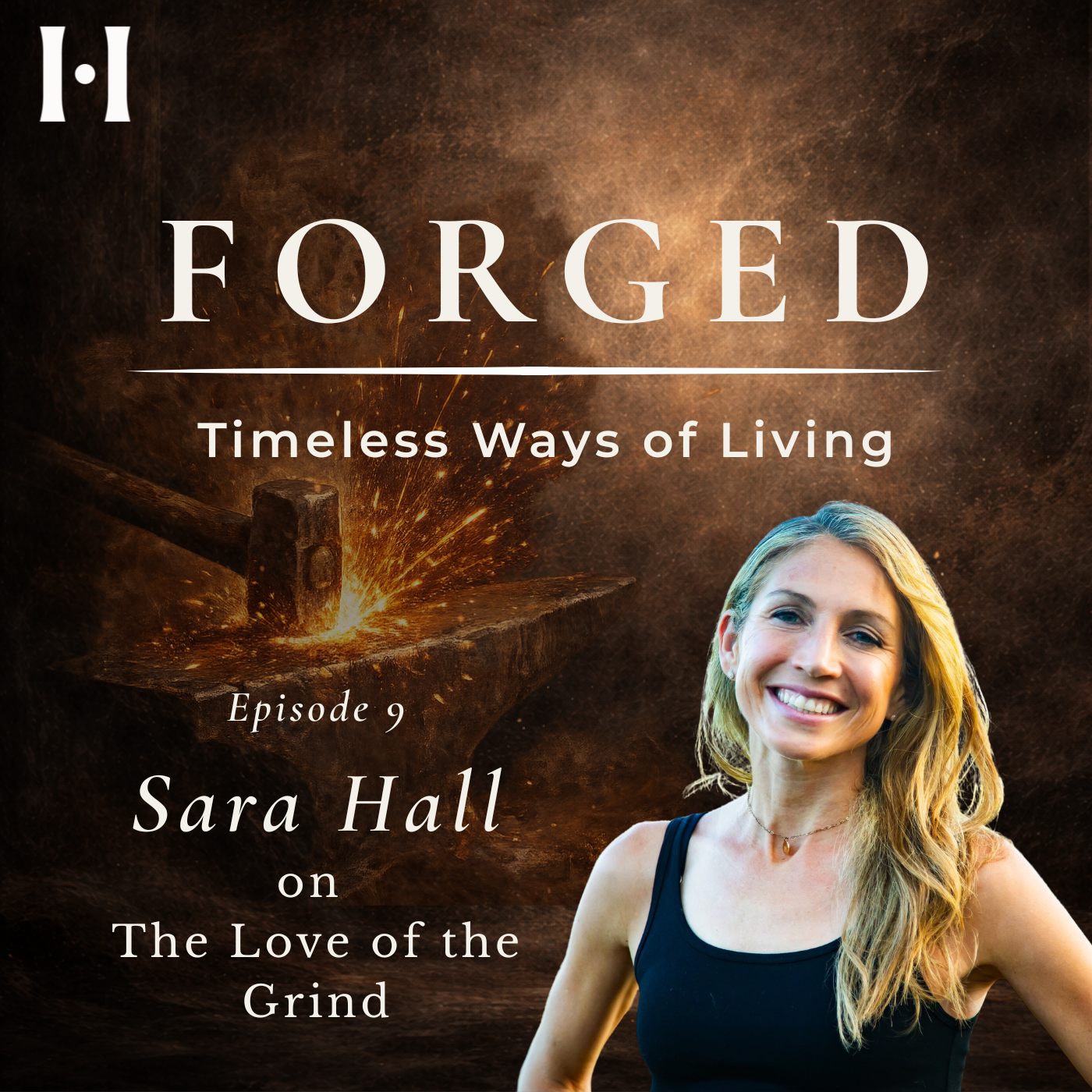
Forged: Timeless Ways of Living
Sara Hall on the Love of the Grind

What does distance running teach us about the body, failure, and the long work of becoming whole? In this episode of Forged, Brian Williams speaks with American distance running legend Sara Hall about the discipline and delight of a life spent running, competing, recovering, parenting, and learning to receive her identity from God rather than performance. On her 43rd birthday, Sara reflects on more than twenty-five years in elite running, the injuries and disappointments that reshaped her, the joy of competition when it is rightly ordered, and the deeper love that has sustained her through the grind. The conversation also turns toward family, marriage, adoption, Ethiopia, and the work Sara and Ryan Hall have pursued through the Hall Steps Foundation. Sara offers a grounded picture of vocation in motion: a life shaped by training, service, sleep, dinner around the table, and the steady grace of being loved apart from achievement.
Contributors

Guest
Sara Hall
Sara Hall is a professional runner, Christian, and author. Sara Hall has been a fixture atop American distance running for more than two decades: first as a national high school champion, then as an NCAA star at Stanford University, and later, as the only pro runner to ever win U.S. titles in the mile and the marathon. She has 10 national titles to her name and was the top American finisher at the World Athletics Championships. She is also the former half marathon national record holder, the runner-up from the 2020 London Marathon, and a two-time winner of the Mastercard New York Mini 10K. Hall attended Stanford University where she was a seven-time All-American. While at Stanford, she met her current husband and coach, Ryan Hall, who owns the American record in the men’s half marathon. The two got married in 2005 and four years later formed the Hall Steps Foundation to help fight world poverty through better health. In 2015, they adopted four sisters from Ethiopia.
Featured Links

Host
Dr. Brian Williams
Podcast Host and Contributing Writer
Brian A. Williams (DPhil, Oxon) is Dean of the Templeton Honors College, Professor of Ethics and Liberal Studies, and Co-Director of the MA in Classical Teaching at Eastern University in Philadelphia. He is the founding editor of Principia: A Journal of Classical Education, speaks internationally on classical education, and serves on several academic and educational boards, including the Classic Learning Test (CLT). Previously, he taught at Cair Paravel Latin School and the University of Oxford. Dr. Williams earned degrees in theology and Christian ethics from Regent College and the University of Oxford, and his research focuses on education and formation in the Christian Intellectual Tradition. Brian is a runner, art collector, and traveler, having visited over 40 countries, often in search of sites and cities of the ancient world. He is married to Kim, a visual artist and teacher, and has three children: Ilia, Brecon, and Maeve.
Related Resources

School-Choice Tax Credit Gets Big Boost From Treasury
Married couples can donate double, making tax break worth $3,400, not $1,700

Bessent Advances Divisive $26 Billion School Tax Credit Plan
The program, dubbed the Education Freedom Tax Credit, allows individual taxpayers to direct up to $1,700 of their annual federal tax bill to nonprofits that grant scholarships to students to pay for qualified educational expenses.

Not All ‘Classical’ Schools Are Created Equal
The most consequential differences are often the least obvious.