Christine Perrin: This is Christine Perrin, host of A Timeless Way of Living, a podcast of the Humanitas Institute that explores living patterns of virtue, craft, community, and delight and draws the classical tradition into contemporary times. Hello. This is composed and I'm Christine Perrin interviewing Agnes Howard who teaches at Christ College at Valparaiso. She also taught at Gordon College before that and teaches in the Gordon Inorvieto program. She has published two books, very important books.
I've spent a lot of time with the first. The second is forthcoming. The first, the title is Showing What Pregnancy Tells Us About Being Human, and the book that is forthcoming in 2026 is disoriented embodied life in strange times. So these titles, so wonderful, are going to especially the subtitles are going to direct our conversation today. Welcome, Agnes.
I'm so glad you're here.
Agnes Howard: Oh, Christine, thank you so much for having me. It's really delightful to talk to you like this.
Christine Perrin: We'll have to restrain ourselves. We need those, inflatable bumpers for bowling alleys in our conversation. So, would you first just give us a little bit of biographical information beyond where you teach and the books you've written?
Agnes Howard: So, where my biography, I think, starts with having been a young child in, like, third or fourth grade when I moved up to the part of the elementary school where you couldn't get anywhere in or out of the classroom, in or out of the cafeteria without walking through the library. So the understanding of my life as thrillingly lived walking through libraries, many of them public, is one way to define myself. So I grew up a nerdy child. I liked history. I went to grad school, and I got a degree in history, in US history particularly.
I love teaching undergraduates. I have been teaching, as Christine said, at Gordon and Gordon Inorvieto and Valparaiso. Also in Great Books Honors Program heavy discussion seminar format, which is a real joy. I have three children. They're all grown, and my husband and I live in Valparaiso, which is snowy outside our window this morning.
Christine Perrin: It's snowy here as well. Thank you. That that's a wonderful way for us to orient towards your own desire to write books and answer to your love of books. Since you began with that comment about libraries, can you give us a few titles, you know, of books that you've read and returned to over the years or authors, you know, minds, intellectual friends that have really kept you company? From childhood?
Or or It might be in any part of your life, really. Yeah. Any any time.
Agnes Howard: I have been deeply grateful to read Marilyn, all of Marilyn Robinson's fiction. I have not read all of her essays, and that has really been a companion through good and difficult times. As with many listeners, probably the same sorts of things, Lewis and Tolkien and children's books that I revisited, I know sometimes it's just a little seems a little iffy to say you keep revisiting children's literature, but I think it's been very important for me and very important in the lives of my children. So, many of those sorts of children's classics that one reads aloud again and again, not just Tolkien, but say, the Anne of Green Gables series or Phantom Tollbooth. Kristen Laverne's daughter as an adult.
I don't know. I have the the bad maybe the the flip side of loving to read and loving to live in libraries is forgetting too much of what you've read. So I regret that I forget too much.
Christine Perrin: Well, one of the authors you introduced me to, was Robert Wilkin. And I remember you saying about the book, this is a love book. And, indeed, it it has been for me the spirit of the early Christian church. But that's a very nice problem to have, forgetting books and getting to come back to them. I I'd like to turn to your first book.
You you've written a lot. You've published a lot of articles. You stay in touch with the books that are coming out, doing lots of reviews, and we'll have some of those available on our website. But, in particular, talk to us about showing and some of the main ideas in that book and and then the the kinds of things that got you going to write it.
Agnes Howard: Well, even before I was pregnant, when I was at grad school in at the University of Virginia, I remember one time really clearly in a bookstore seeing some book about early modern pregnancy practices. And it was shocking to me and kind of horrifying, but also really interesting because at that time I had a couple of not grad school women, but wives of grad school colleagues who were having babies. I knew some people who had babies. And I felt completely unmoored by how little I understood about this thing that made that seemed enormously important and formative. And in searching for a book at the time when I eventually got pregnant as a grad student myself, for a kind of book that said not just here's what's happening, but here's what's happening into the baby, to the body of the mother, with the mother's participation and collaboration.
I could not find anything like that. Now, I can fast forward ahead to say, not my book by itself, but the large movement in publishing, both academic and popular publishing about pregnancy and birth is tremendous in the last two or three decades. So there's great stuff to read that I wish I had had to read. But in any case, I began thinking about and thinking with women in church and with things that I was reading, thinking about the process of growing a child in the body where the experience from a woman is to have a whole additional life enclosed in the space of her body. And she was, for the period of the pregnancy, both supposed to live her ordinary life and also to respond to that quite serious task of growing the child.
You know, I have never gotten over that. It's been a long time since I've been pregnant and since I've seen other people, but I have never gotten over the astonishing, like, blowing mystery of that, that I really wanted someone to speak into my life in theological terms. What does God say to me while holding another life? What am I supposed to do toward the other life and to God? And how does the community welcome not just the new baby when the baby pops out, but this experience of coming in overlapped life to be in a community that awaits you and preexists you.
So all of that was really fascinating to me, and it was my dissatisfaction with what existed that made me work on the book. And my hope that really everyone like, my dream when talking about this is, first of all, that people don't just think of this as a thing that women, especially pregnant women or new moms or new grandmothers think about because it's short of the story of salvation, to me, I think the most interesting story in the world. Like, the birth of stars has nothing on this. Like, this is thrilling. But also, it implicates every single one of us, whether you've been pregnant or not, whether you have any intention of being pregnant or not, whether you're a man or a woman, every single human being alive has been brought to be by this process.
So I think that's also one of my correctives to thinking about this or to talking to others to try to talk them into thinking about this, is that you in this story are not the new mom first, or the pregnant woman who needs help and support or the, like, new sibling who has a new baby brother or sister. You are the baby. And the fact that all human beings were babies in this way, I think is a is a sadly overlooked fact of the way we understand ourselves. So that's really where I start, where I want other people to start.
Christine Perrin: I love that you in this story are the baby. I think it would be easy for some people to think of a book about this mystery, and the history of it to be for women. But your argument is, no. This is for humans, which is why it's in the title, because everyone comes into the world this way, and it tells us something about who we are, what our anthropology is. And how do you think a world that recognized this would behave toward, toward, you know, other people, doing it even if they themselves were not having a child or even planning to have a child?
How do you think we might orient towards that differently than we do?
Agnes Howard: Okay. So here's where I need a poet to answer that question for me. Because when I was thinking about this, and I think, I don't want to say I think best when walking or on drives or train rides. I know there's kind of cognitive theory about why our brains move better when we're actually moving. But I can remember really clearly some car rides when I was trying to think, okay, what is the metaphor for this thing that I want people to understand?
How can we compare it to something that other people know and recognize it as important? And all the things I could come up with are kind of absurd and dumb. We to answer your question directly, what should we think when we see a person about to like, we know is pregnant, showing, visibly pregnant, about to have a baby? We should look at it like we look at kind of Simone Biles jumping off the the end of a balance beam after a perfect routine. It's like that.
Or, you know, any other sports metaphors, kind of work, like an operatic voice hitting a perfect note. Like, there's this astonishing thing that happens that we have to have happen, otherwise, nobody would exist. And I I just like, it's a waste to me. I hate waste, but it's a waste to me that human beings come into existence this way, and we just don't pay attention to that thing. Like, the shared body, the things that happen to the like, the physical stuff in the woman's body to make another human being have the material for life.
That is amazing. And the fact that everybody has it happen doesn't mean it's normal and boring. I mean, it is normal, but it's not boring. It's it makes us amazing to ourselves, I think.
Christine Perrin: Amazing to ourselves. I mean, my metaphors come from more mythological terms. You know? Like, of course, I think of the ark, carrying civilization, that would be one, or, you know, some sort of important historical document or jewels that are guarded, you know, or stolen as the case may be, you know, or some piece of art like the Pieta and and what that tells us about ourselves. And you're right.
Every time you try to come up with something, it pales in comparison to the natural reality. You know, the symbolic almost can't do justice even though it's it's often the other way around. Right? The symbolic reminds us of how remarkable the natural is. You know, I'm as you talk, I'm thinking about it in a couple directions.
I mean, one is the birth dearth, you know, and and you've written articles about this. You have conducted talks about this, reviewing other books. But could you comment on the fact that people aren't choosing to do this. People aren't you know, there's a we're not gonna replace ourselves, and, governments are giving incentives for for people to have babies. You know, I think about, for instance, you know, Augustus when he wanted, to bring peace to Rome.
He employed Virgil to, write an epic, you know, about their great their great cunt civilization, and its birth. Perhaps we need, your book instead of government incentives. Or even, I'm thinking also of Marilyn Robinson's book. You know, in the book Home, there's a very sad story in a sad in a way, that the the one of the protagonists is Jack, has a child out of wedlock with a child. And, the baby of this union, dies at age three because she steps on a rusty nail and she's not vaccinated.
But the character that I we love so much, Glory, Klaus, you know, she is, says to her brother who thinks that everyone's guilt tripping him about this child. No. She enjoyed her life. We're I'm glad she was born. You know?
And this kind of exclamation of the goodness of being, I think, in that moment. What do you think about the birthdirth? What do you think about maybe it's too big of a question about the how do we communicate the wonder? But I think if anyone could answer it, it would be you.
Agnes Howard: Okay. So I I will do a couple of efforts at not answering well, but maybe we'll get further. We'll have some more raw materials for future conversations that other people could have. But, you know, the the first thing that strikes me about the birthdirth is just how mismatched the pieces are. So we are worried about it from a public perspective, like what will it do to our tax base and what will it do to our economy.
And so the offer of money could be useful. Like, people generally like kind of extra cash coming in, but I don't think anyone ever has had a baby because you're going to kind of make a couple 100 extra dollars or pay a 100 extra dollars less in taxes. Like, that's just not how people understand their own lives and certainly not the giving of life to another person. So first of all, there's this huge mismatch between what people think they're doing when they choose to have a child, and then what people think they're doing when they try to incentivize the having of children. And it's a problem that you would really prefer to not ever have to worry about, like whether there are too many babies, which until very recently used to be the more urgent feeling worry, the population boom, the population explosion, the fact that the Earth can't support.
And now the fact that we're talking about having too few babies, it seems like worrying about the other things should have given us better language, which is to say it's very difficult for a state or even a smaller community to manipulate people's decisions of those kind. So first of all that. You know, I think there are real worries about what a child would be born into. And I think I have talked to people who or talked to young prospective parents who say, effectively if the world is about to flood or incinerate, it feels wrong to bring a child into that. And I would prefer when possible to spare my children suffering.
That seems to me like a serious reservation. But as another friend of mine told me, yeah, but it's not probably your kids who are going to suffer first, which is not a callous thing to say, but a way of saying that worry might not quite be the right reason for a person in a comparatively wealthy, comfortable place not to have a child if the other reasons for having a child obtained. But then the two other big things that I'd step back and say, first of all, have to do with the great language that the Christian or Christian traditions have had about bearing children is you don't have a child because you wanna have a child. You have a child because a child is the fruit of a marital union. And a child is God's way of adding life, bringing a new human into a fruitful marital union.
So the choice to look at the child as the goal and then abstract the other pieces or instrumentalize the other pieces that you need to get to that goal, that seems to me problematic. And then the thing that was happening when you and I were having young children that I think you saw before I did, but I I think I'm better I'm less good at making patterns and more good at being troubled by other people's faulty ones. So the the faulty pattern that my motherhood encountered when I had young children was everything was supposed to be fun. And I had a like, my babies were easy babies, but I had a really hard time as a mother because of all not just, like, all the way you're tired, but all of the other physical stuff that you have to do on behalf of your children. It's good work.
It's important work. We're embodied human being. Like, that's what a human is, is a being with a body, and a mother gives a child that body. But it was hard for me even with pretty easy babies. And when I was around all these women who would always talk about how much fun it was, how cute babies were, how much fun they were having, how much more fun they should be having, how many fun toys we could have, that bothered me.
And it was in conversation with you that I understood this thing that seems to me one of the great explanations, false steps in getting us to where we are now, which is the understanding early in the twenty first century that having children was something you chose, not something that happened because as fruit of a marital union, but you chose to do because you wanted to because it was going to be fun. When it turned out either, a, not to be fun or b, not easy to slot into the other things that either were, a, more fun or b, more urgent and necessary, much of which was work, where you put the choice of a child is very difficult to discover. I don't I mean, I don't know how people do this who don't approach it from the other way. Because, you know, it could be fun, but it might not be fun.
Christine Perrin: Yes. You you did I I read some wonderful things that you said about that in your, one of your reviews about creative work. What are children for? Was that the one? No.
Baby on the fires fire escape, I think. You were reviewing that. And I, you know, I think, one of the I remember the magazine Family Fun. Do you remember that one that you could subscribe to? There's a sense in which we live in a time where you know, I mean, even this podcast is called composed, and it's about composing a life, which, you know, we have to do.
And yet, that feeling of choice, that feeling of, you know, being in a a store picking something out, seems to really beset us in areas of our life where there should be some givens. You know, some things are given and some things are made. Have you been in communities or in contact with people for whom maybe it's a new generation, maybe not, for whom this is a given that, it's a it's a natural fruit of a marriage. And what do you observe about those communities and those, those people that that live that way? What does that look like?
Agnes Howard: Yeah. I mean, the the people I've met who take it as a given are really remarkable young women, like young women whom I don't envy them because that would be the wrong way to appreciate the beautiful things they are receiving and composing. But, you know, I wish that I had had those kinds of resources and worked with those kinds of resources. The people who take it as given in some way, at least with the limited set of people I know, are also the people who are pretty good at composing. And it just may be their gifts or their self awareness or the kinds of communities that support them.
But they assume that it's good to have children, and this is what you do when you are a person in love and with a spouse and a body. But they are also really sort of both careful and joyful. Like, they are glad to have the shape of life, but then they know that life can be shaped in better and worse ways to make the fact of increase other people's bodies, more members of a household, a thing that is experienced and grown together rather than just and I think this is the other thing I was trying to say with the family fun, rather than just being decisions laid on women of choice of your enjoyment. And and this is there's a book that came out about a year and a half ago, what are children for? Anna Susserberg and Rachel Wiseman, which is a book I really like.
Like, I I don't know that everyone will really like it. It's philosophy, University of Chicago kinda social science ish. And it it deals with a demographic of people for whom parental, especially maternal ambivalence, is a real problem. Like, not is it good to have children, but should I, where people are stuck in the ambivalence. And I think part of the reason they're stuck in the ambivalence is, as you already said, the the sense that they have to make a choice.
It's all choice, and you better make the right choice. But also the way that choices have in weird fashion, in part because of improvements in kind of gender relationships and and equity with professional and educational environments, how even within that, the choice has stuck with women. So men feel like they're being really generous when they say, well, gee, you know, whatever happens in this relationship, if you want to become a mom or if you want to have kids, it's up to you. The authors in what I think is a very perceptive couple of paragraphs say, that's not helpful to assume that it's still just a woman's choice, even if all of the language around reproductive health and law at present in The United States pushes us to that language of choice, to say it's a woman's choice or whatever you want to do, honey, you know, I'll defer to you, acts as though it's not a common decision, and it ridiculously burdens women. So I I really appreciated the way they analyze that.
I don't know that I would have seen that.
Christine Perrin: Here's a sentence you wrote in that that review. Still, the package, love, commitment, parenthood, family life can be linked in ways that honor men, women, and children altogether. It seems to me that that is a remarkable progress from, the way people were talking, when we were young women. Here's another sentence. When you have a child, and this is Berg writing this, you bind your fate, how well things fare for you, with that of another being as infinitely vulnerable as you.
This means when you die, even if all goes well, you die with your own fate still unsettled up in the air. Wow. That makes me want to cry. I I wonder I there are some theologians that I am fond of. Paul Ifdokimov is one of them who talks about how, you know, the work that one generation does can accrue to the benefit of another.
And I wonder if there were, you know, sort of things suffered or things done that helped us to arrive at this place. I mean, and we're not at this place collectively, but, you know, for a book like this to be written, for sentences like that to be written, where we're thinking about the thing you just said and about this honoring of men, women, and children, and the the package of love, commitment, parenthood, family life. And also of of understanding that we undertake other people's fate, that that isn't something to escape. I I'll just narrate a short story of a student of mine who, was Kenyan, who came to The US for college. Lovely, intelligent, capable student.
She was writing beautiful essays and seeking out more support to keep writing, you know, as a central part of her education. And, she decided to go home after about a year and a half. And when I asked her about it, she said, I don't like who I'm becoming when I'm not responsible for other people. You know, at home, there are there are times when I just can't stand being responsible for other people. But when I'm here and I see the alternative, I'm concerned about who I am and and what I'm being formed or not formed to be.
Could you comment on on those things?
Agnes Howard: A lot of things. How I'll go backwards. How about so the I'm formed by the responsibilities I have to other people. You know, I think for sure we have responsibilities to other people, and I like her is it her line or your line that I can't stand? I can't stand being responsible for other people.
Christine Perrin: Well, she just said, yeah, she was hers. I mean, I I'm not quoting her exactly, but she said, I get frustrated. I get tired of it.
Agnes Howard: Right. I I sort of take for granted that this is how life is. Like, I Leah Libresco Sargent writes really beautifully about dependence. I think she's right. I think she's right that that human beings now, you know, maybe need to remind themselves of that.
I have never like, I can't remember a time in my life, except maybe for a little slice of graduate school, where I was not responsible for somebody else in some way, whether the way was proximate, immediate, physical, and my own kind of four walls or not. So I take for granted that that's how life is. It seems to me like a kind of maybe a self serving delusion or sometimes a good vacation, a separate piece of life when we are able to live in a way that because of for what other reasons we might have, it's appropriate that we not be quite so tightly pulled in those directions of obligation. You know, both of those arrangements can be good. But I think human beings just are.
You're you're always responsible for someone else, and someone else is always in some ways responsible for you. And in many cases, in The United States, we don't see this because we drive cars. We live far away from each other, and because we put into cash nexus relationships that used to not be paid out that way. So for sure, I think that's right and true. You know, I have never been far enough away from it to miss it.
But Mhmm. I I appreciate her her way of see I mean, that seems like a great maturity for a young woman to understand about herself.
Christine Perrin: Can I interrupt you there for a moment Sure? Before you go back to my list of questions? Sorry about that. So Leah's book is, the dignity of dependence, which you've reviewed in Christianity Today recently. Do you think that learning I mean, that seems the precursor almost to pregnancy, and to a culture taking on pregnancy more thoroughly than we have.
What would it look like for people just to start trying to be responsible for other people? I mean, you say it's just natural. We don't have to look for it. And yet, on the other hand, that book and your review of that book lists some really notable examples of people feeling ashamed or confessing to never really having asked people for help. To what extent do you think that might be a precursor to, you know, the hospitality of having a child within you or of hosting a child for, you know, eighteen or twenty years?
Agnes Howard: Yeah. I mean, I I should correct. I'm not saying it's only natural and it's a mistake to feel like we have to look for it. It there are all kinds of things in our present and fairly recent past that make it harder to see these things. But the fact of responsibility and dependence, Leah gets that quite well.
Starting with pregnancy, her argument basically is that it is just normal for human beings to be dependent. We start that way. We end that way. We are that way a lot of times in between. And it's it's more a falsehood to act as though independence and autonomy are the norm and dependence is the exception because we start and end, and we really require it.
And so she does place us first in pregnancy and discuss, you know, both the experience of pregnancy, of the child's dependence on the mother, again, some of the kind of ways that had I read the things that Leah wrote now thirty years ago, then my life would have been different. Because it would have been really helpful to have someone say, yeah, here's how the baby's capillaries connect to the placenta in such a way that shows us in a nice kind of teaching tool that human beings are always dependent or born this way, but there's also this space in which agency matters. So not just instinctual dependency or dependency from one beast to another, but a way that human beings can recognize something about themselves and then shape themselves acknowledging rather than resisting that fact. So for sure, pregnancy carrying another human being in your body, and again, always recognizing you were before you were able to say that thing about a child you carried, someone carried you, and someone carried every single human being in that way in order to to give life, but to experience this the necessity of receiving someone else's gift in order to live at all.
Like, I think that's that would be how I would start. You start with the gift. You start with the embodied gift, somebody else's body carrying you around. You know? And and I I think agency, volition, virtue shaping matters, but here's where there's this like, the body will do things that the body can do, And I generally dislike the language of choice and the way arguments about abortion have required us to talk about choice and volition, you know, in a way that I would prefer not to.
But we can say even if you don't like it, even if you hate the fact that being pregnant makes you feel gross and nauseated every day or miss out on other things that you might like, the fact that you let it continue and help it along should count as a kind of practice in this this exchange of dependence and responsibility. That might be distracting us from where you're going.
Christine Perrin: No. I don't think so. I mean, one of my favorite chapters in showing is the chapter on virtue that is formed and cultivated or required, actually, but also cultivated in the process of being pregnant. And I think here, you know, I was talking about my student who realized that she had been formed towards caring for others the moment that she lacked it. And and and you're saying, you know, and Leah's saying this is just what it means to be human, but whether we acknowledge that and form ourselves towards that.
So this kind of leads me I mean, I I asked that question about, you know, was there work done in the goddess goddess here? That might be too big because we're not really here. There are just some people who are are putting their finger on it. But if if you wanna tackle any part of that, I would gracious I would I'd be so grateful.
Agnes Howard: Goddess. Which which thing are where are we going? Which piece are we going to?
Christine Perrin: The piece of did did our generation or a generation before us or before us, There have been so many missteps, but, were there some steps that helped us to be able to publish a book called The Dignity of Dependence and a book like Showing?
Agnes Howard: Yeah. I mean, so so maybe it's the flip side of the you have a baby because it's your choice and you think it's going to be fun. The flip side of that could be so I interpret the you have a baby because it's your choice and it's going to be fun as a kind of outgrowth of the mommy wars of the late twentieth, early twenty first century in which women and what's like, still strikes me as a really weird, historically unfortunate puzzle. This is a misstep, not a a good forward step. Decided to pit work against motherhood in a way that just was not necessary.
Like, there are a lot of other ways to think about motherhood. There are a lot of other ways to think about work that did not require them to be pitted against each other the way they were when you and I were young women having to work through these things. And people did and said ridiculous things. And in the wake of the arguments that basically required one side in order to justify herself and her own choices to vilify the other side. So women who became professionals and sent their kids to daycare all day.
And even using that language makes clear who like, which side I'm on. So women who did that thing were made to feel as though they were cheating their children out of this great close bonding experience by women who felt like they needed to be lying on the floor playing Legos with their kids all day. And then those Lego playing women on the other side were accused of being like, wasting their lives, essentially, wasting their educations. Didn't you go to college to do something with your degree? That that sort of gesture.
Out of that, though, women had to really think why is this decision of childbearing and child rearing worth the cost of taking off time from work? And some of that led to the, I'm just doing this because this is really fun. I want to be a mom. I've always wanted to be a mom, that kind of language. But on the other side, it led to some great deliberation and some really mature, thoughtful, forward looking conversation about what we were doing when having children and raising them in communities or or regretting the loss of community and that kind of, like, the stay at home mom defense, like, my kids need me.
They need me. They only need me. They need me and not some babysitter or day care person. I think the harshness of some of those arguments led some women to be able to see, no, it's not just that you have a child because you want to or your child needs your constant time and attention. It's a call for a different kind of community and a different kind of social organization recognizing that nurture is good for all of us and ought to be supported by all of us.
So I'm not sure that's the right answer, but it's No.
Christine Perrin: That's helpful. I you're recalling to me an article that David Brooks published a number of years ago that that proclaimed that the nuclear family was dead or something to that effect. But it but what he was arguing for is that, you know, we really need help to do this work. Again, the work that's done in families is done for a culture, for a civilization, and people can't do it, with, you know, two adults and two kids or three kids or four or five, whatever the case is, but instead need extended family, you know, religious organizations, neighborhoods. And he described a time when that was sort of a matter of course that you would have that.
It wouldn't just be these two adults trying to figure everything out. So it's very interesting that, you know, we started by talking about pregnancy and the body, and now we're suddenly talking about the way we organize ourselves socially. And I hear you in some ways agreeing with him that that the conversation leads to that.
Agnes Howard: Yes. But I need to be a little queerless and say, we made the I mean, not we like, we didn't invent the nuclear family. The nuclear family predates our generation and predate not just predates the twenty first, but predates the twentieth century and, like, love lots of things about the new think I even Brooks loves a lot of things about the nuclear family, but just doesn't want it abstracted. You know, I think that the two parents and their kids against the world or to do things the way we want to does, to me, also come out of those from from the mommy war perspective, not just from whatever other sociology he's working with. It's the sense that if I'm going to be a stay at home mom and take care of my kids and act like having kids is the most important thing in the world to me.
And people don't women who, in lots of other ways, I respect and respect their decisions, say stuff like that in a way that I find very disturbing. But when you prioritize your kids in that way and you do so against the explicit Hillary Clinton. And it was this time, like, and I remember that this gave title to the it takes community, it takes a village language. That women who felt it was important to raise their kids without paid childcare opposed the it takes a village approach. And so in a way, we're receiving the side like, the return of that.
But it's also the fact that we wanna make ourselves. Like, we don't want to do the things that our parents have done and our parents have chosen for us. And if we do that, if we go move across the country because of an interesting job or because we like a different climate, we put ourselves in situations where we are we end up raising our kids alone. So it's not just that we've decided we want to have two parents make all the decisions. It's all those other things that kind of in which we make choices for other important parts of our lives without really knowing we've made them.
But because we've made preliminary ones, we've set the table in a different way.
Christine Perrin: You're you're showing us the invisible network of relationships among these subjects. There's it's a very rich map that you're making for us. It leads me to want to ask you, and I think this is related to that chapter of yours that I brought up, but, what role do you think or how do you understand? I mean, you also teach a you teach a course on women's monasticism. You you write about this.
What role do you think asceticism, or or some form of self denial plays in these kinds of decisions? And what have you learned from looking at monastic communities?
Agnes Howard: Okay. So I love monastic communities. I think they get a lot of things right. I also think the decisions that they make about their communities are difficult to imitate from the outside. So one of the questions people sometimes answer when they've had contact with monastic communities or when this program that I've taught in Orvieto often asks students, what do you want to take back with you?
And I would insist that some of these things you just can't. You can't take back with you. You can take back forms of prayer or recognition that people in another place are doing this thing. But with that, the space is really important. And I think acknowledging your physical existence has to acknowledge at some level that you can only do certain things in certain places and at certain times of year.
So what I admire about monastic communities is, first of all, a decision that the good is the good of the community and not just the good of the individual and that those things track together. So the community may be more or less fruitful for particular members, but the good of a particular member is also the good of a community. Like, if I am in a household or a religious like, a monastic community within walls or in a town where things are going well, it's better for me if things are going well and not just it's good for me to sacrifice on behalf of the community. So the goal is the, I think, the mutual goods. But very often, the individual good needs to be, you know, sometimes sacrificed and sometimes a good given up on behalf of someone else or on behalf of the community at large or in the abstract.
But also just the fact of the good the individual's good being subordinated to a good of something specific, bowed, corporate, not corporate in the business sense, but the sense of belonging to a larger body. And I'm struggling with language here because kind of as with pregnancy, so many of the words are compromised or taken over by other things. So the language of being part of something bigger than yourself, you know, yes, for sure. But if you have to say it that way, something's already gone wrong.
Christine Perrin: Maybe you need a metaphor.
Agnes Howard: A metaphor for you know, it's this thing that you're supposed kid, like, high school juniors say on their college applications, I want I'm so glad to be part of this water polo team because it made me able to be part of something bigger than myself. You know, I think this the conversations on this podcast, I think, sometimes get to fasting and feasting. And I'm ready prepared to say, I prefer feasting to fasting. I prefer the kind of glorious reward to the aesthetic discipline. But the aesthetic discipline is just necessary and part of what an individual does and what a community ought to ask individuals to do for the sake of this good thing that we're living out in the body.
Is that getting at what
Christine Perrin: you With that phrase, yes. That's very helpful. This the sake of this good thing that we're living out in the body, I think we ought to get to embodied life in strange times, and maybe we should start with feasting because, you were just describing that. And, you know, of course, there's involved in feasting is preparation. There's there's the preparation and the fulfillment.
And, of course, that's involved in pregnancy. That's involved in all the rhythms and patterns, I would say, of the good, hard, elaborate, basic things that we do. But, why don't we turn our our attention to embodied life, in particular, in relationship to feasting? You said you like feasting. How how did you learn to like feasting?
Who helped you in that? Who was hospitable towards you? And why do you like it?
Agnes Howard: There's there's too much to say on this count. Alright. I think I think the kind of oral enactment of a feast as conversations with you just are. But food and feasting go together, but are not the same. I really like food.
I think it's easy to really like food. It's strangely it's harder. Now that we have abundant food and and lots of cleverness and creativity around food, it's strangely harder to be good at just liking plain food. We may or may not have time to talk about that. But it was easy to me to enjoy other people's food and preparing food growing up.
Like, I think, almost all American women and maybe almost all people who have abundance as a problem rather than scarcity. There have been points in my life when relationship with food was complicated and I think not admirable. Like, I wish it were easier to simply choose something, eat it with joy, and go on with your day. But I think for many people and in some ways, don't even want to talk about this because I think these disclosures now take up too much space in conversations about food and disorder and the debility we feel around it. So I think here's a place where I cannot just say here's what's wrong, but here's what I think we can do that's right.
What I love about food is not just that it tastes good and nourishes the body, but it seems to me one of the of one of the proofs of the existence of God and the goodness of God in our making, that we have that God makes food exist. We take it to our bodies, and we grow and are nourished, but also it's a delight. And God asks something of us in the preparation, whether preparation means farming or cooking or assembling ingredients or cleaning up or setting the table. All of those things invite human agency and creativity into the work God has done. I think that, like, that's amazing to me that we get to partake of that and can partake of that together.
And then in a feast, we share not only food and the labor someone or or a group of others have dedicated, but we we share this thing, conversation, physical presence, often joy around this delicious thing. There's so much good going on at the same time in a good feast. And a good feast even you know, you know it has to end, but you really don't want it to end. And I think that's right. I think God wants us to see the feast in that way.
I have a friend who says, like, when he at Thanksgiving, he made a tart and something about the crust wasn't right. And he said, well, this wasn't like the crust I had when I thought about my heavenly version of the thing. Like, we we ought to be glad in the right way about the earthly version recognizing that the heavenly version leaves this a pale resemblance. But the two people I can name as really bringing me into this feast besides, of course, my mother for whom, like, cooking and eating in a good way was just also part of what you do in everyday ways, different from festival or feast day ways. I think that distinction is utterly essential.
You don't eat every day as though you're having a feast. So two women. One, Mary Ann Poland, who is in my mother's bible study group. I knew her daughter, but I kind of knew the mom better than the daughter. And she was a good cook.
Like, I'll say she was an excellent cook. But when you went to her house, you knew you were going to eat well, but you also knew the feast was not about the food. And she had this remarkable gift to make you feel when you walked in the house, to kind of enclose you in a little space of welcome and tranquility, to make you feel as though she had been longing for your presence and awaiting your arrival. And the only thing that mattered to her was that you were there at your table. I don't know how she did it.
And I assume she did it for every person who came into her house and sat at her table. But this really expressive joy that you were there with her. So that that I learned a lot about. But also her food was not fussy, completely not fussy. She did not make you feel like she had slaved over the stove or like garnished with wild flowers.
She never did that. And her husband was Irish, but she was Italian. So maybe we're we're gonna work on a theme here. The other woman, Catherine Antamaria, was a former dean at Valparaiso where I teach, and she would have these big dinner parties. She never went small.
She had this whole closet off the side of her kitchen. Like, didn't know this existed, this whole closet of special dishes for her special dinner party. So that sense that you prepare and you fit your life in order to be hospitable to other people, I saw her do that. And then when she would cook and host people, she was really good at seeding people together in ways that required people to kind of make little germs of community, especially ones that would not naturally occur. And then having done all the labor of the cooking, she would step back and require that her guests did the labor of service, both so that she could be present as host and kind of preside over the table, but also so that the guests would get together.
So you had the little pair in your cluster, the three or four people around you, and then you had the person you were paired with to, like, clear the salad and plate the entree or pour the coffee or refill water glasses. It was really an excellent way to do dinner.
Christine Perrin: Oh, I love that. It strikes me too that I'm hearing a bit of a theme. One is that you you I think you said something. You dispose your life or you you orient your life to be hospitable to others. That that's, a yet an yet a telos or, like, an orientation that, creates the realization.
And I guess one of the ways that happens is that you experience it from other people, and you like it, and you wanna perpetuate it. You said that we ought not to be feasting every day, and that that sort of ordinary time food is different from festal food. Could you say why?
Agnes Howard: So another bible study story. The I was raised Catholic, and I became really kind of starchily Protestant in college and grad school. And then when after we got married, my husband and I went to live in Germany for the first year that we were married. We were in this bible study group where when they got together, they would all crack open beers, which was the most bizarre thing to me. But, you know, I have I know now that there's the kind of like whiskey and pipe smoking bible study vibe in The United States too.
But at that time, that was not true. Like, think I think that was strange. But there was a woman in this group who would always quote in German the saying attributed to Theresa of Avila, which basically means when it's time to fast, fast, and when it's time to feast, feast. So I'll say it that way. But the way she said it is better, especially if you think about when Americans eat this bird.
So she would say, with an open beer and a kind of the light snacks that we had with our bible study, Like, don't you all know this thing? And the the layers of misunderstanding I had to work through to understand what she was trying to say have made that figure of speech stick to me more than when feasting feast, when fasting fast. So it means literally when it's time to fast, fast, when it's time to feast turkey. Fast, fast, turkey, turkey. Eat your turkey.
Eat your turkey on the day you're supposed to eat turkey.
Christine Perrin: Which Italians would not say, by the way.
Agnes Howard: Italians would not say. That's why it's it's German. So it's it's like that too, I love. I love the fact that other people understand this as, like, for a German like, a low church, free evangelical Protestant German woman to borrow from Teresa of Avila, Catholic Reformation Spanish mystic, and act like that was just the most normal thing in the world. Like, who who doesn't know that?
Stop stuffing yourself with turkey and torta every day. So I think that the key distinction is what has gone wrong with Americans' food, and I think this is more a health thing before it's a spiritual thing, but it's both, is that we think we should always have the best thing all the time. And the best thing all the time has to be accommodated to our busy schedules, our work lives, and our expanding tastes. And so we do weird things that I think nobody else in the world used to do. Now influenced by us, they're doing it.
But making all meals kind of fancy and festive and delightful, which does, number one, like a lousy thing for the environment. You know, the fact that we eat like that is bad for the earth. The fact that we expect to eat like that means we have a harder time recognizing feast as feast when you're supposed to have a feast, and it also makes all kinds of health problems that the culture of expected daily feasting makes almost unavoidable. So the like, we were the the same decades that brought the sort of lying on the floor playing with your children intensive parenting debut also brought snacks and treats all the time, like studying the day of men, especially women and children more than men. And so you'd have your 100 calorie packs so you don't feel cheated of dessert every day.
Some days, you just don't eat dessert. You just don't. Like, some days, you just eat you're you're glad for your daily bread, and it's good that you have your daily bread so that you have the feast separate or so that you can make the feast for someone else. That too.
Christine Perrin: You in in saying that, you you mentioned, the exigencies of work, and you also mentioned a little bit earlier the kind of maybe falsity of work life balance language and and the kind of language that we've evolved to talk about what portion of our life should be this and what portion of our life should be that, these sort of discrete categories. And and also, you've written this book about embodied life in in strange times. And I wonder if you could bring some of those things together for us, because we are talking a lot about the embodied life. And it, you know, one of the things you just said was if you're if you're trying to make elaborate meals and get a lot of work done, bad things result. You you can't eat that way every day and keep that pace every day.
And there's something about the festival, and the the fasting that understands that there are rhythms, seasons. There's a a kind of shape, to days. Could you say a little bit more about what, what would be other ways of thinking about work life balance, particularly for women and, particularly in light of this subject of being embodied? Why is that conversation on those terms left us exhausted, angry, pointing fingers at everyone, employers, spouses, children?
Agnes Howard: I do love pointing fingers. But, so maybe a good transition from talking just about food and feasting to talking about this work life embodied balance is to note that old book that most of us read, I think, or have been influenced by whether we read it or not, Michael Pollan's The Omnivore's Dilemma, in which he said, we literally have no idea anymore what what's good to eat and what's poisonous, what will nourish us and what will kill us. And that was his premise. I think it was 2006 or 2007. My premise in a book subtitled Embodied Life in Strange Times is basically that, that with pollen, would say not just these are the cranky musings of a person getting older or a person for whom life as it was presented in childhood turned out to be something quite different from adult life.
And, you know, every generation has that dynamic, and every generation goes through these changes. You know, sure, I think it's partially that. But I think it's also it is strange times. And like pollen saying, let's think a little bit about where food comes from and why we eat and and drink and behave in these certain ways. I want to say the way that especially women have been told to put together work that they earn money for and have status for and have a certain trajectory that by the end of their lives they will be accounted as men are accounted as having accomplished something and having a pension, like that kind of work, how that gets put together with the things you do off the pay clock, which for women conventionally has been raising taking care of a family, raising children.
So I said earlier that it seems to me bizarre and unfortunate that our history has organized those two things in opposition to each other. I think the reason that was the case was change in you know, I don't know if I'm I can get why the change in women's roles in the nineteenth century happened about the same time as the change in work being not so much like a shared household agricultural work, but sort of men go off to factory and office and women stay home. But those things happened at the same time and helped define each other. And so when women closer to our own lifetimes are trying to think of how they would do one thing or the other, it seemed as though having a meaningful career was more desirable and important in everyone's accounting, important in the accounting of keeping yourself in the way you wanted, in paying forward your education, in doing what your community needed you to do. And, you know, maybe in spiritual terms, what God expected you to do was to have work.
But at the same time, women who had conventionally been the ones to bear and take care of children also had to figure out what you were supposed to do with the kids left behind. And it was a huge cultural a huge social and cultural mistake to push women into work in the pattern of men without figuring out what you were supposed to do with all this other stuff. And even still, people have weird, just like odd tone deaf conversations about how men and women ought to put this kind of thing together. So now when you use the word seasons, Christine, I understand from reading an article recently that younger women who are favoring family, like putting the bearing of children and rearing of young children chronologically before taking up careers that they want are calling that seasons, like having your work apportioned in seasons. And, okay, that can be fine.
But some of that seems to partake of the same mommy wars errors that we lived through, which is feeling like you have to say, oh, my children are the most important thing to me or my family is my priority. I would want to say your life as called a child of God and a disciple of Christ is your chief vocation. How you put together work and and child rearing or a family having, if you do that, has a lot of permutations and acceptable combinations. But it's always a whole. And sometimes one thing will be will seem to be pitted against another.
If I could make any change, I would like to say the family should think of itself as early as possible and consistently as possible as a body. This corporate something big. Like, it's so that's why it's so ridiculous for a high school the high school water polo junior to say, I wanna find something bigger than myself. When he's grown up in a family where his mom packs his lunch every day and, like, his dad pays his car insurance. Like, you already are part of a a body organization association, bigger community, bigger than yourself.
You grew up in this environment. And if we could begin to see the work of child rearing as the work of mother and father in a way that obligates them both. And I want to stay away from, like, the language that parses out sort of duties and schedules that might have to be necessary, but I wouldn't want to start there. But mother and father both are raising children because we live in a time when both mother and father are both expected to be breadwinner and caretaker. So both of them can understand how that looks for their particular family, but both are doing both kinds of work.
And if a woman is not working for pay, she absolutely is supporting the work of the person who's working for pay. Like, she just is. So to act as though she's not is a kind of cheat and a violence to her. But also, children are not the things you do for fun or your, like, reward for yourself after you've had a couple satisfying years of career. Children are also part of the body.
So if children can understand themselves as being honored by, being understood as full fledged agents, participants in this great thing we're doing together. And I don't know how to do that. I think some people who do that successfully do that because they have external support. And this is where the it takes a village and community comes in again. If your children are the only ones who think that in their household, have to act as though they're full fledged participants, which means they have to do chores, that's not going to work.
Other people around them other people they go to school with or go to church with or the kids who live across the street also kind of have to recognize that world or it's not going to work.
Christine Perrin: That causes me and this is a bit of a pivot, but it's it's related. Our time is getting short. You and Zoe Endicott have created a substack called mom care. You've created videos, but you've also, begun to write these, articles on what it's like you I mean, we could start by saying just the fourth trimester. Right?
And what it's like to do the work of carrying a child, bearing a child, and and then moving out from that time. Then and and and we've recently begun to call it the fourth trimester, that that three months after birth. Could you talk a little bit about the way in which, you know, you're talking about, again, this sort of communal both within the family, the we, but the we outside the family as well that that, gives the family its sense of purpose and normalcy in some in the normalcy of contribution. How is mom care seeking to, create momentum in that respect? Tell us about that a little bit.
Agnes Howard: Yeah. Thank you for asking. This is so exciting, and I love the work that Zoe does with this. The collaboration is aimed to do both of the things you named. First of all, the support of the mom herself, but also the encouragement to all of the people around her before, during, and after the time she's bearing a child to recognize this time as one that's important to them and important to them so that they can support her in doing this thing.
And the thing is the work of take bearing and caring for a young child is in some ways particular to her. She only can do some of this work. Like, you don't, when pregnant, kind of hand off the child for shifts to the other gestator. Like, you know, and I'm so glad it doesn't work that way. And I know some people don't like being pregnant, and some people wish they could be pregnant and can't.
And I I feel all of those things. So I don't want this to sound like I am acting as though this is the one particular task human beings can do on behalf of nurture and birth. But being pregnant puts a kind of burden on the body and also allows a certain opportunity for growth and discipline and virtue and delight. So that's true. But it's wrong for the woman and wrong for the community for her to go through that as though it's only her little special project.
And what I would like to do from the material that I contribute is to help give a grounding, a kind of historical and cultural grounding of why it should be normal. And Zoe is so perceptive with a lot of the specific practical relational things that other people can do in order to support the woman, but in some ways participate in this thing that begs their participation. You're not just doing a favor to the mom when you go hold the baby or when you make a healthy meal so that the nursing mother has enough nourishment to do the thing she has to do. You're participating in this great thing that number one, we all are involved in. And number two, we have this great opportunity when we're close to a person who's having a baby or has had a baby to participate in this thing.
And what I wish and what mom care, I think, is trying to do is to normalize the understanding of fourth trimester, which I'm so glad you named it that. Because when I was writing showing a woman I was working with who was helping edit, marked that line and asked, is this a typo? Like, do you mean something else? Is this like, is this a what is third trimester? Who now has children of her own, and I think long before that understood what I was saying.
But the fact that this this seems mysterious, and we have all kinds of dumb social and cultural reasons why it seems mysterious, like the fact that when a woman goes back for her six week check-in, what she wants to hear the doctor or midwife say to her is, wow. Your body has snapped right back as though nothing has happened. But this enormous, earth shifting, life changing thing for not just the woman and the baby, but this whole other community has happened. You don't want it to go back to the way it was before. You want the woman in the community with the child to enter this great new period.
And she ought to have help. I don't want to she does need help. But again, this too, it's really hard to find the right language. She doesn't need help like she's like, these sort of nineteenth century, oh, poor me. Like, I am wasting away or a kind of whiny kind of need.
She needs help because she's done a hard and important work and deserves help for that reason.
Christine Perrin: You know, the word that is, suggesting itself to me of what you said is participation. Participation in this great, mystery, in this, wonder, in this work. And I as we sort of round the end of our time together, I I I wanna I wanna turn that into a relief. You know? I I feel that so much of what you've been saying is it's a privilege to participate.
And how do we how do we orient our lives such that we know that? What does it look like as a as a parent? What does it look like as a friend? What does it look like as people part of communities to be a participant? Theologically, I think that's really important too.
You know, this fiat of the mother of God to say yes. And the fact that she she had to that was a contribution that was essential and that meant participation. I I think I I really also wanna commend you because these ideas that matter so much to you that you've thought about for decades, really, written books about, but then you decided to create small pockets, I don't wanna say institutions, but that would give it a a reality in the world like mom care, like the summits on womanhood that you've led. And I I think that it's also a a sort of precis for us of the fact that you can, you know, you can be a reader, you can be a thinker, you can be a doer, that these these domains ought not to be so separate from each other. And I wonder if you would attribute you know, I wonder what you would attribute that knowledge or that desire, or instinct to.
Has motherhood helped you to see those things as interconnected?
Agnes Howard: Well, yes. Yes. I thought you're you're going to ask me about Italy, is the place where I also feel like this I I'm just joking. Motherhood certainly has made me see these things as connected. I I I you know, there's a lot of suffering that human beings go through, and the suffering I have had is comparatively mild when I look out of my window.
But it's so amazing that we have the world that we have and that we're in it. And the invitation to do this with the other people, like, to watch a young child come to language and to participate in that, like, that it's I mean, how much money do you want to sell tickets for to be able to witness that thing? It's or learning how to smell the scent of a flower or to taste something or when a child reads something, when someone meets your children and sees you and them together. And when you can do that with other people, I think there's a lot of, again, you don't have to be a mother to be part of a community like this. You don't have to be a mother to participate.
You don't have to be in a family to participate in this way. But it's one of the ways I think we have an invitation to this, to to respond with the doing.
Christine Perrin: Agnes Howard, thank you so much. It was a great pleasure to talk to you and to listen to you, and, I'm so grateful for your time and the work that you've done over so many years out of your loves.
Agnes Howard: Oh, thank you so much. It's been a great privilege.
Christine Perrin: You've been listening to Composed with Christine Perrin, a podcast of the Humanitas Institute about composing well lived lives of virtue, craft, community, and delight.
Composed: Timeless Ways of Living
Bearing Life, Bearing one Another
In this thoughtful episode, Christine sits down with writer and educator Agnes Howard for a rich conversation about motherhood, community, and what it means to share in the human experience. Together, they reflect on the deeper significance of pregnancy, the cultural pressures surrounding work and family life, and the beauty of living in meaningful connection with others. With warmth and insight, Howard invites listeners to reconsider familiar assumptions and to see everyday life as something both communal and deeply significant.
Contributors
Guest
Agnes Howard
Agnes Howard is an American Historian, mother, teacher, and writer. She is author of Showing: What Pregnancy Tells Us about Being Human (Eerdmans, 2020) and the forthcoming, Disoriented: Embodied Life in Strange Times (Cascade, 2026). Here and on a Substack called Momcare she discusses the culture of maternity and family life. For more of Agnes Howard's thoughts, follow these links:
Host
Christine Perrin
Podcast Host and Contributing Writer
Christine Perrin is a literature professor, writer, poet, and podcast host. After teaching literature full-time at Messiah University for almost 20 years, Christine arranges her time to write, teach in Italy, and host the Composed Podcast. Christine is a graduate of Johns Hopkins University (BA in Writing Seminars) and the University of Maryland (MFA in Poetry).
Related Resources
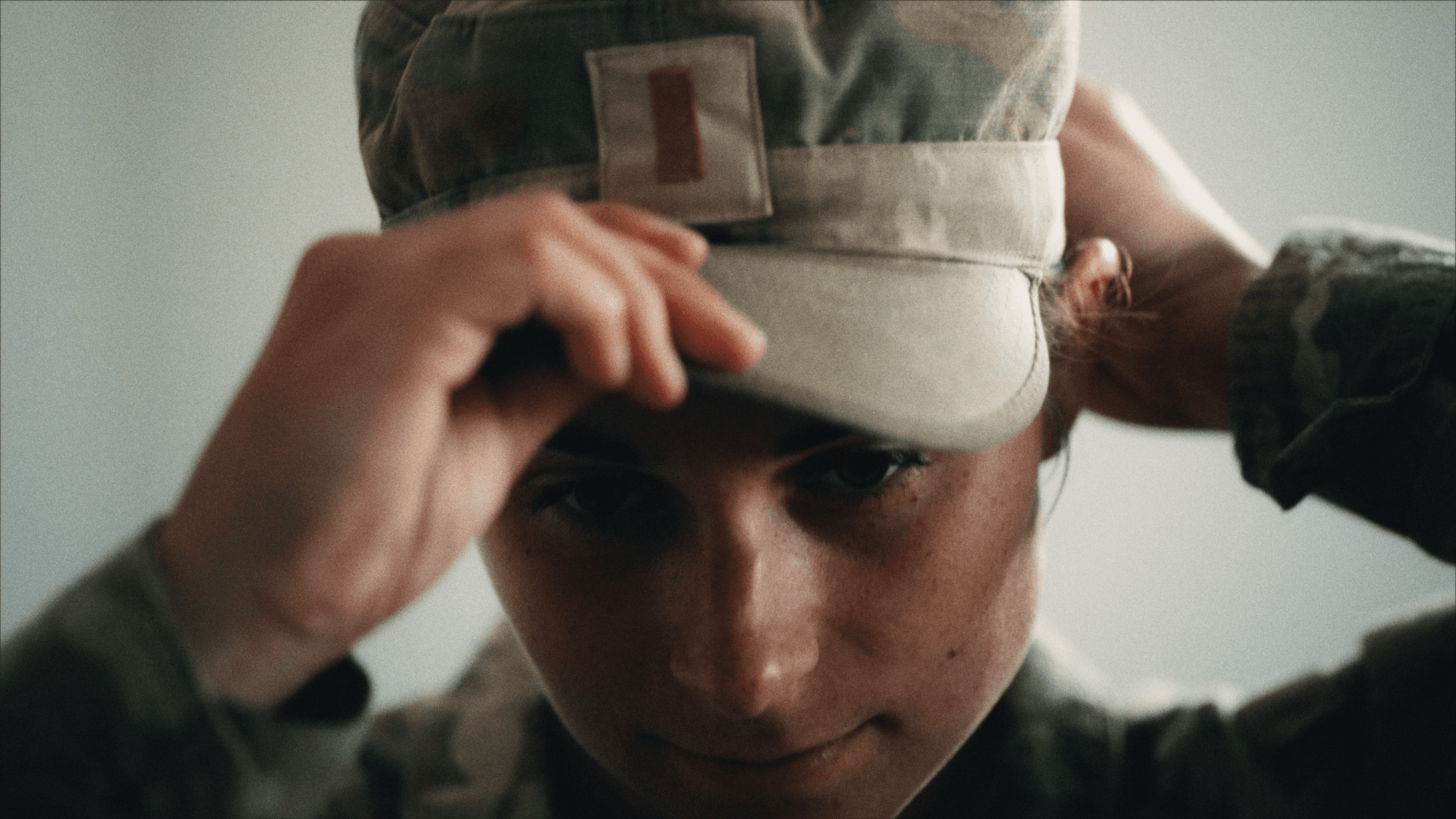
Grit, Loyalty, and Poetry: How Classical Education Shaped a Future Army Leader
One day at a classical school changed the course of her life.
In seventh grade, Sarah spent a single day shadowing at Jackson Hole Classical Academy. She says she learned more that day than in the seven years of school before it.
What followed was an education in great books, Latin, and poetry learned by heart, including Rudyard Kipling's "If-" Years later, when Sarah arrived at West Point to train as an Army officer, she found that same poem on the walls of the barracks.
Today, Sarah is a West Point graduate preparing to lead a platoon of soldiers. Her story shows what classical education is for: forming young people who know what's right, do what's right, and give of themselves in service to others.

Toward a Renaissance of American Jewish Education
n his commentary on the Talmud — a body of Jewish learning that represents one of the greatest models of cultural preservation in the history of mankind — the medieval philosopher Moses Maimonides pointed to the rabbinic idea that "the world is sustained only by the breath of schoolchildren." His insight is a deep one: that the fate of every civilization depends, over the long term, on the work of perpetuation and transmission.

President Trump Champions Educational Freedom — Putting Students and Parents First
"Today, President Donald J. Trump welcomes students, parents, and education advocates to the White House to celebrate the start of a new school year. Under President Trump’s and Secretary of Education Linda McMahon’s leadership, this Administration has delivered an unparalleled record of expanding educational freedom, restoring parental rights, returning power to the states, and putting American students first."