From Knowledge to Wisdom: Reclaiming the Scientific Human
Details coming soon.
%20(1)-1400x788_CtAVe.png)
July 08, 2026
Details coming soon.
July 08, 2026
%20(1)-1400x788_ZxYBLl.png)
From Knowledge to Wisdom: Reclaiming the Scientific Human
Subscribe to receive weekly insights from John D. Mays on classical education, thoughtful parenting, and the formation of virtue—delivered directly to your inbox.
Read on SubstackTo describe the Scientific Human, we must begin with the Human, that is, what God intends humans to be, as understood within the realm of classical education. Classically, a well-functioning human consistently exhibits wisdom and virtue; developing these is the goal of classical education. Biblically, a godly human lives according to the two greatest commandments, as articulated by our Lord: First, love God with all your heart, soul, mind, and strength, and second, love your neighbor as yourself.
It is crucial to notice that Christ articulates both the two great commandments in terms of love. As the first epistle of John tells us—twice—God is love. This truth reveals a great deal about God, us, our purpose, and all of creation. The overflow of God’s love is why the creation exists. And the reason we are here in creation is to love. Loving is hard; in fact, it is exactly opposite our fallen, selfish inclinations. So, one could say that our reason for being here in the creation is to learn how to love. If we apply this to every circumstance we find ourselves in—quarrels with spouses or children, impatience in traffic, the discovery of a need that we have the means to address, inordinate desire for the things of this world, the temptation to drink too much, and so on—we will find ourselves growing in grace and becoming every day more like Jesus Christ.
When we consider the Scientific Human in particular, we are considering a person who is called to a life of love and the consistent exercise of wisdom and virtue. All these apply when we consider engaging in science. Despite what popular secular or materialistic definitions might say about science, I argue that engaging in science does not mean leaving your faith at the door. In fact, today scientists find themselves face to face with a growing assortment of hard questions with no answers, questions that make much more sense within the framework of Christian belief. Q: How could consciousness evolve? A: It didn’t; consciousness entered creation via the Logos, Christ, the instrument of creation. Q: How can homeostasis operate autonomously in organisms to keep all their physical parameters inside life-sustaining limits? A: While all organisms do this, they don’t do it autonomously. The life of the Logos sustains every living thing. Q: Why do we seek meaning if the quantum world is nothing but chance events? A: The fact that we all seek meaning indicates that the apparent randomness of the quantum world is not all that is going on. Scientists have learned a lot about the quantum world, but they have not found any subtleties explaining God’s action there, and they won’t.
Each of these questions demonstrates how Christian faith lifts routine scientific questions out of the meaningless mire of our nihilistic times and contextualizes them properly.
A good Scientific Human is a person seeking to live a life characterized by love, exhibiting wisdom and virtue, and bringing these to the study of creation—the overflow of God’s love. To add two more questions to the list above, one might ask: Where do we draw the line between things science has given us to power to do (a technical issue) and things we ought not do (a moral issue)?, and, How do we prioritize and manage our scientific research goals, funds, and personnel? Apart from a well-informed faith in the Creator, neither science nor politics can speak effectively to these questions. And in contemporary culture, making money and maintaining power are often the only factors that motivate decision making. Perhaps instead of developing new technologies that further exploit the earth, we are in a time when it would be wiser to invest in healing the earth and the communities (human and nonhuman) that have been harmed by contemporary industrial technologies and practices.
Classically trained Christians are people who seek first to love God and neighbor and who have the wisdom and virtue to do so effectively in contemporary culture. Their decisions and priorities are oriented toward realizing the Kingdom of God in the world rather than making money and maintaining power, and their classical training enables them to see the many factors that should be brought to bear on decision-making, factors such as the limits of ecosystems and the potential for unknown harmful side-effects, as well as acting justly, showing mercy, caring for the needy, and caring for the earth.
Uniquely among the many fields of human endeavor, over the past few hundred years, scientific knowledge has given us colossal powers for healing and for destruction. Christians manifesting wisdom and virtue have always been needed in our world for promoting decisions and practices aligned with the Kingdom of God. Today, they are needed as never before.
John Mays is an an engineer, physicist, educator, author, and founder of the Novare Science Curriculum. He speaks frequently about science and science pedagogy across the United States.
%20(1)-1400x788_Z1VMAEt.png)
Contributing Writer
John Mays is and author and the founder of Novare Science and Centripetal Science curriculum.
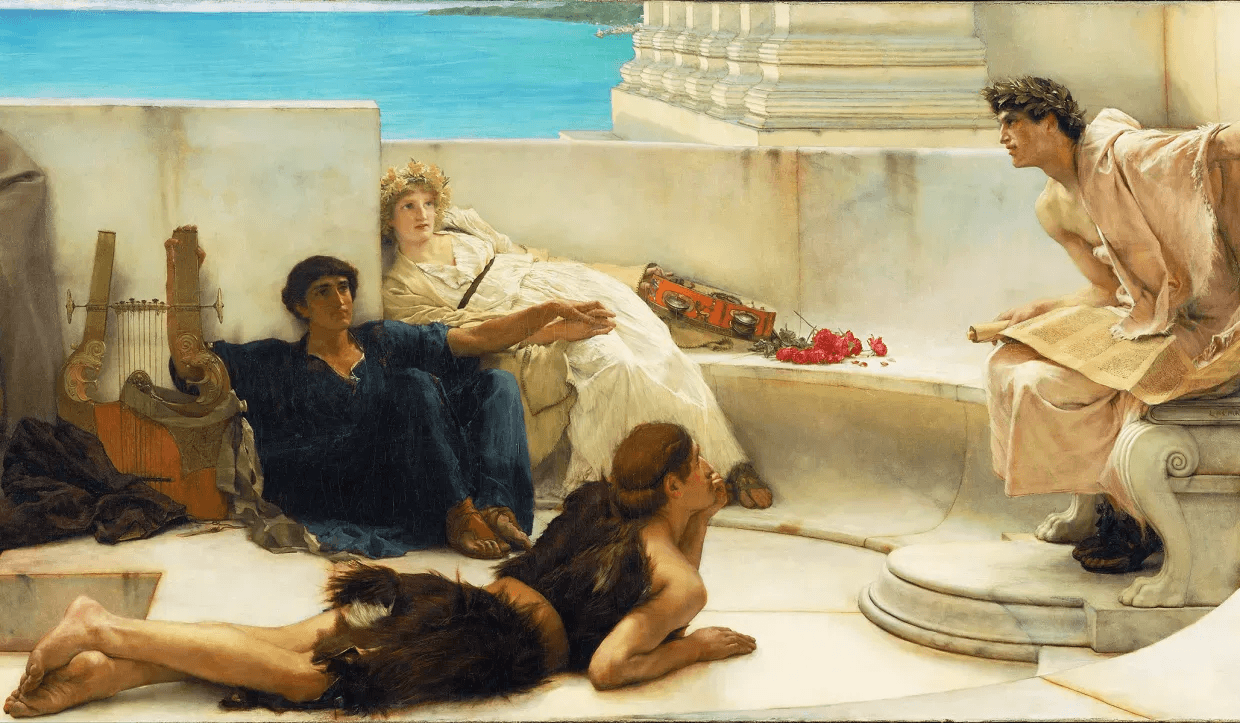
How a Latin grammar lesson can be the key to undying wisdom
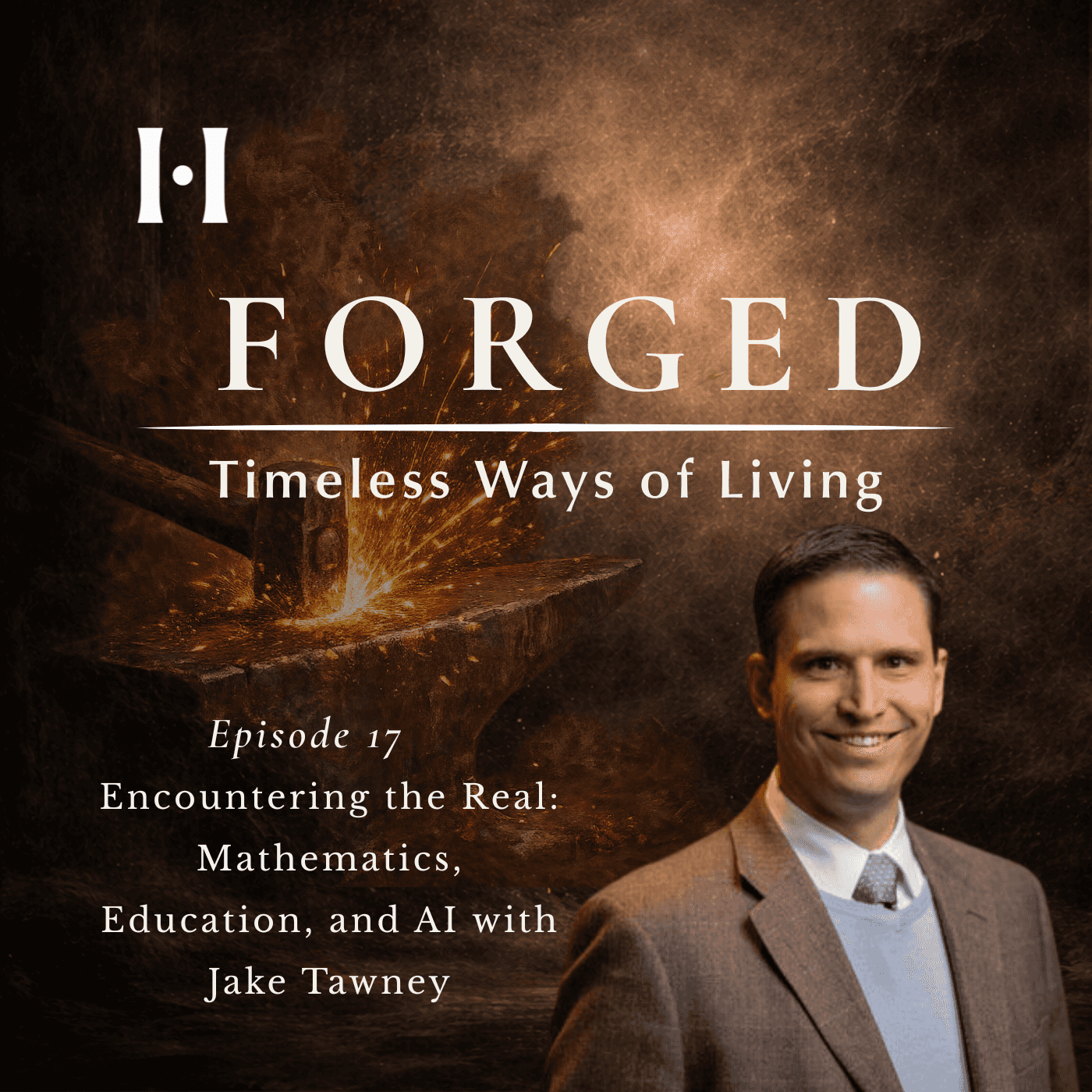
What if mathematics is not merely a tool for solving problems, but a way of encountering reality? In this episode of Forged, Brian Williams talks with mathematician and educator Jake Tawney about the beauty of number and shape, why wonder belongs at the heart of education, and what we risk losing when technology begins doing our thinking for us. From Euclid and fractals to calculators and artificial intelligence, Jake makes the case that education should begin with real things worth knowing and loving. Their conversation ultimately turns toward a larger question: What habits, practices, and encounters help us become more fully human? Jake and Brian explore why mathematics has so often been reduced to computation, how teachers can invite students into genuine wonder, and why AI raises deeper questions than efficiency alone. Jake also reflects on the practices that have shaped his own life as a husband and father, including prayer, cooking, wine, reading aloud, and the conviction that our first calling is to give ourselves for the good of others. Books & Resources Mentioned Another Sort of Mathematics: Selected Proofs Necessary to Acquire a True Education in Mathematics by Jake Tawney Euclid’s Elements A Mathematician’s Lament by Paul Lockhart The Lion, the Witch and the Wardrobe by C. S. Lewis Gaudium et Spes (Pastoral Constitution on the Church in the Modern World), especially paragraphs 22 and 24
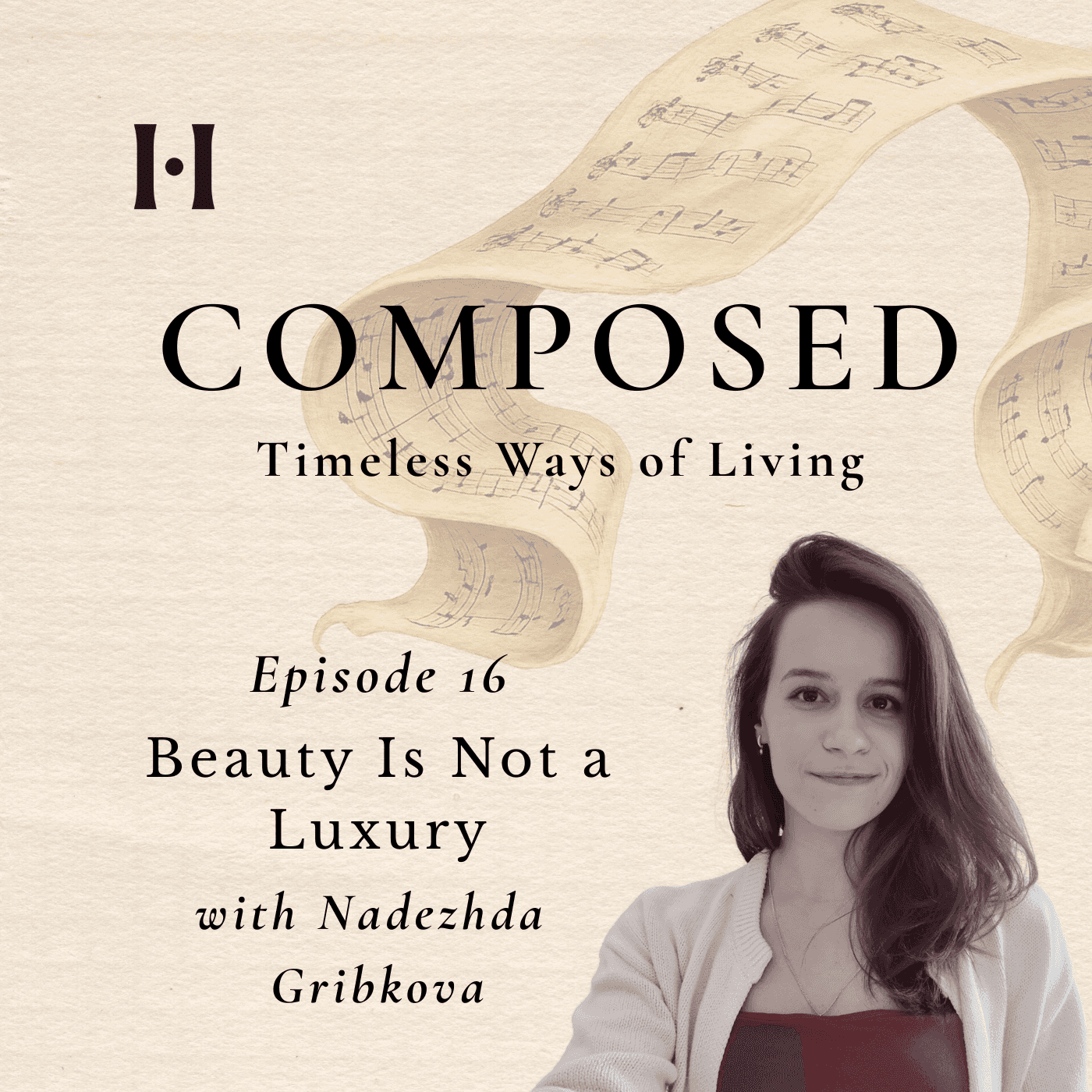
What we attend to quietly shapes the people we become. In this episode of Composed, Christine Perrin speaks with Nadezhda Gribkova about beauty-first education, the patient work of looking, and the relationships that make genuine learning possible. Drawing on Dostoevsky, Rowan Williams, Jane Jacobs, sacred icons, and her own experiences as a student and teacher, Nadezhda explores why formation cannot be reduced to transferring information. Her own education, as a fifteen year old in a new country, significantly shaped her life. Her teachers, she explains, took her seriously by tackling difficult books in conversation and asking good questions toward the person she would be but was not yet. She offers simple practices for recovering attention, including memorizing poetry, observing art without rushing to interpret it, and returning to the patterns that remind us what is true. Their conversation invites parents and educators to consider how beauty can deepen family culture, strengthen human connection, and orient an ordinary life toward flourishing. At the heart of the conversation is a hopeful claim: beautiful things are not luxuries reserved for experts. They are gifts that can ground us, enlarge our vision, and help us remember how to live.