The Lost Art of Handwriting–and Why It Still Matters
Writing by hand trains focus—we pause before putting words on paper, and sometimes that pause is where real insights begin.

November 26, 2025
Writing by hand trains focus—we pause before putting words on paper, and sometimes that pause is where real insights begin.
November 26, 2025

The Lost Art of Handwriting–and Why It Still Matters
The Epoch Times • Ian Kane
This piece reflects on a forgotten stack of handwritten letters and uses that moment to remind us why handwriting still matters. Ian Kane encounters an old family note—its cursive lines full of rhythm and personality—and realizes how deeply the physical act of writing slows us down, invites reflection, and preserves a kind of presence that digital communication rarely matches. The story becomes a small meditation on memory, attention, and the human desire to leave something lasting behind, suggesting that handwriting isn’t just an old habit but a formative practice worth keeping.

The Epoch Times

One day at a classical school changed the course of her life.
In seventh grade, Sarah spent a single day shadowing at Jackson Hole Classical Academy. She says she learned more that day than in the seven years of school before it.
What followed was an education in great books, Latin, and poetry learned by heart, including Rudyard Kipling's "If-" Years later, when Sarah arrived at West Point to train as an Army officer, she found that same poem on the walls of the barracks.
Today, Sarah is a West Point graduate preparing to lead a platoon of soldiers. Her story shows what classical education is for: forming young people who know what's right, do what's right, and give of themselves in service to others.
_ZjunIz.png)
What if a flourishing family life depends less on doing more and more on recovering rhythms of work, rest, attention, and belonging? Christine Perrin talks with Dr. Kerry Hasler-Brooks about the life she and her family have built on a small Pennsylvania farm, where agricultural seasons make limits, dependence, and renewal impossible to ignore. Their conversation explores how parents can create room for boredom, Sabbath, reading, meaningful work, and life together, even without radically rearranging their circumstances. Kerry also reflects on technology, simplicity, literature, and the formative power of returning to the same places and texts over time. For families feeling crowded by schedules and competing demands, this conversation offers a hopeful vision of choosing what to value and making space to live accordingly. Along the way, Kerry considers the sustaining power of literature, from Zora Neale Hurston to Emily Dickinson, and the way reading can help us attend more deeply to ourselves, one another, the natural world, and God. Her reflections suggest that formation often happens through ordinary practices repeated faithfully: walking the same ground, rereading a beloved poem, sharing work with children, welcoming others, and protecting stretches of time in which nothing has been planned.
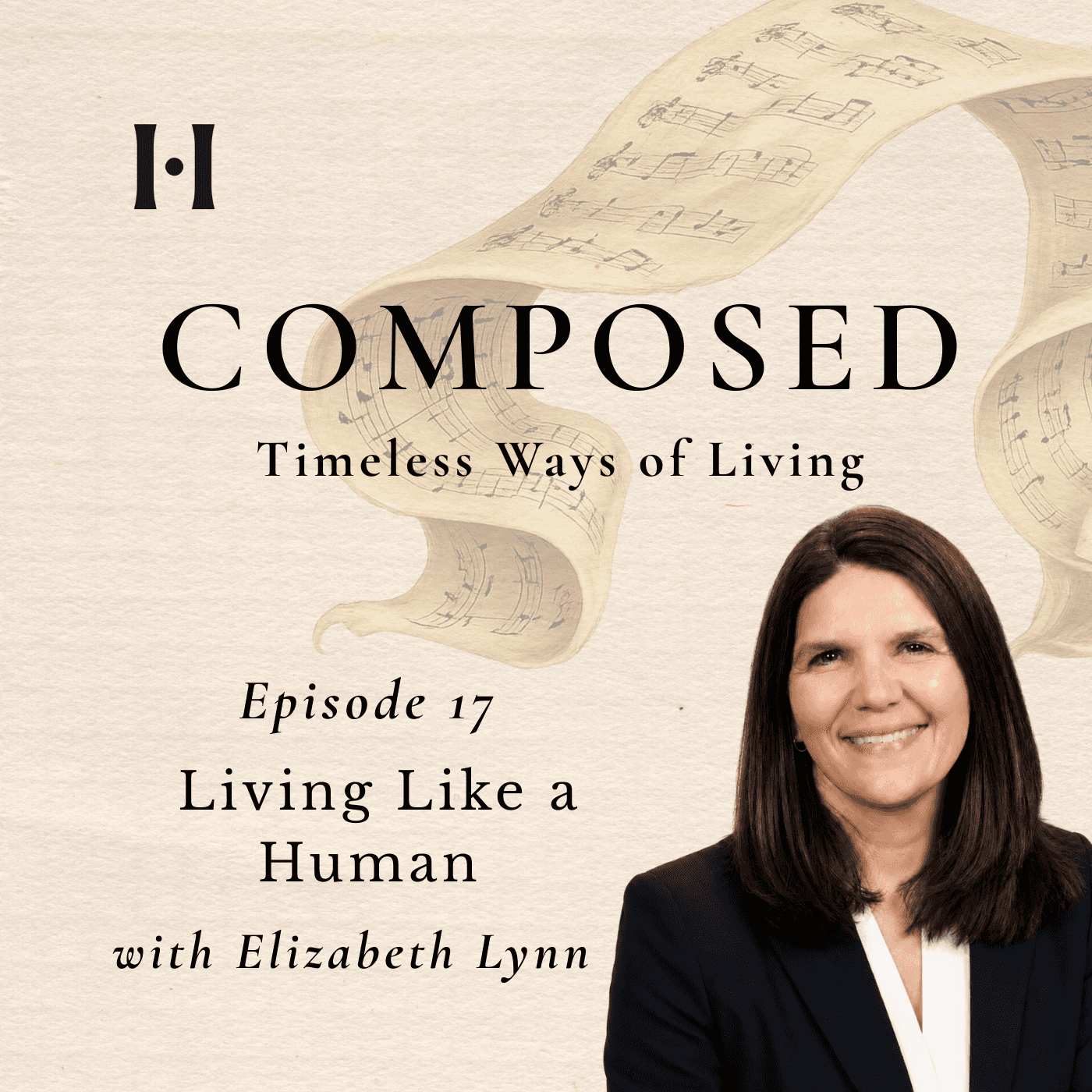
What helps a child learn, a family flourish, or a community grow strong? Elizabeth Lynn suggests that the answer often begins with things that can seem almost invisible: order, repeated rhythms, presence, attention, and the willingness to delight in one another. In conversation with Christine Perrin, Elizabeth reflects on the “liturgy” of a classroom, the surprising gift of being known by name, and why beauty and rest depend on patterns that make room for genuine learning. She also considers the challenge many families know well: how to cultivate an inner life when the tempo of the world refuses to slow down. For Elizabeth, Scripture has become a lifelong anchor, calling her again and again toward humility, stillness, gratitude, and a life attentive to God and neighbor. Their conversation offers parents and educators a hopeful picture of formation. The small practices of showing up, praying for people by name, making room for wonder, and refusing to let busyness dictate our deepest commitments can slowly shape the atmosphere of a home, classroom, and community. It is a vision closely aligned with the Humanitas Institute’s commitment to education as formation through relationship, beauty, truth, goodness, and wonder.