What is your biggest regret? Oo, 0:10 >> great question. Biggest regret. 0:18 For most of my life, the only things that I had been good at didn't produce 0:22 the sorts of rewards that people admired. 0:25 I ran weird. My arms did this. I could throw. I couldn't catch. I was a lousy 0:30 swimmer. Finally, I had found something I was good at, which was sales, that 0:33 produced a reward that people did admire, which was a W2. 0:37 I was an excellent salesperson my first month working in sales. I was on a sales 0:42 floor of 145 people. I was the number two sales guy on the floor. My first 30 0:47 days at the company, I had never made more than $1,100 in a 0:52 month when I got out of college, and I earned $8,000 after taxes my first month 0:56 working in sales. The way I was keeping score was money. I 1:00 never thought to stop and ask if that was a good way to keep score. 1:07 At the beginning of co all we salespeople got shunted off into our 1:11 houses and handed laptops and told sell. I I think that was the moment that I 1:14 came to the realization the reason that I do this is I crave the admiration of 1:19 my peers. It lost all of its allure very quickly. Like you don't feel like the 1:24 star quarterback anymore. You're just some lonely guy sitting in his living 1:27 room in his underwear selling software to some guy in Jangry Law. 1:35 I came home for what was supposed to be a 3-we vacation. I got bored on day 1:40 three. I was staying close to my old high school alma mater. I called the 1:44 principal of St. Stevens Academy and said, "Do you need substitute teachers?" 1:53 I start going through the sub plan. Things start going off the rails and I 1:57 go, I'm a sales guy. I know what to do. Things go off the rails. Get the room 2:01 back. So, I got up there, started writing on the board. Two kids got it. 2:04 Was like, awesome. You guys move on to the next thing. I'm going to be right 2:07 back with you. Come see me at lunch. I'm a first day sub. I can't tell kids to 2:10 come see me at lunch, but I'm like, we're doing this. We're doing it. One 2:14 kid stayed stuck. So then that night I went home and I spent an hour and a half 2:18 drawing and writing all this stuff and I scanned it and I emailed it to him. I 2:22 had never done an hour and a half of work that I wasn't paid for in my life. 2:27 And I realized in that moment, oh no, I'm just excited enough about this kid 2:31 getting pre-calc. I came in the next day. I came in the 2:37 day after that. I came in the day after that. 2:42 >> I learned that they had lost a teacher. He he brings me to the office. He goes, 2:45 "I have a crazy idea. You should quit your job and come work for me." I told 2:50 him, "I I I can't do that. I can't do that." The only thing in my head is 2:54 numbers. Like, go from this to this. And then I start playing with the idea. 3:01 Couldn't play golf 5 days a week. I don't really like golf very much anyway. 3:04 Couldn't drive a Mercedes. Hate my Mercedes. Couldn't live in a luxury 3:07 apartment. Don't care about my luxury apartment. I live at the office. 3:11 what improvements in my quality of life as a consequence of this income? And it 3:16 just hit me like a ton of bricks. It's like none. 3:21 It was the sudden realization, I don't have to do this anymore. I have 3:25 permission to stop. I resented myself for remaining for so 3:47 long and then started to realize that the 3:52 Lord's timing is always perfect. 3:54 >> Come in gentlemen and those years were reclaimed. 3:59 >> Sitting on the couch with hot chocolate. Classical education 4:04 is asking questions of goodness. 4:10 How good is it? How true is it? How beautiful is it? 4:15 >> He never misses the opportunity to build someone up. He uses his words to 4:20 encourage the people he interacts with down the right path. Introducing the St. 4:25 Stevens Academy commencement speaker, Mr. John Lorie. 4:30 My my biggest regret is not asking that question sooner. 4:34 Just not asking what actually matters to me. 4:40 >> My students knew I was going to propose to her before I did. I told them if I 4:44 hadn't fallen in love with you first, I never would have fallen in love with my 4:47 wife. 4:51 >> I don't think you found your place when you found what you're good at. I think 4:56 you found your place when you find yourself surrounded with the kind of 5:01 people that you want to call old friends in 30 years. 5:03 >> That is literally the line. 5:06 >> I love you. 5:08 >> As you sojourn through this world, you will be asked to do something that seems 5:13 beyond you. You will find that God's grace and your own tenacity are enough. 5:20 A life well-lived is anchored in five or six extraordinary days. You never know 5:28 when the next one is tomorrow.
Finding Purpose in the Classroom
John Laurie, a former top salesman, quit his lucrative sales career to become a teacher after finding unexpected fulfillment substitute teaching and discovering that true purpose comes from meaningful relationships rather than money or admiration.
Related Resources
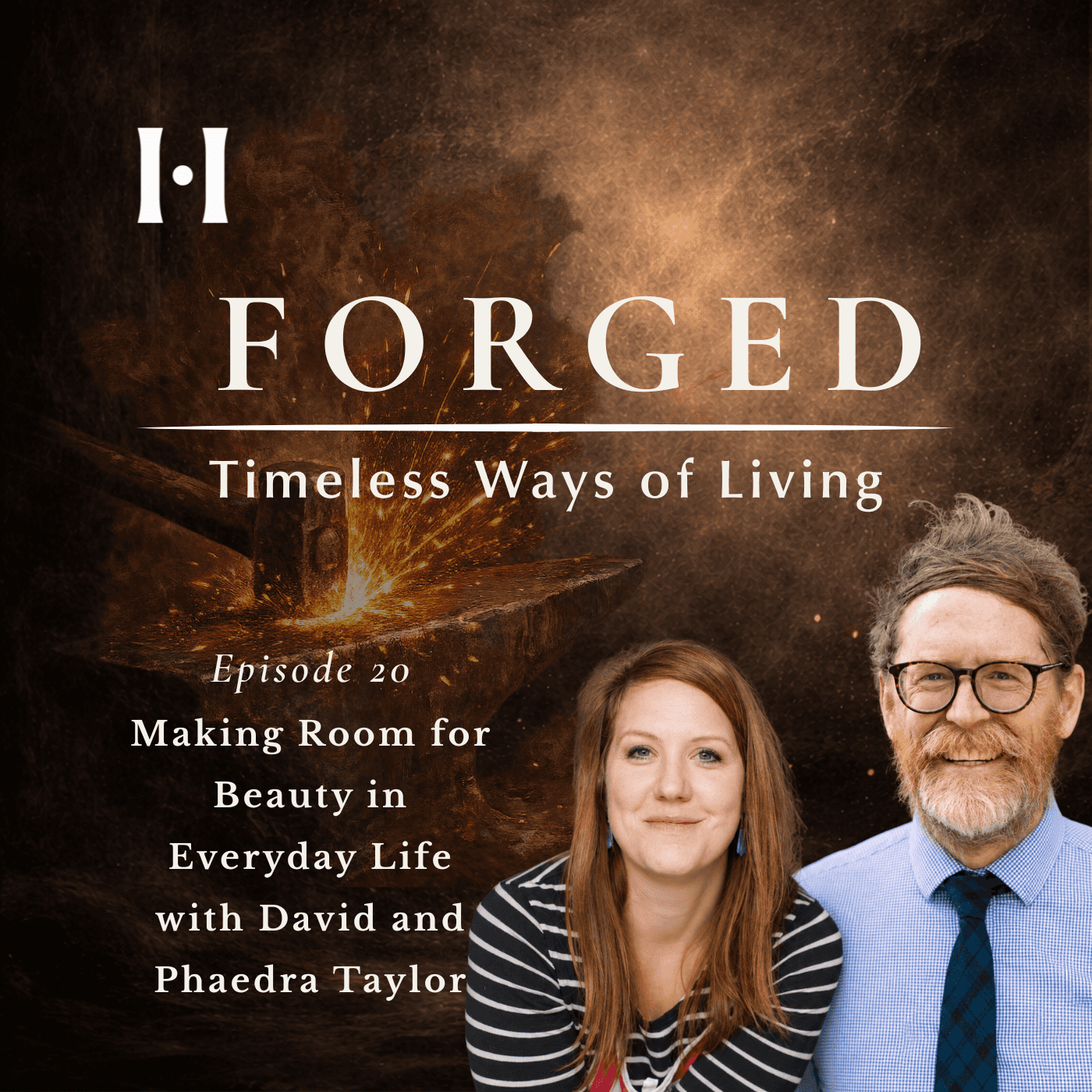
Making Room for Beauty in Everyday Life with David and Phaedra Taylor
What would change if we treated every part of our lives as worthy of prayer? And how might we learn to notice the beauty of the world when so much of modern life competes for our attention? On this episode of Forged, Brian Williams welcomes David and Phaedra Taylor for a conversation about prayer, art, family, and the habits that shape a meaningful life. They discuss their collaborative book Prayers for the Pilgrimage, the importance of making room for beauty in our homes, and the small decisions that help families resist the pull of digital distraction. Drawing on their experiences as artists, parents, and stewards of twenty-one acres of Texas prairie, the Taylors offer a thoughtful vision for living with greater attention, patience, and purpose. Along the way, David reflects on why artists are essential to human flourishing, while Phaedra shares what painting, motherhood, and restoring the land have taught her about creativity, limitation, and learning to let go of control.
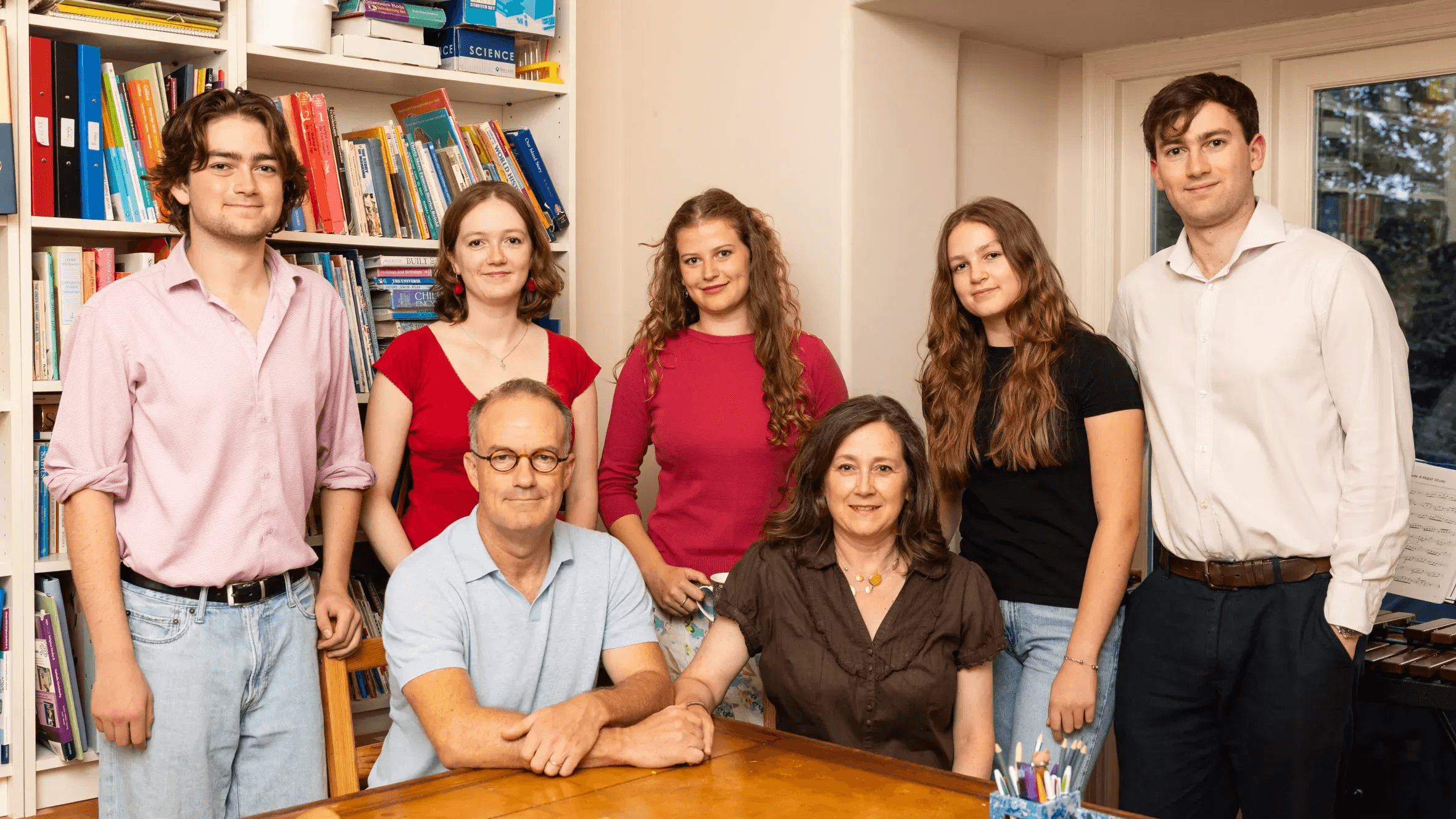
I home schooled my children till 16 — all four got into Oxbridge
This week my son Xavier will start his first term at Oxford University studying maths, my fourth child to get into Oxbridge. His older sisters, Olivia and Felicity, are Oxford graduates in classics and music respectively and his older brother, Max, has a degree in engineering from Cambridge. Two of them had choral scholarships; two had academic scholarships.
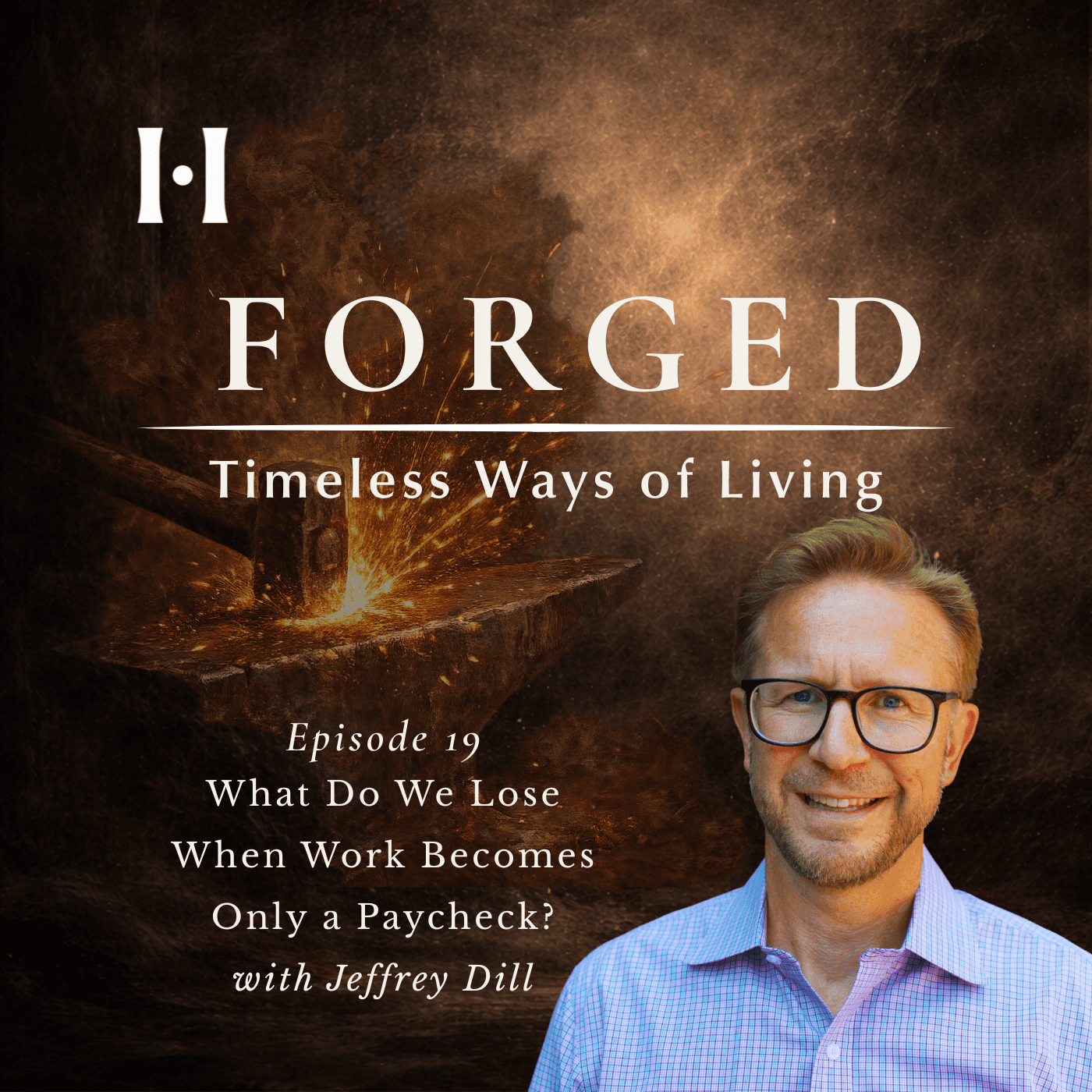
What Do We Lose When Work Becomes Only a Paycheck? with Jeffrey Dill
What happens when work becomes little more than a paycheck, food becomes something we expect to appear in a grocery store, and home becomes mostly a place of consumption? In this episode, Brian Williams speaks with sociologist, professor, and farmer Jeffrey Dill about the dignity of work, the discipline of living within limits, and what farming can teach us about family, freedom, and responsibility. Drawing on his experience with a regenerative beef and pork farm in Pennsylvania, Jeff considers what industrial efficiency gives us and what it can quietly take away: connection to land, craft, neighbor, and the formative power of labor itself. Their conversation ranges from Adam Smith and Wendell Berry to care work, fatherhood, household life, and raising young men who understand that a good life is larger than a career. Listen for a thoughtful invitation to recover work as something that forms us, not merely something that pays us. Jeff also reflects on folding laundry as a discipline, time outdoors with family as a delight, woodworking as a craft, and the love of God and neighbor as the calling that gathers the rest of life together. The conversation closes with W. H. Auden and a reminder that meaningful lives are built through ordinary acts of work, love, service, and fidelity.