Jeffrey Dill: You know, we consume a lot in our country of a lot of different kinds of things. And when you understand that, you know, there's only two tenderloins on every pig, and if it takes you three or four tenderloins to feed your whole family, you're you're moving through quite a quite a few animals. The value we place in quote work is the size of the paycheck. And what gets lost is how we understand the importance of say, you know, raising children, the importance of certain kinds of tasks that happen in the household and the management of the household.
Brian Williams: Hey folks, this is Brian Williams, host of Forged, a timeless way of living, a podcast of the Humanitas Institute about forging well lived ordinary lives of discipline, delight, craft and calling that draws wisdom from the classical tradition into contemporary times. Today, my guest is Jeff Dill. Jeff is a sociologist who teaches in the Temple and Honors College at Eastern University, but he's also sometimes known as Farmer Jeff. That's because with his brother-in-law, Jeff runs Wybrook Farm, a regenerative beef and pork farm out in beautiful Amish country near Honeybrook, Pennsylvania. Jeff and his wife, Heather, have also raised four young men, currently between the ages of 17 and 24.
And today, I'm eager to speak with him about how a former high school teacher and now university professor finds himself running a sustainable pig and cattle farm, what farming reveals about the nature of work in late modern capitalism, and the lessons he's learned from raising four boys in today's culture. So welcome to Forged, Jeff.
Jeffrey Dill: Hello, Brian. It's a pleasure and privilege to be here.
Brian Williams: It's great to have you. So let's jump right into this farm. So you've got a PhD in sociology from the University of Virginia. Very impressive working with James Davidson Hunter, a well known sociologist. But now you spend a good portion of your time helping run a sustainable pig and cattle farm out in the country.
You even drive a pickup truck. So walk us into this. Is this like a long... Well, a big longitudinal study you're doing, a protest against industrial farming, nostalgia for a childhood you never had, or or what led to you working now this Wybrook farm that you have?
Jeffrey Dill: Well, you know, it start... I don't know if I've ever told you this, Brian, but it really started in tenth grade when I took one of those, like, what are gonna be when you grow up tests. Okay. Have I told you this?
Brian Williams: I don't know. I don't think so.
Jeffrey Dill: Do tell. You know, the answer to that, like, series of questions came back with two occupations for me. One was hotel manager, and the other was farmer.
Brian Williams: And I see that you took up neither of them.
Jeffrey Dill: So, yes, the farm started really for us in just just after COVID, actually. And to be completely fair, I really don't do any of the farming. So no visions of me on a tractor out, herding cattle. But my brother-in-law, does and actually had kind of worked with a herd for, quite a few years, actually, at a different, farm in Pennsylvania. And so for a number of circumstances, he and I started talking about the possibility of moving this herd to a closer location.
And it was right at the time... I don't know if you recall this, but during COVID, some of the early COVID outbreaks were actually in a handful of slaughterhouses and meat processing facilities. And so there was a bit of a logjam in the sort of supply chain. And so there was shortages of meat, and so we began sort of thinking that through and thinking through the fragility really of the food system. And so the initial dream was to do farming, but also do on farm processing.
And so there's... It could be a kind of vertical integration for supplying local consumers with local meat.
Brian Williams: Okay. Just back up. What does on farm processing mean?
Jeffrey Dill: Yeah. So that would have been the doing the actual butchering right on on the farm itself, which doesn't often happen.
Brian Williams: And why not? Why does that matter?
Jeffrey Dill: Well, there's a lot of reasons. It's much more efficient to do the processing at a huge scale. And so the actual craft of butchering is what we were interested in. And and we started that way, actually. Neither my brother-in-law nor I did did the butchering, but we're able to employ a very skilled butcher who then trained another.
But that that, you know, it... That particular piece of the actual enterprise is quite challenging. It's labor intensive and slow doing it the way that we did. And consequently, means relatively inefficient. And so eventually, through a series of circumstances, both those butchers needed to move on to other things, and it just became too challenging for us to continue to train new ones with the craft.
So all that to say, the origins of the farm kinda came out of this vision of food supply chain fragility out of COVID and the desire to try to provide local meat to a local economy.
Brian Williams: Okay. So... But what was behind that even? Because why were you interested in food chain fragility and supplying local meat? I mean, people weren't going hungry in the area, so it wasn't meeting that kind of a need.
But what was it that piqued your interest to get into this?
Jeffrey Dill: So my, yeah, my interest in this was... Is probably more academic than it is, say, purely agricultural. Because the academic questions, as as you know, I teach a seminar here on modernity. And so, you know, part of the the the story of the emergence of modern culture is, especially in the economic sphere, the division of labor. And something like, the...
If I can start with a story from Adam Smith's Wealth of Nations. Sure. He he tells a fascinating... This is written in 1776. Tells a fascinating story about the kind of emerging capitalist economy about...
It's kind of a famous story about a pin maker. And so he tells the story about this sort of tradesman pin maker who knows the craft, works very slowly and methodically, but makes a wonderful pin on his own in his little pin shop. And if he's working well, maybe with an apprentice, he might make one to two, maybe up to 10 pins in a day. And the story that Smith tells in Wealth of Nations is that he observes a... Essentially a factory that has divided that process of pin making up into 10 different steps.
And the efficiency that they gain is remarkable. And so rather than one to 10 pins in a day, the factory with 10 employees could make up to 40,000 is what's is what Smith notices. So that kind of efficiency is is what gets gained in the division of labor as the modern economy emerges.
Brian Williams: And then what gets lost?
Jeffrey Dill: So lots of things get lost for the sake of efficiency. So what gets gained is we have a lot more, in this case, pins. Right? So we have an abundance of a product. Costs go way down, so it's much stronger for consumers because it's cheaper.
But it changes the nature of labor for the one craftsman to the factory worker. Mark says some things to say about the way in which that that craft gets alienated. So the worker now becomes alienated from the product itself because they're just doing the same thing over and over again. So... But all that to say in the...
This also happens in the meat industry. So so the process of raising an animal now gets divided up into various different pieces. And so one animal might make four different stops on its way to your plate because each farm can specialize in a certain segment of the husbandry of of an animal.
Brian Williams: Which would be what? I mean, what what has to take place for a cow to go from the, you know, the pasture to my to my plate?
Jeffrey Dill: Yeah. Well, so some farms specialize in in the calf cow operations or the birthing. Right? And then once that calf is weaned, it can move to a different farm that focuses on just sort of the the grazing and the feeding on pasture. And then it moves to an even a third place at least, which we often call feedlots where they're fed and fattened up and ready for the next stop, which would be the slaughter and processing.
But all all all that to say, those segments, it's it's it's like the pin factory. So the process gets divided, and we gain efficiencies because each place is focused in a very specific segment. So our farm, it's a calf cow operation. So the the calves are born on our farm and stay there their entire lives. But...
We lose efficiencies. Right? And so part of the the academic interest for me was what's the nature of this sort of segmented and divided process, and what might be lost and gained by trying to sort of reorient the... And it's, you know, it it's the the business enterprise is what's most interesting to me, and it is a challenge.
Brian Williams: Okay. And and and what way? But but but before you answer that question, what do you think has been gained in the way you're doing this at Wybrook Farm? Because you... Well, you've talked about things that have been lost.
What do you think you gain by by keeping as much of it in house on farm as you have?
Jeffrey Dill: Yeah. So I... There's there's less stress to the animal. So every time you you load animals into a trailer and cart them around, you know, all over the country. There's strain on the animal, which actually changes the quality of the meat in various ways.
So strain on the animal. So we... It's better for the animal. We think it's also better for the land in our case because of the way that my brother-in-law and our farm manager do rotational grazing, so we're moving the animals around.
Brian Williams: What does what does that mean? Because I did call this a sustainable farm, think, and a regenerative farm. What what does that mean? How do you how do you do that?
Jeffrey Dill: So moving cattle either daily or every couple days to different areas of a pasture so that they're eating and grazing different grasses in different areas of of a pasture, which enables the grasses to regrow over time. So you can graze an area, move cattle to a different area, move them around from pasture to pasture, give that that area that was just grazed time to recover, which through the miracles of photosynthesis creates... You know, stimulates growth in the grass, which stimulates movement in the roots, which actually continues to build soil. So it's it's better for the development of the soil, which is good for storm water retention and a whole bunch of other things that we've lost as we, you know, change farmland into developments and and and other things. So it's good...
We think it's good for the animal, good for the land. And ultimately, we think it's good for the consumer because that... You know, our our meat, the product that that you may purchase and get... Gets to your plate, stays quite local. Right?
So it's... You know, travels no more than a 100 miles or whatever from where it's born to where it's served.
Brian Williams: It it travels from Honeybrook to the farmer's Market in Malvern. Correct. Yeah. Just down down down the road. So better for the land, better for the animal, better for the consumer, better for the farmer?
Because that was one of the concerns obviously for for for Marx. Right? The alienation of the worker from his or her work.
Jeffrey Dill: Yeah. That's right. That's the fourth piece. I think it's better for the animal, better for the land, better for the consumer, better for the the laborer, the worker, and in this case, the farmer. Because...
And and again, this is not this is not a side of the of the work that I get to really jump into. But what I've observed watching the farmers do their work is there's a real kind of responsive listening that a farmer does to, in this case, the livestock and and to the land. And so things, you know, you may need to adapt if you notice things about the animal, or if you notice things about the pasture, or if it's too dry, or certain kinds of grasses are not growing as well as you might want. And so the ability to know that land and know the animals really for the entirety of their life. You know, it it I think captures a certain approach to agriculture that much of the industrialized model probably loses when you're in a tractor, you know, all day and and not so much getting your hands dirty.
Brian Williams: So what's the biggest challenge of doing this? I mean, you've said it's not efficient.
Jeffrey Dill: Yeah. The challenge is is is the economics. Right? And so, you know, we like to think of this kind of farming as sustainable farming. But, you know, there are local farms around who do it the more industrialized way who would would I think challenge our claim and say that the way they do it is is sustainable because it's financially sustainable.
And to do it the way that we're doing it, it's slower, takes takes longer for us to get the animal to to the right weight. And so that that all amounts to cost. And so it's it's more difficult to control costs, amounts to higher prices for your product. And so those those are the biggest challenges. It's actually trying to make the enterprise sustainable financially Because the the, you know, the competitors are all using much much...
The industrial model has been incredibly successful at giving us cheap food over the last seventy five years.
Brian Williams: So is part of your work consumer education? Because you need a consumer who understands the value of what you're trying to do and is willing to pay a little bit more for their meat than they might if they just run to the local supermarket and grab, you know, the industrially farmed.
Jeffrey Dill: Yes. So it's consumer education on on those things. It's also... I... You know, I've learned a lot about...
I mean, I tend to eat less meat now than I may have in the past because you, you know, you learn the process that it takes. And so it it kind of certainly makes me as a consumer much more grateful. And and when you understand, we, you know, we consume a lot in our country of a lot of different kinds of things. And when you understand that, you know, there's only two tenderloins on every pig. And if it takes you three or four tenderloins to feed your whole family, you're you're moving through quite a quite a few animals.
So so... Yeah. So it it is consumer education on cost and and and pricing. But but also it's it's... You know, I think we have become...
We've grown accustomed to food being in our grocery stores. And you know, there's probably children in our country that think it just grows there.
Brian Williams: I have to tell a self incriminating story. My daughter Ilya was two. We were having dinner with some friends who had chicken on the bone, and our two year old daughter started laughing. And we turned over and we said, Ilya, what are you laughing about? She says, there's a bone here.
Our chickens don't have bones. And my wife who's from Kansas and I who come from a long line of Kansas farmers just cringed because we realized, you know, our two year old, I think she was maybe three, had no idea where chicken came from or that it came from an animal who grew up on a farm.
Jeffrey Dill: Yeah. I think this is the normal experience for most of us. Right? And so... Yes.
So the consumer education piece is is certainly partly just to help folks understand the meat in the case in the grocery store doesn't just grow there.
Brian Williams: How would you like us as consumers to be more discriminating when we go to purchase, say meat in a grocery store or at a farmer's market? Are are there things you'd like to see consumers, you know, know, and the questions that you'd like them to ask?
Jeffrey Dill: Well, I I mean, I think this is a big question. The the industrial food complex is is, you know, is huge. And so I'm realistic enough to realize that sort of the... You changing your consumer behavior, me changing my consumer behavior isn't going to change the entire
Brian Williams: I don't eat that much meat. No.
Jeffrey Dill: But I think in general, being being knowledgeable about it, but also also I think realistic. Right? Like, I think it's not it's not realistic for everybody to... Unfortunately, our country to be shopping at farmer's markets because of price, etcetera. I think we're getting a little better at thinking that through, and there's lots of long reasons why prices are what they what they are, and I think that could change.
But, yeah, I think generally asking questions about where your food comes from is is is a good practice.
Brian Williams: And what do we need, do you think, say, in our country, just where where we are, do we need more farmers with small farms like what you're doing? Would would that move the needle? Would that help?
Jeffrey Dill: Yes. I mean, I think in my image of the future, yeah, it... There would be a plurality of small farms, but this is precisely what we've lost over the last seventy five years as the industrial model has grown. And so we've had a shrinkage of those farms. It's harder and harder for for for small farms to be passed on.
Younger people are less interested in farming. And so we've had a massive consolidation, and so that's gonna be really hard to reverse.
Brian Williams: When did that happen? Was that late nineteenth century? Was that middle twentieth century when that happened?
Jeffrey Dill: Yeah. No. It's it's really post nineteen thirties and forties. Yeah. So I...
It... The last seventy five years, I think it's... That consolidation has happened. And and again, the benefit here, your your grandparents and mine, maybe our great grandparents, spent more than 20% of their disposable income on food.
Brian Williams: My grandparents were farmers, and so they grew it in the back lot and had cattle in the back pasture and those kind of things. So
Jeffrey Dill: So on average, that generation spent more than 20% on... Of their disposable income on food, and now that number for us is 6%. I think we think we spend a lot of money on food, which we do, but that number has shrunk dramatically, and that's thanks to
Brian Williams: Industrial farming.
Jeffrey Dill: Industrial food. Yeah. And also thanks to a lot of government subsidy. So I think that would have to change too, which... And I think there's some some signs of life.
I think we're beginning to think about the costs. Think the main costs of the industrial food successes have come both environmental and also I think with health. And I think in both those cases, I think we're starting to ask some questions about how we've done it.
Brian Williams: Is there a larger trend nationwide to move towards smaller farms like this, do you think? I mean, are there people increasingly interested in this? Because farming is is hard. I saw family do it. I saw my grandfather, grandmother, aunts, uncles, cousins do it.
It's not it's not easy, and there's sometimes there's not much romantic about it.
Jeffrey Dill: Yeah. Yeah. That's that's very true. And so I think you actually have more and more first generation farmers trying to get in, and it's partly the romance that might attract them. So, no, I would be hesitant to...
I mean, sure. Like, I I think people are much more interested in clean local meat, and those are certainly trends. I just think those are very, very... They're they're blips against the larger sort of industrial model. And so probably the bigger trends are trying to figure out ways to grow food, grow meat in labs.
Like, resources are being spent there than probably, you know, the revival of small farms.
Brian Williams: Have you had a three d printed sirloin yet?
Jeffrey Dill: I have not. Have you?
Brian Williams: I have not either. So so what have you learned about, you know, the farming as a sociologist? I mean, as a sociologist, what what what have you seen over the last several years? What? Five years, six years you've been doing this?
Jeffrey Dill: Yes. I think we're in our seventh year. I think it's been really, really interesting for me to see in in sort of a real life example, the way in which the the vision of labor in this... In a particular industry creates efficiencies that that are really quite remarkable and difficult to sort of reverse in some way. And so I mean, I think what I've been impressed with is the the economic challenges, controlling costs, and trying to make things work.
I think the the larger question, it seems to me that, like, one of the core ideals of modern culture is sort of transcending limits of various kinds. And, you know, that single pin maker was limited. Limited by time, limited by resources, limited by his own capacities, And the division of labor destroyed many of those limits that that individual pin maker had. Same thing is true with the industrial food model. It just...
We're able to break through limits, and that that helps provide cheap food. But it... What's most interesting to me is is that as we do that, my business could could grow. But to grow, I would need more land. I am limited, like, physically limited by the the number of acres that we have.
And so to scale our business means more more cattle, means more land. And to try to think about working within limits and making a successful model that can actually provide, you know, good meat to our neighbors, that to me is is, I think, the most rewarding challenge because I think it's difficult to actually say those are limits. Rather than try to scale beyond them, let's see if we can work within them. And I think that's a pressure point in the culture of modernity that I find really, really helpful to continue thinking
Brian Williams: just the way you describe this makes it sound as if working within limits was somehow a good in and of itself. Why restrict yourself to working within limits when if you push those limits, you could grow?
Jeffrey Dill: Because I think the... All... Those always come at... With costs. Right?
And so so I think part of the human condition is actually, like, we are embodied limited creatures. There's only so many things you can do. Even you. Only so
Brian Williams: many things you can do in a day. Refuse to accept that.
Jeffrey Dill: And so I I do think that, like, understanding our our limits... And this is... I think this is actually one of the interesting things that I often read and taught prior to this actual experience of farming, was through the work, especially fiction of Wendell Berry. And so, I think he he understands this and tries to help, us continue to ask questions about this. And and so, yes, I think there are some goods to actually understanding that we are limited beings.
And working within those limits may may actually create certain kinds of freedoms that are counterintuitive for us. And so, you know, the consumer economy has given us a massive amount of of real freedom of choice, let's say. But I think there are some costs, and I think, you know, people like Karl Marx, I think, understood that actually about the direction of a consumer capitalist economy. And so, yeah, I think there are goods to be had from lit... Learning to work within limits.
Brian Williams: Let me ask about that. What are the freedoms, the counterintuitive freedoms that are... Become available to us when we work within limits?
Jeffrey Dill: Yeah. So I may draw on... Maybe this is a helpful segue, but I'm... So Barry has... This is not actually part of his fiction, but he has a wonderful essay, on poetry and marriage.
And in this essay, you know, Barry writes poems, and he talks about the the craft of the poet and writing within certain kinds of forms. Right? And so a form that a poet is writing in a sonnet or whatever the form is can be quite constricting because you're working with rhyme scheme or whatever it is that the form constricts you to. But working within the form can actually be freeing in various ways, he argues, as a poet. And in that particular essay, the analogy is marriage.
Like, there's... There are certain limits that we take on when we commit to another person, But those limits actually create possibilities and freedoms that we might not have, you know, without those limits. There's a wonderful line in that essay. Can't quite get it right, but it's the only the impeded stream sings. And so there there are certain kinds of limits that actually create beauty or truth.
Brian Williams: Because they give you a form. They give you some sort of order. They give you a a kind of parameters within which to actually work and and create.
Jeffrey Dill: And so I think there are lots of crafts probably that do that for us. In this particular case, he's talking about the craft of the poet. But I I mean, I would see, you know, agriculture as a similar kind of possibility.
Brian Williams: So for my listeners, let me just point out that Jeff is not the first scholar farmer. I just did a quick search and thought about all the scholar farmers or writers that some of us might know. So there was Greeks, Hesiod, Xenophon, the Romans, Cincinnatus, Cato, Virgil, Cicero, the poet, Petrarch, Martin Luther, George Washington, of course, Thomas Jefferson, Tolstoy, Robert Burns, Robert Frost, Orwell, Eby White, and Wendell Berry, all of whom tended to farms and taught and wrote as as farmers in many cases. In many cases, we don't know their writings as as farmers, but all of those individuals had active farms. You've mentioned Barry.
Are there other inspiring models or exemplars of farmers that have stoked your imagination?
Jeffrey Dill: Well, that was quite a list. I I... Actually, there were names on that list that I didn't I didn't even know that about them. The one that comes to mind would be another poet, actually, who who was not on your list. It's a poet named Donald Hall who is sort of a New England, New Hampshire based poet who also sort of moved back to a family farm and often writes.
And so there's a there's a wonderful poem that's a lovely children's book that's... That maybe you maybe you are aware of or maybe some of your listeners are that I remember as a child It's wonderfully illustrated called The Oxcart Man. But it's a beautiful Donald Hall poem about cycles and seasons of, in this case, an agricultural life in in New Hampshire, which is lovely.
Brian Williams: That's lovely. So what's your thoughts on educating students in this way of thinking about land and and soil and opening up the possibility of doing small farms like this for for students. I mean, I taught at a school in Kansas, and even though we were in Kansas, we didn't think about farming. We didn't teach about farming. We didn't teach about working the land necessarily.
Is there a place within say k to 12 schools here? I mean, for some of my listeners, they'll know that I I like the medieval educator Hugh of Saint Victor who reflected a lot on what he called the common arts, and one of the common arts he thought was important was was agriculture. One was hunting, which included cooking. Another one was was commerce, and you're bound up with all all three of these. Is there a place in, say, our high schools or colleges generally where we introduce students to any of these crafts and arts you've been describing?
Jeffrey Dill: I mean, I I certainly hope so, and it's... Seems to me that that would be very important. However, I think the the general direction over the last several decades has been away from those kinds of k 12 programs as well as trade schools, largely because I think, you know, we push a lot of students to four year college because we see that as a path of success towards certain kinds of jobs. So so, yes, I would certainly hope so. It seems to me that there are many goods to be had from those kinds of programs.
And I think very small scale, but I think there are some places that are sort of reawakening to the need for that kind of training.
Brian Williams: Where they're teaching not only the craft, but also perhaps how to think about it. That's what I would love to see, the kind of, you know, what I have sometimes called the liberal arts trade school, where you learn a craft, learn a trade, but you also learn how to think about it and have the opportunity to read.
Jeffrey Dill: Yeah. And we and we do have one locally here called the Williamson Free Trade School, which I think does a great job with a whole host of trades, but I think also tries to see itself as doing some of that liberal arts training as well.
Brian Williams: Yeah. Think so. I think so too. This raises another question just around work in general. I think for many people, they see work as what we might call an instrumental good, not good in and of itself, not an intrinsic good, but good for something else, which is usually the paycheck.
How do you think about the nature of work? Is it an purely instrumental good? Is it an intrinsic good?
Jeffrey Dill: This is a setup question or a trick question.
Brian Williams: This is not a trick question. This is... Generally, I don't what Jeff Dill thinks. Is it work an instrumental good or an intrinsic good?
Jeffrey Dill: Certainly an intrinsic good. Now we live in an economy that really sees it exclusively as an instrumental good. So we're... You know, you're really swimming upstream with this kind of argument. But
Brian Williams: And education is an instrumental good to get you to work, which is an instrumental good to get you to some sort of paycheck so you can buy stuff, I guess.
Jeffrey Dill: And I think it probably works the reverse way. Right? Education has become an instrumental good because we see work as an instrumental good for a kind of paycheck. So to me, I think this is a piece that both of us have taught. I think the...
One of the best places to to go to read this and think this through is John Paul the second's encyclical, Laborum Exertens, which I think really does an outstanding job of kind of unpacking work as an intrinsic good of the human condition.
Brian Williams: Okay. Unpack that for us just a little bit. What what what does John Paul the second say about work that frames it as an intrinsic good, an inherent good?
Jeffrey Dill: He would he does refer to it as the kind of subjective nature of work. So I am the subject of the work, and that that work is actually... It does something to me, the worker. Obviously, there's an objective nature of work. There's a product that I may produce.
In our case, lots of paper. Right? But but the the objective nature of of work is only one of the goods and and not even the primary good.
Brian Williams: Primary I'm so sorry. The objective nature of work. This is this is what you're producing. What whatever whatever widget it happens to be or whatever whatever. That's what you're focused on making.
Jeffrey Dill: That's right. But I think he tries to point out that work itself does something to us and forms us as as humans. And that element of of work is the primary good. And so it's because there's something intrinsic about us as humans as as workers.
Brian Williams: Which is which is what? How does he explain that? What what... Why is work good for me given the nature that I have as a human?
Jeffrey Dill: Well, he starts... And I think a lot of theologians would start with the creation story and the nature of the Imago Dei, and how that gets unpacked into the the command to tend and work the garden.
Brian Williams: I often point out to my own children, and sometimes to my students, that work was present in the Garden of Eden before the fall. That what he gave Adam and Eve was kind of in in Genesis, kinda like a starter garden. And said, here, got you started. Now you go keep doing things. Keep creating.
Keep adapting. And so go go work and and keep the garden.
Jeffrey Dill: That's right. And the toil nature of work, and this is pointed out in in the encyclical as well, doesn't necessarily eliminate or erase the intrinsic goods. Right? It it makes it more difficult and challenging. But as you point out, work itself was a good even prior to the fall in the story.
Brian Williams: So how do you help your students see that? And do you help them distinguish between work that would be intrinsically good and work that would not be intrinsically good? I mean, are there kind of, you know, categories of work and tasks that would not be intrinsically good for the human person?
Jeffrey Dill: So, yeah, the the first thing I think that is important for for us, especially for young people to to to remind themselves is that we do live in a in a world where work is an instrumental good. And some of us have more choices than others about the kinds of work we can pursue. Some of us are very limited. And and so I I do wanna... I do try to stress to students that, obviously, you wanna think these through...
These things through. You do wanna discern as much as you can. There may be certain times in your life where you do need to understand work as an instrumental good or work... Your paid work as an instrumental good for maybe some other part of your life that you may be... And and and in seasons, think, is important.
Brian Williams: The nine months that I worked at Sonic Drive In doing footlong chili cheese counties felt pretty instrumental and not very intrinsically good. That's right.
Jeffrey Dill: And and I... So I I think we need to be realistic about sort of the the time in which we live and and the circumstances of of any one of our lives. That being said, I I do... I'll give maybe one more Barry quote. In one of his poems, he says, by the by the excellence of his work, a workman is a neighbor.
By selling what he does not despise to own, a salesman is a neighbor. And I... I'm gonna butcher the last line, but by doing so, his character survives his market. And so there's there's some sense in which even in a sales job that in some way may feel quite instrumental. Make sure you're selling something that you do not despise to own.
And doing so, your work itself can be a good.
Brian Williams: Mhmm. Yeah. The sixteenth century theologian Philip Melancton, who was kind of right hand man to Martin Luther, he's got a long reflection on the command to love one's neighbor and how that applies to contract law and commerce. To do unto others as you would have them do unto you, he says, how do we follow that when we're designing a contract or selling to someone? And and it changes the nature of your relationship to the product and to and to the other person by prioritizing your relationship to the other person, not maximizing your profit.
Jeffrey Dill: Yeah. That's right. And and so... And I think there are various kinds of jobs that our students may pursue. You know?
And, of course, they're gonna be limited, especially at entry level jobs. But I think helping them to ask these kinds of questions as they're pursuing different kinds of work, I I think can be helpful. And I mean, even even folks that wanna pursue careers in finance, I think it's really helpful. And that the jump all the seconds encyclical that we mentioned already has a really nice section on the priority of labor over capital. And so I I like to help students who are pursuing careers in finance to think that through too.
Like, what's what is the point of capital? Is it just more capital? And I think, again, given the subjective nature of work, I think what JB two wants to point out is that capital is really for the for the sake of of labor so that humans can actually work. And so it it changes how... I I think it will...
Would change how those even going into finance think about trying to, you know, select certain kinds of investments. And again, we're all limited in what we can do in any particular job, but I think asking those kinds of questions can certainly help us understand work as the intrinsic good that we want it to be even if it can't be at at the moment.
Brian Williams: And if I remember right, doesn't John Paul II in that piece also reflect that length on the goodness of what I just referred to as the common arts and what we were referring to back, you know, with with farming and husbandry. I mean, he's got a long section, if I remember right, where he just points out all of the references throughout scripture to the common arts and the goodness of manual labor and the goodness of what Hugh of Saint Richard called the mechanical arts.
Jeffrey Dill: Yeah. And and and and, yes, India's section on on agriculture specifically and and trade unions, etcetera. Yeah.
Brian Williams: That's what I thought. Now we were thinking about work here in the context of financially remunerated work, so work that you get a paycheck for. But I... I've also heard you comment on the importance of drawing our attention to what I think you've called, and correct me if I'm wrong, care work. So the kind of work that's done by people that isn't done for the sake of a paycheck.
Am I right? Is that the category that I I think I've heard you use?
Jeffrey Dill: Yeah. I I think... I mean, there's probably lots of terms for it, but that's that's certainly one.
Brian Williams: And what does it mean? What does care work mean?
Jeffrey Dill: Yeah. I think in in many ways, and and care work can be paid or unpaid, but I think, I think it's probably helpful to think of categories of work that are not rewarded financially in our current economic climate. And so when we think about work as a... As in... As an instrumental good, we often think about wages, paychecks.
Right. But there's a lot of work that that goes into family life.
Brian Williams: Now give me just some examples of
Jeffrey Dill: That's unpaid work.
Brian Williams: Is is it is this cooking? Is this cleaning? Is this doing the laundry? Is this caring for kids? Caring for parents?
Is that the kind of thing we have in mind with care work? Unpaid care work?
Jeffrey Dill: Yes. Yeah. So much of that kind of work we would think of as domestic labor right now. And in today's economy, domestic labor is generally unpaid work. And because it's unpaid work, generally seen as lower status.
Brian Williams: Because our evaluation scale is predicated on something producing an income or producing generating money or something.
Jeffrey Dill: But that that's a very historically unique situation. And it it's really only the industrial economy that begins to split how we we see work and paid work outside, say, the home and unpaid work inside the home. Right?
Brian Williams: So so what have we lost? You were doing this earlier. You were thinking, okay. We've we've gained some things here and there, but we've also lost something. What what have we lost in this in this context?
Jeffrey Dill: Well, yeah. So I I mean, I think you could think of... It's not that long ago in in his... I mean, you know, maybe your your listeners have read the Little House in the Prairie series. Right?
So... And, you know, that's... Those are stories of family life in the nineteenth century largely on the frontier. And there you see a kind of management of the household and where Ma and Pa are together doing many of the kinds of domestic work. Right?
Still, you know, maybe differently, but not differently in the way that we might think about it now in terms of household chores. Everyone is trying to actually manage the household and produce.
Brian Williams: And has an obligation to the household because they're members of the household.
Jeffrey Dill: And this... You know, it's it's not wage labor in the same way that we have now. Right? So that's a that's a major difference. But as...
So I've... As we've as we've split that, there's there's inherently a devaluing of certain kinds of work, and that's the... That's unpaid work. Because the value we place in, quote, work is the size of the paycheck, and that's gonna happen outside of the home. And so that it...
I think, you know, what gets lost is how we understand the importance of say, you know, raising children, The importance of certain kinds of tasks that happen in the household and the management of the household.
Brian Williams: Is that lead to a devaluation of the home and and household and family itself? Do you think because home household family then are no longer a common project within which we invest our time and our labor? Because our time and labor, that goes outside the home to something that, you know, allows me to come home with a paycheck. Whereas home, just, know, domestic context is just something we we do to get by and, you know, it's where we sleep and where we eat so that we can go out and do the important stuff.
Jeffrey Dill: Yes. Yeah. I would certainly agree with that. And I think it's... We often then tend to...
And this is part of the consumer economy. You know, we often... Home life often becomes a place of consumption rather than production as part of this change too. And then I think, of course, within families, I think there's... We begin to see division in terms of, like, where our identity is found as a worker outside the home or as a, you know, nurturer or you know, caregiver inside the home.
Brian Williams: Oh, that's interesting I think because then my identity becomes worker and not a husband, father, child, who who's part of this common project called the home or the homestead, which we probably saw in Little House on the Prairie to be sure, but not just there.
Jeffrey Dill: Right? Not just there. I mean, I think I... You know, a passage from the Hebrew Bible that I often work through with my students is that sort of somewhat famous passage in... Of Proverbs 31 of this this woman who, you know, often gets thought of as a kind of ideal housewife.
Right? But but she's she's operating in an e... In a economy that's not a modern economy. And so she's really doing household management. And some of the some of the work that she's doing is, you know, buying fields.
And and it's it's... It gives a a glimpse into the kind of the household management that that would have been done, you know, prior to the kinds of gender divisions that we may think of now.
Brian Williams: Okay. So you you and your wife Heather have raised four strapping young men. What this looked like in the Dill household? How did you help your boys come to an understanding of the value of labor and the value of home and working within the home? Were the things that you guys did, were there practices?
And I'm gonna have them listen to this and verify whatever you say next. You really need ask them
Jeffrey Dill: this question. But... So I think the way that... You know, we... We've had different seasons of life in our household.
And for a number of re... And I I think think of them in terms of decades, actually, which is hard to believe now. But the sort of first decade, my my wife Heather was really primary caregiver, which was something that I think she very much wanted to do. And so when the children were very young, she was home with them and was, you know, the lead on most of those child rearing household tasks. And then after about ten years, so our children were probably the...
Between the ages of six and 12. For a number of reasons, she had an opportunity to go into full time work. It was a sort of demanding kind of position. And as she and I talked that through, there are a number of reasons, you know, that we felt like this would be the right thing to do. But one of them was demonstrating to our kids the different seasons of life, may mean different things for mom or for dad.
And so at that stage, I sort of became primary caregiver. And she was, you know, primary wage earner. And and we did a a big switch on that. Right? And a lot of...
And, you know, this... The things changed for the children. You know, they quickly learned that dad was, you know, less adept at certain things than mom was. But I think that was hope... You know, again, jury's still out.
We'll have to see how this all turns out. But but I think it was helpful, at least one of the... Our goals here was to just demonstrate that for our kids and
Brian Williams: see Demonstrate what exactly?
Jeffrey Dill: That that mom and dad have certain kinds of roles, but that at certain seasons of life, the primary caregiver role could could change.
Brian Williams: Do you think they learned distinct things from you, dad, and from mom?
Jeffrey Dill: Yeah. I... Yes. There are certainly differences, I think, between Heather and me. And I think they could...
They would... They picked that up very much so. There are, you know, certain things that I emphasized or or that I... We spent our time doing that she might have emphasized different things or spent time doing different different tasks, different activities, I think, too. So...
Yes. I think they certainly picked that up. But I think the bottom line is that the... For us was that they could see the... Especially the domestic tasks, the running of the household tasks.
You know, we thought that trying to model that that that mom might do that for some time, dad might do that for some time would be helpful.
Brian Williams: And how did you help them gain an understanding of work that was important?
Jeffrey Dill: I think this is a perennial challenge in our in our day and age. You know? So, of course, chores, I I can't say that any of those stuck. Some some some of the... Our children are better than others at cleaning up after themselves, etcetera.
Brian Williams: And we're talking about boys here, four boys, just for the record.
Jeffrey Dill: That's that's correct. But... Yeah. So I think there, you know, there's always... They were always expected to do certain things.
Right? I think like most households, lot of complaining. And, you know, especially Heather's standards of cleanliness are different than our children's. And so there was always some battles over those standards and where they should lie. But but but I think the...
Probably the most important thing actually when when it comes to work is... And and really all of this is modeling, I think, in the home. And so I think they were able to see mom at work, various kinds of tasks, both paid work and unpaid, and and dad as well. And I and I think it was... It's it's...
You know, they'll tease me, you know, that a part time teaching job is not a real job. Right? And so, you know, there's... I I think they pick up very quickly the nature of the status economy and and what matters and when who bring... You know, who brings some of the paycheck.
But I but I think in the end, yeah, just modeling and their observations of how mom and dad tackle various kinds of work, paid and unpaid, I think it's probably the most important.
Brian Williams: So how have you also helped them contextualize work along the other... Alongside the other many goods one could pursue in in a human life? And here I'm thinking just for the high school boys, you know, sports, family, home, church, school, girlfriends. How did you help them figure out where work belongs in the pursuit of those goods? Because it's it's also easy to just collapse one's identity into worker and to think that you should be working all the time, and all these other kinds of things are secondary.
Now we've kind of suggested that's not the case, but how did you help them discern how to balance all of those demands and all of those goods they might pursue?
Jeffrey Dill: Well, yeah. I think most, or at least in in our case, most teenagers don't necessarily, like, hang all of their identity in a in a job that they're taking. Right? But I think they they they kind of learn expectations that a future job will be where they find their identity. But, again, I think I think this is this is helpful just in modeling.
Right? That that the the work that that I do as professor or at the farm is one piece of lots of other things that I do, and the work around the house is is another important piece. And so I think they can see that, and I think that's true with with mom as well. And so they can see the way in which one, you know, the the paid work isn't the only thing. And I I...
You know, again, I think a a couple of them now have full time jobs. And so there's, I think, ways that they're gonna have to work through that, you know, on their own now. But but I think hopefully there's there's been enough conversation and modeling that their entire identities are never going to be simply by or from their paid work.
Brian Williams: Yeah. That's great. Final question is about your your your boys. Who do who young men need their dad to be in this contemporary moment, do you think?
Jeffrey Dill: This is a big question.
Brian Williams: This is a big question.
Jeffrey Dill: So I, you know, I I think that the way in which young men hopefully can see their fathers modeling how to be a husband and a servant in some way. Right? Especially around the household. I think that sort of model of sacrificial serve... Service is is a helpful one for young men to see.
And of... You know, I think the way that one interacts with their spouse, etcetera, are all critical things. And and again, this is less... I think those kinds of things, what it means to be a husband or a father is less, like, taught intentionally. It's one of these things that's, I think, caught and observed, whether we like it or not.
And and and and they're gonna see the the strengths, but they're also gonna see the weaknesses, I think. The one other thing I would say on this particular point is I think it's really difficult for, a father or even a married couple to tackle this particular challenge on their own. And so I think communities, extended families, and in our case, we have have the privilege of a strong extended family in the area who could speak into the lives of our children. But friends, school communities, church communities, even neighborhoods, I think when young men can see other other men, other other dads, other husbands modeling, you know, the kinds of of loves and cultivations of of of loves that that that my children wanna embrace. I think it's partly from mom and dad, but also partly from the others that they can they can observe.
Brian Williams: Alright, Jeff. On Forged generally, and in our conversation specifically, I like to reflect on disciplines, delights, crafts, calling that go into a well lived ordinary life. So let me run you through each one each one of these if I could. Discipline. What's a discipline you've pursued that has sustained you intellectually, spiritually, physically?
Would discipline come to mind?
Jeffrey Dill: Yeah. So I think what I'm going... What I would say on this one, maybe this is partly because of the conversation we just had, but let's go with folding laundry.
Brian Williams: Okay. That's the first time I've heard folding laundry as a as a discipline.
Jeffrey Dill: Yeah. And if I... Can I
Brian Williams: say something about this? So,
Jeffrey Dill: you know, this is... And, again, in in my time as sort of the primary caregiver, it was like teenage boys. Right? And so the laundry was literally ceaseless. And there's not much I like less than folding laundry.
But I think it's one of those tasks, and and, you know, you could probably pick a household chore. It doesn't... Wouldn't have to just be this, but that needs to get done and probably feels beneath us in in a lot of ways. But I think in that sense, it's a it's it's a kind of habit that is is good for us and helps helps us understand that there are certain things that just need to get done.
Brian Williams: Okay. If you don't delight in folding laundry, what do you delight in?
Jeffrey Dill: There are many things, I think, in the different sort of facets of my life, but I think maybe the one I'll I'll talk about here, as as you know, I've had some health challenges over the last few years. And so those have just made me much more grateful for very simple things, like moving one's body. And so we're having this conversation late summer, and I have really been grateful for time with family outdoors, hikes. I had a couple of wonderful water skiing runs with one of my sons this summer, and those those those bring me delight, and I think bring me delight in ways that they may not have when I was a younger man. Mhmm.
Brian Williams: What about a craft? Is there a craft you've pursued over the years?
Jeffrey Dill: You may not know this about me, but I I have on occasion tackled some woodworking projects. Not very well.
Brian Williams: That's the beauty about being an amateur, just being a lover.
Jeffrey Dill: But I I... And I've really enjoyed it. You know? So I made a couple of desks for for the boys. There's a ragtag bookshelf in one of our colleagues' offices here that that I put together.
And and that is... Yes, I I delight in it. I mean, it just gives you an appreciation for the beauty of a master craftsman and master woodworker because you understand how challenging it is. But but I... But that is a craft that I enjoy.
Brian Williams: So discipline, delight, craft, and calling. What's your calling, Jeff Dill?
Jeffrey Dill: I like to think of callings in the plural. And I think if there's one sort of meta calling that that all others might fall under, I I think it's a it's a quite broad but quite simple one. And that is love God and love neighbor.
Brian Williams: Okay. Jeff, I like to end by asking guests if there's a particular poem or a passage or writing that has become significant to them over the years for one reason. Did you have a a poem or a a passage or something that you'd be willing to share with us?
Jeffrey Dill: I do. Okay. What is it? Please read it. Is a favorite poem that I have been contemplating for thirty years now, believe it or not.
And I I I can read it. I will read it. This is as I walked out one evening by W. H. Auden.
As I walked out one evening walking down Bristol Street, the crowds upon the pavement were fields of harvest wheat. And down by the brimming river, I heard a lover sing under an arch of the railway. Love has no ending. I'll love you, dear. I'll love you till China and Africa meet.
And the river jumps over the mountain and the salmon sing in the street. I'll love you till the ocean is folded and hung up to dry, and the seven stars go squawking like geese about the sky. The years shall run like rabbits, for in my arms I hold the flower of the ages and the first love of the world. But all the clocks in the city began to whir and chime. Oh, let not time deceive you.
You cannot conquer time. In the burrows of the nightmare where justice naked is, time watches from the shadow and coughs when you would kiss. In headaches and in worry, vaguely life leaks away, and time will have his fancy tomorrow or today. Into many a green valley drifts the appalling snow. Time breaks the threaded dances and the diver's brilliant bow.
Oh, plunge your hands in water. Plunge them in up to the wrist. Stare. Stare in the basin and wonder what you've missed. The glacier knocks in the cupboard, the desert sighs in the bed, and the crack in the teacup opens a lane to the land of the dead.
Where the beggars raffle the banknotes and the giant is enchanting to Jack, and the lily white boy is a roarer, and Jill goes down on her back. Oh, look. Look in the mirror. Oh, look in your distress. Life remains a blessing, although you cannot bless.
Oh, stand. Stand at the window as the tears scald and start. You shall love your crooked neighbor with your crooked heart. It was late late in the evening, the lovers they were gone. The clocks had ceased their chiming, and the deep river ran on.
Brian Williams: And why this poem in particular?
Jeffrey Dill: This poem was shared with me by a beloved undergraduate professor some thirty years ago and captivated my imagination then and and has continued to all these years. And I don't know how much time we have to really talk this through, but but I I I might just highlight the two penultimate stances. Oh, look. Look in the mirror. Oh, look in your distress.
Life remains a blessing, although you cannot bless. Oh, stand, stand at the window as the tears scald and start. You shall love your crooked neighbor with your crooked heart. And those two stanzas to me, to your question of calling, I think is our collective calling as as humans at this stage, of late modernity, to love our crooked neighbors with our crooked heart.
Brian Williams: Well, thank you, Jeff. I've been talking with Jeff Dill about the story of Wybrook Farm, the pursuit of good work, and raising boys in the contemporary age. I'm grateful for this conversation. Thank you, friend. And with that, we'll wrap it up.
You've been listening to Forged with Brian Williams, a podcast of the Humanitas Institute about forging well lived ordinary lives through discipline, delight, craft, and calling. Thanks again, folks.
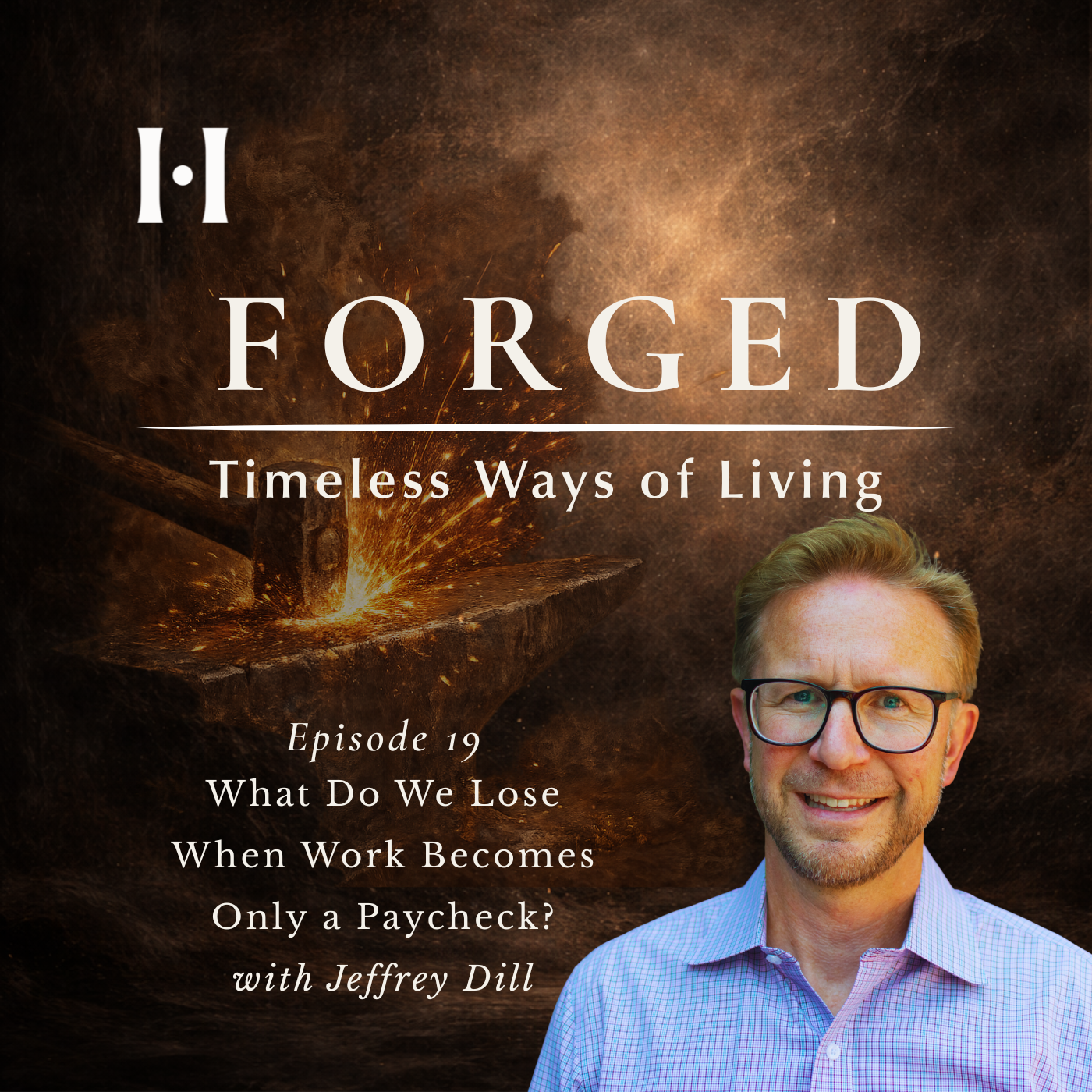
Forged: Timeless Ways of Living
What Do We Lose When Work Becomes Only a Paycheck? with Jeffrey Dill
What happens when work becomes little more than a paycheck, food becomes something we expect to appear in a grocery store, and home becomes mostly a place of consumption? In this episode, Brian Williams speaks with sociologist, professor, and farmer Jeffrey Dill about the dignity of work, the discipline of living within limits, and what farming can teach us about family, freedom, and responsibility. Drawing on his experience with a regenerative beef and pork farm in Pennsylvania, Jeff considers what industrial efficiency gives us and what it can quietly take away: connection to land, craft, neighbor, and the formative power of labor itself. Their conversation ranges from Adam Smith and Wendell Berry to care work, fatherhood, household life, and raising young men who understand that a good life is larger than a career. Listen for a thoughtful invitation to recover work as something that forms us, not merely something that pays us. Jeff also reflects on folding laundry as a discipline, time outdoors with family as a delight, woodworking as a craft, and the love of God and neighbor as the calling that gathers the rest of life together. The conversation closes with W. H. Auden and a reminder that meaningful lives are built through ordinary acts of work, love, service, and fidelity.
Contributors

Guest
Jeffrey Dill
Jeffrey Dill is an Affiliate Professor of Sociology and Liberal Studies in the Templeton Honors College at Eastern University. He received his B.A. in English from Wheaton College and his Ph.D. in Sociology at the University of Virginia, where he was a Bradley Fellow at the Institute for Advanced Studies in Culture. His research focuses on questions of pluralism and difference in educational systems, moral and citizenship education, and socialization processes in schools. He is author of The Longing and Limits of Global Citizenship Education: the moral pedagogy of schooling in a cosmopolitan age. His work has been published in Social Forces, the Journal of Moral Education, Society, and The Huffington Post. When not teaching, he is busy helping to run Wyebrook Farm, a sustainable beef and pork farm in Honey Brook, PA.
Featured Links

Host
Dr. Brian Williams
Podcast Host and Contributing Writer
Brian A. Williams (DPhil, Oxon) is Dean of the Templeton Honors College, Professor of Ethics and Liberal Studies, and Co-Director of the MA in Classical Teaching at Eastern University in Philadelphia. He is the founding editor of Principia: A Journal of Classical Education, speaks internationally on classical education, and serves on several academic and educational boards, including the Classic Learning Test (CLT). Previously, he taught at Cair Paravel Latin School and the University of Oxford. Dr. Williams earned degrees in theology and Christian ethics from Regent College and the University of Oxford, and his research focuses on education and formation in the Christian Intellectual Tradition. Brian is a runner, art collector, and traveler, having visited over 40 countries, often in search of sites and cities of the ancient world. He is married to Kim, a visual artist and teacher, and has three children: Ilia, Brecon, and Maeve.
Related Resources

Not All ‘Classical’ Schools Are Created Equal
The most consequential differences are often the least obvious.
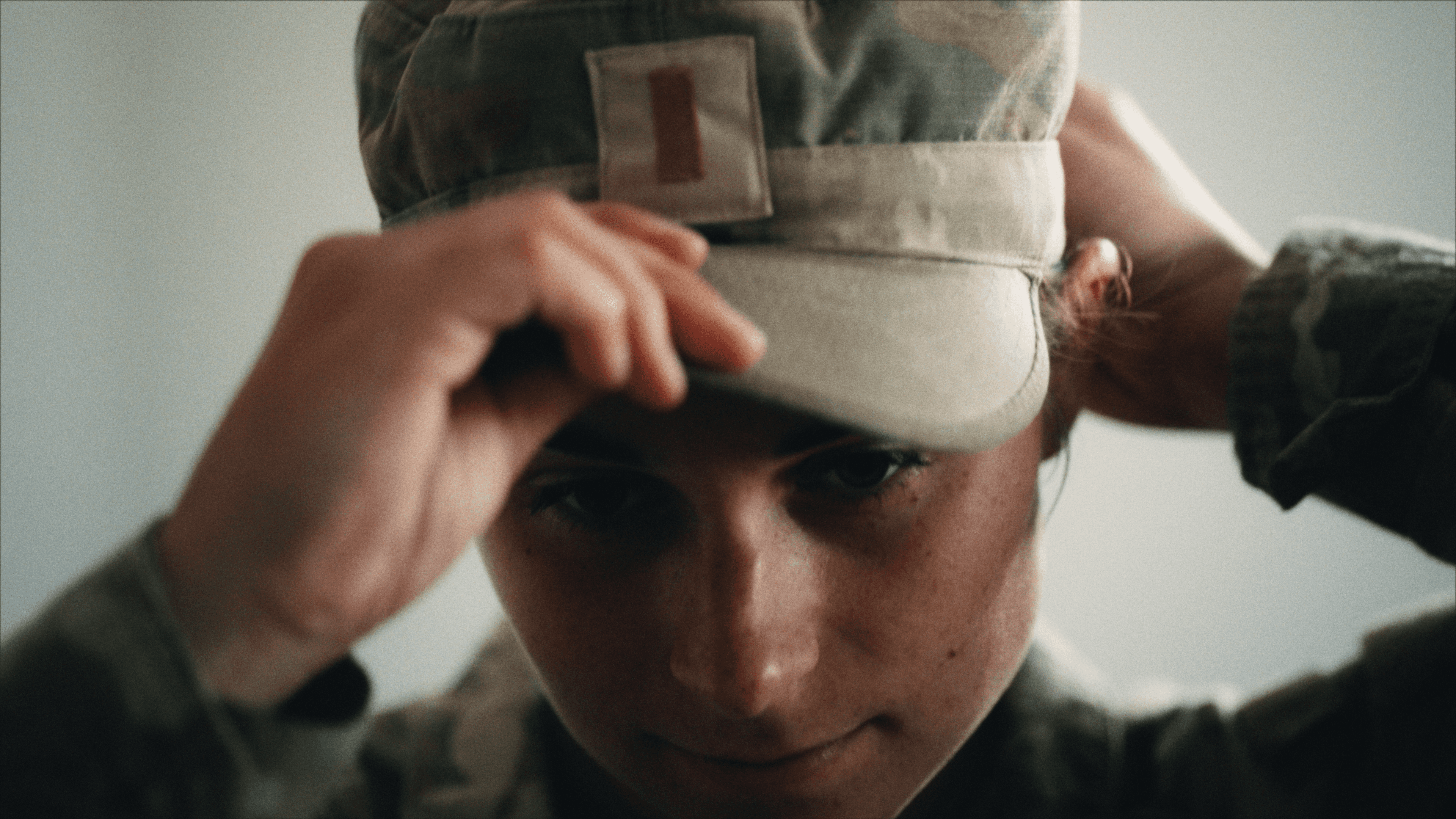
Something Bigger Than Myself
In Sarah’s words, her teachers taught her “how to know what’s right and how to do what’s right.” That is what we mean when we say a classical education prepares young people for real life.
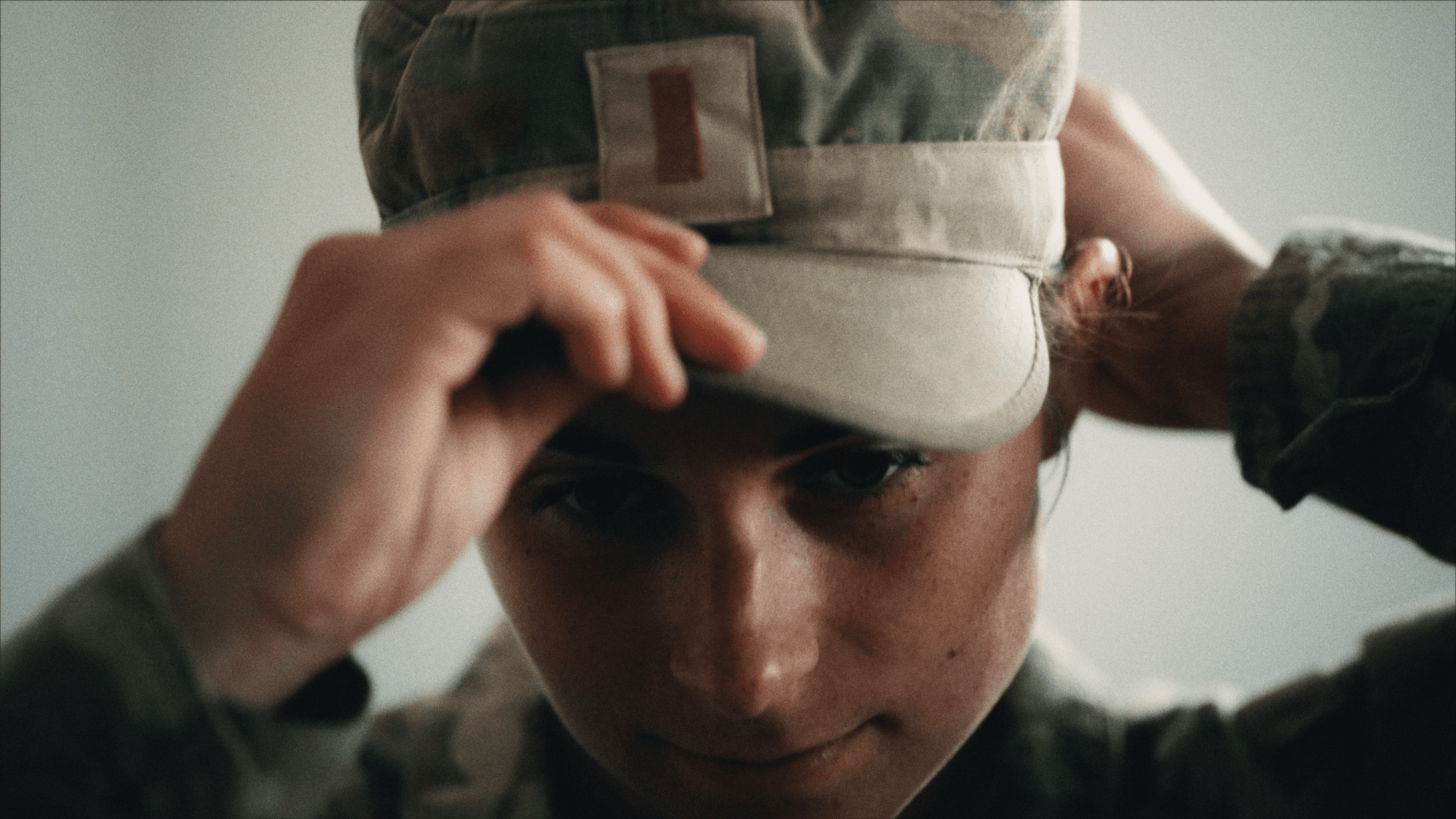
Grit, Loyalty, and Poetry: How Classical Education Shaped a Future Army Leader
One day at a classical school changed the course of her life.
In seventh grade, Sarah spent a single day shadowing at Jackson Hole Classical Academy. She says she learned more that day than in the seven years of school before it.
What followed was an education in great books, Latin, and poetry learned by heart, including Rudyard Kipling's "If-" Years later, when Sarah arrived at West Point to train as an Army officer, she found that same poem on the walls of the barracks.
Today, Sarah is a West Point graduate preparing to lead a platoon of soldiers. Her story shows what classical education is for: forming young people who know what's right, do what's right, and give of themselves in service to others.