Christine Perrin: This is Christine Perrin, host of Composed, A Timeless Way of Living, a podcast of the Humanitas Institute that explores living patterns of virtue, craft, community, and delight, and draws the classical tradition into contemporary times. Welcome to Composed. I'm Christine Perrin, and this is Alicia Coyle. Alicia is the homeschooling educator of four daughters. She attended the Templeton program as an undergraduate at Eastern and taught in the classical education world and did a master's degree in theology at the Augustine Institute.
So we're gonna be talking, about, some of the things that she's sunk deeply into as a reader and a in contemplation. I do remember hearing that you missed study abroad, you could take a Theology of the Body course. Yep. So it has been part of, I could say, maybe the pattern of your life, to prioritize certain kinds of knowledge that you felt were really important to you. And I I think I have so many places we could start, but that maybe would be where I would start is just saying, how did you know that that was worth a certain kind of desire and striving and even asceticism for?
Alicia Coyle: Mhmm. Yeah. Yeah. So that class, it was called sexual ethics, and it was offered every other year. And I don't think you could take it until you were a junior, if I'm remembering right.
But for whatever reasons, I didn't get it freshman and sophomore year. So I could take it junior year, but then I wouldn't be going to Oxford with all my girlfriends, and they were all going in the same semester. Or and and then I would have to go somewhere senior year. So I'd also have to miss one of the last semesters of senior year, which was also tough. But this professor, I'll name him doctor Snell, I wouldn't miss it for the world.
Like, I just I really wanted to study theology of the body with him. And, yeah, in a lot of ways, I would say that class changed my life. So I wouldn't I wouldn't trade it. I I miss those fun memories that the girls made, but but our friendships continued, so that's okay.
Christine Perrin: I'm hearing these traces in your comments about the faculty of friends at Templeton, the way in which the the faculty were the curriculum in a sense, and also the the community and what it meant to because you didn't wanna then go experience Oxford without and miss out on your faculty and your colleagues, you know, your other students. Can you say more about how that idea or or even just practice or way of life impressed itself on you?
Alicia Coyle: Yeah. I I hadn't articulated it ever, like, the way you just did, but that the curriculum was the faculty. But that's a great way of putting it. Like, each distinct class, you couldn't just take the books that were being read in that class and do them with a different professor or do them on your own. It would it would be something completely different.
Maybe totally good in a different kind of way, but it just wouldn't be that class with that professor because they each had a different style of teaching and learning. And the friends that were in the class, like you're saying, the other classmates, I still to this day remember different things that were said by this student or that student, which just unlocked the book or took us a little deeper or kinda planted a seed that, you know, has grown has the fruit has grown from that comment. So I think you're right. The these things are not just abstract ideas, but they're the person brings them into reality in a particular kind of incarnate way. And that's probably true of all ideas everywhere.
But we like to think that they can be just sort of kept in the abstract or in the theory.
Christine Perrin: I love the way you're already introducing us to the theology of the body, in the context of your professors and of your classmates saying that, in fact, these things were bodied forth. These were the fruit of people internalizing the books. I think about Newman, Don Henry Newman, and the way he says, something about the living color of the books, you know, the the faculty themselves who had internalized the books. But I think you're saying something even deeper, which is that part of the way our bodies work is to respond to other bodies and to know through relationship, which is a huge part of the theology of the body, and and I don't know how we're gonna refer to j p two in this conversation. But I'm also wondering, you know, what were the kinds of things that prepared you to value those things?
I'm a professor, and I can see people who kind of come into the room expecting good things in the classroom, expecting maybe not to privilege everything that you just listed, but, to take my word for it. And I'm wondering, you know, what brought you to that moment in your life, prepared for that
Alicia Coyle: priority? Well, I think I have to start with my parents and thanking them for the upbringing that they gave me. They my dad's a Protestant pastor. And so and a deep, deep lover of theology. So often our family conversations would come back to this sort of fun arguing, yeah, and bantering about theology in particular at the dinner table and stuff.
So that was probably the initial seed, you know, of seek truth wherever you can find it. And he something I love about my dad and his love of theology is he's not one of those, you know, circle the wagons theologians, you know, like, we're, you know, whatever the denomination is Methodist or Presbyterian or or Calvinist or we're, you know, whatever it is. He I get I got to watch him himself grow in theology of the universe. It wasn't like a closed question, you know, that he figured out in his twenties. He was always reading more, reading deeper.
He still is to this day. So that was probably definitely the initial push. And then my brother, Adam, he went to Eastern, but not to Templeton, but snuck into all their classes as much as he could. So he was a big one that came back and said, you've got to go, you know, to this class with these professors, you know. So I I came hungry because of my love and trust of my brother, you know, and the way that he if he says it's good, it must be, you know.
So
Christine Perrin: How much older than you was he?
Alicia Coyle: He's I have three older brothers, and he's about six years,
Christine Perrin: seven years older than me. So he came with a lot of authority and Yeah. Having done the whole thing Yeah. Before you started. Can we maybe begin to talk about how that book has formed you and even formed you not just intellectually, although that matters to me to hear about because I think these are very precise ideas that you've embodied precisely, but you've also thought through precisely.
But maybe some of the ways you've chosen to live your life because of that book.
Alicia Coyle: Yeah. Theology Body. Yes. Yeah. Well, initially so I was dating this man, Thomas Coyle, who is now my husband, and right during this class.
Christine Perrin: So Was he taking the class too?
Alicia Coyle: No. I think he was kinda taking it vicariously through me, but no. I if my memory is right, although I could be wrong, but I don't think he was in the class. I think we would just come argue about it afterward. And and many of our friends, our cohorts were also dating or getting ready to date or thinking about marriage and whatnot.
So that was an extremely practical application, you know, that had real live questions immediately that had to be answered. So that was a huge part of me trying to discern what love is for, what love is about, what marriage is for, and definitely impacted the decisions that I made with Thomas and, you know, how we kinda discerned marriage and headed towards that. And then I'd say another practical way in which this book has drastically changed to the shape of my life was both Thomas and I were teaching at a classical school, but we were both kinda hungry for more, and we started applying to graduate schools. And he was thinking about going down the doctor route, which he's done. We're almost coming to the end.
And I, course, more the theoretical route of philosophy and theology. So we both applied. We got into a few different places, and I got pregnant with our first. And so it was a very live question of like, what am I gonna prioritize? In what way?
And how are we gonna navigate these two things, you know, body and soul? So both of us being intellectual, but both of us also being physical and now starting a physical family. So I said no to two places that would've been kinda more up my alley, you know, intellectually speaking, and went for the Augustine Stoop because it was in town and it was it could be done in a slow pace. I it was flexible in the way that I needed it to be in my first few years of motherhood. And so I chose I feel like that was a concrete decision where I chose to be first a mom and then secondly, a still student.
And I'm that's a decision I feel really proud of. I feel I don't regret anything about that. Was it difficult at the time? Maybe for a couple of weeks. Like, maybe just a short time.
But the decision also felt easy. It felt obvious to me. Like, of course. Of course, I'm gonna, you know, be really, really present while my kids are little. And who knows what the shape of life will take?
You know, things may look different in the decades to come. But right now, that was a priority. And and, you know, as we get to it, because the body reveals obviously a sort of physical motherhood, but then that becomes signs of these deeper spiritual realities of a spiritual motherhood. And so it would just feel really it it would grind in the wrong way if I was sort of like finding out all these beautiful things about motherhood, but in some sort of a concrete way, like not being the mom I really wanna be. You know?
So yeah, the the ideas had concrete effect in my life.
Christine Perrin: I like the way you described the convergence of, having studied it, having studied it with Thomas, and then having being confronted with a choice. I you wrote a paper ten years ago Yeah. That I've had the pleasure of reading, and I actually took some excerpts from it. And in it, I I would love to read a couple of quotes from it. But one thing that you've said in, I think a gathering that we were in together was, you talked about the sign of the body and the way in which the mother is the introducer, I'm not sure if that's the word you used, of the child to the father or of the father to the child by virtue of the fact that the child is first within her.
And, that sounds obvious when you say it, but I think the way you put it, the moment you put it, it was sort of earth shattering to me. It's almost so obvious that you have to have someone outline its mystery for you, but, also, it explains a lot of the dynamics that you experience firsthand in families. And that you know, in this paper that you wrote, maybe you could outline it, but you talked about different feminist ideas of womanhood and motherhood. Am I right? Is that a good summary?
Alicia Coyle: Yeah.
Christine Perrin: Yeah. And and that facet, I thought, was really key to, the paper. Although, I don't think you mentioned it in the paper. I think you you mentioned it in each other's presence. Let me read a couple of these, and then maybe you can respond to them.
Truth is actually imprinted on the person's body In man's, male and female's own somatic structure, we see this capacity to be a gift for the other, to enter into communion with the other and to bear fruit, in short, communion and fecundity. The body can be thought of as the efficacious sign of the person. Thus, one way of understanding our identity as males and females creating the image of God is to look to the body itself as a theological revelation of the person. Both Edith Stein and John Paul the second have done this when they speak of a physical motherhood, which also presents an inward call to spiritual motherhood for women. In this way, we can look to the body as part of our discernment of our own identity.
Edith Schein uses the word ethos. John Paul the second uses the word genius. In all these terms, identity, ethos, and genius, we are trying to discern what it means to be a female and how this relates to who I am, and in turn, what it means to be a male. That seems to really sum up what we were just talking about. Do you wanna link the ideas and the experience?
I mean, maybe you already have, but is there anything else you would wanna say about that? Yeah.
Alicia Coyle: I guess that the the spiritual growth in motherhood shouldn't ever come in stark contradiction to the physical application of motherhood, if that's the particular vocation you find yourself in. You know, it's gonna be different for a single woman. It's gonna be different for a religious woman who has dedicated herself to celibacy. But if you find yourself in the vocation of physical marriage and physical motherhood, then you have to sort of it's not just a spiritualized thing, you know, it has to also be an embodied thing. And, true of those other vocations too, it's just actually gonna look different, the bodily enactment of that.
But people might hear this idea and think like, oh, that's really confining. Like, that really limits my possibilities and my options in life. But I think when you dive into it deeply, it's actually this beautiful freedom. There are many, many ways to be a woman without having to negate your womanhood, you know? And I I love thinking of literary examples of this, like little women.
You know, take the four daughters, even though in the mom, so different. Yes. But none of them are not a woman, you know? They have this beautiful incarnation of femininity in this way and that way, and they have different gifts. And so each woman in her own life, I think, has to think about the Edith Stein will say ethos.
John Paul II will say genius, but about the sort of gifts that their womanhood brings and the gifts that are particular to her. Like, let's say she has a talent or an interest in this and that. And those things have to be sort of beautifully composed to take the name of this podcast, but they have to be beautifully interwoven and make a life that is full of communion, full of fecundity. And you sometimes there are things thrust upon you which you didn't choose and you are invited to say yes to, you know, like very simply a child, you know, that would be a clear instance in which something is there, and you're invited to say yes to it, you know, and to not see it as a negative burden, but as this beautiful dependency. And this is making me think of the showing book, Agnes's book, and also Just hold it up here.
I think it was Leah Labresco who just had a book
Christine Perrin: on dependency. The dignity of dependency. Yes. Yeah. Well, I so much in what you've just said.
I I'm thinking about fecundity and commune communion, and spiritual motherhood. And you've done such a helpful job of describing what, the body and embodiment looks like. Could you describe that other side of how fecundity and communion and spiritual motherhood might function for those who it just seems in our culture, it's hard for people to assign motherhood, to womanhood when it's spiritual.
Alicia Coyle: Yeah.
Christine Perrin: Can you flesh that out a little bit?
Alicia Coyle: Yeah. Yeah. So I think this spiritual motherhood is gonna affect every part of your person, all the way down to the soul. And so all the way down even to the way that you're thinking and the way that your intellect works. There's gonna be particular virtues which are sort of more natural or more common to the woman the woman's brain, you know, than the man's.
So I think there's been beautiful examples of this in history. When you take a man and a woman together, let's just say in an intellectual way, we're not talking about in a marriage or a sexual way, but they bring different things to the table, and they're able to sort of tease out the information differently. I bet you've seen this in your life as a poet, as a literature professor with even with your own husband, that the way you both interact with the same information is different. And it that's not an antagonistic relationship. It actually brings more fruit.
The conversation is richer because there was a man and a woman a part of it. But I especially think of all these examples of saints. You've got Scholastica and Benedict. You've got Francis Sinclair. Yes.
You've got even the way John Paul the second especially sought out the friendship of mother Theresa and sister Lucia, both of which are saints now. You know? We could probably just go on. I mean, Eda yeah. Eda Stein working with Hasserelle and Heidegger, you know, the main thinkers of her day and age, and she's right there in the center of it.
And I think she gets it right more than they do. You know?
Christine Perrin: Can you say more about her? I mean, some people might even not know her name and know that she's a philosopher and a
Alicia Coyle: saint and Yeah. What a cool example of how to be a woman in the world in the, yeah. The twentieth century. So she's a Jewish German girl, grows up in a Jewish family, and she's deeply intelligent and somehow goes to the university. Like, some of the first of her kind, you know, for a woman to go work as a philosopher, and she was there.
She was working under Husserl. She had some interactions with Heidegger as a co student, and she was just deeply her goal in life was to seek the truth, you know, wherever it could be found. And it was the writing of Teresa of Avila in particular, which she experienced at a friend's house that drove her to Christ and drove her to the Catholic church in particular. So she converts. This is really difficult for her family, of course, for her mother.
There's all sorts of beautiful writing from Edith Stein on this hard time. Her sister also converts, they both become nuns. So then she becomes a sister. She's a nun and has a lot of great intellectual work for education, particularly education of women. She writes and talks about this a lot.
And then World War two happens, and she goes what is the country that she moves to? She's out of Germany. Do you remember? I don't. So she's taken to another I think somewhere in The Netherlands, but then she is even there rounded up and taken to Auschwitz.
And her final the final words and writings that we have of her are so impactful in what she was able to say to her sister to give her sister courage in the face of what they were facing. And she's she was put into the death chamber in Auschwitz, and that's how she died. And she's now a Catholic saint.
Christine Perrin: And you've you draw have drawn on her work heavily for this project of yours, which is one thing I love about it is it's both academic and intellectual, but it's deeply personal and deeply informing your life. And thinking again of our opening conversation in the way you talked about learning something from a particular person, a particular body, and the way that you're demonstrating that with Edith Stein, and learning about motherhood from someone who didn't bear children, is, I think, perhaps, a very good texture or complexity for the kinds of maybe bifurcations that we've begun to think about Yeah. In our world right now. But I also think even in our enactment of the family of the church, say, we've maybe had trouble understanding what motherhood is outside of physical motherhood. Yes.
Yes. We shouldn't. Right. Right? Because so many of us have been mentored, have experienced the hospitality of people, that didn't weren't our parents.
Uh-huh. Can you comment on experiences of that that you've had that have helped you to think broadly about applying Edith Stein's example?
Alicia Coyle: That's a good question. Well, I my aunt, who's never been married and never had kids, lived with us our entire life growing up. So Wonderful. It was kind of a second mom. Yes.
You know? So maybe that's a very good example to think. I've never thought about it until this conversation in this particular way. But, yeah, an aunt that has been another mom. I love that.
Yeah. And, I mean, definitely, the stories of the saints have so many beautiful variations of how to answer this question of femininity and masculinity. You can learn so much from that.
Christine Perrin: Catherine has been very influential to me. The of Alexandria.
Alicia Coyle: Alexandria. Okay.
Christine Perrin: Say more. Just because she was a woman that was very influential in the world of men. And she was influential in, denying marriage, but also then in engaging intellectually with a group of men that were supposed to change her mind, you know, his mind she changed. And then just the kind of force I mean, she's one of a body of, young women that were strong enough to, die for as virgins. And that just seems revolutionary for our experience in the world right now and the way we talk about them and the possibilities we imagine for them.
How do you educate your daughters, on this score? You know, what stories do you want them to know, and how how do you teach them about the saints? And what does how does that relate to fairy tales or myths or scripture? Any I know that's about 10 questions. Answer whichever one you like.
Alicia Coyle: Okay. I my oldest is eight, so I feel like I'm not an expert on this. I wanna hear your stories. But beginnings of answers are, yeah, the stories of the saints. There's tons of good children's books out there.
Fairy tales are huge because there's so many excellent women and men in the fairy tales. I love little women. I can't wait to read that out loud with my girls.
Christine Perrin: Are you saving it for a particular moment? Yeah.
Alicia Coyle: Kind of. Yeah. I'd I want it to hit right. You know? Like, I don't wanna use it up.
I don't want them to listen to it on Audible ahead of time. I want it to be the right moment. I remember someone saying, you know, you can only read a Jane Austen novel for the first time once.
Christine Perrin: That's a great Which has made me think like Idea.
Alicia Coyle: Because nowadays with technology, you can just shove good literature at your kids constantly. But that's made me think like, oh, some love the books. I want the first time to be the right time, you know, because you you can miss it too when if it's too soon.
Christine Perrin: That is a highly refined idea that I love. You're making me think oddly of Langston Hughes was in a library reading a poem about snow, I don't remember which one, and it was snowing outside, and he decided he wanted to be a poet for similar reasons of, like, all of it coming together at the right moment, you know. But I love that. I love that. Even that thought pattern, that'd be a great dinnertime conversation, you know?
Yeah. What is the right moment for
Alicia Coyle: this
Christine Perrin: book? Yeah. So you can have that first time experience. Well, another thing I mean, maybe that sort of leads us to a couple of questions that I had for you in particular. I'm wondering what threats you think there are to feminine formation in this cultural moment, and what virtues do you think girls need to be apprenticed in, and what disciplines teach them?
And, of course, I'm asking you because you've thought about this deeply, because you're doing it, but not expecting it to be a fully formed
Alicia Coyle: Yeah. Answer. Yes. Yes. Because I'm gonna need I'm gonna need help, and I'm gonna need many more years.
I've got, yeah, four daughters. So I've got I need to do this right.
Christine Perrin: You've got time.
Alicia Coyle: Yeah. Hopefully. Yeah. I think okay. So I haven't read Eric Varden's chastity book, but I've been hearing you talk about it, and I'm really hungry to read it.
But I think that's maybe the place to start is true chastity. And of course, for men too. I'm not just saying chastity for women, but what true chastity is. Because growing up, this was not well articulated for me. You know, this was just, I think, from my Protestant background, I think that's one reason I was so hungry for Theology of the Body.
But chastity was just a list of no's. You know? Don't do that. Don't do that. Don't do that.
Because God said so. You know, it wasn't well defined or articulated. There was nothing to latch onto. There wasn't anything beautiful to say yes to. You know, it was just sort of like, you know, don't do all those things until you're married, then you can do them all.
Christine Perrin: Yes. Yes. As a reward. Yes.
Alicia Coyle: Yeah. And chastity has got to be a rich, robust virtue. It's just got to be.
Christine Perrin: It's gotta be something beautiful that you're saying yes to, which maybe Eric Varden has some. He absolutely does. And and just one thing, you know, chaste eros, he calls it, to to to your point, because eros is a desiring love. It's not just a an appeasement, which is a word that he actually uses, you know, critically. And then I think I've heard others define chaste eros as mad self forgetfulness, but also a kind of orientation, a self ordering, or an ordering principle.
Yeah. So, yeah, he he does explore that very well. But maybe you could say more about how theology of the body met that gap for you in terms of, you know, long you said you were so hungry for it. You were seeking after the yes and the beautiful. What what what were some other aspects of the yes and the beautiful that came to you through reading it?
Alicia Coyle: Well, I think part of it is John Paul the second's beautiful Christian understanding of freedom Mhmm. Which is different from our world's understanding of freedom, of freedom just being, like, supermarket freedom. Like, you have a billion choices and you can choose any of them, you know, but freedom being this sort of internal habit, which allows you to choose what will make you happy.
Christine Perrin: Mhmm.
Alicia Coyle: And chastity According
Christine Perrin: to your anthropology, according to how you're made.
Alicia Coyle: Yes. Yes. And so chastity has got to be connected to freedom. It's a way to keep you free. It's a way to make you more free.
If you're not chased, you're gonna be enslaved to something, you know, to lots of different desires, which don't actually make you happy. And so trying to find a good way to talk to young girls and young women and young men, of course, about what this means. Like, how do you present chastity in a way that expresses that? Like, this is a way for you to remain free throughout your whole life. And it doesn't go away when you get married.
Chastity, that virtue continues with you. It takes on a different form, you know. But it's a way to remain free to choose the good and to continue to seek it, you know. And that's that's so so much more beautiful than, you know, just a list of no. No.
No. No. No.
Christine Perrin: Yes. I love the way you say that alone. This is a way for you to remain free and choose the good that will make you happy because of the way that you were formed, because of the the person that you are in God's image. I'm thinking of another quote. Let me find it.
It's the one about authenticity. Yes. Economy of gift. This is a quote from your paper in which I understand my own identity as a gift and the others as a gift, which the notion of gift implies both ownership and relationship. This economy is in stark contrast to the surrounding economy of an identity crisis where we have laid upon ourselves the intolerable burden of finding our own way, the limitless burden of authenticity.
And this authentic identity is all too often understood primarily in terms of difference, isolation, and opposition. However, this not only robs us of the available means through which we could understand our identity and truly make it our own through the reciprocal gift of self, but also puts us in an economy of competition. But from the beginning, it was not so. This at last is bone of my bone and flesh of my flesh. She shall be called women for she was taken out of man.
This is an economy of shared gift and fecundity where the burden of finding one's identity is not isolating and competitive, but where one's identity is found and expanded to the sharing of life with the other. This strikes me as very relevant to what we're talking about right now. Do you wanna expand on it at all? The burden of authenticity, of competition, of isolation, and related to freedom. Yeah.
Yeah. This is making me think of Abigail Favalli's book and how well she did describing kind
Alicia Coyle: of the the current moment, what's going on in gender ideology right now.
Christine Perrin: Genesis of Genders, Abigail Favalli's book.
Alicia Coyle: Yeah. And they almost it's becoming to the point where gender is more like, you get the prize for gender if your gender is more unique, which is to say more isolated, which is to say more unaccessible to other people. You know, the more that it is this very particularized thing, which you give whatever names to, you know, the better. Mhmm.
Christine Perrin: That you alone feel. You alone feel
Alicia Coyle: that no one else can sort of have a connection to that and access that, which kind of breaks off the ability for communion, you know. Instead of seeing it as this beautiful ideas, you sort of have these starting points given by the body of male and female and those are not closed concepts. You know, they they But they are real starting points. They're both you know, so they have this beautiful fruit and you sort of grow into them and add your own articulation, never denying the foundation, you know? And then you get to share them as well and that becomes really fun and fruitful.
It becomes this reciprocal gift. Another little Christmas story by Louisa May Alcott. I can't remember what it's called, but it's this nurse in a hospital ward, taking care of these men during the civil war. And there's I'm gonna butcher the exact quote, but it's something like, the same virtue of pity made the women brave and the men more tender, which and then she adds to it, like, which made them all the more womanly and all the more manly. Interesting.
So this virtue of pity that came about during the war, seeing suffering, would kind of call out in the woman maybe something that wasn't was sort of latent or maybe that she sort of received from looking at the men, this braveness, this ability to be brave in the face of suffering. And then also for the men, the same look, the same pity look at the suffering men brought out this tenderness, which maybe they especially received by watching this tender nurse, you know, go about the ward and attend to their needs. And so then it's this but it didn't it's not like they became more womanly. The men became more womanly and the woman became more manly. It's actually like you reach a higher level of your feminine masculinity when you get to trade back and forth these virtues and these gifts.
And so it's Prudence Allen talks about this that it's a synergistic relationship where one plus one doesn't equal two. You know, equals three and four, the relationship gets to compound, and we've lost that idea in our society. That idea that yeah. It's almost like we're obsessed with figuring out what is just in our little space. You know, what do the women have and what do the men have and who can claim this and who can claim it's a competition instead of this beautiful expanding gift, you know,
Christine Perrin: that just multiplies. I love the language that you're using. Fruitfulness, abundance, gratuity, expanding. Something you said at the beginning of this comment was that it's not a closed system. It's a it's a real given.
It's a real starting point, but it's not a closed system. And I'm wondering if you think that one of the reasons and you you mentioned Favale, she talks about this, but one of the reasons that we reacted against the givens of our sexuality and our bodies, was because there people did make it into a closed system. Yeah. And then there was the need to resist, and then there was the need to resist the whole thing.
Alicia Coyle: Right.
Christine Perrin: A kind of baby with the bathwater. Do do you wanna comment on that idea of it's not a closed system? There's still room for the individual to build something within the given. Yeah. I mean, I'm I'm trying to think of analogies.
Yeah. Think about wearing uniforms. There's something that that's not a good analogy. But, yeah, say more about that.
Alicia Coyle: Yeah. I think you're right. Of course, there was something that the, you know, the first wave and the second wave of feminism was bringing to the table. You know, they really they had a genuine complaint, which was, you know, parts of it really made sense, and we are living in the fruit of that labor, you know, the fact that we get to be a part of the university and be a part of all these facets of human life.
Christine Perrin: In this conversation. Yeah. Yes.
Alicia Coyle: So there's definitely something to react to. But if you if you are the problem maybe is that in trying to gain a voice in these places, they thought that we needed to reject everything physical because there is a truth that women's physical nature is more of a tether than man's, generally speaking. That it kind of it demands things from you that sometimes seem unpleasant, you know. So they thought, okay, let's get rid of that. Let's just sort of all be neutral.
But really, really, you're saying yes to the man's physical
Christine Perrin: Mhmm.
Alicia Coyle: Message. Yes. The message that he's bringing to the world of what it means to be human. You're saying yes to all of those things, which
Christine Perrin: means We'll conform to that. Yeah. To be part of the conversation.
Alicia Coyle: Yeah. Which means, your message, what your body is speaking, the theology of the body, or as John Paul Simon will say, the language of the body, we just lot left half the conversation behind. You know, because the man, this peg piggybacks off of Agnes' book showing Yes. That the idea that pregnancy is not just for that specific mother and specific child, but it's actually communicating something to the whole society. You came from this.
Christine Perrin: Yes. This is how you came into the world.
Alicia Coyle: And it tells you something about what it means to be human. Mhmm. And if you didn't have that, you wouldn't have that message. Mhmm. You wouldn't and that it relates to all these different topics.
So I think it's important when women go into the university or to jobs or to whatever and there's many different ways to be a woman. Don't leave your womanhood behind. Don't leave your femininity at home, you know, when you enter into man's world. You know, it's these beautiful things have come out when men and women have fully sort of received that internal habit, that internal vocation, and then brought it together like, you know, Edith Stein and John Paul the second, you know, coming together in conversation so to speak. Mhmm.
You know? And they he loved her a lot. He probably learned a lot from her.
Christine Perrin: You're making me want to know, are there any ways concretely that you would encourage people to not leave your body and that message behind, that half of the conversation behind? Is there any any way that that that there'd be a small change to begin that process? Because this is a deeply learned pattern culturally. Yeah. You know, I I'm thinking of caricatures of, like, women, you know, expressing their milk in their university offices in their waste baskets.
And and, you know, you hear about these kinds of things. But what what would just a small way to begin that. How how you demonstrate that to your daughters? Or Yeah. What do you how do you and your husband try to live that out intentionally or in the communities that you're a part of?
I'll let you think for a minute and say one thing I know you do, which is you have a book club, with another family, where you read serious books and engage them. And I I've heard there's a rumor that you and your husband are both very good about Aristotle. You know Aristotle very well. And, and, you know, this is this is part of, you know, how you are friends with other people. And I know that you have you know, even in this paper, you talk about, you know, Aristotle's ideas of women being limited, and yet you yourself haven't thrown him out as a thinker, and you've found him to be important even in your marriage, in your friendship.
So, I mean, like, maybe we could start by talking about that as a concrete step that you've engaged in your life, a pattern.
Alicia Coyle: Okay. Well, okay. I'll tell a little bit of the background of the book club because I think it's important. So both of these families, mine and the other, we have lots of children. And so there's lots of book clubs that I wanted to be a part of, but it is so hard to get babysitting and to get out for the night and to go do it.
And sometimes, I've been able to do that and I make that a priority and it's wonderful. But it's really life giving in this book club that we just bring our kids together and it's a really special movie night for the kids, you know, and it's we try not to just pick fluff, you know, which like, what are the best movies? You know? You could probably publish that list. Exactly.
But maybe that's a start to your question, is we have to get creative about how can we still pursue all the great things that human life has to offer, but in a way that is cohesive with our mission and our vocation right now as parents of young children, you know, and that looks different every season. And I think it particularly looks different for the women. Women are cyclical through and through, like, both in the major arc of, you know, childhood, puberty, maidenhood, marriage, childbearing years, nursing, postpartum, and then menopause. And then we go we unravel it all and, you know, so there's just and then there's the monthly cycle of what your hormones are doing from month to month. Maybe right here, should mention doctor Sarah Hill.
She has this book, Your Brain on the Pill, when she's studying, you know, what the female hormones do to your brain, how you think differently at different times a month. And then what happens when an entire generation of women are chemically changing their brain? You know, what does that do to society? So anyway, that's to say for the for women, this is a particular question in a way that is a little bit different than men. And I think both of us should recognize that, the men and the women.
And men should be eager to help the women come up with creative ideas. You know? How can we make this happen? I think workspaces and university programs need to get more creative and flexible because they need to recognize, oh, it's a real value when we have feminine voices in these spaces, but we can't treat them the exact same way as we do the men. There's going to be shifts in real needs.
And so how can we get creative about that? Instead of seeing it as like a negative, you know, how can we honor a woman's childbearing cycle? How can we honor, you know, all the different things that come up but still make that a possibility? I think it really is a gift to men actually because they they tend if all is going well, they can tend to view their experience of reality as in a very linear upward trajectory and very under their control. Like, if I do x, y, and z, if I eat the right foods and exercise in the right way, I get, you know, x outcome in my body.
It's just boom, you know, this straightforward path. And of course, in human life, we're gonna find out that that's not true, you know, that your bodies are not fully your own and you are not fully in control. But I think that message, when it does come to men, hits a lot harder when they have some sort of crisis in their life, whether health or financial or whatever. I think it hits them much harder because they haven't been in the school of dependency Yes.
Christine Perrin: Which we have. Yes. Oh, that's such a beautiful way to describe it. I you know, I'm thinking about one of your enduring questions, I think, is about Aristotle's emphasis on habits and the female embodied experience of cycles and how do habits and cycles work together. But what I love about what you're saying is that this our embodiment, when there's reconciliation between the sexes, which is an age old task, that it it had there's so much more to offer each other and the rest of the world in this creativity and communion, worked through the difficult passes to some synergy.
But I love that very concrete example of this school of, what did you call it? School of cycles or school of dependency or interrelation, can really offer people spiritual nourishment and instruction when the linearity of their lives is violated Yeah. By reality. Yeah. And then as well, probably the reverse.
Right? That that capacity for habit and directionality and building is also possible Yeah. In the midst of cycles, and that that's a contribution, a mutual contribution. I I love that. So you've given us two examples.
I I wanted to just circle back to the Aristotle question. There's a lot of canceling that's gone on in our culture. You know, we we find a bad aspect of someone's thought or some dark recess of their behavior, and it invalidates everything they gave. And, you know, you've talked about Aristotle referring to women as as bad men in certain ways, defective men, and yet you still revere Aristotle. Can tell us
Alicia Coyle: how you put that together. Well, okay. So here's a really fun part about it. Aristotle was going off of the best biology and physics that he knew at the time, which is really fun to think about. Well, how does our understanding of biology impact our understanding of metaphysics and vice versa?
They really do play back. And that's actually one thing Aristotle is so shiningly brilliant in the ancient world on is how you look about, you look at the physical world, you look at biology, you look at actual instantiations of the form, and that helps tell you something about the form. Whereas, you know, Plato was very much, let's just focus on the form. Like, as much as we can get away from bodily instantiations, the better because those are confusing. Those confuse what the thing really is.
Whereas for I was like, no. That's how you learn what it is. You know? So for men and women, he the only seed you can see is the male seed. He had no idea that women had 50% of the genetic material, an egg.
He didn't know. So he thought, you know, women were the soil. That was the the main analogy, was the man provides the seed, the woman is like mother earth, the earth that it grows in. And there's a lot of beautiful thought that comes out of that analogy. Mhmm.
But what would Aristotle have done if he had known that the woman provides the seed in the much bigger seed, you know? Many times larger than the male seed. Not to say that it's more than 50%. It's 50% of the DNA. But, yeah, I think it totally would have changed his thinking on it.
So I really honor him for just he dealt with what he knew, and and his concepts, his categories are still timeless to this day of how to understand the human person and action and what the will and the soul, how those things interact and reason, all of it is still completely fruitful to this day. So
Christine Perrin: To go back to the threat to what did I call it? The feminine formation in this cultural moment. I think maybe would you would you call just trying to think of this transaction. You honor him despite what he didn't know and despite his lack. Would you say that generally that's a threat to all our cultural moment, the the inability to honor the good that people can contribute, how how would you frame that?
And then how would you kinda give find a more specific example of about feminine formation?
Alicia Coyle: Yeah. I I mean, maybe this also relates to the idea of just the economy of gift. That when people are throwing things out into the world and offering them and presenting them, they're of course, it's gonna be wrapped up in human sin and there's gonna be something off about it. And there's also gonna be a gift, you know? Receive what you can receive.
Handle other people that you're talking to in the same kind of way. There's something to be received. Maybe just humility, the virtue to remember that I promise you what you're saying is gonna have some errors. There's no way around it. So
Christine Perrin: But I'm gonna look for what I can receive. Mhmm.
Alicia Coyle: Yeah. Look for what you can receive in the other. Does that help us?
Christine Perrin: It does very much help. Can you make it more specific when we're thinking about girls growing up and the kind of threats to their formation or conversely, the encouragement towards virtue and and sort of discipline surrounding the thing that you just said.
Alicia Coyle: Okay. Like, how to receive you mean, a world that is throwing threats at you? Is that kind of
Christine Perrin: How to operate with the economy of gift. Yeah. Receive the good that is there Yeah. Without sort of this wholesale rejection whenever, there's a kernel of bad. Yeah.
I mean, how do you create kids, that can do that kind of discernment? Or what are your thoughts or hopes? Yeah. I don't know if
Alicia Coyle: I have thought a whole lot about this question, but what's coming to mind is I think it's Aristotle again who says that it's the mark of an educated mind to be able to entertain an idea without, what is what is it, without fully accepting it or something. So you kinda bounce it around in your head. I think that's a real virtue that needs to be fostered nowadays, especially in the university. Like, Abigail Volle seems to talk about this a lot in her book that students nowadays, it feels like if you're at all disagreeing, it's a threat to your personhood, you know, and that's that's a death sentence for for learning for seeking the truth together Yes. And conversation in the classroom if you take every disagreement as a threat.
And so maybe what we need is it's almost like we need stronger identities internally and maybe in Christ, like more time in prayer, more time finding and subsisting in your identity through the strength of Christ, which gives you a little bit of a a buffer, you know, and a little bit of like a a strength to be able to handle ideas. And maybe some of that I got as a child that we would just argue.
Christine Perrin: Around the dinner table I was thinking about.
Alicia Coyle: Yeah. And it wasn't a threat. Arguing was seen as a good thing. Yeah. My mom and dad would even say, you know, in their marriage, may of course, they probably argued too much, but they also said, you know, it's really important for you guys to see mom and dad arguing, you know.
And I think that's true. You have to take you have to be able to entertain an idea and kinda chew on it and munch on it without letting it become a personal. And that's actually one thing I think men have a strength in that we women have to learn from men. They're able to be more objective in a conversation, whereas we are always drawing things inside. We're always internalizing it, which is a real gift.
But it can become a problem if you aren't able to bounce around the object, you know, and like really talk about it.
Christine Perrin: Detach from it a
Alicia Coyle: little bit. Detach from it a little bit.
Christine Perrin: Yeah. Which is, I mean, another I'm just gonna read this quote, as we kind of wind to towards the end, but you said an example of somatic knowledge is the male and female bodies is simply diff the difference in somatic constitution. That was an excerpt. You didn't write it that way. One is radically external while the other is radically internal.
Why might this be? What does it mean? Now this processes of interpretation is not just for me, for one person, but the church together. But I will suggest one possible interpretation, and I believe that Edith Schein was thinking down these lines at least in the case of the female. Edith Schein speaks of the woman having a particular tendency and call toward empathy.
And empathy is the ability to personally share in the life of another, not abstractly, but personally to feel the other's cares as one's own. We might call this a proclivity towards internalization. The female body is oriented toward calling the other into herself and caring for that other internally and personally, both in the form of spouse and child or spiritual, child and mother. So that's a very particular statement of what you just mentioned. Incredibly helpful to see how reconciliation there and mutual pursuit of the good would be necessary to have, as you said, both halves of the conversation on the table or both gifts on the table.
I love, do you wanna say anything more about that, the way in which the natural becomes the image of the symbolic. Yeah. The internalization, the externalization.
Alicia Coyle: Yeah. I I'm immediately thinking of Mary at the wedding feast at Cana and the the the back and forth between Jesus and Mary when she goes and says, you know, they they've run out of wine. And he's like, woman, what have you to do with me? This is not my hour, you know? And she doesn't even respond.
She just turns to the servants and says, do whatever he tells you. Like, she knows her son, you know. She knows. And
Christine Perrin: And she has taken it inside, and then she leaves it to him to decide what to do externally.
Alicia Coyle: She's taken this concern, this rather simple concern, you know, not a big deal. In the big scheme of things, they ran out of wine. It was a big deal in the ancient world, but, you know, we're not talking about, you know, death or something. We're talking about but she's taken she's internalized what would this mean for the married couple, you know, and she brings the need before Christ, you know, and it is his job. He has a mission in the world, his hour, you know?
And she's inviting him to bring that mission now, You know? Make it a reality now, your salvific power. And her invitation, it seems from the text, prompts the God man to make his hour now. You know? And and then you you can go to Pentecost where we have Mary praying with the apostles.
And again, it's just such a beautiful the apostles are sent into the world, you know, which think of the male form, you know, in its physical nature. It is outward. It is pointing external, literally. The desire drives them out. And and and yet Mary's always there with the apostles.
She's got a mission right beside them, and it's this heart pondering that she's doing and this praying for the church and this giving birth to children by power of the Holy Spirit, you know. And so there's just yeah. Maybe that's a beautiful example of how the physical body gets, like
Christine Perrin: Manifest. Yeah. Like echoed throughout your life Echoed
Alicia Coyle: is a nice point. Spiritual ways, you know. Rebirth, birth in birth from above, birth in the heavens,
Christine Perrin: you know, just all these things get redrawn out. I really love your narration and and interpretation. I'm thinking also of the women apostles, right, and the the mer bearers. And the fact that they, first of all, had internalized their affection for Christ and his literal body, and then they were the receivers of the message. And the bearers, they internalized that experience, and they were the bearers of the apostles to the apostles of this word.
Yeah. But that's another example of the working together, which is very present in scripture. It's very present in the tradition. I know there are traditions where, you know, you sing the praises of, the merbearers. Yeah.
I didn't necessarily grow up thinking about that. And I wonder to what extent it seems like maybe an implicit thing that you're saying is that if we did have the eyes to read scripture this way, then we would get clues to how this might look in the world, to that creativity you were talking about.
Alicia Coyle: Yes.
Christine Perrin: It's a hermeneutical problem as well.
Alicia Coyle: Oh, yeah. Yeah. And John Paul II is the leader in this for sure. Like, I am only now starting to realize how much he loves scripture. But Theology of the Body and His Encyclicals, I'm just working my way slowly through one he wrote on Mary.
But I'm like, oh my goodness. He is just spending so much time contemplating scripture and getting out so much from it. Like, think of how much he drew out of the first two chapters of Genesis. Yes. We never it was always there Yeah.
And we never had it. It was yes, and. Like, it's been there. It's in the tradition, but the way that he pulls it out for you to see it is like, wow. That he didn't just get that intellectually.
He must have taken time in his heart spiritually to ponder scripture in a new way. Not to say new as opposed to the tradition, but, like, bringing the tradition and then contemplating scripture. You see all these beautiful things because it's God's word. He's telling a story. He's just waiting for you to wake up and get the picture.
And it's
Christine Perrin: boundless. It's it's fathomless. And so you can go back to it and back to it Yeah. In each age with the particular concerns of that age and think with it. Yeah.
Another word that I really liked that you used in relation to Mary was invitation, that she and, of course, we know that Cana was the first miracle, and you're suggesting that she was a participant in salvific history in a very particular way of saying I mean, not just giving birth. Right? But of saying, you know, now might be a good time. But, again, it wasn't it was participatory in its and I like your your verb. Well, it actually is not a verb, but your the invitation that she made.
She invited him instead of saying, do this for me now.
Alicia Coyle: Yeah. Yeah.
Christine Perrin: I'm your mother.
Alicia Coyle: Yeah. Yeah.
Christine Perrin: I wonder if there's a passage that you wanna read to us from Theology of Body that might, I don't know, give us the language that and then the thought and the contemplation that you've been referencing.
Alicia Coyle: Okay. Alright. Well, I'll read this one. This comes from the section that's called the foundation of the primordial sacrament, the body as sign. So even just the title, think it kind of it's like encapsulates the real good that John Paul the second gives to reunderstand the body as a sacrament.
Okay. So he says, thus in this dimension, a primordial sacrament is constituted, understood as a sign that efficaciously transmits into the visible world the invisible mystery hidden in God from eternity. And this is the mystery of truth and love, the mystery of divine life in which man really participates. In the history of man, it is original innocence that begins this participation and is also the source of original happiness. This sacrament or the sacrament as a visible sign is constituted with man in as much as he is a body through his visible masculinity and femininity.
The body in fact and only the body is capable of making visible what is invisible, the spiritual and the divine. It has been created to transfer into the visible reality of the world, the mystery hidden from eternity in God and thus to be a sign of it.
Christine Perrin: Can you comment on that? Oh, I don't know.
Alicia Coyle: I don't know. Anything more to say
Christine Perrin: Yeah. Other than just And maybe unpacking it because you know it so deeply, but if someone heard that for the first time, they might not.
Alicia Coyle: Yeah.
Christine Perrin: Get the parts of it.
Alicia Coyle: Well, I guess maybe start maybe if you come from a sacramental tradition, you can start
Christine Perrin: What is that? What is a sacramental tradition?
Alicia Coyle: Okay. Wow. That's a big Sorry. That's good. Okay.
One, a a Christian tradition that is comfortable with saying there are these physical places of grace, which are not just symbols. That's not just what's going on in your head, but the actual physical thing before you, I I especially think of the Eucharist, the body and blood of Jesus Christ, that this physically is manifesting a spiritual reality, which in that case is God himself. And of course, this would have practical ramifications in the church, you know, like you would not want the body of Christ to be trampled underfoot, you know. The you know, it would it would then start to affect the the practice. So if you are comfortable with or if you've been thinking theologically about sacraments to now kind of read backwards into this primordial sacrament, like, okay, so what is John Paul the second saying about the body?
What is it revealing? What is it bringing into the world? And in some specific sense, it is that image of God that you are a bearer of the image of God with what you do with your life. What whatever your body does brings with it this idea of something something of the divine that is being revealed. But it's really interesting that there's two bodies.
There's a male body and there's a female body. And what does that say about us and about God?
Christine Perrin: That's a really wonderful question to end on. I'm not ready to end, though. But I wanna say this. I hear you and I'm really glad we got to this point. I hear you saying that there's something in the relationship of the particular, the body, the physical world, and the meaning that we make of that world, getting that relationship right, understanding the relationship between nature and symbol is really fundamental to how we live our lives.
And that might be one place to begin to think about what is the relationship. Is there any relationship, or is it one that we just impose and make up? Or does it have some fundamental structure tied to reality that then we would take our bodies seriously? We would take our differences seriously and our commonalities seriously, and that it could become a guide and a path. And that it seems like we could start in either direction.
We could start by just, you know, looking at our bodies and and extrapolating from there, but we could also think about this relationship that we believe, has particular possibilities Yeah. And and ask ourselves to do some thinking about that. Is there a place that you would start reading if you were somebody who really hadn't thought about that their whole lives and wanted to begin thinking?
Alicia Coyle: Yeah. So I think it's really important to say here that it's not like you look at a body in the abstract or, you know, in isolation all by yourself and think like, what does the body tell me? You know? You might come up with all sorts of ideas which might be helpful, it might not be. You know?
You might go a little far. So that's exactly why I jump on a second. It's a theology of the body. So we're not just sort of like, what does the body say to me today? But and here's the reason.
We're not looking at the body qua body. We're looking at it as a created thing. So there was an artist and you have to have that theological idea first that there was an artist creator who said, I'm I'm gonna do something. I'm gonna make man in our image. In the image of God, he created them.
Male and female, he created them. So right there, male and female come into the story. So the artist was trying to do something. He was trying to say something with what he was creating, something beautiful. And so you have to be kind of under that mantle that when we look at the body, we're looking at it as a theology of the body.
But the biology totally is important. We talked about that with Aristotle. You know, if you have your if you don't know some things in biology, it might actually get your theology off. Mhmm. And vice versa, which is very interesting.
But they have to sort of be together. They have to be brought together in conversation. And where would you start to read? I mean, this is kind of a tome. This is a little bit difficult to dive into, but the first few chapters are the best, maybe.
But Genesis really taking time to slowly, slowly contemplate what is being said in the first few chapters of Genesis. What would be other good oh, so in terms of a sacramentality for the life of the world Mhmm. You know, that would be a huge one to Yeah. Think about how the external world is participating in this sacramentality, all of it. Know?
And there's higher points of contact maybe.
Christine Perrin: That's a great recommendation. I also think about Hans Boersma's book heavenly participation Oh, yeah. So similarly. And we had mentioned Abigail Favalli's book
Alicia Coyle: Oh, Great.
Christine Perrin: The Genesis of Gender. Those are all books that touch on that issue. And I hear you saying, oh, there's even a prior question to nature and symbol, which is the one about what is a human being and and how did we come
Alicia Coyle: into
Christine Perrin: the world? I mean, you know, first, primordially, and then second, you know, in our in our in Agnes' book showing Yeah. What pregnancy tells us about being human is another one of these texts that's really saying, what is the human? That's called anthropology. And these are very big questions, but they direct where you begin in your thinking and where you're headed
Alicia Coyle: Yeah.
Christine Perrin: Really determines a lot of what's going on in inside. And there's a lot of room. Yeah. It's very capacious, but those are important questions to at least ask. Yeah.
Actually, that's where John Paul
Alicia Coyle: the second starts. He starts with that conversation with Christ when the Pharisees say, you know, what about divorce? Moses allowed divorce. You know, they start with the ethical. And he says, from the beginning he points them back to the beginning, it was not so, and he points back to creation.
And John Paul the second takes that as his cue of, no. No. No. Do do not start with the ethical. Don't start with asking, you know, about, you know, homosexuality and Right.
Premarital, you know, sex and what it Stop. If you haven't gone back to the beginning and first asked what is a human, What does it mean to be human? You're you're never gonna finish the question. You know? And so, yeah, you gotta start you're told I love that word anthropology.
You gotta start with anthropology or or you're gonna go wrong.
Christine Perrin: That is so helpful. I'm gonna ask you now a couple of questions that are quick. Okay. Don't think too long or stalk too long about them. Just bullet.
Okay? What is the discipline you've pursued that sustained you? Prayer. Daily prayer. What do you especially delight in?
Alicia Coyle: Conversations with my daughters. Have you pursued a craft?
Christine Perrin: And if you haven't yet, what would you pick up? Okay. Cooking. K. Yes.
I'm thinking bread making
Alicia Coyle: Yeah. Bread. Sourdough and Yeah.
Christine Perrin: Kombucha. Yes. How would you name your calling different or your vocation versus career? I mean, we don't have to talk about career, but how would you name your calling, Alicia's calling?
Alicia Coyle: Yeah. Wife and mother.
Christine Perrin: Okay. Anything that, describes the particularity that you have talked about in this interview? I mean, I want my roles. I want to raise
Alicia Coyle: them well. I want them to be intellectual, not just or I guess intellectual in their own way because they all can have a different manifestation of that. But yeah. Right? I think it could change as time goes on, but I really see myself in my role as raising these little human persons.
Christine Perrin: I think that's a great note to end on. Thank you so much, Alicia Coyle. It's been such a delight to talk to you, and we'll have to do it again Oh. Because there's way too much
Alicia Coyle: Yeah. Here. Oh, thank you. Thank you for having me and being my friend.
Christine Perrin: It's a great pleasure. You've been listening to Composed with Christine Perrin, podcast of the Humanitas Institute about composing well lived lives of virtue, craft, community, and delight.
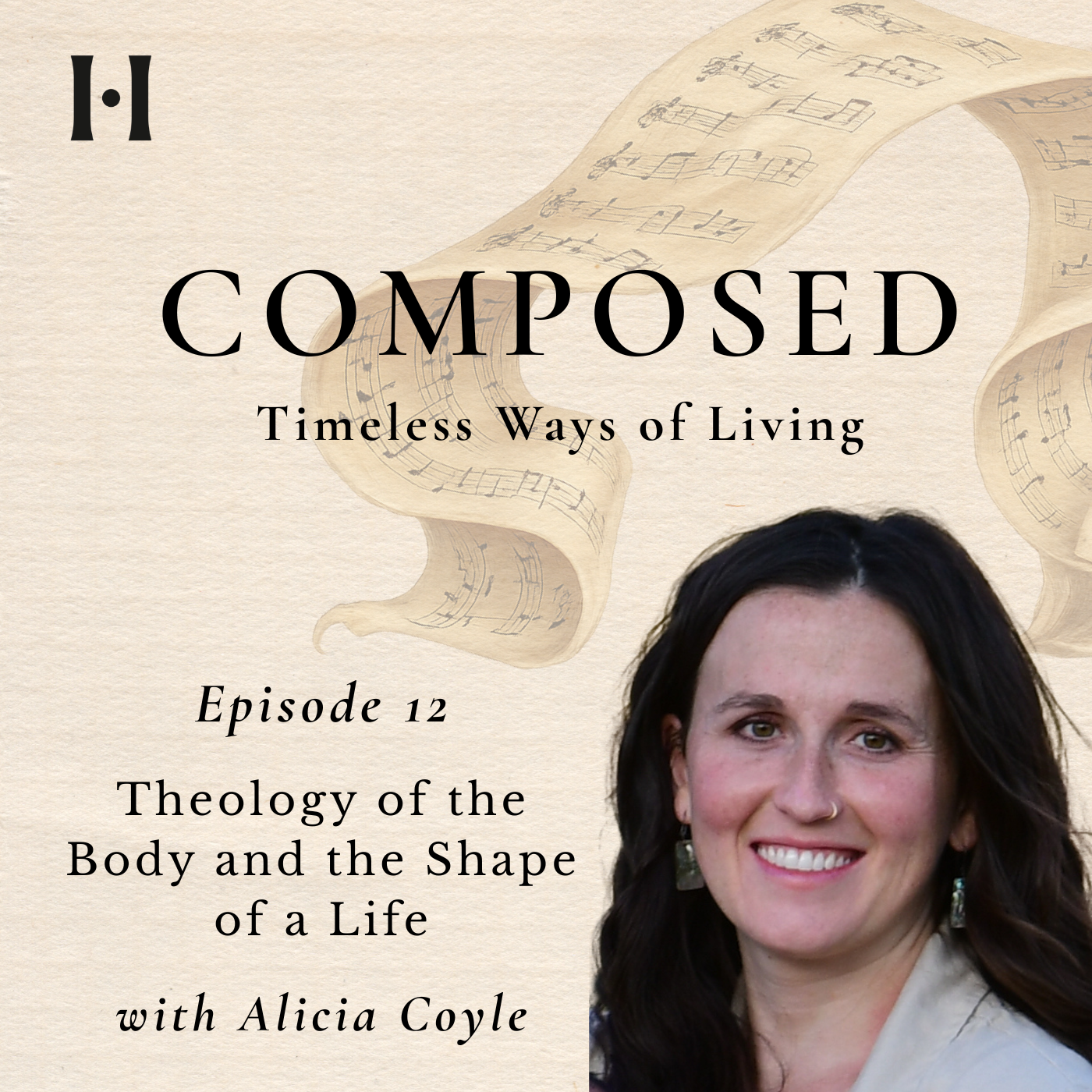
Composed: Timeless Ways of Living
Theology of the Body and the Shape of a Life with Alicia Coyle

What does the body reveal about vocation and our search for communion? In this episode of Composed, Christine Perrin speaks with Alicia Coyle about Theology of the Body, motherhood, feminine formation, chastity, education, and the slow work of composing a life around gift rather than competition. Their conversation moves from John Paul II and Edith Stein to Little Women, Aristotle, Mary at Cana, and the daily patterns of homeschooling, prayer, reading, and family life. For parents seeking a wiser way through cultural confusion, Alicia offers a thoughtful vision of embodiment as something neither limiting nor abstract, but deeply human, practical, and full of invitation. Together, Christine and Alicia consider how ideas become incarnate through teachers, friendships, families, and habits. They ask what it means to see the body as meaningful, how women and men can offer distinct gifts without rivalry, and why formation begins not with rules alone, but with anthropology, wonder, and the truth of the person made in the image of God.
Contributors

Guest
Alicia Coyle
Alicia Coyle is a wife and a mother of four young girls. She currently homeschools. She did her undergraduate in philosophy and theology at the Templeton Honors College, and especially enjoyed thinking about Theology of the Body and the many related topics. She has taught in the classical education world and received her Masters in Theology from the Augustine Institute.
Host
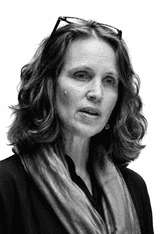
Christine Perrin
Podcast Host and Contributing Writer
Christine Perrin is a literature professor, writer, poet, and podcast host. After teaching literature full-time at Messiah University for almost 20 years, Christine arranges her time to write, teach in Italy, and host the Composed Podcast. Christine is a graduate of Johns Hopkins University (BA in Writing Seminars) and the University of Maryland (MFA in Poetry).
Related Resources
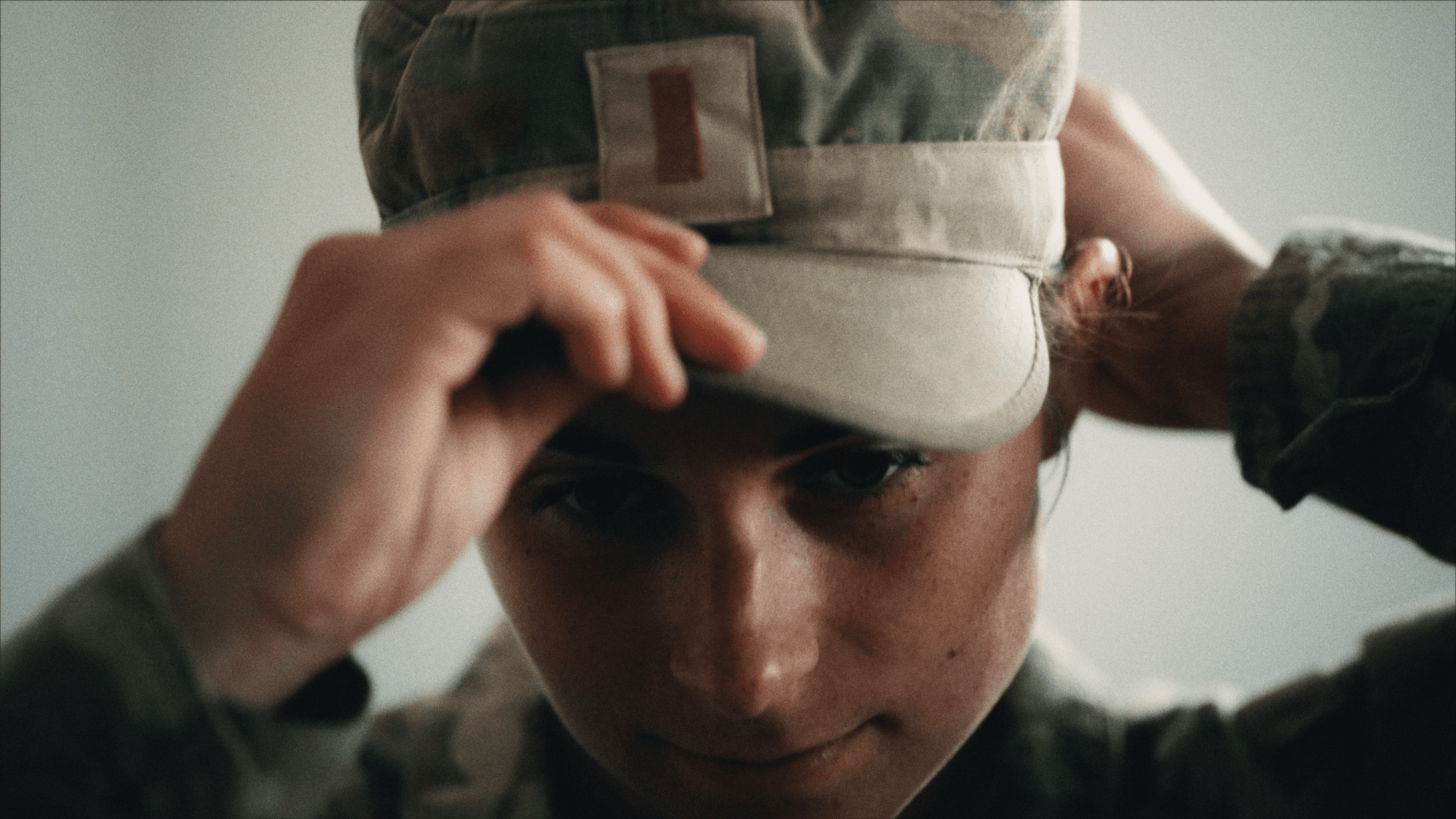
Grit, Loyalty, and Poetry: How Classical Education Shaped a Future Army Leader
One day at a classical school changed the course of her life.
In seventh grade, Sarah spent a single day shadowing at Jackson Hole Classical Academy. She says she learned more that day than in the seven years of school before it.
What followed was an education in great books, Latin, and poetry learned by heart, including Rudyard Kipling's "If-" Years later, when Sarah arrived at West Point to train as an Army officer, she found that same poem on the walls of the barracks.
Today, Sarah is a West Point graduate preparing to lead a platoon of soldiers. Her story shows what classical education is for: forming young people who know what's right, do what's right, and give of themselves in service to others.

President Trump Champions Educational Freedom — Putting Students and Parents First
"Today, President Donald J. Trump welcomes students, parents, and education advocates to the White House to celebrate the start of a new school year. Under President Trump’s and Secretary of Education Linda McMahon’s leadership, this Administration has delivered an unparalleled record of expanding educational freedom, restoring parental rights, returning power to the states, and putting American students first."
_1x80oX.png)
Teaching Children the Fruit of Longsuffering
A new generation of parents has arrived, people who love their children more visibly, more anxiously, and more attentively than perhaps any generation before them. They read the books, they watch for the warning signs, and they would lay down almost anything for the good of the child in front of them. Yet many of these same parents struggle to tell the difference between play and scholé , or between protecting a child from cruelty and protecting a child from difficulty. These are not the same acts of love. One forms a soul while the other, however tenderly intended, can quietly deform it.