Elspeth Currie: For you, this is a chance to think on paper and to see the way that having to put words on a page makes you think differently and makes you structure things differently and makes you engage differently. Rest that is set aside and intentional is so much richer than the accidental, I thought I was gonna do all this today and then I ended up getting distracted. And the the freedom to think about how you wanna fill your time and fill it with good things really changes the then experience of that.
Christine Perrin: This is Christine Perrin, host of Composed, A Timeless Way of Living, a podcast of the Humanitas Institute that explores living patterns of virtue, craft, community, and delight, and draws the classical tradition into contemporary times. Welcome, Elspeth Currie, to Composed.
Elspeth Currie: Thank you so much for having me. It's a delight to be here.
Christine Perrin: I'm so glad you're here. I'm gonna say a few things about you that are formal, and then I want you to tell us some things that we wouldn't know from the Internet. You're a PhD candidate, and you research women's Latin education and intellectual lives within the humanist household of early modern England. I read that you're particularly interested in the connection between women's intellectual agency and their familial ties. I find that a really intriguing phrase.
I wanna hear more about it. You studied history and classical studies at Gordon, and went to Oxford for a master's degree, and you're at Boston College now. You have two daughters.
Elspeth Currie: Yes.
Christine Perrin: And you have taught Latin and history in a high school, I think, for a number
Elspeth Currie: of years. I have. Yes. Yeah.
Christine Perrin: Okay. So that is I'm not gonna say that's boring because it's not boring at all. But give us a little more. Tell us maybe a few of the things that that took you on these paths and that helped you to discover you wanted to go this direction.
Elspeth Currie: Yeah. So I knew that I loved history. I don't know. Starting in maybe middle school, I would love reading the coffee table books that my grandparents had at their house full of, like, pictures of kings and queens of England, especially. And the the Dear Diary series, I don't know if your kids have ever come across those, but I loved reading them.
So then, new in college, I wanted to study history and loved it and spent a year at Oxford as a study abroad student and was there that I realized, oh, I'm interested in graduate study. And so I went right into a a one year master's, which was great to kind of keep the momentum. But I I knew that program started in October and I knew I wasn't ready to commit to the the full PhD or just the the multi year process that that would be without knowing more about who I was or what I was feeling called to. It was one thing to be very good at school and to like school, which were two things that were true. But I hadn't done anything else.
And so didn't I intentionally didn't apply to anything after my master's and went into teaching instead and taught high school for four years, which was really lovely. I was at two different classical Christian schools, and the first was doing English mostly. And then that school closed and went to another one where I did Latin and history. And, Those were just really really beautiful years and hard to It's
Christine Perrin: so hard. Yeah.
Elspeth Currie: Teaching is not the same as being good at being good at teaching is not the same as being good at a subject. And had some really wonderful older teachers who helped help me just with the mechanics of it. Right? You know, how do you how do you lesson plan? How do you think about units?
How do you engage your students? Was teaching through the COVID shutdown years as well. And that was
Christine Perrin: So difficult. A
Elspeth Currie: whole other thing. And then that did make returning to graduate school more of a of a thing to discern. Realizing that I that I do love teaching. And I still love teaching and I don't know where I'll be at the end of my degree, but I really hope that teaching is a part of a part of whatever I end up doing. But also realized that I did still have research questions or questions that I wanted to spend, you know, the the years, the PhD years delving into more deeply.
And so that's why I returned to to academia and have enjoyed how much I've liked researching and knowing that I do really love the research and I do love the teaching. So, yeah, again, I don't know where I'll be at the end of all this, but really grateful right now to be in a job where I get to get to still work with students as a TA or a summer instructor, and continue researching as well.
Christine Perrin: Thank you. I as you're talking, I'd be interested in just getting started with your high school education. Yeah. And because I think it was somewhat unique. And then also yourself as a teacher of high school students, and just thinking about mentorship, about maybe some of the formative patterns that were a part of of your formation that you wanted to pass on to others, that you would want to pass on to your children as well as they grow.
Elspeth Currie: Yeah. My high school was really yeah. The formative is the best word for those years. My teachers were very gracious to me. I I came in, and I was rather precocious and just odd.
I mean, you know, you're 14. It's kind of part of many 14 year old experiences. And they took my enthusiasm and helped to direct it in really fruitful The school, it's it's not a classical school, but it at the time, it was very classical in its method. So we had humanities classes where history and literature are combined and you're learning chronologically. So the medieval course, modern Europe, American course, and classical course were the four years.
And there were no grades, so you just got credit or no credit, which Remarkable. Is true across all subjects. And I I'm a humanities girl, but to have that freedom then in my physics classes to try you know, that's not something that I felt confident in. But to have the pressure off of, well, I'm only a c student in this, I'm only a b student in this, and that's kind of all I can ever do. It was really it was really freeing to engage with learning kind of writ large rather than just the pursuit of grades.
And then in the humanities classes themselves where I was more engaged with the content perhaps, it was, yeah, just a real a real gift to be able to take risk in it. So the structure of that school was really really wonderful. And its attitude towards great books in particular. You know, giving a 14 year old Dante and saying, here you go. This this is for you.
And not anticipating that, you know, you're going to get everything out of it. But saying, you there there are some things that you can get out of this, and this is something that you is good, and you should be exposed to it. And maybe right now is not the year that you're going to get a lot out of it, but maybe in ten years you will.
Christine Perrin: I love that. I love that thought. Maybe right now is not the time, but it's still worth the contact because you'll know to return. Is that is that what you think?
Elspeth Currie: Yes. No. Exactly.
Christine Perrin: The was?
Elspeth Currie: And whether it's like it it has been fun as an adult to reread some of those books I read in high school and to see both to see my marginalia as a as a teenager and the because they made us we had to, you know, had to read actively.
Christine Perrin: Did they give you instructions for active reading?
Elspeth Currie: A little bit. Or, you know, don't just underline anything. Like, right, if you're underlining something, you should say in the margin why you're underlining it. Is it because you are reacting to it? And if so, why?
It can be a negative reaction. That's okay. Is it because it reminds you of something you've read in another book? You know, like like make sure your responses are clear. So that was one thing.
And the the assignments for humanities were either to write, they called them note cards or visuals. So note card was just some sort of formal written response. It didn't have to be, you know, here's how I see this theme appearing in the chapters we read last night. Though it could be. It could be, you know, the struggle Beowulf is having in this passage reminds me of how it feels on the soccer field.
Like, it it was very open ended, which
Christine Perrin: Where did you keep those responses? Sorry to interrupt.
Elspeth Currie: No. You're good. Yeah. We would turn them in and then get them back. So
Christine Perrin: In a note
Elspeth Currie: book? To save them. Just on sheets of paper. So you could take them or handwrite them. So that yeah.
That was just a continual encouragement of of response and a very open type of response, which then extended to visuals which were, as the name implies, a visual response to to the work. So I kind of dreaded the nights that we were assigned visuals because art is not something I come to easily. But I had peers for whom who are very visually creative and they love those assignments. And they would, you know, like do these beautiful like painting things or mixed media reactions. And I'm there with my like colored pencils trying to illustrate a simile from Romeo and Juliet and saying, this is all I could do.
But it was still good. Right? It was still Yes. Still responding to art with art, even though my response was technically far inferior to to the original source.
Christine Perrin: I really love that. I've actually done that with students before, but it's really nice to hear that this was a regular part of your reading life as a high school student. One of the ones that I assigned was draw Penelope in Odysseus's bed, because it's very hard to figure out. So it was more almost architectural mechanical even, just like Mhmm. What does this actually look like?
Because it's hard to know when you hear about it. But I'm wondering, your teachers expect a certain level of response? Was this something that you just did every night? Did you collect it over the year? You know, what what forms were those in?
Elspeth Currie: Yeah. So note cards and visuals were I don't know if we had them every night we had a reading, but we had them fairly frequently. And occasionally and we'd display the visuals around the classroom. That was, you know, the classroom decor. And occasionally, we would have a longer response.
So like I remember for the Odyssey, we wrote we kept a a journal that we would do an entry in every night. Could be visual. Could be written. Could be mixed. And then at the end, we wrote like a a short reflection essay, I believe.
But normally, these were sort of one offs. And then we would have usually a paper at the end. Sort of a more, you know, you're more traditional. I'm going to make an argument, an academic argument about this source. But the bulk of the homework assignments were much more reflective than analytical.
But they could be, you know, if you're if you're all of a sudden realizing like, oh, I think, you know, I think this is what Fitzgerald is doing in this chapter. And I like I've seen it all throughout, you know, that's they're not going to mark you off for for not responding personally. But, yeah, there is greater freedom in those.
Christine Perrin: I really love that because I've become, as a teacher, very interested in minimums as opposed to maximums for just the reasons that you're articulating. That it gives you a chance to respond and become engaged and absorb reflectively. It's a form of contemplation as opposed to quick analysis that lacks any kind of depth experience with these, you know, masters of of all of civilization. And I'm curious about what you were I see how not having grades interacts with this approach. I also see how certain kinds of assessments and evaluations that are so good for the student are very hard for the teacher if they're always having to assess.
So for instance, one of my friends has done peripatetic oral exams. So they'll go on a walk, and she'll do an oral exam while they're on the walk. That's hard to grade. Yeah. But it's so useful, and especially in the age of AI, where and and even of Google, where we're just so used to having everything at our fingertips.
We don't internalize it, you know, we don't know how to narrate it, or tell it as a story, or we don't have a memory palace, you know, that we've built inside our heads. So I'm also really curious about what were some of the interesting assessments that you had, and what of this were you able to replicate in a different setting when you got to be a teacher?
Elspeth Currie: Yeah. So some of the assessments that come to mind, we had to do a lot of memorization. Even in languages, like like we had to do part of the wanderer, which I think is old English. It might be Middle English. It is not it is not English we speak today.
I'll say that. And we had to do the first sentence of the Canterbury Tales and some other poems. And, yeah, when you're when you're memorizing something, the school had a big emphasis on French as well, French language instruction, and we had to memorize a lot of French poetry as well. And then recite with meaning. And that was a a very foreign practice and seemingly useless.
Right? You know? Why why should I go around with bits of this old English poem in my head? But to to get the practice of how do I bring meaning to these words? How do I hear what the sounds are?
I was really odd, but good. And then we would do some plays as well. We would put on, like, selections of plays as parts of our assessment. So, you know, we're studying Romeo and Juliet, and now we have to, with our group Embody. Put on a scene.
Right? And and see what it's like and make those choices. I know for my teachers, they especially as an adult having friends who've worked at this at our former high school and seeing the work that they put into grading, I have a lot more gratitude for my teachers and and the way they endeavored to meet us with our earnestness and our work with their own presence in in giving us long form written comments. But, yeah, it is it is a lot of work for those teachers to do that. And then thinking about, you know, current practice teaching and that your comments about AI feel really, yeah, really pressing.
The summer course I teach is all asynchronous. So I never meet my students unless they come to office hours and everything is received electronically. And so trying trying to come up with assignments that you could a you could use AI to do but wouldn't really make sense. So I do a lot of like voice memo responses for students. So at the like sort of the credit, no credit assignment they have each week is to just send me like a two minute voice memo answering questions.
And the questions I try to make them more reflective. It's a history class that I'm teaching. And I do want them to have exposure to sort of timelines and facts and stuff, but I also recognize that in six months, they're probably gonna remember very few of the details. You know, like when did the printing press come out? Things like that.
But if they develop a habit of, you know, I just learned about this historical event. What does it remind me of in the present? Or I'm realizing that this thing has that I deal with every day has its roots in the past. Like, how do I think about that? What am I curious about?
Those are sorts of habits that they can take with them, even when they don't remember anything about the age of exploration. Right? They can still look around them and have questions and reflect and make connections. And so I'm trying to have more assignments like that where, you know, a student could use some some program that will, you know, create a voice answering these questions if they really want to. But I don't think the incentive is necessarily there as much as it might be for sort of your standard, send me a little essay write up.
Or if you make it a personal reflection essay, it's you can use you can totally audio generate it, but I don't think it feels as easy perhaps for students, or it doesn't feel necessary in the same way perhaps.
Christine Perrin: That's really interesting. I can see the your formation as well as sort of some contemporary intelligence about how do you help students to want the thing you're offering them, and how do you put that into an assignment. But I really love what you're saying about habits and the way that I know that there's this center for examine the examined life that has begun in New York, and they give people, not just students, but anyone who wants to, experiences of attention that they hope then they'll be possessed with the desire to go out and have more of them. You know, you have to have this depth experience with something, or even glancing experience with something in order to know what it is, and to go out and pursue it. Pursue more of it because of desire.
And I think that one of the things that I am wondering right now as I think carefully as much as possible and read about AI, I'm wondering if it will actually help us be more astute in the kind of education we offer in the human embodied classroom. I know it won't everyone. I know that AI is already taking over learning for many people, but I'm wondering if that's shortsighted because it takes the truly human, which is what we have to offer, which is flexible and capacious, out of the picture, you know, when education says, well, we can do this this way, you don't
Elspeth Currie: really need
Christine Perrin: us. I don't agree with that. But even if you do agree with that, you're sort of working yourself out of a job in a way that seems very shortsighted for everyone involved because we don't know yet. And so I I think of the relational model of education that you're describing as relationship between texts and authors, between among students, and between teachers and students
Elspeth Currie: Mhmm.
Christine Perrin: As the antidote. And I'm wondering what you think about that given that you've had the most deeply relational education possible.
Elspeth Currie: Yeah. No. I I I do see glimmers of hope in the way I think AI really clarifies what education is for or what practices are for. Like, I I don't know if I will still keep this as my midterm for this class, but I I have students write about how revolutionary or not was the printing press. And I've been trying to say to them, you know, like, I want you to write this not to tell me something new about the printing press.
That's not why I'm having you do this. This is my job to know about it. But for you, this is a chance to to think on paper and to see the way that having to put words on a page makes you think differently and makes you structure things differently and makes you engage differently. And that's why I'm having you do this. And so, not that the facts don't matter, but this like this is for you to do.
And I think without AI, that I don't know if that would be clarified in the same way. That this this assignment, this work is for them to do. And I'm here to to help them work through the tangles in their thoughts. Right? And to encourage them in the process.
And I hope that's what I'm doing for them. But I do yeah. I do see see ways in which we can really see the good that's offered in particular types of assignments and then also the the interpersonal side. I understand why we have asynchronous classes. I would love to only have in person ones.
I think that is the the better model. But, yeah, there is yeah. The clarification of what is truly supposed to be happening and what can happen in these moments of relationship between teacher and student, and student and text, and student and assignment, I think are all ways to be hopeful in the current era. So
Christine Perrin: that leads me to a couple of questions. Well, I just a comment on that. If you can push a button, and it will tell you all the facts you need about the printing press, then the process I'm just expanding on what we're agreeing on. Then the process of thinking on paper could become more important because Mhmm. You already have that.
You know? You don't need to go figure that part out. And I'm wondering what again, if you go back to your high school education and you go to the high school education that you were giving, not the not the college classes that you're doing, but the high school education when you were teaching. What carried over, and what was an obstacle in terms of grades assessment and modern expectations. One thing I'll I'll just say is, obviously, the reason that people are in high school and where they're going with it has an impact on what they do in high school or don't do.
And maybe the the school that you went to wasn't under as much pressure as people are now. But is it possible that they were onto something that could actually be facilitated by the pressures that we have now? Because and and how do you think they communicated, say to colleges or other places that people were headed about what they gave in a way that justified those approaches to learning? Those are lots of questions in one.
Elspeth Currie: So I know. The the tension I felt most acutely when I was teaching high school was between my AP Latin class and Latin for class. We called it Latin language and literature, sort of the the the highest level you could reach other than AP. And teaching both was so I mean, they had different parts that were fun to them, but AP, I always struggled because you just had to you the the test required you to go through so many lines every night. And there was no time to sit and to grieve with Dido because you just had to talk about Oh.
Ascended in and, you know Oh. The past paraprastic or whatever. And I felt like I was cheating the students who are you know, this is their chance to read Virgil in the original, and we don't have time to to dwell with it as opposed to because of what the test required. As opposed to the Latin four class where, you know, we I I made the curriculum. I chose the text.
We could spend as long or short as we want with each of them. And that didn't mean the students responded in the same way to each author, that there was room to do more than just the, you know, parse this verb for me. Good job. You you've learned this form of the subjunctive. And the the text themselves could live as living things.
Christine Perrin: So That's that's beautiful phrase. The text themselves could live as living things.
Elspeth Currie: Yeah.
Christine Perrin: I love that.
Elspeth Currie: So I don't I don't know if I ever resolved that tension between the two the two courses, except to tell students that if they did AP, they should still do Latin four to to get to enjoy the hard work that they'd put in in in grasping those those, like, foundational grammatical parts of the language. But
Christine Perrin: that is quite a telling setup right there. Most people don't have that side by side example laboratory that you had. I'm wondering if we might pivot to the way that your studies in early modern in the early modern period of England and women in particular has that's that's something that academics led you to. But now you're a mother, and you have a household, and you're you know Latin deeply as some of these women did. And so you must be thinking about that academic study in a different way.
And I'm wondering what you've learned from them and how you're trying to live in harmony with some of the things that they've taught you.
Elspeth Currie: Yeah. So I sometimes feel self conscious because I think that my historical subjects are just me if I lived four hundred years ago. So
Christine Perrin: Just as it should be.
Elspeth Currie: I know. It's right out there in the open. So I I study or my main research questions are on the impact of Latin education on women in England, 1500 to 1700. So normally, we think about the expansion of Latin education as something that happened for boys. So you have a lot of founding of grammar schools.
You have the expansion of Cambridge and Oxford. Grammar schools and universities were male only environments. And yet, in these years, we have a real growth in women receiving this education as well. And a lot of the scholarship until this point has said, you know, this is useless. What are, like, what are they going to do with it?
These women aren't going to become priests. They're not going to be a professor. They won't be a doctor. You know, they're they're not going to use this Latin. So I guess their families were just doing it to show off their wealth.
And that's kind of been where the conversation stops. I find that very unsatisfying because women are people, and if you give them an education, who knows what's going to happen? And so, most of what I look at is that interaction, that relationship between women in their education, particularly as they grow up, and then how they contributed to what we might call Renaissance culture. You know? Maybe they're not working at a university, but they are spending money to buy Latin books.
They are founding schools. They are putting up monuments in Latin. Are saying very concretely, this matters to me, and I'm a part of this, and I have a stake in this. So, it's a really outward focus, but also something I found a lot is particularly widows. So, women not always later on in their life, sometimes in their thirties, but often in their fifties or sixties, kind of after their kids have grown up.
And you can see them returning to studying and to learning. I have a lot of women where in their funeral sermons, it'll say, you know, she passed her final illness reading books of history. These And you can see or I would argue. I am arguing. You catch me in the the stage of my dissertation where I'm having to make my big claims.
So practicing now. But Good. I argue that education really had unlimited potential for these women that you you gives you give they were received a Latin education, and then they went and did many things with it that looked different than what their brothers did because they didn't have those institutional opportunities. But it still meant something to them. It changed how they viewed their life.
It changed how they reacted to things. And sometimes it lay dormant for many years, or we don't have sources for some years. And so, you know, we don't really know. But it did matter to them. And that has been, yeah, really impactful to see.
I mean, I've I've never kind of left academics whether I was teaching or not. But to know that things like your education can continue to impact your life long after you're sort of formally in those environments has been, yeah, really meaningful.
Christine Perrin: That is very meaningful. I wonder what you would say to someone who well, how should I frame this? I I think what I'm hearing you say is that they make the non utilitarian and liberal, and by that I mean broad education, and the argument for its proper place in our lives more apparent because they're not training in a pre professional way where you see its use immediately actualized. Mhmm. And yet, it is actualized, but it's within this, you might say cycle of a woman's life that in some ways hasn't changed that much.
I mean, we hear a lot about the birth, dearth, and about people not getting married and things like that. But if you do take a path of having children, getting married, then you also are in this circle of how will what I've learned and how I've been prepared be used, and how will it fit with this other great concern that I have, which is that these children came from my body, will be raised up and cared for. So in that sense, it seems not very far away from some of the questions that you yourself must be wrestling with as you divide your time right now.
Elspeth Currie: Yeah. Entirely. There's I can tell you about two women who who don't we see that very much in their life. One of them is named Anne Wentworth, and then her married name was Watson. And she started learning Latin sometime, we don't exactly know when, but certainly by the time she was 14.
And she kept a Latin notebook where she was having to at Sounds like your school, yes. She had to write on themes. She'd have, you know, a little and she'd have to write a little bit in Latin about why that was true. So we know she learned a lot. And then when she was about 27, she got married, and she had eight kids, and she breastfed most of them we think, like looking at when she like the birth spacing.
And she has a poem dedicated to her praising her for breastfeeding her kids. And Written by whom? This man. Do we know? Yeah.
Richard Fleckner wrote this poem. It's to make like political commentary on how she's like her father who was executed. So she had a hard life. Yeah. So she has eight kids, breastfeeds all of them, ends up a widow.
And then in her sixties, she when she was in her twenties, she had purchased books, translations of Virgil and or not Virgil. No. Homer. Sorry. But in her sixties, she purchases this big multi volume dictionary called the Great Historical Geographical Dictionary, and it's just like all these ancient facts and stuff.
And I look at her life and think about all those middle years. Right? She had such, I could say, promise in quotation marks as like this scholar. And then, so much of her middle years of her life is her running her house and keeping account books and raising kids. And we don't really know much about what was going on then.
But then, in her sixties, she you can see that she she still cared about those things and felt like she had a place in returning to the conversation. That's a woman who again, I mean, we don't know much about the middle years, but we can see a through line. And then a contemporary of her, someone who also lived in the seventeenth century, is Lucy Hastings, who we don't exactly know how many kids she had, certainly at least six. It's a little unclear. She had several several of her children died.
But we have records of her teaching her teaching her daughters in particular Latin and Greek, she had learned Latin. And it's recorded that she would write verses, write poetry to teach her daughters. And so you see you see her kind of merging her intellectual life with her maternal life in a particular way. We would call it high school. But yeah.
Christine Perrin: That is a high function to write poetry to teach Yep. Your own children. I can't say that I myself have done that, and I am a poet. I'm so impressed. But I'm also struck by the people that I know as you speak.
These are fascinating women. I'm so excited you're writing about them, and I can't wait to read about them. And I hope you'll write a popular version of your dissertations so that more people can, because I think these are very relevant to the kinds of questions that I myself have been asking for many years without ready answers. And I think that your generation is coming out with some really wonderful thinking on this. You know, we we share the friend and acquaintance, Leah Labresco, sergeant, and she's writing about how you know, the dignity of dependence, which is something that no one spoke about in any kind of academic or even public academic way when I was in these years of my life.
But we know, you and I know people who and and the ones that I know, I admire so much. They take what they've learned in one domain that's more academic, and they deploy it in another domain of their lives, whether it's gardening or starting a school or raising children or all of the above. And there's this richness of the almost like an ecological zone that that goes into two, you know, ecosystems. And so you have that rich animal and plant life because of the the overlap. And there is something we all agree that there's some something very arid has happened in academia over you know, people have submitted these fake articles and such to prove that there's a certain narrowing of interest.
And so I I'm very grateful to know that my struggle and thought patterns and and puzzles over these years is the same as a woman, you know, hundreds of years ago. And I wonder what you would say about how important history is to us in that way, and how studying history has made you think about yourself and your own plight and your own moment, and how it might or might not be so limited as we think.
Elspeth Currie: Yeah. No. I understandably love studying history, but one of the things I love about it is the feeling of the the the simultaneous feeling of recognition with someone from the past where all of a sudden, thousands of years, hundreds of years can collapse in a moment when you recognize and experience. On the one hand, and at the same time, the moments of what is hap like, this is just a very odd experience or reaction or way of being at the same. And the first, I think, is really helpful because it it makes you feel not alone.
Right? And particularly as Christians, the idea of the communion of saints, which isn't necessarily true for all historical subjects, but feeling like, oh, I'm studying someone and I will probably get to meet them one day. And that's that's really odd. And I that that means I need to approach them with a certain amount of respect and and at the very least, a recognition of shared humanity and shared creation in the image of God. So there's that side.
But then the the moments of oddity, I think, help remind us that the way that we currently live and the way that we currently think are themselves historically situated and not just inevitable or normal. Doesn't mean that they're bad. Right? But just means that they there are reasons for them, just like people in the past had reasons for thinking or doing the things that they did. And so I like I like the dissonance of those Mhmm.
Those two things.
Christine Perrin: That's beautifully described. It makes me wonder this is an oddball question, but it makes me wonder, are there machines that you're super grateful for because they give you more time to do the the two the various things that you do? And then are there some that you just think you wish you didn't have them because they limit you in ways that make you a less full human being?
Elspeth Currie: Yeah. I I'll I think I'll speak to the second one. I am increasingly reluctant to do sort of like data collection type things. So like watches that track your sleep or your heart rate or steps or or yeah. Those those sorts of machines that are often geared geared at here's more information about yourself.
Or as a as a parent, the video baby monitor versus the just the oral baby monitor. And I don't always think having all that information does make my life easier. I think it often gives me more things to be worried about And and doesn't free me up actually to live in the world with greater ease. So Interesting.
Christine Perrin: I am wondering how you do and how you envision integrating family life and work. And I'm also wondering how you want to educate your daughters.
Elspeth Currie: Yeah. I'd say family life and work, it helps that my job is studying history. That's from a long time ago because if if something needs to go wait another day to happen, it's okay. The people I study have been dead for four hundred years, you know, another day is not really going to change things for them. So, you know, when when someone's sick and I'm home and I lose that day of writing, you know, that's that's fine.
And even even having a job where it's mostly research and not a lot of teaching, as a teacher, you know, if you have to show up in front of 20 kids and you don't have a lesson plan, that that does matter. Right? I don't wanna say they will suffer, but you you will have a harder time in that classroom experience as opposed to, oh, I didn't read that article I said I was going to read. You know? I can hold that.
I can hold that lightly. So I think having having kids has definitely helped with the perspective and boundaries. And I suspect that many jobs are ones that you can put in will take as much as you can give, but certainly research and teaching academia, there is, I think, a temptation to always, you know, always give more, give more, give more. And so being able to say, like, no, I'm not working actually after daycare pickup at four. Or if I am, it's after bedtime.
Right? I'm not those hours are going to be set aside. Or I'm not gonna work on the weekends and do email things because I have the perspective that, like, this is this is time for my family. I think that has been helpful. You and I were talking earlier before about at the same time having this three hour chunks, at least three hour chunks of time Mhmm.
Where children are getting care elsewhere in another environment just to kind of let your brain sink into the tasks at hand so you can really focus on them is sort of the the flip side of that boundary. But holding them lightly. Right? Leah, like you said, talks about the the ways that as a parent, you know, even the strictest boundaries are still permeable, which is true. So I found this helpful.
Christine Perrin: How will you be involved in your daughter's education?
Elspeth Currie: I know. That's the that is the big question. Right now, it is with a lot of book reading, I think, trying to expose them to to good books and books that will challenge them and give them good questions is is the main thing. So my my oldest is 3.5, so we're still a couple years out from sort of more more formal education or institutional education. But right now, we it's it's fun.
She's kind of big enough to do big girl books, so we've been reading the Little House on the Prairie books to her. And and that has been really fun for me too because I've started to get tired of the of the shorter ones. So it's nice to have a longer book to work through with her as much as Beatrix Potter held us on for a good a good long mile. But that has been something that I see as a skill or a habit that we started when they were infants, right, and are carrying through. And I don't know how long they'll want us to read to them.
But for as long as they will, we'll keep doing that.
Christine Perrin: Could you give us a list of some others that are on your list? And it can be just not the very best, but just whatever comes to mind. You've you've mentioned too.
Elspeth Currie: Yeah. So those are ones I think next we'll probably do. Narnia and Anne of Green Gables are ones that I have memories of. My mother reading to me in The Secret Garden as well are are the ones that Me too. I yeah.
I we would sit down and have tea and read those, which now something we often do on Saturdays with with our eldest. But it's not also the bedtime book. So
Christine Perrin: Do you find part of your picture it being important that you be near family to help you pull this off?
Elspeth Currie: Yeah. So we fortunately live by my parents. We're about fifteen minutes from them. And they both work full time, so they aren't sort of like weekly childcare, or like work childcare. With a caveat that my mom was wonderful and came out to San Francisco with me two weeks ago for a conference
Christine Perrin: Oh.
Elspeth Currie: So that my six month old could come and and, you know, nurse when she needed to, and then be with my mom when I was presenting and such things. So that was very much a parents helping me with my professional life. But they, yeah, we try to see them. They're traveling a lot, but like once a week ish. And they will give time for my husband and I to go on a run together.
Mhmm. We had snow on the ground here for about a month and a half, and we do a lot of cross country skiing Mhmm. Together, which normally it's, you know, one of us is swapping on and off with the and the other one is watching the kids. But that was really great for us to have that time, but great for them to have the time and for them to be a regular presence in their lives where any one visit doesn't have the weight of like, this is the time to be with the grandparents. And I hope you're on your best behavior.
Right? You know?
Christine Perrin: If Gotta get it right all at Yeah.
Elspeth Currie: Wailing the whole time. You're like, well, okay. I'll see you next week. And that'll be okay.
Christine Perrin: Yes. How do you what role does community play in the life that you've made? This is we're talking about the community of family. But beyond family, what role does that play? And how would you recommend to people that they build it if they don't have it as a feature of their lives?
Elspeth Currie: Yeah. So our our church community is really important to us. And in part, we we are blessed to be at a church that has a lot of families in a similar life stage. So and in the sense of kids who have a or a similar age, which has made a culture at church itself, but also in sort of small groups of sort of communal child caring in a sense that I I can after church, can trust that I can talk with other people and know that my kids who are running around are running around with other kids, and that there are other people who have eyes who are watching Mhmm. Who are making it a safe place for them to be in a place for me to be as a parent as well.
Or when my child is existing in a church service in a way that's loud because that's what's happening. You know, it's it's met with graciousness for us in that moment. So that has been important and helpful. And, yeah, involved with the church is really good. It's a good way to meet other people and to bring structure to your life.
And often, if there's small groups associated with it, that can be a way to just build in time with other people.
Christine Perrin: Was that a habit that your parents gave you, and that at one point you had to decide on for yourself? And do you remember that process at all?
Elspeth Currie: Yeah. So my growing up, my dad was a Presbyterian pastor, and now both my parents are Anglican priests. So church going has been a big part of my life. And, yeah, college was the time, I think, of finding my own church, going to different places, but trying to continue that practice. And even in years of my life where I've known I'm only going be in a place really temporarily, so whether it was, you know, I'm in this nine month masters, or I'm last year, my family and I moved to England for five and a half months so I could work in the archives in London, and just saying like, we were going to go to this church, and this is where we're going to go, and it is good enough.
And we don't have time to bounce around a lot, so let's let's go and be and recognize that, you know, we're not gonna make probably forever friends here. But we can engage and we can push ourselves to talk to people and have that touch point. And the sooner we start doing that, the more we'll be able to benefit from it. And and, you know, bless others too. One
Christine Perrin: of your one of the things that we one of the people we have in common is Agnes Howard. And I know that you edited her book showing, and that she was a professor of yours. And I'm wondering if you could in any way describe what that relationship or other relationships like it or that part of our lives of finding someone who's farther on a path than we are, and just opening ourselves up to what they have to share with us, whatever it is. Could you describe that for people at all? Because it seems that, you know, this is one example, and it's located in your life in a particular way, but we all have the chance to look for people like that or even to offer ourselves to people in that way.
And so I'm wondering what that was like, and also, are you beginning to think about how you would like to do that for others?
Elspeth Currie: Yeah. Agnes is great. Oh, I should say it's just coffee editing, not a not more formal editing. But she yeah. She was my undergraduate adviser, so that was a really fortuitous assignment in in college where they just kind of give you, you know, give you an adviser.
And she yeah. If you think back to when I was saying, like, with history, it's the the recognition and I I don't know what the other word would be, but the the dissonance of like, oh, that's really different for me. Mhmm. And I think what I really appreciate about Agnes is the way that she cultivated the the surprise of that that should come with doing history that, like, I can vividly remember being in one of her classes, and it was on women in early modern Europe. And she showed us a picture of a, like, a one year old smash cake, if you've heard of that, for one year old birthday parties where, like, you bake, like, a special cake just for the baby to, like, smash.
Because we were doing a unit on, like, birth and and infant care and stuff. And Agnes refused to let us be satisfied just saying, like, yeah. Like, that's what you do at birthday parties. She's like, this is weird. This is an odd thing.
We are going to talk about why smash cakes are weird and think about the ways in which we should be we should be paying attention to the moments that feel different and strange and see those as opportunities to get into meaning. And so so really appreciating her, from a pedagogical standpoint, her refusal to let students just kind of drift along without really engaging in material. But also from a from a training as a historian standpoint of like really to find the moments that allow for productive sort of engagement with the particularities of a culture. So that's kind of the the college side.
Christine Perrin: That's wonderful.
Elspeth Currie: Yeah. It's it's been great
Christine Perrin: to Smash cakes. Yeah. If you think about it, it's wherever you want.
Elspeth Currie: Right? Yeah. Since since then, continued to talk with her from from a really scholarly standpoint, but also, you know, because she she's also studied early modern Europe and women, and it's been helpful even in trying to to make write my dissertation proposal, and to go with her to her and say, like, I'm being told I need to write about power, but I don't want to write about power. And having her help me think through, you know, like, well, what is it that I want to write about? But also just her her generosity with sharing things, whether it's interesting articles or questions she has or cultural moments from today.
And, yeah, her her her interest in my reactions to things too. Mhmm. It has been obviously informative for me and enjoyable. She's a delight to talk with and to think with, but a good model too of how to how to bring other people into conversation and to cultivate people in those ways.
Christine Perrin: Generosity is is a very good word for her. I have experienced that as well. I am wondering about something that you said, which is that the prevailing frame for approaching women now as well as in the past has been one of power. And it's very clear that your project is different from that, that you are so interested in thinking about, from what I know, so interested in thinking about women and the natural cycles or rhythms or patterns that a life that is one that can give life, as well as one that is fully prepared for the life of the mind. The kind of cycles that that initiates and that have you know, there are differences, but there are so many similarities.
How would you describe that model versus the power model of always approaching something from the question of what power did they have or lack, and what does that tell us about what we're seeing? What frame or language would you use to describe the difference?
Elspeth Currie: Yeah. So this is now a big part of my dissertation where sort of the second half is all all about this. And I'm using the the language of pleasure, in part because in the early modern world, you see authors saying, you learn for profit and pleasure. And so profit is more of the power, you know, like what do I get out of this? You know, what does this education let me do in terms of saving money or getting social clout?
But pleasure is more of the internal side, like, what does it do to me to have experienced this? Like, how am I different in my relationships with others, with my spouse, with my children, with the way that I see myself, now that I'm someone who has learned these things or been exposed to this way of being. And I don't think that I just don't think power is enough to big enough to hold all of that experience. Right? To to assess the ways in which education or encountering things that are good or beautiful changes how you see yourself in relationship to the world.
Right? And so, I am really interested in these questions about what does it mean to enjoy something. Right? And and what is the yeah. What difference does it make to the world that women four hundred years ago really loved reading Virgil, right, or really loved studying the past?
And we can say it it, you know, influences whole culture. You know, they're they're contributing and driving this popular movement. But I think it does matter that it it shaped their everyday life and it gave them moments they could draw upon when times were hard. And it gave them self confidence, and it gave them things to joke about in their letters with their husbands. Mhmm.
Like, I think that matters. Mhmm. And, yeah, still trying to work through the language around that. But, yeah, pleasure, enjoyment matters, I guess.
Christine Perrin: Would you call it then something like pleasure flourishing and being as opposed to power and product. Or, I mean, I'm sorry that I'm trying to codify something that you're No.
Elspeth Currie: You're good.
Christine Perrin: Of, but it just seems like such an important thing to put a pin in right now. Mhmm. And I have to say that no one in the academic world that I existed in from my twenties on ever did that. There were people that maybe manifested it, but didn't ever put it into language. So I'm just curious about the language a little bit.
Elspeth Currie: Yeah. The delight is the other word that often is used that often early modern people used to talk about, you know, why do you learn? And and delight is part of it. Someone already wrote a book where that's called Prophet and Delight, so that's why I can't use it for the for the title of my dissertation. But, yeah, this this sort of intangible or hard to non quantifiable, I guess, would be a better way to say it, but still real real way of engagement is what is yeah.
What I'm I'm curious about.
Christine Perrin: I wonder if before we say goodbye, I could ask you a few quick questions Sure. About maybe a favorite daily pattern that you have in your life. You don't have to elaborate. You can just say it.
Elspeth Currie: Cuddles with my baby, first thing. And
Christine Perrin: what about one that you would like to form?
Elspeth Currie: Probably some sort of intentional quiet time rather than a grasped few seconds. A
Christine Perrin: pattern that early modern women had consistently?
Elspeth Currie: Or a habit? Yeah. I would say the the six week postpartum party Mhmm. Is a is one. I've tried to do it with both my kids, but I think it's a great way to formally celebrate the big work that has happened.
Christine Perrin: That's beautiful. I wanna stop. Even the fact that you're calling it a celebration of the big work, I'm gonna circle back to that, but I'll ask one one more question before I do that, which is if you were trying to encourage people who hadn't thought in terms of patterns and habits in their own life but wanted to get started, what would the one be? Out of all the things that we've discussed or not discussed, that you would say, here's a small place you could start that would be fruitful.
Elspeth Currie: Yeah. I would probably encourage some form of Sabbath keeping. Rest that is set aside and intentional is so much richer than the accidental, I thought I was gonna do all this today, and then I ended up getting distracted. And the the freedom to think about how you wanna fill your time and fill it with good things really changes the then experience of that.
Christine Perrin: That's lovely. Thank you. Okay. Back to the big work celebration. Could you say a little bit about what those six weeks held and how in a world of almost total work and connectivity we could justify that or begin that?
Elspeth Currie: Yeah. So obviously, childbirth is a huge thing, and any woman's experience of it is going to be very particular and different, and the recovery period varies in all sorts of ways. But early modern women traditionally would have a churching celebration if they survived birth, which is where they'd go to a church after six weeks, and it was a Thanksgiving service for her safe delivery. And then they'd go home and have a feast with the women who were with them at birth, and also men in the community as well. And again, it was a celebration of having made it through a rough travail, and made it through that sort of initial, yeah, initial healing period.
And now, again, like recovery might be much longer for various reasons. And certainly, the work of caring for children does not end after six weeks. And hopefully, people have longer maternity leaves than that as well. But there's something I think really powerful and good in in having a moment in the midst of the hecticness of newborn life of saying, we've made it this far and we're on the right track. And it is good that this child exists, and it's good that I brought them forth, and it's good that I'm able to sort of take up more of my role in the community again.
Or this new role in the community, you know, if you're becoming a mother for the first time. You're you're starting to emerge from from the haze. And you have people around you then who also are recognizing that. So
Christine Perrin: That is so beautiful. I have to ask you another question about it because of the things that you're unfolding for us, which is one of recognition. I have had this in my daughter and daughter-in-law that when they give birth, I'm just so aware at the travail of it, and I try not to share that with them. I know they are too, but I don't wanna focus on that. But it it's my body knows it.
My mind knows it. It's always present, and in a way that people don't really acknowledge. And what I love about what you're saying, you know, because we have hospitals. We have, you know, all these things, and we think that that's ob it obfuscates both the remarkable thing as well as the fearful thing, but also the thing worthy of celebration, worthy of awe, and maybe of centering in our culture and making it a more visible good that women are doing for us, that life is giving us. You know, when I grew up, there was so much about almost the moral wrong of bringing children into the world because they were over overpopulating the earth.
Now we have the birth dearth, and and it just shows that there's something essential and lasting about this miracle and wonder that no amount of data in the moment can really obscure. So I'm just wondering if you think that that lack that awareness of those times made it a richer experience, and our lack of awareness of it being a travail and contributes to our lack of awareness of it being a celebration. Could you speak in any way you would want to about that?
Elspeth Currie: Yeah. Well, I'd say it's a lot more fun to look forward to a party at six weeks than it is to your follow-up appointment with your OB or midwife. In terms of, yeah, it's there's something about, like, I'm in it, and it's really hard right now. And but I'm I'm seeing I'm I'm healing, and I'm kinda figuring out this baby, and I'm not doing work, whether it's professional work or community work or hopefully, like, household work. But there is a time that I am going to take that up again, and that is right.
And there's goodness in the waiting and in the holding of these weeks for myself and my child, and the pause because of who I am and who they are, and that and that they are. Right? Like you were saying, the goodness of of existence. That that's also a season, and then part of why existence is good is that it continues. And we we we take up our lives, our lives outside of that particular moment as well.
And having a having a moment to celebrate that, you know, it is sort of arbitrary on the one hand. But it's good to have those. Because otherwise, we don't. Right? Otherwise, we just sort of drift forward and wake up, and we're four months in, and kind of like, well, I guess, like, I had a baby, and Mhmm.
Things are really different, and I don't even know what my body is anymore, and it's better, but it's yeah. It's it's helpful to not just drift into new things, I think.
Christine Perrin: That's so helpful. This is my final question. Promise.
Elspeth Currie: Oh, you're good.
Christine Perrin: Who are the thinkers that have enabled you to think this way? By this way, I mean, all the things we've talked about, not just the last five minutes.
Elspeth Currie: Yeah. I think are probably Companions. Yeah. I've probably been to novels. Like, I've I've mentioned teachers, like Agnes or my high school teachers.
But certain novels, like, I think of Jabber Crow by Wendell Berry and just the phrase good good good, which comes up at different times. I think, actually, in the context of a party, what's where Jabber is having a very good time. But the sort of the statement of the goodness of things, whether it is creation or relationships or art, that has been really helpful, informative. I think of like East of Eden by John Steinbeck and thinking about the importance of choice and freedom and the hardness of those things and the hardness of relationship. But the ability to press forward as well.
Yeah. Those those are two who who come to mind or Jane Eyre and and the the importance of seeking what is good and the and the hardness of seeking what is good too at the same time.
Christine Perrin: Almost like a three foot pop. Yeah. A form of asceticism of seeking what's good. That is so helpful. Thank you, Elspeth.
Yeah. It's been wonderful to be with you and to hear your thoughts about the past and our own lives. Thank you for coming and talking.
Elspeth Currie: Thanks so much, Christine.
Christine Perrin: You've been listening to Composed with Christine Perrin, a podcast of the Humanitas Institute about composing well lived lives of virtue, craft, community, and delight.
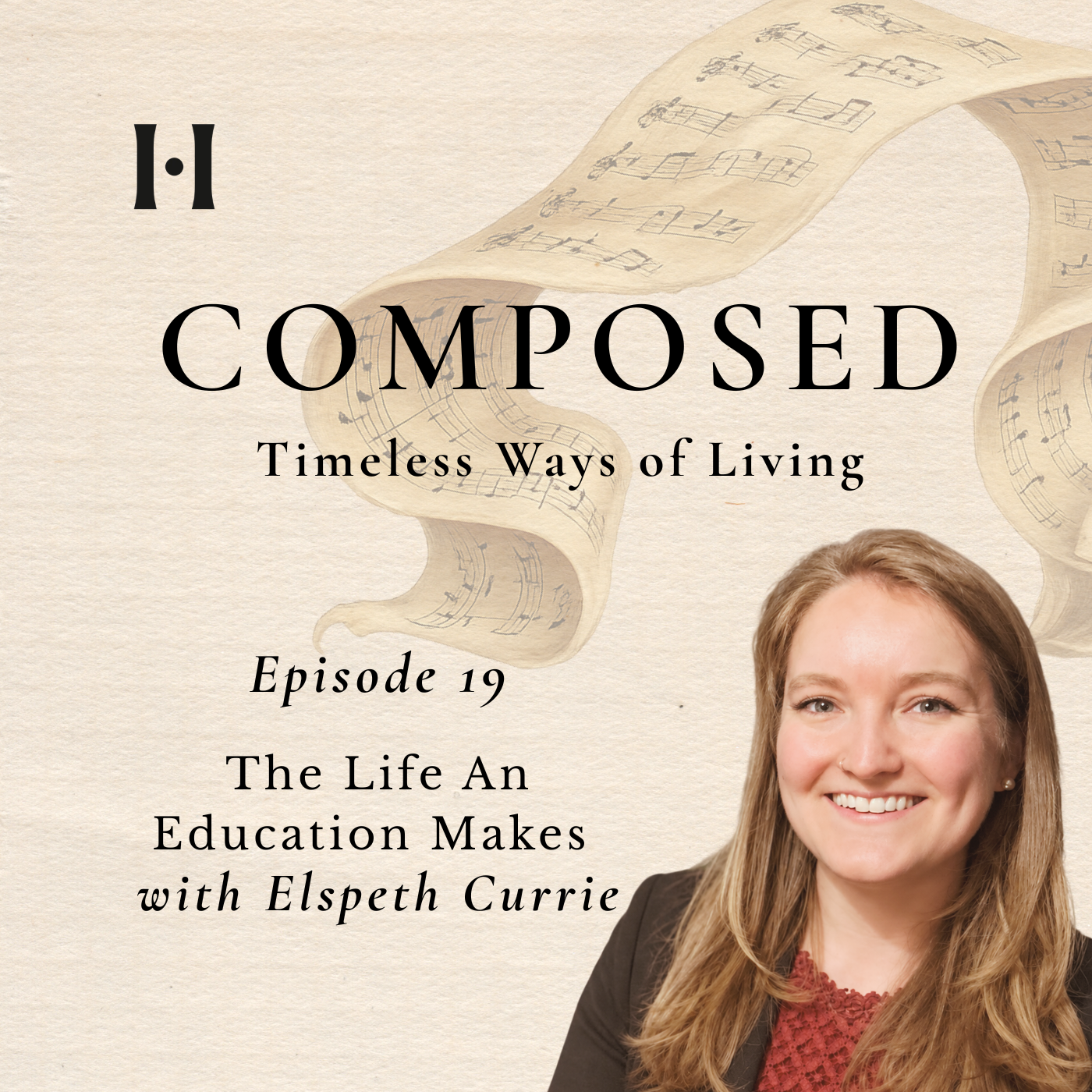
Composed: Timeless Ways of Living
The Life An Education Makes with Elspeth Currie

What if the books you read at sixteen, the habits you formed in a classroom, or the things you learned simply because they were beautiful were never meant to “pay off” only in a career? Christine Perrin talks with historian Elspeth Currie about education as lifelong formation, and about the ways learning can shape motherhood, family culture, work, and our capacity for attention and enjoyment. Drawing on Currie’s research into educated women in Renaissance England, they explore why learning matters even when its effects cannot be measured, how good books and thoughtful teachers shape us over time, and why practices like reading aloud, Sabbath rest, community, and celebration can keep us from simply drifting through family life. It is a conversation that recognizes the good work that might already be unfolding in ordinary life.
Contributors

Guest
Elspeth Currie
Elspeth Currie is a PhD candidate in history at Boston College, where she studies women and Latin in Renaissance England. She holds a BA in History and Classical Studies from Gordon College and a MSt in Women’s Studies from the University of Oxford. Prior to her doctorate, she taught Latin and history in a classical Christian school. She is the author and translator of To Marvel More: Holy Attention in the Incarnation Poems of Martha Marchina, a Christmas devotional on the Latin poetry of a seventeenth-century Italian woman. Elspeth and her family make their home on Boston’s North Shore.
Featured Links
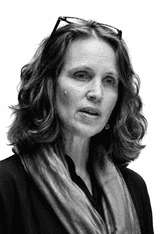
Host
Christine Perrin
Podcast Host and Contributing Writer
Christine Perrin is a literature professor, writer, poet, and podcast host. After teaching literature full-time at Messiah University for almost 20 years, Christine arranges her time to write, teach in Italy, and host the Composed Podcast. Christine is a graduate of Johns Hopkins University (BA in Writing Seminars) and the University of Maryland (MFA in Poetry).
Related Resources

Not All ‘Classical’ Schools Are Created Equal
The most consequential differences are often the least obvious.
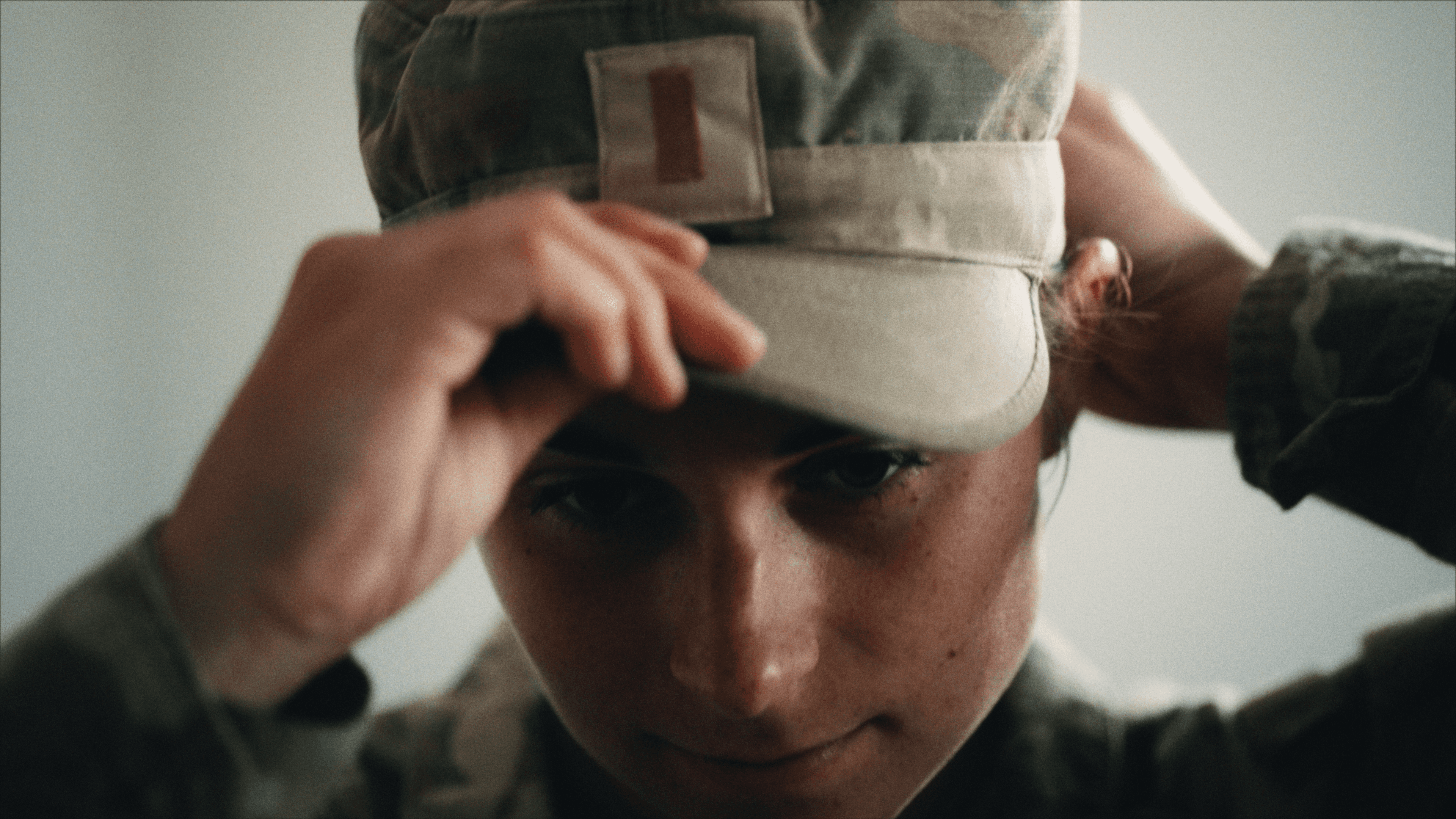
Something Bigger Than Myself
In Sarah’s words, her teachers taught her “how to know what’s right and how to do what’s right.” That is what we mean when we say a classical education prepares young people for real life.
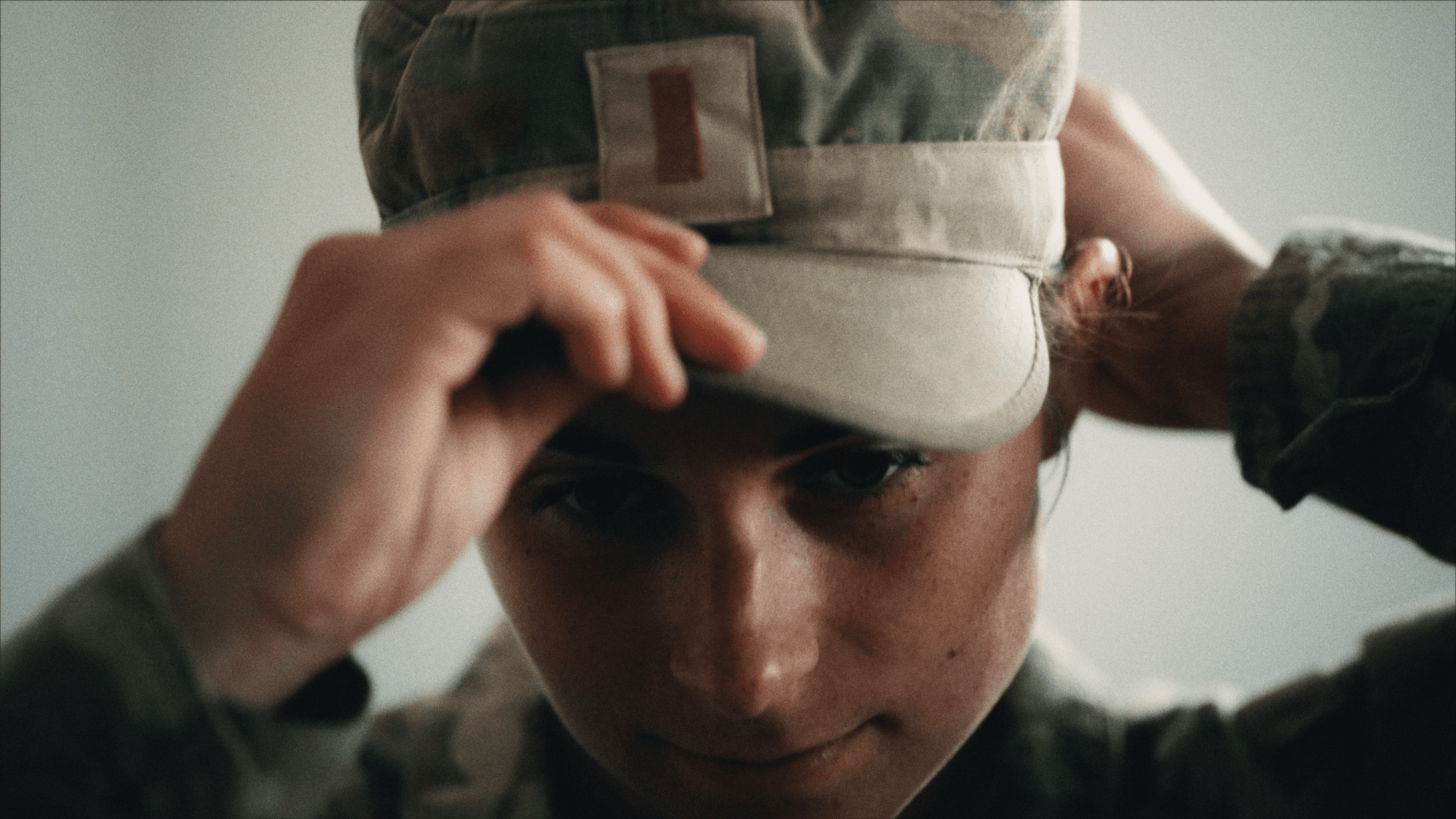
Grit, Loyalty, and Poetry: How Classical Education Shaped a Future Army Leader
One day at a classical school changed the course of her life.
In seventh grade, Sarah spent a single day shadowing at Jackson Hole Classical Academy. She says she learned more that day than in the seven years of school before it.
What followed was an education in great books, Latin, and poetry learned by heart, including Rudyard Kipling's "If-" Years later, when Sarah arrived at West Point to train as an Army officer, she found that same poem on the walls of the barracks.
Today, Sarah is a West Point graduate preparing to lead a platoon of soldiers. Her story shows what classical education is for: forming young people who know what's right, do what's right, and give of themselves in service to others.