Christine Perrin: This is Christine Perrin, host of Composed, A Timeless Way of Living, a podcast of the Humanitas Institute that explores living patterns of virtue, craft, community, and delight, and draws the classical tradition into contemporary times. Welcome, LaGrand of Messiah University's College Honors Program and dear colleague, we're so glad
Christine Perrin: that you're here talking on Composed today. Can you start by just giving us
Christine Perrin: a little bit of background about yourself?
James LaGrand: Sure. Sure. I came to Messiah University, was then Messiah College many, many years ago, to teach US history. I'm a modern American historian and, have taught lots of different kinds of courses in, in US history. But for the past, seven years, I think it is, I've directed, the honors program here, and that has really been a delight.
It's been the the highlight of my professional career, I think, thus far, working with these wonderful students and wonderful honors faculty member like like you and like Chris.
Christine Perrin: What is your intellectual background in terms of the preparation that you did and the discipline that you studied?
James LaGrand: And Yeah. I'm the child of a of a university professor. My father was a medieval historian. I think that's one of the reasons why I gravitated to history. I took a history degree, a bachelor's degree at Calvin College, and then I immediately went to graduate school, entered Indiana University Bloomington's PhD program in US history, Studied modern US, studied Native American history.
That's one of my great interests. I wrote my thesis and published it on Native Americans in Chicago in the twentieth century. But in recent years or maybe ever since I started coming to Messiah, I've been more and more drawn to the humanities in general. I can't say that I had the kind of classical education, but I think some of the people, Christine, in your circle have had. But some ways, I think, as I've thought back on this, I think I had a at least a partly classical education without it being called such.
Christine Perrin: I am very interested in the ways that your childhood, which was a very particular thing, prepared you to love the humanities, not just as a specialist, but also as a as a lover, as an immature, so to speak. Could you talk about some of the ways that that found age was laid for you as a child? And then we'll go on to talk about the patterns that you've established as the director of this program. But what was the foundation?
James LaGrand: Absolutely. I think the first thing that comes to mind is the deep, extensive role of music in my whole childhood. I studied violin, I guess, pretty seriously from a very young age. I took lessons, but the sort of lessons that many people, at least in my generation, I hope this still continues, are at least offered to the public schools. I went to I went to public school in Ottawa, Canada.
That's where I grew up. And I had this teacher I should honor because I think he formed me tremendously. Mister Stevens was a a New Yorker's New Yorker, had been to all of the great master classes. And here he is at 1st Ave School in Ottawa in this grade one classroom teaching me remarkably, training me training my ear in very sort of fine discerning ways to be able to hear truly fine, beautiful, rich tone from alternatives, training me in technique, entering me. The violin has a there's a whole world around the violin.
Right? It is repertoire. It's playing, but it's stories. It's identity. And so I think that experience, I I sung badly.
I assure you in a very fine children's choir at Knox Presbyterian Church in Ottawa, Canada, missus Forsyth, and to the degree I can I can sing, she taught me to sing? So it was music, I think, that that entered me into the world of humanities and the world of trying to sort of listen for and appreciate and inculcate beauty.
Christine Perrin: That's a really lovely tribute to teachers. And given, you know, your father, your own teachers, your music teacher, and and you're a teacher, that doesn't seem accidental. What would you say about the way that music was given? You know, it's this lofty thing, but it was also a discipline, and there were people that you were accountable to, and there was the fear every week of not being prepared and all of that. How was that a part of what you've known?
James LaGrand: I think it is the marriage, and this is this is a marriage that is so important in so many areas of life to marry, to combine, to sort of fuse within yourself and within your heart, within your spirit, to combine a a focus on craft, a focus on excellence. Even this isn't my favorite word, but it's not I don't think a wrong word. A focus on improvement or maybe refinement, we might say, but without losing the heart of a thing, the joy of a thing, the gift the giftedness of a thing. Right? Beautiful violin playing, whether it's a little child playing twinkle twinkle little star through the through the Suzuki program or whether it's, you know, Hilary Hahn recording the recorded works of Bach on the violin.
All of that is a is a gift. And I think it was that that combination. And I'm sure I on one side or another, and there were plenty of weeks when I didn't practice enough. And I did have the kind of teacher that would, lovingly say, there's no need to have this lesson. Right?
This lesson is done if I wasn't prepared. But it wasn't for some kind of sort of artificial and and individualistic and kind of narrow scale. It was to enter into this world to sort of give back the violin and violin repertoire, the love and the attention and the care that it called for.
Christine Perrin: That's beautiful. I love all the things that you're putting together about the gestalt of an experience. And it calls to mind a a story that we've both taught and loved, leaf by nickel, and and that notion of what does it take to realize something as a gift. It's not apart from craft, but it isn't solely craft, and it's relational, and it's accountable. I wonder if we could transpose that into your life as the director of young people in their twenties.
You took this position, was it about six years ago?
James LaGrand: I think seven.
Christine Perrin: Yep. Okay. And I remember you thinking a lot about what am I trying to give, and what are the patterns and the routines and the DNA that will give that? Could we talk about that a bit?
James LaGrand: Absolutely. Absolutely. I don't wanna primarily focus on social things and on the environment, but but it is true. I mean, I guess that is the first thing that comes to mind just as I was listening to your question, is that it is a challenge, I think, for many people to find space for these things that you're talking about, to not fall into a kind of trap of being hurried, of being distracted, trying to multitask, which all the scientists even now tell us isn't even possible. But yet, most of us, we we listen in a way I guess I would go this far.
We listen to sort of lies. So, anyway, back to back to what I've tried to do. Part of what it is is just to pick spots, whether it's a book, whether an experience, a trip, a concert, a poetry reading, and to do all I can to sort of pull out all the stops. There's another music reference for you. To pull out all the stops, to plead with stews, to pay attention, right, to quiet their inner selves, and to receive this.
You know, might be as short as just an hour. It might be an afternoon or a morning with with other people in good company, those have been the types of things that I've sought to bring to and to to manifest and to inculcate in the Messiah University Honors Program.
Christine Perrin: There's a group called the Center for the Examined Life, and it strikes me that one of the things they talk about, which I hear you saying, is that you have to encounter certain kinds of experience to seek them out. And I hear you saying that you've tried to give people those kinds of encounters on various levels that would then create in them a knowledge that they could go in search of. I know that one of the practical ways you've done that is to require certain events where the 400 students or so have to choose a certain number of events each semester to be present with each other and with some guide to to have this kind of encounter. I wonder what role you would say your own curiosity and that of other faculty members has you've tried to give them a taste of that as well and tried to kind of invite them into something that you've experienced in your own life of the mind and relational life.
James LaGrand: That's a great interesting question. One of the things that comes to mind, Christine, is our book of the year program. That's what we call it in the honors program where first year students read either this year, it's Augustine's Confessions. Next year's first year student honors, students will read Dante's Inferno, and then the following year, Homer's Odyssey. And I personally believe that there is an advantage.
There's a benefit. There's endless benefits to books like that, but one of them is that no one is, dare say, there's few people that would confidently say, I am an expert, expert in the sense of knowing everything about Homer or about Dante. Right? What what scholar would claim that? I think when there are texts, when there are bodies of knowledge, when there are subjects, and I'll use that term sort of broadly, that are that are endless in some ways, there's a benefit there because even the guide is not the guide in a a sort of a mechanical sense, in a judging sense.
Why haven't you gotten to the end? Because I haven't gotten to the end of drawing what I might from these these wonderful authors and these wonderful books. But in the honors program, one of my favorite weeks is seminar week, where every group of first year stews attends a small group seminar on just just a chunk of one of our of of our book of the year that year. And it is remarkable, I think. Wallstrums have told me this, that this is the first time that they've done that thing, where an hour and an hour is not the longest length of time.
We should. Every every time after this, I think, why why isn't there more of this? Because an hour everyone has an hour, but they tell me this is the first time that they spent something like an hour in this kind of way, aiming at something that's very high in terms of what is good character. What does it mean to seek God in the single-minded way, whatever the focus might be. And alongside other friends, other personal friends and intellectual friends, that that experience, I think, as I say, first comes to mind when thinking about the kinds of issues you're raising.
Christine Perrin: Couple of things that occurred to me. One is that this is something that happens outside of the grading system, outside of assessment. They have to do it, and they're held accountable to it. But they're not graded for it, and they are invited into relationship in association with it, both with you or with whoever is guiding their group, but also with each other. I love that aspect of it.
I also love what you're saying about this modeling of orienting towards the great minds and texts as something that we're all on equal ground in front of. I think Newman says this. Right? Just this idea of that's where you become intellectual friends because you're both small in the face of this, and yet it still meets you. It still reaches down to you as you sit at its feet.
James LaGrand: I agree with that, but there's also a way in which this has been at least my experience in in teaching these books to students. There's also a way in which students who might not come from intellectual backgrounds we have first gen students in the honors program. I realized that very few of my students had sort of fathers that taught university at least for a while. And so this is this is a kind of a surprise to them. But when you read these great authors, these great texts in hopefully sort of a suitable arrangement, you're honoring the author.
But I I see this in their eyes. Right? If you ask them sort of good questions, accessible, sort of high questions, but not not technical questions, not graduate school kinds of questions, humane and humanistic questions, but deeply important. They they have this sort of spark in their eyes. I am somebody.
Right? I'm being honored in in this way. I think that's this is a bit of an aside, but that's one of the things, sadly, that I think some people that are in the habit of questioning and critiquing and worrying about the place of the classics. That's one of the things they miss. They hear, they see, I'm not gonna argue with them, but they see too much honoring, say, of Homer, too much honoring of Dante.
But what about what happens in the heart and in the soul and the spirit of the reader? Right? They too are honored in the process of talking about or in or in some ways communicating their reading of it. That's, that's invaluable, I found.
Christine Perrin: That's profound, the, dignity that's conferred upon us by the invitation of another mind that can become a friend. And you've written about this in relationship to Toni Morrison and Frederick Douglass and the kinds of things that they've said about being dignified, being honored by access to that conversation, and access being simply just the wide invitation that these speeches and bottomless books offer us.
James LaGrand: Yeah. Martin Luther King is in that is in that camp as well. I think it was a few years ago around the, the social media or at least some social media circle of people started sharing the syllabus of the, of the course the humanities course he took at at Morehouse and everyone or most everyone except for a very few said, how on earth could you get undergraduates to read that? But King clearly, you can see it in overtly. You can see it sort of between the lines.
That shaped him. The clear self evident importance of these texts, the capaciousness of them. Right? They were for the high and the low, people of all kinds of backgrounds, whether racial or religious or what have you. That is is the genius and the and the still sort of untapped riches of inviting.
I love that word, more so than assigning and certainly more so than assessing or some kind of technical or mechanical word. But to invite students to read these great texts with you. It's been a joy in recent years.
Christine Perrin: You know, this phrase intellectual friends, I I know that that has also been a kind of hallmark of the leadership that you've wanted to model even before you were the director of the honors program. You use that language a lot of you know, essentially, when you write a paper, you are combining with an intellectual friend to think about something together, which seems to me also to really humanize the telos of what we're doing when we are trying to become educated even in the least bit. And that's kind of extended into the honors program and the kinds of things that you've hoped for people and the kinds of experiences you've curated. Do you wanna say anything more about patterns that you've felt have been effective in sharing that way of pursuing an education?
James LaGrand: Yeah. Couple things that come to mind. One is that there are, in my in my view, Lise, a wide range of intellectual friends. So, yes, this would include and we have we have assigned some of this, not not as much as perhaps some other honors programs, but we've assigned some of, say, Plato and Aristotle. To many people, these would be, in a sense, in their identity, of obvious intellectual friends.
And for some of my students, I can I can sort of walk with them through some of these texts at least and serve as guides? But what has struck me, and maybe this is partly due to my interest in my work and my teaching, is the wide range of intellectual friends. So I I teach a an honors first year seminar, and the title of it is patriotism or cosmopolitanism. I put together a reader. And but to be sure, are challenging texts, maybe slightly more accessible texts like Frederick Douglass' What to the Slave is the Fourth of July?
Or some of Abraham Lincoln's greatest speeches. These are on the on the brain because I've just been teaching these and reading these with students recently. Here are some some of these other intellectual friends that sometimes surprise them in being able to powerfully speak to what they might think about as contemporary issues. Issues like justice or quality or diversity. Intellectual friends would be intellectual friends like Douglas and and Lincoln, speak powerfully to that.
And then the other thing, briefly, that comes to mind, Christine, is that I think it's helpful too to hear speakers I think it's it's helpful particularly to to hear them in person, meet with them and chat with them after their talk that have been shaped by some of these intellectual friends themselves. So I was so happy to meet through you, Emily Maeda, and she came and spoke to our honor students recently. And in the aftermath of her talk, I chatted with several honor students who were who were struck by and encouraged by, and I pray changed in some way by hearing and seeing and pondering the intellectual friends that Emily had made and what she had done with them in her own being.
Christine Perrin: You're calling to mind so many things. One is Danielle Bennett Duke's visit years even before that, and I'm I worked with an honors student on her senior thesis this year that recalled Danielle Bennett Duke's, dug up that talk about why I teach my children Homer and the golden thread and found that to be incredibly useful. So I hear what you're saying is that there's an almost genealogical relationship among the living, among the living and the dead, where we share our friends with each other. And it becomes one you know, I mean, it's a cliche, but one long conversation, but it truly is a conversation. It's I love this about this.
What do you love? Come talk to us. Come enter into that. And I'm I'm curious about I think this has been a huge part of colleagues, something that we've shared as faculty in the honors program. Something that John senior calls the faculty of friends, which is a sort of invitation into a friendship that exists, whether it's between two teachers or between a teacher and a writer that has been long loved.
Can you comment on what you've observed in that respect?
James LaGrand: Yeah. Absolutely. I think one of the reasons why sometimes students are surprised to see this I can think of several examples of students that as they got to know you or me or both of us more closely, they were were a bit surprised to know that there were that were deep friends. Right? Very close friends.
Not not that they sense any kind of incompatibility there, But I do think that, sadly, deep friendship does surprise people in this day and age. If you look at the if you look at the social science data, this is there's plenty of things to mourn over, to pray for, but one of them collectively is maybe you've seen this, Christine, of the surveys every year in recent years that show how few people have even one good friend that they can rely on, that they can count on. So I think initially, there's a kind of a countercultural aspect to this. But then as they enter into this, and hopefully, they see the way that this has formed us, that has formed any two friends or group of friends, they come to desire that. And I think one of the things that appeals there is the way in which two different things that they might think of some people might think of as separate.
I think, sadly, some parts of higher education in recent years have almost suggested these things are separate. The world of the mind, the world of the intellect, the work you do, the performance, the things that can be assessed, and then recreation or playing or free time. And I think many people I I I at least would say that one of the sort of key elements of the good life is when these things can be conjoined, can be married together. I'm thinking of of walks. We have this beautiful nature trail on our campus, and the walks, some of us, are these deep friends that have emerged at Messiah and within Messiah University's honor honors program of Tabella, or meals or tea time or these kinds of things where where the physical and the social and the interpersonal is combined with, it's fused with, it's married to the world of even the intellect and the world of the spirit.
That is lots of lots of pretenders, I think, lots of counterfeit holistic education. But this thing we're talking about here, that's the real McCord. That's true holistic education.
Christine Perrin: And it takes time, and it takes scale, and it takes some self forgetfulness about ambition. Right? You spend, you know, four hours on a field trip to Gettysburg, or do you write work on your book? I'm thinking too that of late, one of the things I've noticed is that instead of just having events where you had speakers, you had the event, and then you invited the faculty of friends to the common room to talk about the event with tea and invited students into that conversation. And so there's this layering of that I think has just become part of the DNA of the program, and it's it's an unofficial litmus test.
If you like this, you should probably be a part of this program. If you don't, you don't wanna be a part of it.
James LaGrand: We do have the name or the the the language of program in this thing that I direct, but I far prefer the language of trying to build and to create and to feed and to protect and to grow a culture. That's really what I'm most about in my work. In my mind, that's more suitable. It's more central to my anthropology, my Christian anthropology, my understanding of what a person is and what a person is is called to be. And though so those are the kinds of things that I look for, and I try now now you're having me check my words, Christine.
I was gonna say plan, but even that can be kind of a cold word. I try to put these in front of students. Right? I try to offer these to students. When Hans Borsma came here a few years ago, I think this is a great example.
So we put all sorts of things on his itinerary, and he just said, yes. Yes. Yes. But he gave this sort of brilliant, heady talk. He also gave one of the finest chapel presentations I've ever heard.
I still go back and listen to that. But we also went to a local Orthodox church, and some folks worshiped there, and others came afterwards as he read the icons for us. For some people, this is sort of introducing them to a new way of reading scripture, of encountering scripture. There happened to be providentially, I think was it a Slavic meal? I can't remember the ethnicity, but they had food.
And so we sat on the grass and ate and talked. And to me, that's a little picture of heaven and also a picture of what a true education should be.
Christine Perrin: That's beautiful. It is one of those memories that lives on as a place where heaven and earth met and where you realized so often in life, we realize what is impossible. And in those moments, we realize what is possible and that we are eating of the bread of heaven. That is standing in my mind as very memorable, life giving. I am also thinking about our trip to Gettysburg where we went with students to the battlefields.
And on the battlefields, we read certain American documents aloud together. Can you talk about that a little bit and what we learned from that? And I would say what we learned, not what we taught even.
James LaGrand: Well, I think as as a proper fit for purpose academic or intellectual exercise, there was no one agenda. Right? It is it is broad, but I'll speak to to what I tried to bring to this and what has been on my mind a lot recently, and I'd be interested to hear how your your thoughts relate. But we live in a time when, for good reason, what I would call civic piety, a relationship of some kind of affection that's married to dedication, that's married to a sense of duty for one's nation, whatever one's nation is. This is this is what I teach or focus on in my first year seminar.
We live in a time when that's very much in question, when that's vexed, when that has lots of different voices here. I personally think that that civic piety has a place in a well formed person, in a well formed nation or state or collective or whatever the whatever the unit or polity is. And I think that the exemplar of that is is Abraham Lincoln. Right? The thoughtfulness, the ethos that he brings to every sentence almost that he wrote, that he spoke, that's what I was thinking about.
I remember when we were driving in these vans down to Gettysburg as we were walking there that day as I think I can't remember if I was the one or if we had a student read the Gettysburg address at the very spot that Lincoln was. That was that was, for me, at least, that made the hairs on the back of my neck stand up. It was a it was a thrilling kind of moment because of the civic seriousness and civic weightiness of it.
Christine Perrin: Yes. We also in the graveyard, we read When Lilac's Last in the Dooryard Bloomed. And on one of the battlefields, we read, the Dear Sarah Letter, of a soldier that's very famous to his wife as he faced his own death and the loss of that life together. I think what struck me was, again, something that we've referred to earlier in the conversation that you've referred to is this mutual, conferring of dignity to, our own past, as well as our own present as belonging to something. You know, we're not just deracinated, uprooted like a great trees that have no place to receive their nutrients, but we we have a soil.
We belong to that soil. I also was struck as a poet, you know, in my fifties. Goodness. We need songs to remind us of who we are together. And since then, I feel it's only more necessary that we find a way to do this in the multivalent layeredness that you're describing of friendships, place.
You know, it seems like many are aware that we've depending on who you talk to, we've seeded our our lives and our minds to the machine, and we've lost cohesiveness as a people. And, you know, what are the things that plant us in the soil again? That was one of those moments for me that helped.
James LaGrand: I mean, I think one of the things we're talking about here is what is it to be fully human? That is a lifelong task. Right? That is that is something that I try when there are opportunities to put that question before students, sometimes explicitly, sometimes implicitly, but also to put before them texts, but also songs. Right?
To do this in a varied way because I think certainly much of this I've received from you, Christine, but poets and poems, songs and songwriters have much to teach us here. One other thing just to sort of add on to what we've been talking about here, any sort of thoughtful, well developed person, man or woman, is called to think about is where they came from. What kinds of commitments and sacrifices drop them to be, form them? We're not we're not sort of dropped from the sky. So that kind of historical, you would expect me to sort of appreciate a historical dimension.
But, of course, you mentioned that we were one of the places quite rightly we where we spent some time, some quiet time, you might say, in Gettysburg, was in a cemetery to be reminded of the finitude of life. The limits of life is, again, something that that distraction and all sorts of noise in this world can distract us from. In some cases, I think it just sort of says, well, don't don't think about that. In other cases, there are voices today that that more explicitly say that's not real. Right?
You can you can be immortal. Right? There's there's projects to try to make human beings immortal if they have enough money. I I would say in every respect, and I say this partly because I'm thinking of the sort of wise people that I've read, that I've met, that I've received. That's a kind of dead end in every respect.
That that understanding, I think, is so so important as well in a human sense, in a Christian sense, in every sense that we are to be preparing for our deaths and then also certainly for the world to come.
Christine Perrin: Thank you for that. That's a dimension of an honors program that I would venture to say is rare. I think it's an extraordinary opportunity at a fruitful moment in people's lives to have the privilege to consider that element part of the educational process. As you were talking, I was thinking about my honor seminar this week on, the architecture of happiness called about the virtue tradition taught to seniors, you know, in their last year. I love the bookends of the honors program historically of that first year seminar that is so much of a cohort of people just coming, just fresh, and then the other end of the senior seminar.
We were reading Marilynne Robinson's book, Home, which is very much about death and facing death because the father in the family is dying and two children come home. And one of the students recalled his own experience growing up as a son of a father that was was raised Amish, whose grandfather was still Amish, they were farmers. And it was so wonderful because he was describing a scene between Jack and his father, Robert Boutin. And he said, this scene is very much like a scene around my dinner table when things are tense. And then he went on to kind of articulate the resonant there.
And it strikes me that part of what happens when you have a common culture through a text and through a relationship or a program or even just these conversational events, common faculty, is that your sense of what things are is constantly being widened in just the way you're talking about by other people's experience, but deepened by the common thing that you can circle around. And I know we've had Anika Prather talk, at Messiah regularly, and that's how she sees this process of, like, this is almost like a fire that warms us together. There's the potential for racial reconciliation. There's the potential for cultural reconciliation. When you share something and you love it, and it's a it's a kind of separate thing that you're both looking at together in admiration.
Maybe I'm just restating things that you said in other words, but I wonder if you have any thoughts on that.
James LaGrand: Well, I I agree wholeheartedly. I think one of the things just very basically that we're we're talking about here that I know you and I share, but it's not universal, certainly, even in education, is an anthropology that would say that one of the one of the primary goals of a proper education is to be formed rightly or to to start down that path, not to not to demonstrate competence in this or that or the other thing, not even necessarily I mean, is this is controversial talk in some circles, not even necessarily to demonstrate expertise. That's not the final word. So I think I think one of the sort of key things that is required to have this kind of experience and to per keep pursuing it is, you know, it really does come down to to one's anthropology. What how one understands the human person and what the human person is made for.
But maybe this is related to that. Another thing that that came to mind as I was listening to your comments about some of these mutual friends of ours is that they do not live entirely, and their and their circle does not live entirely in the world of politics, and I'm using that term broadly. So you use the language, Christine, of difference, and it would be sort of a interesting, I think, sort of exercise, social exercise, to see how a wide range of people responded even instinctively immediately to difference. To some people, this is trouble. Right?
It refers to polarization and to these kinds of things, whereas I think you and I would say that that difference both is inevitable and that it doesn't have to be this kind of, you know, political war of all against all. It can in a in a humane, in a humanistic, in a in a liberal arts sense, it can be married with this human unity. So whether we're we're reading and I I assign these kinds of authors, someone like Frederick Douglass, someone like Malcolm X. I've I've read, talked with my students for years and years about both the autobiography of Malcolm X and some of his his legendary speeches. Yes.
There's some things there that might be sort of jarring and off putting, and I try to encourage students not to sort of stay there or belabor there was points, but also look for those points of apparently, they're points of connection. They're just points of of humanity, of sort of productive talking where even someone like Malcolm X can be perhaps some of his thinking one of these intellectual friends.
Christine Perrin: I have some more questions for you about, your formation, but you're making me think of another favorite thing that we've done and and now do every year, which is to study taking the jests and the book Olio together, which is very much engaging the things that you just said. One thing that strikes me about the experience wherein we each teach a different class, and we take this Pulitzer Prize winning book, assign it in both classes, and then we have cross class pollination by having a wink of African American history and a week of Tejinva Juste's poetry. You teach my class. I teach your class. And Jess is full of music, literal music, and he has this famous essay, which we can put in the notes to this program, about the black men who were musicians that essentially gave him his inheritance.
So, I mean, it's an example of all these things we're talking about of piety and genealogy and teachers and fellowship and intellectual friends. I wonder if you would say anything about the fact that one of our most significant formative teaching experiences had nothing to do with a program or with funding or with, you know, what has that meant to you?
James LaGrand: Sure. Yeah. I'll speak to that. I won't focus on the falls, But it does occur to me, Christine, that that some people, if they they just got sort of the the shorthand review of what was done, they this is, I think, what they would say. Oh, that's interdisciplinary work.
You must have been drawn by the interdisciplinary nature of it. Not not really or not first, not foremost. Right? Tahimbah Jas is deeply humane, deeply learned, I can't even I don't have words to describe how skilled he is at his craft. It takes your breath away.
And then the sort of clippus for which he uses this craft. I'll try to I'll try to reference maybe this will work, this this analogy. I'll go back to the violin. So one of the things that some people don't like about some aspects of the world of classical music, the world of of the violin in particular, is that it's so focused on virtuosity, right, on showing off for the sake of showing off. In fact, there's a whole genre of violin repertoire that essentially this isn't the official name for this repertoire, but essentially, they're show off pieces, paganini and things like this.
And they it's all just sort of fireworks. Right? And people go, oh, and they you know, results in the long, long applauses. I think I know through your help in trading and guidance and your presence in my life, Kris Keene, I'm quite sure that the haemba jest in the world of poetry is as virtuosic as they come. But it's remarkable the the subject matter, the the the purpose, the end towards which he devotes his virtuosic gifts.
It's towards mean, in one way, it's it's towards the the history and the experiences of his people as a black American, as someone who has written about and and recorded podcasts beautifully about the nearness in his own family of sharecropping and of Jim Crow, the way that he brings beauty and craft and talent to stories of pain and suffering and challenge. Again, for me, least, don't suffice. I I almost hesitate to say this, but because these are categories are too flat. But in some ways, what's remarkable about his work is the way in which both true pain and injustice and suffering are married with human resilience and human agency and the power of tradition and the power of kinship and family and the seeking towards the good. It is yeah.
That that experience has been one of my favorite things I've done here is when we have all of our spouses collectively read and talk about and reflect on Tahitboujes' poetry.
Christine Perrin: You know, it strikes me, your opening comments. I I love what you're saying. I love your love of him, and I I feel similarly devoted. But it strikes me that he is I mean, I don't even wanna put it this way, but he is interdisciplinary. His work you know, his work is so rich in the way that any well made thing is.
It asks us to approach it in these multifractal dimensions. And so to say, oh, no. This is a little project where someone told you to cook up two approaches to the same material is to it's just laughable. And yet it feels like in this world of objectives and of using the proper language for the goals of the semester and everything, there's almost no room for that magnificence.
James LaGrand: Yes. In some ways. But then when you read, like, you know, all your listeners are are are hearing both of us, please read Olio. When you read Olio, will you realize how I mean, I'll be honest, how intimidatingly high, intimidatingly talented, you talk about a fully formed man, the ways in which this deeply talented, deeply admirable man, Pristin cares not a wit. I'm quite confident for all of these trivial things that could be measured and written on some form and assessed.
I hope it makes people fake, Right? About what what is important in life. How should we use our time for teachers? How should we treat our students? What kinds of texts?
What kinds of experiences should be put before them? What things truly are highest and most worthy and most, we pray, conducive to true human formation and true human flourishing? To hemagesis olio is at the top of my list.
Christine Perrin: Oh, yes. And mine. Thank you. That's really well rendered. I'm interested in a couple more questions that that segues into, which is, do you have an early encounter with beauty that you know you were young, you were a child, that you felt like you didn't maybe even have language for, but you went in search of afterward that still lives with you in your memory?
James LaGrand: Yeah. I'll mention a couple of things, Christine, and hopefully, your listeners can see the connection here. Because they're not I don't think immediately or in a firsthand way connected to some of the things we've talked about. But two things that come to mind are, one, my grandmother's, my mother's mother's dinner table. Dinner table set for a Sunday dinner.
I came up with that. It was brought up in that tradition where where all the family comes together at the often the matriarch's home for for Sunday dinner after morning worship. And it wasn't as if she had sort of the most beautiful or the most valuable, certainly China or flatware or anything like that. But it was the care, the care that was put into setting that table. I I think, whether this was conscious or unconscious, I think part of the part of the the purpose, the telos of that care, was some sense of things being done sort of rightly and beautifully and towards some kind of aesthetic goal.
But, of course, it was also, and this was probably more immediately, I think, for my grandmother and rightly so. The goal was to love and to convey thoughtfulness and care and respect for her family whom she loved, for her children, for her grandchildren as she's anticipated what what regularly almost every time happened, which was this Sabbath activity. Right? This this time of rest when we weren't looking this was before the era of cell phone, but we weren't looking at our watches or our phones. We sat and enjoyed this time together and maybe talked about the sermon or maybe talked about the week ahead or some of it, you know, not all of it very high.
You know, some of it kind of fun and low and and not low, but funny and and deeply human. Anyway, that's one of the things that comes to mind. And then another, this is tied back to music, both in my grandmother's home, but but in my home as well. My mother was a very fine so just a natural penis. She took some lessons, and she just soaked it up.
And there was a whole range of music that she just maybe on partly being a son who wants to honor his mother, but I think this was objectively true. Up to up to a pretty high level of music, of of piano music, she played it perfectly and actually sight read it perfectly. So I never I never met a better accompanist for me as a violinist or for hymnsings. There's a lot of hymnsings in our whole, particularly around the holidays. And, we used to joke, and I was one that had to say this in a joking way.
We would reference the scripture, make a joyful noise, because I didn't always make a beautiful noise. I think I had a pretty good sense of pitch. The timbre of my voice is is not great, too too gravelly, not not sure enough despite missus Forsyth's best intention. But I think I hope that was a time of self forgetfulness, a time of focused on something outside or beyond even important things like craft and beauty and competence that was that was focused partly on this thing that we were enjoying together. But most of all, we hope, this is my prayer, that that this glorified God, as we sang these suitable hymns, whether it was Advent or Christmas or Epiphany or Holy Week or, you know, whatever the season of the church calendar that we were in, those are two memories of beauty from my childhood.
Christine Perrin: Thank you. It strikes me that it's it's just so interesting to think she doesn't know it, but, you know, your grandmother and your mother gave you the materials to do the most important work of your life. You didn't come up with that sui generis. You know, the conversations and the food and the music and the being together joyfully with something that they planted in you, that you lived into. That's really beautiful.
I think our time is coming to the end. I do have one more question, but I also am wondering if we should read a tiny bit of Jess poem. I could call one up, although I would love for you to read it. I'm wondering what role hardship has played in the vision of what you are describing.
James LaGrand: Can I ask if you're thinking of hardship in a sort of particular register, a particular dimension in general?
Christine Perrin: Well, more just, you mean, in your personal life or in your academic life or in the life of an institution? Is that
James LaGrand: That's what I'm getting at. Yeah.
Christine Perrin: I think it could be in any realm. We've been talking about the realm of forming a culture and a community in, an so that might be the most natural segue. But but I would say even just as beauty has formed you, if you wanna say something about your own formation in terms of hardship, that would be helpful too.
James LaGrand: Yeah. I'd be happy to. I won't sort of belabor this point because it's well known to people who know anything about the world of higher education. But these are these are difficult times in higher education. I wouldn't I wouldn't put my self or my program in any kind of special category of hardship.
But there are there are limits, financial and in terms of time that occasionally are jarring or even frustrating, at least professionally. That's that's what one of the things that comes to mind. I mentioned this. This is an imperfect metaphor, but this idea of noise or static. Not a dated metaphor, isn't it?
But that's that's what comes to mind. That can sort of subconsciously fill our minds. I try to sort of help students clear that out. It it doesn't happen in every respect. There are there are these limits I mentioned.
What I wanna return to is the beauty and the sustaining goodness of friends, of the deep and invaluable friends that I have developed at Messiah. And you are certainly among them, Christine, and we have some mutual friends here that buoy us, that sustain us through these through these hardships. A sympathetic listening ear. Sometimes that's what's needed. Sometimes it's, someone to plan the next thing.
Right? To cook up some some idea, some program for a speaker to come. So I certainly would not wanna end with hardship because, you know, even in this this world, I'm trying to do all I can with other people and with the gifts that God has has given me to at least impart make make all things new or some of the things new within the Messiah University Honors Program.
Christine Perrin: Thank you. That's a really helpful answer. I think, I don't have a way for you to read this poem, so I'll read it
James LaGrand: Okay.
Christine Perrin: In in tributes to and and even to Walt Whitman and the the Gettysburg pilgrimage that we took. Fisk Jubilee Proclamation. Oh, sing into the lord a new song. Sing. Undo the world with blued song, born from newly freed throats, sprung loose from lungs, once bound with bonded skin, scored from dawn to dusk with coffle and lash.
Every tongue unfurled as the body's flag. Every breath conjured despite loss we've had. Bear witness to the birthing of our hymn from storied depths of America's sin, soul worn psalms blessed in our blood through dark lessons of the past, struggling to be heard. Behold, the bold sound we've found in ourselves that was hidden, passed out of the garden of freedom. It's loud and unbeaten and soft as a newborn's face, each note bursting loose from human bondage.
I just wanna thank you so much for giving us a window into the way that you've tried to cultivate your own life and other people's lives and a vision maybe for some of those ways. I did not say this about you, but I'll say it now. You seem to be a person who loves big and beautiful things and knows how to take small steps towards them and be satisfied with them. I hope that this interview gives other people a sense of how that works, but, certainly, you've you've given that to me.
James LaGrand: Thank you. I hope so too, and I hope everyone, particularly after that that reading, if you've not read Tahima Jess's collection Olio, please do. Yes. It is a wonder.
Christine Perrin: And read it aloud with friends.
James LaGrand: Amen.
Christine Perrin: Thank you so much, Jim.
James LaGrand: Thanks, Christine.
Christine Perrin: You've been listening to Composed with Christine Perrin, a podcast of the Humanitas Institute about composing well lived lives of virtue, craft, community, and delight.
-1400x1400.png?prefix=media)
Composed: Timeless Ways of Living
James LaGrand on Making a Home for Books, Beauty, and Belonging

What does it mean to build a culture of intellectual friendship, one shaped by books, music, meals, memory, and shared attention? In this episode of Composed, Christine Perrin speaks with historian and colleague, James LaGrand, about the habits that form students and teachers into a genuine community of learning. Their conversation moves from violin lessons and hymns to Augustine, Dante, Frederick Douglass, Lincoln, Tyehimba Jess, and the Sunday dinner table. Together they consider education not merely as competence or achievement, but as the patient formation of persons who can receive beauty, honor the past, and seek the good in company with others. LaGrand describes his work in Messiah University’s Honors Program as the building and protecting of a culture, rather than the management of a program. Through seminars, shared meals, walks, tea, concerts, trips to Gettysburg, and the reading of great texts aloud, he invites students into patterns of attention that join the life of the mind to friendship and delight. The episode closes with a tribute to Tyehimba Jess’s Olio, and with the quiet image of a grandmother’s Sabbath table as a pattern for a life of hospitality and care. Mentioned in the Episode Olio by Tyehimba Jess | https://www.wavepoetry.com/products/olio Tyehimba Jess | https://www.tyehimbajess.net/books.html
Contributors

Guest
James LaGrande
James LaGrand is an American historian and director of the Messiah University Honors Program. He has spent his seven year tenure practicing the example of his grandmother and mother in setting the table in order to draw students and faculty together for conversation about books and life that build relationships.
Featured Links
Host
Christine Perrin
Podcast Host and Contributing Writer
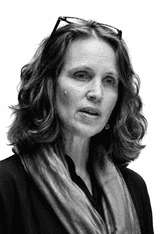
Christine Perrin is a literature professor, writer, poet, and podcast host. After teaching literature full-time at Messiah University for almost 20 years, Christine arranges her time to write, teach in Italy, and host the Composed Podcast. Christine is a graduate of Johns Hopkins University (BA in Writing Seminars) and the University of Maryland (MFA in Poetry).
Related Resources

Grit, Loyalty, and Poetry: How Classical Education Shaped a Future Army Leader
One day at a classical school changed the course of her life.
In seventh grade, Sarah spent a single day shadowing at Jackson Hole Classical Academy. She says she learned more that day than in the seven years of school before it.
What followed was an education in great books, Latin, and poetry learned by heart, including Rudyard Kipling's "If-" Years later, when Sarah arrived at West Point to train as an Army officer, she found that same poem on the walls of the barracks.
Today, Sarah is a West Point graduate preparing to lead a platoon of soldiers. Her story shows what classical education is for: forming young people who know what's right, do what's right, and give of themselves in service to others.

President Trump Champions Educational Freedom — Putting Students and Parents First
"Today, President Donald J. Trump welcomes students, parents, and education advocates to the White House to celebrate the start of a new school year. Under President Trump’s and Secretary of Education Linda McMahon’s leadership, this Administration has delivered an unparalleled record of expanding educational freedom, restoring parental rights, returning power to the states, and putting American students first."
_1x80oX.png)
Teaching Children the Fruit of Longsuffering
A new generation of parents has arrived, people who love their children more visibly, more anxiously, and more attentively than perhaps any generation before them. They read the books, they watch for the warning signs, and they would lay down almost anything for the good of the child in front of them. Yet many of these same parents struggle to tell the difference between play and scholé , or between protecting a child from cruelty and protecting a child from difficulty. These are not the same acts of love. One forms a soul while the other, however tenderly intended, can quietly deform it.