Christine Perrin: This is Christine Perrin, host of Composed, A Timeless Way of Living, a podcast of the Humanitas Institute that explores living patterns of virtue, craft, community, and delight, and draws the classical tradition into contemporary times. Olivia Reardon, it's so nice to be with you here. I I wanna say a few things about your formal bio and then tell me a little bit more about yourself and, you know, how you ended up here sort of thing. You were homeschooled from k through nine, and then you went to Rockbridge Academy from tenth grade to twelfth grade. You are a graduating senior at Messiah University where I met you Yep.
Despite knowing of you from mutual friends beforehand. You studied literature at Messiah, and then you did minors in education and dance. We did your senior thesis together, and that's the subject of our conversation today, as well as with Carrie Hassler Brooks, a colleague of mine and a teacher of yours. You have interned at Covenant Christian Academy. And then after the internship continued being the ninth grade writing teacher.
And you're planning to seek a job in classical Christian education starting this summer. And you're interviewing for that now. So, you come from a family with four siblings and you are number two. Did I miss anything?
Olivia Reardon: No, that's great. That sounds exactly right.
Christine Perrin: Good. I would love just to hear a little bit about how did you end up loving literature, wanting to major in it? What was the path that brought you to this conversation?
Olivia Reardon: Yeah. I have always loved literature as long as I can remember being able to read. I was an avid library goer. I think that's part of being homeschooled is you get to go to the library all the time. And I did that with all of my siblings.
And, so literature is just a huge part of my life for my entire life. But going to classical Christian schools, got to engage with really specific kinds of literature in these classic texts that just were a whole new level of wonder and exploration. Because I got to engage with thinkers and writers from centuries who were asking and wrestling with the questions that I was asking and wrestling with as well. So that just became a really formative experience for me intellectually and spiritually to engage with these texts, in like a community with people from the past, but also in community of my peers and teachers in the present. And I realized in high school when I went to Rockbridge Academy that people got paid to do that for the rest of their lives.
And I was like, this this is the job for me, and I would love to continue to study literature in college, which is what I've been doing at Messiah University, But then also get to continue to engage with these great books with future generations of students for probably the rest of my life. That sounded delightful. Something I should pay someone else to allow me to do. So that's why I'm kind of on that path. And I think because I think continuing to engage with these books will continue to shape me in really important ways.
And so having a reason to continue to engage with those books is really important to me in community because I think that's a really important way that we read is with other people. But then also because I have experienced classical Christian education, I know just how important it is for young people. And I think that there's there's little more noble and worth our time than helping young people love to learn.
Christine Perrin: There is so much there to unpack. I'll start by just mentioning, which I didn't mention, that you're recording a course today Yes. For Classical You that is about your the content of your senior thesis to the extent that a 100 pages can be Yes. Recorded. And you focus specifically on the kinds of things that brought you to literature and that brought you along on that journey of reading and living out of what you read.
You you said so many things in your introduction to yourself right now that I'd love to turn around and follow-up on. I think two of the things that stand out. One is that it began the things you read began to answer your questions about yourself. And you became aware that you were reading with the dead and not just the living. Could do you remember an early question that was answered for you in a reading experience?
Olivia Reardon: I think that well, one of the easiest texts to point to for me personally is Hamlet, is Shakespeare's Hamlet because of the way that Hamlet himself asks so many questions. And the the really important thing actually before we get to answers is just the language of questions and of asking and of wondering. And so when Hamlet asked questions, existential questions, hard questions, he was asking the kinds of questions that I had in me but didn't know how to express, didn't know how to get outside of me. And so I think the first thing that literary texts actually do for me and I think for many other people is give us the words to ask the questions that we have and the questions that people have been asking for centuries. And then after we can actually ask the question, we can put it into the room.
We have the opportunity to think about it more deeply and to discuss it in community in light of scripture and other things to start to get to the beginning of answers. Mhmm. And I think because these big questions never are fully answered in our lifetime, which is one of the beautiful things about returning to text over and over again. But they can start to give us sort of handholds for thinking about these big questions. And so, you know, when when Hamlet asks like what should fellows such as I do crawling between earth and heaven?
He's asking like how do we live as broken people in a very very broken world? And I think that that is my question. That's continually daily my question. How do I live as a sinful person in a world where other people are also sinful? And, you know, engaging other kinds of texts alongside those questions that give us examples, live options for living.
Father Zosima, Alyosha, the brothers Karamazov are such good examples of that. That just gives me handholds to start to to live the life that I want to live.
Christine Perrin: I love the metaphor of handholds. I'm thinking of a rock face, with those, you know, climbing holds that get you up a sheer, cliff. And I'm thinking even about this is a beautiful thing that you said that the the texts actually create the questions for us that are within us, but we can't name them without help. I love that. But I'm also thinking about the fact that we have to start somewhere, those handholds, you know, we have to begin this climb or ascent.
And we often have to think inter I've sometimes thought we almost have to reverse engineer as teachers. What handhold do you need to get to the next question or to get to the next text? So for I have two books here on the table. Mhmm. Because we work together, I know that you were really formed by both of them, The Lion, the Witch, and the Wardrobe and The Chronicles of Narnia and The Brothers Karamazov and by Dostoevsky.
You use both of these as examples of how this happened in you. I want to get to that in our talking. But before I go there, how do we reverse engineer the capacity to read a book like The Brothers Karamazov? So what what does it have to look like to even be ready to read that or to read Hamlet? Mhmm.
And to let those questions, to have access to the questions both by virtue of the smaller questions that were asked before then and the life that was lived before then, and also just the skill set. Because you're thinking now as a teacher and you have been for the last couple of years being in the classroom even as a college student. How do you think of that question?
Olivia Reardon: Yeah. I mean, think on one level it's really hard because each person is a unique person, and I'm very aware of that when I teach a group of students that no two people are really going to honestly get the same thing out of a text in the same moment because we each need different things. And so the idea of preparing students to read a particular text or to engage with particular ideas is hard because different students need different texts at different times. I've certainly read a book one time and maybe not walked away with anything huge and then read it a year later and it was life changing. And it spoke exactly into what I was experiencing or thinking about or talking about.
And that is a testimony to rereading, to returning to text
Christine Perrin: It is.
Olivia Reardon: And doing it again and again because you are a different person each time you interact with that text, and so it can speak to you in a new way. But I also think then there's value in just putting a text before students and praying that it does work in their lives and preparing them as best as you can through reflection and discussion and community so that maybe one person's epiphany can become another person's. But trusting that the Lord will use the text that we have, to shape them in particular ways, and knowing that not every text is gonna shape every student at all or in the same way. So that's kind of just like a release I think of control and just trusting in the work of the Holy Spirit through these texts as and through us as teachers as vessels for his work. But I also think that we can choose developmentally appropriate times in students' life to give them particular texts.
And so I really started diving into these major classic texts around seventh grade, seventh through twelfth grade. And I think that's really developmentally appropriate because that's the time in students' lives where they are beginning to really ask hard questions, to argue, to want answers, to seek out answers. And so I think if we hand students texts at the time when they are looking for questions and looking for answers, then we're more likely to give them something that can be productive that first time around. Or at least give them something productive that they will return to years later because they know that it exists and that it could be beneficial to them.
Christine Perrin: So many things about what you say resonate beautifully. One is this sense of the whole person that you have in front of you and their lifetime. And that's why you chose the title journey. Can you say the actual title of the course in case people do wanna look it up?
Olivia Reardon: Yes. Journeying with the Ethical Formation in the Classical Christian Classroom.
Christine Perrin: Thank you. But this notion that it's a journey, we could even use the word pilgrimage, that you walk a long time and the person in front of you is going to be combining whatever is happening in this moment with you or this year with you as a teacher, or even as a fellow student with what happens in the future. And I I heard somebody say you teach to the adult. They will be in some sense. But I love your emphasis on community and the fact that we can read together and we must read together and that someone else's realizations can become ours.
That seems you were homeschooled. Mhmm. So you started out. Did you you started out with maybe a smaller community than you've ended up with. Can you talk about the difference between reading as an individual, solitary individual, and some of the virtues of that or the pleasures of that Mhmm.
Or the recognitions of it, and then the the way that that is different when you're reading with others. Yeah.
Olivia Reardon: I think one of the things that I cherish when I read a book just by myself in solitary is in solitude, is that I get to slow down. I think which many of my reading experiences for school or for a book club is like, okay, we all need to be at this place at this time, and that makes sense so we can have productive discussion. But when I read just myself, I get to it at whatever pace I want. I can tear through it if I want to. Mhmm.
I can read it slowly if I need to. And there's something really beautiful in just sitting with a text. I love to read on the beach. That's my favorite setting to read in. And so to just sit in nature and God's creation and also contemplate the beauty in the written world as just yourself and this text is just a it's a I think a a sort of sacred experience that you get to partake in.
But I cherish the opportunity to talk about texts with other people. And so that's why I chose to study literature in college and I hope to teach literature, because I think when we get to experience a text that's really meaningful to ourselves, that's great. But it becomes that much more meaningful when we get to actually explore that in a safe community alongside other people who are also asking and wondering and pursuing truth. And so the discussions that I've had surrounding literary texts in the classroom have been very very formative to me. As I just hear what other people have discovered and I didn't even think about myself, but also to have the opportunity to be like, hey, this book has made me ask this question.
What do you think about that? And just glean wisdom from the people who are living lives alongside me.
Christine Perrin: I love your mention of beauty and reading in nature. I'm thinking about a moment where Langston Hughes was reading a poem about snow and it was snowing outside. And I think he said it's recorded that he said, yeah, I wanna be a poet. That was the moment I knew I wanted to be a poet because there was this beautiful correspondence. I hear you referencing something similar that the beauty of creation and the beauty of, the human creating Mhmm.
The made thing. There's the given and there's the made. And that when those two things correspond to each other, there's almost this exponential gratuity excess that you get to experience. And I love you're calling it a sacred experience. And then also the beauty of being with others, asking questions, being instructed by their lives and their perceptions and receptivity.
How did you, what was the first book you reread that you could read as a solitary individual, not or in solitude, not that was read to you as a picture book or that you had to read at school? How did you know that rereading was a part of reading? Lewis says there's no readers, only rereaders. Something to that effect.
Olivia Reardon: Yes. Yeah. I think that's a good question. The first are you asking the first book that I reread or the first book I reread by myself?
Christine Perrin: By yourself.
Olivia Reardon: I think the first one that comes to mind is Pride and Prejudice by Jane Austen, and I've read it many times now. And I think it's I think that's the first class, like, traditionally classic text that I ever read, probably in sixth grade. And I loved it in a way that I had not let loved the text before that. And so I continued over years. I've probably read it five times now.
Since then, just continue to return to it as something that I not as an academic pursuit, but just something that I loved. Even though it can be read in an an epic academic setting certainly, it was just something that I enjoyed and I wanted to experience again. And each time I experienced it, it was like a a fresh experience. It wasn't, oh, I I already know what's gonna happen or I've been there and I've done that. It was a joy again.
And so I think that that, was my first experience of of great books are rereadable and that the rereading can be really really productive.
Christine Perrin: Why are they rereadable?
Olivia Reardon: There's something I think it's because these great books contain ideas that are bigger than ourselves or major. Usually to me, they're ideas that deal with in some way virtue and what it means to live a good life. And so when they deal with these major ideas, and usually you can tell if they've lasted for centuries, they deal with major ideas because they've mattered to people across culture and time and place. It's then rereadable because each time you encounter it, you're encountering major ideas that bear upon your life wherever you are. Whether you're a child, whether you're an adult, whether you're a parent or a student or a teacher, they have something to say to your life right then.
And so they continue to matter each time you come back to them. I also think that they continue to be refreshing because they deal with these bigger ideas or these major ideas. It's never gonna grow old to me to hear someone talk about, what it means to to love their neighbor well, or, what it means to seek out beauty, or to, create in a way that is, that is beautiful. Those are those are ideas that don't grow old. And so I think that you can return to them again and again, and they will matter forever.
Christine Perrin: That's so encouraging. Even just to hear how that happened to you and then you, of course, set out to be in a situation to do that again and again, to reread and to come fresh. I I've heard it said that you could read the same book every year and write down your response and that that would be your autobiography. But I'm also thinking about a metaphor that you used in your paper and presentation, your honors thesis. Could you tell us the title of that thesis?
Olivia Reardon: Of the whole project?
Christine Perrin: Yes.
Olivia Reardon: It's called Great Books and Ethical Formation in the Classical Christian Classroom.
Christine Perrin: And that also could be found on Mosaic at Messiah University. Am I right?
Olivia Reardon: Not currently, but
Christine Perrin: hopefully. Eventually. Yes. Okay. But you use this metaphor of mirrors, windows, and doors
Olivia Reardon: as
Christine Perrin: a way of describing what can, what does happen and what can happen, what's possible to happen in that relationship to the book as a reader and to the author as well. I wonder if you could sketch out that idea a bit. What does that metaphor mean? You know, that that, text we have these relationships to texts that are like mirrors, like windows, like doors. And and then we'll get into sort of what you're arguing there because what I I would love for people to see is that this, as official as it might sound, this is very organic to your own experience.
You've already told us a lot about your own experience and your own dawning awareness that this was worthwhile. This is worth your time. And we'll look at some more examples of that in your life. We've got them on the table right here. Yes.
But could you flesh that out for us a bit, the the metaphor that you use?
Olivia Reardon: Yeah. So the idea of reading as a process that can be, a text can be a mirror or a window or a door is essentially the idea that if it's a mirror, this text can reflect yourself back to you in some type of way. If it's a window, it gives you a kind of view of some new knowledge or people or place that you wouldn't have known about before. And then for text to be a door is it's something that you can actually enter into in order to have an experience that's not your own. And so some people, I think, would suggest that different texts serve different roles.
They're either a mirror or either a window or either a door. And I think the most productive reading experiences as when we kind of join those three metaphors together and allow them to more dynamically or organically interact in one reading experience with one text.
Christine Perrin: Maybe we should move to an example. Let's start with Narnia and, your your reading of The Lion, the Witch, and the Wardrobe, and the characters that you identified with and how, you know, you're not pitting these three things against each other.
Olivia Reardon: Mhmm.
Christine Perrin: And yet you are making a claim about the hope for the the ceiling of the reading experience that might say, in some sense, ceiling can be very low, but it it can also expand into a dome, so to speak. Tell us about that idea in reference to The Lion, The Witch, and the Wardrobe.
Olivia Reardon: Yeah. So I think I've originally started thinking about The Lion, The Witch, and the Wardrobe because of rereading. I had initially probably encountered this text for the first time, I would say maybe second or third grade. And I immediately identified with Susan, who is the oldest girl of four siblings. And, you know, she she embodied some qualities that I wanted to see in myself as well.
She was brave and she was kind of mature, and she led her siblings, and all of those things. Was like, yes, this that's who I am. And I identified with her because we were both girls, and I she's a fictional character. I imagined that she looked like me, which I don't know what basis I have for that.
Christine Perrin: Well, books can let you do that.
Olivia Reardon: It's true. Exactly. And fiction, certainly. And so I was engaging with this metaphor, with mirrors, windows, and doors, really on the the mirrors level, and I was doing it on a basis of, like, external quality. So I I was looking for somebody who reflected me because we shared our our gender and and other things like that.
Susan doesn't have an ethnicity that we're necessarily aware of, but we shared all of those aspects. And so that's the kind of identification that I did. And there it was productive because it involved me in the story. I was interested. I I wanted to align myself with her, and so I kind of walked through the story alongside her.
But when I returned to the Chronicles of Narnia maybe a year ago, I did not identify with Susan. I found myself much more productively identifying with Edmund, who is, the younger brother of Susan. And if if you've never read the stories, not great in The Lion, The Witch, and The Wardrobe. He he makes some choices that are bad for everybody, and bad for himself particularly. And at first I was like, slightly taken aback.
I was like, why why am I associating with this character? Why do I connect with this character? And I realized it was because I saw my own sinful nature in him. I saw my own pride in him. And, my deep need for forgiveness and for salvation which is offered to him, by Aslan near the end of the story.
And so I realized that I was actually doing the same kind of identification as I did with Susan, but on a much broader plane. On the plane of human experience of virtues and vices, and just the fact that I knew that I had a sinful nature the same as Edmund. And that kind of connection allowed me to learn deeply about other characters in the story, but also then to take that learning that I did about Edmund, about his state, about his heart posture, and make realizations about my own heart posture because of that. And so the dynamics between mirrors and windows and doors, I think became more evident and more productive when I did that kind of identification on that broader moral plane. And so that was kind of a catalyst for my thinking about this metaphor because I would say probably my connection with Susan was more about mirrors and seeing myself in a very literal identity level and, walking alongside walking through the text in that way.
And to be honest, I'm not sure how morally productive that necessarily was. I enjoyed the story. It was a beautiful story. I thought deeply about it as deeply as a second grader can, and that was great. But when I did this identification with Edmund on this different plane of connection, I just had this deep realization about my own pride, my own need for forgiveness, and it just honed my ability to to, like, kneel before God and and ask for that kind of forgiveness.
And so I think there was a moral development that happened within me when I did that different level of identification that was it was surprisingly productive to me.
Christine Perrin: How do you understand the relationship or the inner dynamics of a story being beautiful Mhmm. And a story being good or or truthful? And how how do those things work together? And in your project, are you privileging one over the other, or do you see them as, dependent and and drawing from some of the same sources.
Olivia Reardon: Yeah. I think that truth, goodness, and beauty all weigh very specifically upon each other. I think that it's difficult to find something that is true and good and beautiful in the highest sense and not one of the others as well, if that makes sense. They are always intertwined in my mind. And that's part of why I love literary texts.
I think, and I mean like specifically stories, myths, fairy tales, fiction because they are beautiful and that beauty is often what points us to something that is true or something that is good. And so you can read history books or textbooks and get something that is true. Certainly. You can get something that is good. Certainly.
And maybe there's even beautiful language in those kinds of texts. But I think there's something different that displays the coming together of truth, goodness, and beauty in a excellent, story, in a story well told. And so I think that it's elusive. I don't know that I could actually parse out for you. Well, this is beautiful and it's and because it's beautiful, it also tells me that this is good.
But it's it really is in the experience of, when you experience something beauty, beautiful, you realize something that is true and something that is good. I think I started thinking deeply about beauty when I went to, Italy to four years ago now. And I was in the the basilicas and the churches that they have over there, and they are just breathtakingly beautiful. And in their beauty, the way that the architecture is designed, the art that is within those churches, it requires that you think about something that is higher than yourself, which is true and good. And so the coming together that happened in like the Sistine Chapel of beautiful artwork that points you literally upward, like I was always just looking up, reminds you of of the greatest truth which is the existence of God and of his son and our smallness in his vastness.
And so I realized that beauty is very very essential. It's not something we prioritize in our American culture I think enough, but it is something that continually reminds us of what is true and what is good.
Christine Perrin: That's so helpful. I love the example of the cathedrals and the basilicas. And I love what you're saying about the fact that beauty has a kind of self forgetfulness to it. I've heard I'd I've heard chased arrows described as mad self forgetting, that there's a kind of decentering of yourself in the presence of beauty because it is bigger than you. It is worthy of your full attention.
It's something that overwhelms you. It's not a logical process that you engage, or an argument that you engage, but rather it floods your senses and your perceptions. And I'm wondering what you think of that notion of self forgetfulness in relationship to beauty, in relationship to stories. How does that work? You should feel free to reference even the the books that we have on the table, Brothers Karamazov or, you know, some reading experience that you've had that in the process of reading it, in the process of encountering these characters, you you found yourself forgetting yourself.
That's a very odd phrase. You you forgot yourself.
Olivia Reardon: Yeah. Yeah. I think that that is one of the most productive ways that we can actually read is when we set the self to the side, when we decenter, our own thoughts, desires, wants, and even and even identities in some sense in order to enter into a story that isn't ours and have a productive experience. I think that there are approaches to literature like the new critical approach from the twentieth century that really emphasize that idea that we read a text for what the text says and what it can do. And I think that there we get some really valuable things from that like close reading that we should put ourselves aside for just a second and engage deeply with the written word, with what is said there, and not thinking immediately, well, what does it say to me or what can it do for me, but what is it and what is good about it and what is beautiful about it.
And then, I think and this is where I think the new critical approach kind of falls a little bit short. After we do that, I think there's a time when we need to say, okay, now how does this bear upon me? How then shall I live given that I've read this text, given that I've experienced this text? And so it's this paradox kind of that I think we're dealing with when we read in that We shouldn't be reading with the self at the forefront of our focus, but the self in order to be shaped and changed by what we read has to be there in some way. And so I talk about this a little bit in my reading of The Brothers Karamazov in that, I really had to set myself aside to even understand the story.
This is a complex book with a lot of characters set in a time and a place that I'm not very familiar with. And so I had to engage deeply to just understand Dmitry and Alyosha and father Zosima, and all of those characters to know what they're doing, why they're doing it. And that kind of allowed me to enter into the story and to live lives that I have never lived, truly. And eventually, that actually can turn back to myself after I've had those experiences, after I've walked alongside Alyosha as he tells Dmitry that they are the same even though Alyosha is a pious member of the church and Dmitry is using women and wasting money and getting drunk. He's able to say to him, well, we are the same.
And I then, because I've entered into that story, because I'm walking alongside those characters and saying, well, what am I to this group? Am I also the same as Dmitry? And if so, how then does that impact the way I see myself? The way that I then can interact not in the world necessarily of the Karamazov brothers, but in my world today. And so there's this fascinating dynamic that happened for me when I read The Brothers Karamazov and reflected deeply upon it, and that I entered into the story to understand characters that are not me and are not even kind of like me.
And then I traversed through that story in order to understand them and have these experiences. And then eventually, I returned to my own changing identity and realized that connecting with these characters in, like a moral level, on a moral plane rather than a literal identity level is really really productive for my own self, my own sense of self, my own identity, my own knowledge of myself. And it's, again, a dynamic and a little bit elusive because it's not gonna happen the same every time you interact with a text. It doesn't happen the same for you or for I or for us together. But it is, a process that is ultimately productive when we consider the self, but not the self at the center.
Christine Perrin: I'm thinking about Mark Edmondson because you interviewed him for your project. You went to the University of Virginia, and you talked to him for several hours. And he is to me a voice in our contemporary landscape who has said something like this. He he began his teaching career, and he saw that people were teaching books for very utilitarian purposes, very routine purposes. And he said, no.
I I really want these books to help people to actually live their lives. Mhmm. I want them to begin to go through the process that you just described and and not just get three credits or an a or a degree, but to try to think with the books, how shall I live? And as you I love that question you asked just now. Who am I in this group?
Who am I to these people? Can you say anything about your conversation with him and how he helped to helped you to think about this or things that he said that agreed or expanded your convictions.
Olivia Reardon: Yeah. He in our conversation, he talked a lot about the ways in which we consider our own identities, the way we think about ourselves, and how that really impacts the way that we interact with the text. So if we think about our identity on a more surface level continuum, if we think of our identity as solely something that's made up of like race and gender and ethnicity and culture, class, things like that, then we often are going to come to text looking for those things and those things only. But if we choose to think about ourselves in those ways, those those are things that bear upon our identity certainly, and that's not a bad thing. But if we also can think on a deeper level as well about the things that we are passionate about, the things that we want to further in our own lives and lives of others, virtues, and and things like courage and compassion, and, you know, our also our vices like pride and and lust and and other things like that.
If we're able to think about ourselves in those complex ways, those deeper ways, then when we come to texts, we'll often also see those things at play. And we can interact with texts in maybe a more in a in a way that has more depth, and then actually has a way to to bear upon our lives. And not just in a way that maybe affirms us, but certainly in a way that changes us, alters how we think about ourselves. And also, not only how we think about ourselves, but how we actually live, which shapes ourselves. And so part of what I loved about talking to doctor Edmondson is that he clearly loves the books that he teaches.
And that I think is a something major that educators get to do, but really should make sure that they do is teach things that they care deeply about and that have shaped them. Because that kind of sets an example for the students that they teach, that this book is not just a book. It's something that has shaped another human, another human soul who is right before them. And so potentially has the capacity to do the same thing for them. And so he talks about, teach the things that you care about.
And it's almost like for me as an emerging educator, it's like you get to give people a piece of yourself. Something that has just been deeply important to you. And I think that students see that and deeply resonate with them.
Christine Perrin: And that's happened to you. Yes. And that's how you know it. Yes. So many thoughts about this.
One is I'm thinking about Newman's comment about how it is the person who's loved the book that gives the book. The book gives itself. Yes. But all the color of that giving can be transmitted through the vessel of one who who has received it before you, the teacher Mhmm. The parent, whoever it is.
And so he has a beautiful quote about that that I don't have at my fingertips, but it's worth looking up. The other thing is that it strikes me that this is almost disappearing from education. There's a sense in which we are thinking very much right now in contemporary times about education, not as chiefly relational as you're describing relationship with a teacher, relationship with a text through a teacher, relationship with a student, relationship with a dead author that you've come to love and know deeply their turns of mind, their grammar, their phrases, the way that their syntax is constructed, the way that they feel towards a certain character and teach us to feel, this model of education as a relationship is disappearing in the world. And increasingly we are taught that it's content that matters. And I would say even in classical Christian education, this is sometimes the bent.
Mhmm. It's not just in the greater world of education, but that it's content that matters and truth that matters. Mhmm. Whatever that truth, you know, wherever you happen to think truth lies. And even this, sense that even a machine could give you what you need in order to be educated.
And so there's that thought. And then the other thought is you've just described this very layered and even recursive that turns back on itself in almost like a spiral pattern of learning Mhmm. That involves, first of all, learning to read. Secondly, learning to care about reading, going back and rereading, learning to receive from a teacher, learning to receive from classmates, learning to attend. I mean, you just mentioned how hard it is to attend to a Russian novel.
There are lots of names. There are lots of versions of a single name. There are multiple stories going on. In the case of Dostoevsky, there are multiple perspectives, and he's constantly putting you in this person's shoes and that person's shoes. And you almost can't tell where he as an author is what what's being recommended to you because he so inhabits each position in the story.
Mhmm. This almost dialogic method of, well, try this idea on and through the mouth of this character. Now try this one on. Now try this. And you, you really don't know how to sort it in a sense.
These are two processes that I've just named that I think are disappearing. It's almost like forest disappearing. And Mhmm. How do you comment on that? Is is this just an idealistic, elitist, utopian pipe dream that we could give this to another generation in the circumstances that we're in right now?
Olivia Reardon: I to the last question, I believe no. And because, like, I it is a very attainable dream in that I think I am myself the example of that, and that I've lived that, experienced that k through twelfth grade, and now I want to go back and do that. And I know I'm not the only person like that. So as to whether this is a dream that can continue, I think yes. As to why it's like falling by the wayside largely, I think it's just, you know, our culture, what our culture is is demanding and desiring is, can you do a thing that makes money?
And that that truly is what I've seen in higher education is, I'm an English major and I get asked all the time, what are you gonna do with that? And I get to say teacher, which people usually take as an acceptable answer. But I think there's lots of my peers who are creative writers and don't have a straight artists who don't have a straightforward of an answer as to how they're gonna make money. But our society is very very focused on that. And so I see that also in like the purpose of education outside of classical Christian circles.
Because what we do is all driven by or should be all driven by what our end goal is, what our purpose is. And I see in like general public education that the end goal to me largely seems to be to give students the knowledge that they need in order to be, productive citizens. And by productive, I mean people who work, who make money, who can sustain themselves, and then maybe also, you know, have children and and further further the people in our country. And because that's the end of, you know, good citizens, productive citizens, then what they need is knowledge and some skills. But really, it's a focus on almost opening up their brains and pouring in some information, really so that they can take a test, so that they can get into a school, so that they can get a job.
And that is what I've seen in in friends, that's what I've seen in in peers that I've talked to in higher education, And it's so antithetical to the kind of education that I experienced because I think classical Christian education really specifically aims at what we talked about earlier, the formation of the whole person, both their mind and their heart, and certainly giving them knowledge and skills that will allow them to be productive citizens. That's a that's a good thing. But really more importantly, to develop as whole people who are able to serve their community, who are able to love the Lord with all their heart and soul and mind and strength. And so those kinds of goals, those holistic goals require that we slow down, that we read deeply, that we talk to one another, that we have relationships. Because as a teacher, I cannot help a student, you know, answer a big existential question that they are dealing with if I don't know them.
I can't stand in front of 50 students and possibly give them something that will be meaningful through a lecture. It happens through small groups of people interacting with each other over important texts and and big questions that we get to ask and wonder together. And so that the small classrooms, the the idea of homeschooling where you maybe get to have those relationships with siblings or parents or close friends, but then also those kinds of small class sizes are really beautiful and really important, and they're directly dictated by what our ultimate goal is. So if we as classical Christian educators or parents or students lose that vision of why it is that we're here, what is it that we're doing, it's not to get students into the most elite colleges, but it's to help them develop as good people, people who love the Lord, that will dictate the what of what we do in the classroom every day.
Christine Perrin: That is incredibly helpful for you to remind us that our sense of the beginning and the end shape what's in between. And in this case, the end of the fullness of life which is tied to the Holy Trinity, Christ, and the beginning of who we are and how we are made and what we are made for. I'm wondering, and I love that as a question, you know, who are we and where are we headed and how do we decide what's in between on the basis of those things. And it's very understandable that if you've lost your way on those poles, so to speak, then you've lost your way in the middle. And you sort of just keep trying things and keep trying things.
I mean, change is, is a part of life, but you, you have a hard time knowing why you're choosing one thing over another. I'm wondering if you think that this machine age that is kind of unfolding in front of our fingertips, you might say, this age of AI and AGI is actually an opportunity to return to a more humane human relational education because it's exposing the methods of teaching that are more like machines that machines can do for us now.
Olivia Reardon: Mhmm.
Christine Perrin: Do you think there's an opportunity? And do you think that do you have hope or do you think that it's sort of all of this kind of humanistic, Christian humanistic approaches to education are going to have to kind of go underground like the matrix or something, or even I'm thinking of Prince Caspian and his education by Cornelius. What are your thoughts on that? I'm really curious. I don't know your answer.
This isn't something we've ever talked about.
Olivia Reardon: Yeah. I think that that's a really interesting idea. Just yesterday, I read an article that was talking about, AI voice. So I work at the writing center at Messiah University, and we deal pretty often with students bringing papers to us, which is not turning it in, but getting help on papers that were written by artificial intelligence. And usually, I can tell.
Most most tutors can tell. And this article was saying we can tell because AI voice is like a specific thing that we can find or acknowledge or see in in writing. And it's the point of the article was that human voice is is notable. It's something that we know, and it's really deeply important. And I was just fascinated by the fact that it took us to have AI with a voice and write papers for us to think deeply about what it means to have a human voice and to interact with, ourselves and and define our voice as a writer, and which was part of the article is like, each writer needs to kind of find their voice as they're creating something or it will just sound generic.
It will just sound like a a robot wrote it. And as of why have we not had this conversation until now? And so, yes, I think that there is truth in what you're saying in that sometimes when we we have to see the extreme or see the the thing that we know we don't want in order to think about, well, what what is it that we do want? And I have also seen a return to because of this machine age, a return to the use of paper and pencil in the classroom in a way that it hasn't been for a long
Christine Perrin: time. Interesting.
Olivia Reardon: Yes. Which is my preferred method of writing an essay or, you know, an in class essay or taking a test. I would much prefer to have paper and pencil. So blue books have been coming back out, at least at my university. And so I think that maybe it is true that at least in educational circles, AI has forced us to think deeply about, how it is that we get the particular products that we get.
And sometimes I think the better outcome, and now I think people are realizing, is when we slow down and when we do the slow thing and the hard thing. And maybe that essay that the student generates is not as polished as the AI version that they would have done using Grammarly on their word processor, but it's more human. And I think people are realizing that that is infinitely better.
Christine Perrin: That's a really helpful answer. And I'm curious to see how that plays out in your lifetime as a teacher. I like this idea of return to older technologies such as the pencil and the paper. I'm wondering what were the things in your upbringing, whether it was through family or community, that developed habits in you that got you to this place? What would you say was very formative in being able to have attention, being able to have space to be quiet, to read and absorb, being able to contemplate beyond the flashes of things going across your perception, being able to maybe even struggle because as we described, you know, reading this books like this, it's a struggle and you have to endure for a bit.
And and other things that you've talked about, just the desire for bravery or courage, the desire for faithfulness to God and to other people. How could you name maybe just two things, two living patterns in your life from an early age that you think opened you up to those things. And they can be not they can be things that we would not see the connection between what they are and what you're Yeah. Laying out for us.
Olivia Reardon: Yeah. I think two things. One is very explicitly from my childhood and the other is has carried through more into my life now. The first is that my parents so I was homeschooled with my four siblings. And so I spent a lot of my time with my siblings, and we would be always required really to go outside or go into our basement depending on the weather and play for at least an hour, but usually it was much longer than that.
And we couldn't come back inside or we couldn't come back up from the basement for a certain amount of time. And I really think it was so my mom could get things done. But what it did was it created a space and there was no like TV or iPads or there was no technology. It was like, do something. And it was a space of like wonder and exploration and creativity that like is unmatched that I can think of in in my life now.
And like, we would invent new games, and we would tell stories, and we would go on adventures in my little backyard. That was just I think it hones your wonder. It hones your ability to ask questions, and to create and your attention for something because it was like, well, we're gonna be outside in in our yard for a couple of hours. We have water on the porch. What should we do?
And I had three partners in that because my youngest sibling wasn't born yet. And we we created and we explored. And so that like, I think was super formative for my my brain to be honest and the way that I then interacted with things. I looked for adventure in the books that I read because that could take me places beyond my backyard and and things like that. So, I think that that's really that was really a beautiful experience.
Yes. My siblings and I still talk about the things that we did and created and, what catalyze that kind of creativity in us was, is really fascinating. So that habit of of free exploration, no agenda, no no purpose necessarily, but just to do a thing, I think was really formative for me at a young age. And then the other thing is sort of related, but it's the idea of patterns of rest and how you choose to embed those things in your life because I think we live in a culture that does not prioritize but also does not reward rest necessarily. And in my upbringing, in my schooling, I had rest like very specifically protective for me.
And that like where I went to school, there was no homework given on Fridays, nothing big due on Mondays, which meant that your weekend was a school free zone. In my house, Sundays were a, you know, go to church and a rest full day. And so that that was a space I took for granted as just of, yes, we rest. That's what we do.
Christine Perrin: And
Olivia Reardon: then when I went to college, that space was not protected for me. I had assignments that were due. I had things that I could always be doing. And for the first semester, I just went and I did and I did and I did and I worked and I worked and I never rested. And I was so tired.
And I was mad. I was like, nobody is like giving me a break. And then I was like, I think I have to make my own patterns of rest. And then I realized the Lord gave us a day of rest, which is is Sunday is the Lord's day. And that the Sabbath was made for man and not man for the Sabbath.
So he gives us this gift of rest. And so that's a pattern that I have like worked hard to embed into my own life. And it's it has to be a choice because I could always be doing more work. But to choose to set aside, like work and responsibility to do something more leisurely, to go on a walk, to call a friend, to read a book, and certainly to go to church is pattern a that rejuvenates me certainly, and also just continually points my my eyes to to the bigger things in life to what really matters, which is often more than the next test or paper that's coming up.
Christine Perrin: Those are beautiful and so useful, I think, to people listening. You know, perhaps parents even thinking, where do I get started so that my children can love these things? Boredom. Mhmm.
Olivia Reardon: Make them go outside.
Christine Perrin: The mother's self protection. Yes. Having a her own ability to concentrate. And then this notion of rest, which I think you're so right. I I think of many, thinkers before us, like Josef Pieper who talked about I don't know.
Did we read that for this project? I can't remember. Only the Lover Sings and leisure is the basis for culture. There's a sense in which you cannot exist to work. Work has to exist for some kind of leisure.
And he also says a very interesting thing. He says, you have to be able to celebrate a feast to do worship or philosophical thought or to make art. That these things can only exist in an environment where people are feasting together. Because when you have a feast, what you're affirming is that life is worthwhile. Despite our tears and the riddles, it is worthwhile and it's worthwhile for us to make these things.
And so we have witnessed a lot of hunger for meaning in the absence of meaning, a kind of nihilism of what is the point? Whatever is sort of the slang that was from my youth, but this sense of what is it all for? And now we kind of return to that issue of how were you made and what were you made for.
Olivia Reardon: Mhmm.
Christine Perrin: And I think that you're touching on that so deeply. And I appreciate the way you've articulated it and tied it back to very simple things, simple patterns, showing that what it is we do every day or are forced to do every day becomes us. I'm wondering, you know, a lot of people would say that what you're describing is incredibly elitist. You're talking about Western texts. You're talking about leisure.
You're talking about non utilitarian uses of education. This seems to many to be a lack of democratic sentiment because it is unattainable for all. And on the verge on the basis of things that they themselves did not choose, but that would happen to them. Mhmm. And and I'm wondering what your response would be to that critique, and if you could lead into some of the not start with, but lead into some of the discussion about what is the West.
Olivia Reardon: Yeah.
Christine Perrin: It's a big question. It is. Sorry.
Olivia Reardon: It is a big question.
Christine Perrin: Start small.
Olivia Reardon: I can start with well, I can start with the idea of of the West certainly because I think that is a big reason that people have this sort of elitist notion of classical Christian education. It's sort of like basically by association because people think Western civilization and they think the classics, which makes sense because the classics sit at kind of the foundation of Western civilization. The text that came from ancient Greece and Rome that were developed at the Mediterranean crossroads kind of catalyzed the western tradition that we talk about that has a lot of the values that we see in America today like democracy and, you know, middle class and all of those kinds of things. But what's really interesting to me, and I kind of discovered this as I was doing some research, is that the term the West to refer to these like ideological things is really very new. So people were really only when they said the West, they were talking about like a geographical location for most of history.
And then in like the nineteenth centuries about, countries in Western Europe wanted to distance themselves from countries in Eastern Europe because certain countries in Eastern Europe such as Russia were beginning to display communist tendencies essentially. And so the countries in Western Europe like, well, we don't want to be associated with that. So what we're gonna do is we're gonna associate the values that we see as like democracy with the idea of the West, is a specific location. And, that will keep us from being associated with Russia and other countries in that area. And so what happened was they took ideals or ideas that came out of antiquity, like democracy, just as a broad example, and they and this idea is available to anyone.
Anyone could subscribe to this, appreciate this, the idea of freedom, freedom of speech, and and reasoning, and all of those ideas are available to anyone. But what happened was they took those broad ideas and they made them spatialized because they said that they are in terms of the West. And so that then made people think, well, oh, if you subscribe to these ideas, then you have to in some way be associated with the West. And if we think about the West as being something that started in antiquity and went through Western Europe and then to the Americas, people automatically then think, oh, well then these ideas are only for white people. And that is simply not true.
When we look at these texts, these classic texts that originated in antiquity, the idea, the ideological association with the West did not exist, and it didn't exist for a very long time. And the idea that certain ideologies or, or even just values are for certain people was not really present in certainly not in like Plato and Aristotle and and those, ancient thinkers, but also not even in like Locke and and Bentham and Mill. That was really a new idea that we've come up with. And so when people have this sort of visceral reaction to the idea of Western civilization in association with classical Christian education, it's more of our modern notion of the West than anything else. And it is kind of a guilty by association problem with the classics and classical Christian education.
Even though it was begun in ancient Greece and Roman, it has been furthered, throughout the West, through the church and the reformation and and those ideas. It is really ideas that are meant for any person that can be espoused by any person, and that many many people, have benefited from. And I think the exchange of ideas that happened in antiquity at the Mediterranean crossroads is a really good example of that. Like, Aristotle's work just for example was read by Averroes who's an an eastern thinker and, developed in like through commentary. So they wrote back and forth and exchanged ideas and that helped develop a really important Greek thinker.
And so that's just one example of the way that there was like a diverse exchange of ideas happening in antiquity, and that diverse exchange of ideas has continued throughout the great conversation and into today. So we see thinkers like Toni Morrison, Malcolm X, Martin Luther King Junior, Frederick Douglass, W. E. B. Du Bois, and so many others that have read these classic texts, have loved them, cherished them, and then have written their own works that were inspired by them.
And so this is really these are texts that are for any person. It's a conversation that is meant to have lots and lots of different voices in it. And so I think when we think in that those broader terms, when we understand that, then it becomes a tradition that is for every person. That doesn't mean that every person has been equally invited into that conversation or that all voices have been equally respected in that conversation throughout history. It is certainly true that we have lost many many voices because of racism and slavery and illiteracy and lots of other issues.
That is true and it's it's terrible. And it bears upon the tradition certainly, but it is not a result of the tradition, but rather just a result of the fact that we live in a hurting broken world. And that these texts and that this conversation that truly does want every person to be a part of it, can actually be a way in which we we work through some of those differences and issues, and eventually I think can come together in an even more, unified way.
Christine Perrin: That's incredibly helpful. You said so much in such a little space. You also got to interview Angel Adams Parham at UVA who writes about these Mediterranean crossroads. And I wonder if you could make a comment about her idea of what the what was included in the crossroads in the med what is the Mediterranean crossroads, and why is that a more descriptive term than the West?
Olivia Reardon: Yeah. There is, if you read Herodotus' Histories, is kind of the first history account and kind of talks about the different areas that were working together, guess, is a is a good way to say it, at the Mediterranean crossroads. It's like, Europe certainly and like ancient Greece and Rome, but then you also have parts of Africa and then also parts of of the East, which is not the same as it is today, which was all kind of like exchanging ideas. And so Herodotus doesn't use any maps, but there are maps that you can look up that are kind of reconstructions of his ideas that display that these countries were all kind of doing their own their own kind of innovations and inventions, but they were also kind of talking to each other about it. So Herodotus, for example, talks about the Egyptian calendar.
He's like, what they have going on there, it makes way more sense than what we're doing in Greece. And so things like that where they are all actively innovating, but also kind of exploring each other's innovations and exchanging those ideas. And so we typically talk about that time as like the beginning of Western civilization or the West, but doctor Parham thinks that it would be helpful for us if we talked about it as the Mediterranean crossroads because that more that does not have the connotations that the West has today, and it just demonstrates that there was like really this crossroads, this exchange that was happening at the time that has continued. So nothing that we got out of ancient Greece and Rome was totally made there in isolation. They didn't as demonstrated by Herodotus' histories, they didn't see it like they were operating in isolation.
And so when we study it, we also shouldn't think about it in isolation either.
Christine Perrin: That's incredibly helpful. Just to return to a simpler question in relationship to this subject. A lot of times in a democracy, which we value deeply, you think you want the good things to be available to all. You think perhaps you've done away with the class system that's based on money and prestige. You think that you want to bring, you want to bring beautiful, high, good things to everyone.
And you've just explained to us how much had to be poured into you and how much you had to be surrounded by many good things. Even a mother that didn't, when you were young, have to work for instance, or get paid. She worked. Mhmm. But what how do you respond to the claim that the bar for this is just too high and it really is just for people with means.
Olivia Reardon: I think that well, I think it's important to acknowledge that the education that we're talking certainly to attend a private school, but even to have the means to maybe homeschool or or stay at home, and do a hybrid type education is not always available to every person. I think that it's important to acknowledge that because that requires certain means. I think there's also a lot of organizations, groups, and even private schools that are working to make this kinds of education accessible to as many people as possible, and I think there's some really great headway being made in that space. And I am certainly interested in supporting that because I think this education truly is beneficial for every person, then we should be attempting as much as possible to make it accessible to every person. So there are there's work being done in that avenue certainly, which I think is great.
What as to whether this is like maybe intellectually accessible to everyone, I think that the answer is yes. The short answer. We need to be, I think, asking a lot more of our students than often we are asking today. I think that a primary role of the educator is actually to challenge their students, is to make them a little bit uncomfortable, is to ask them to do things that they don't actually think that they can do, but then give them the resources to be able to do it. Because I think that's how you actually grow and progress.
And so I think that often we limit our students in in what we think that they're capable of, whether it's because of their particular background or just because we think that they're young and can't handle it. So I think that the more that we can be respecting our students enough to ask a lot of them, no matter who they are, where their background is, within reason, is really really productive for them, and I think is what we should be striving after. And then also that that just kind of displays to them that they not only that we believe that they can do hard things, but also that they and their participation in this tradition, in this conversation with these texts is incredibly valuable. We're not saying I am never saying that these texts are only for certain people. And so when we actually put a really hard text before students, The Brothers Karamazov, The Odyssey, And we say, we believe that you can do this and actually we're gonna help you do this.
It demonstrates to them that we believe that their voice in this conversation is deeply important and that they belong in that space.
Christine Perrin: That's a really helpful piece of what you're saying. And I just chime in to say that in our area, Logos Academy in York is doing this.
Olivia Reardon: Yes.
Christine Perrin: You can go to Logos without money.
Olivia Reardon: Yes.
Christine Perrin: Great Hearts Academy in Texas and Arizona, Ridgeview in Colorado, True North in Florida. Therefore, we're getting ourselves into another conversation, which we don't have time for right now, but that is that the policy on education is part of what makes this possible for others. And very strong willed capable people can make it happen without good policy. But good policy helps it make helps make it happen for those who are struggling with life's basic necessities. But you, in your conversation here, have listed many people who were struggling even more so, who clung to these texts and were lifted by them into the kind of thought that they already had, but that dignified and developed them.
Is there any last word that you'd like to say of encouragement to people related to this telos of being a fulfilled formed human being and what kind of hope and encouragement you can give them to that end.
Olivia Reardon: Yeah. I think that for any person, whether you're an educator, or a teacher, or a parent, or a student, that these texts, these classic texts that we've been been talking about are worth your time, and they're worth the effort that they required both to engage with them deeply, but also to put them before young people. That even if your students are grumbling now, I believe and I have seen not only in my life, but in the lives of many others the ways that they impact them years later. And so, to continue to do this good work because to engage with timeless texts, believe, is to also engage with soul shaping texts and that is worth worth every second that you can give it.
Christine Perrin: Olivia Rairdon, thank you so much for this conversation.
Olivia Reardon: Thank you so much for having me. It's wonderful.
Christine Perrin: You've been listening to Composed with Christine Perrin, podcast of the Humanitas Institute about composing well lived lives of virtue, craft, community, and delight.
Composed: Timeless Ways of Living
Growing Up Classical: Literature, Wisdom, and the Questions We Carry
What does it mean to grow up classical, and how can the great books help form a young person’s moral imagination? In this episode of Composed, Christine Perrin speaks with Olivia Reardon, a graduating senior at Messiah University, about literature, ethical formation, and the classical Christian classroom. Drawing from Olivia’s senior honors thesis and her upcoming ClassicalU course, Journeying with the Great Books: Ethical Formation in the Classical Christian Classroom, the conversation explores how stories give students language for their deepest questions, offer “handholds” for living in a broken world, and invite readers to return again and again as they grow in wisdom. Together, Christine and Olivia reflect on reading as a relational and formative act, one that happens best in a community of trust, conversation, and shared attention. Olivia offers the images of mirrors, windows, and doors as a way of understanding how books help students see themselves, encounter others, and enter experiences beyond their own. The conversation also considers the breadth of the Great Conversation, not as a narrow inheritance for a few, but as a living tradition shaped by many voices and offered for the formation of all.
Contributors
Guest
Olivia Reardon
Olivia Reardon earned her B.A. in English with a concentration in literature and minors in Education and Dance from Messiah University in 2026. Olivia grew up in Maryland with her parents and four siblings where she received a Classical, Christian education first through a homeschool co-op and then at a full-time private school. Olivia now teaches Upper School Rhetoric and Literature at Rockbridge Academy, a Classical, Christian School in Crownsville, Maryland. When Olivia is not teaching, she reads abundantly (some of her favorite authors are Fyodor Dostoyevsky, C. S. Lewis, Jane Austen, Toni Morrison, and Kazuo Ishiguro), teaches dance at a local studio, and enjoys the beach, trying new ice cream flavors, and competition with friends and family.
Host
Christine Perrin
Podcast Host and Contributing Writer
Christine Perrin is a literature professor, writer, poet, and podcast host. After teaching literature full-time at Messiah University for almost 20 years, Christine arranges her time to write, teach in Italy, and host the Composed Podcast. Christine is a graduate of Johns Hopkins University (BA in Writing Seminars) and the University of Maryland (MFA in Poetry).
Related Resources
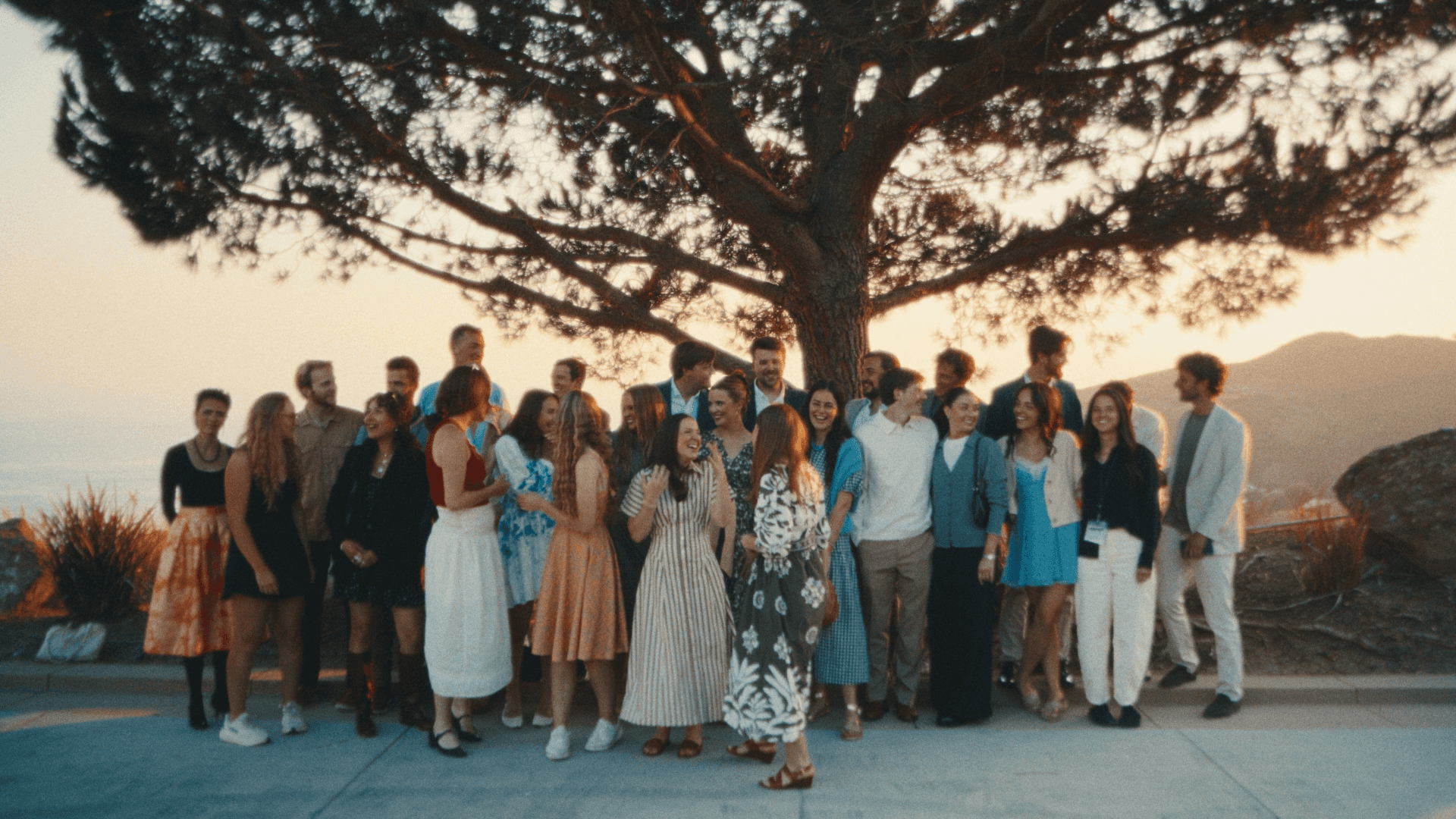
More Than a Résumé: Classical School Graduates on Who They’ve Become
Classical school graduates reflect on who they’ve become and how their education formed them in mind, character, and a lifelong love of learning.
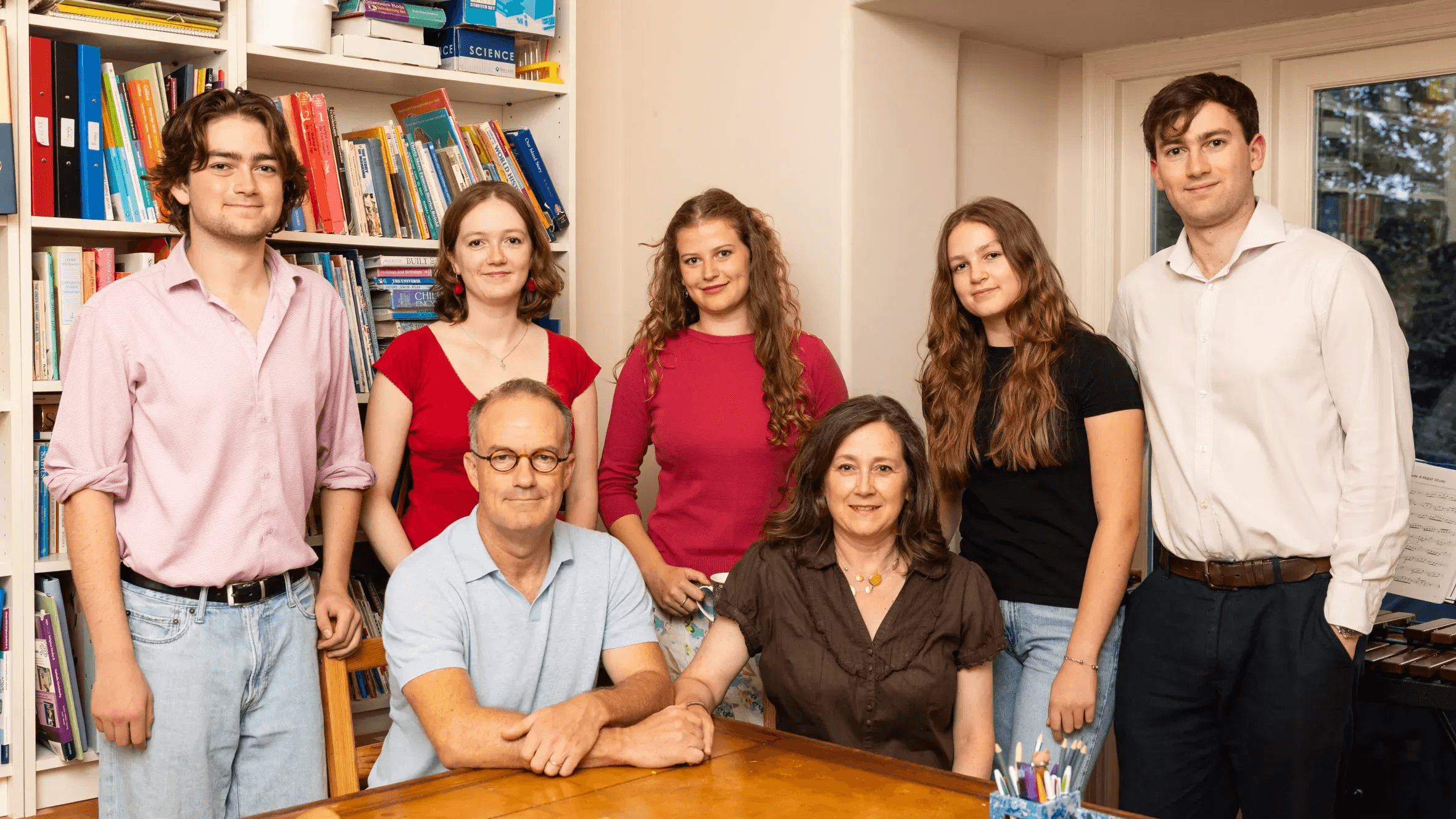
I home schooled my children till 16 — all four got into Oxbridge
This week my son Xavier will start his first term at Oxford University studying maths, my fourth child to get into Oxbridge. His older sisters, Olivia and Felicity, are Oxford graduates in classics and music respectively and his older brother, Max, has a degree in engineering from Cambridge. Two of them had choral scholarships; two had academic scholarships.

Not All ‘Classical’ Schools Are Created Equal
The most consequential differences are often the least obvious.