From Factories to Flourishing
Details coming soon.
July 08, 2026
Details coming soon.
July 08, 2026
From Factories to Flourishing
Subscribe to receive weekly insights from Dr. Andrew Selby on classical education, thoughtful parenting, and the formation of virtue—delivered directly to your inbox.
Read on SubstackRising from bed late at night the mother instinctively knew something was wrong. In the hallway, she immediately noticed the light coming from her daughter’s bedroom and muffled weeping. Opening her daughter’s door, she found the teenager sobbing into her hands over an open laptop with a cursor flashing on an empty document. She knew her daughter was stressed out by the mounting school work and the pressure to succeed, but it seemed like she had reached a breaking point.
“It’s so late,” she softly told her daughter with her arms around her shoulders, “Why don’t you go to sleep and let things be what they may? You work so hard.”
“But I have to finish this essay—and do well on it—so that I can keep up my GPA.”
“Why? You’ve done so well already. Just rest now.”
“I can’t! If I don’t finish in the top 10% of my class, I won’t get into a good college. And that will mean that I won’t get a good job. I don’t want to be a failure.”
The mom knew that everything in her daughter’s education was pushing this message. They might not explicitly say that she would be a failure if she didn’t go to college and do well there, but this vision for life was still there in the role models that were held up in alumni spotlights and in what the college counselor was saying. She had gone along with it, but watching her daughter start to snap under the pressure and noticing her growing tension and tears over the past months, the mother was beginning to wonder if there was a better way.
Modern youth are taught to be obsessed with grades and jobs. For the past 115 years, when “Progressivism” overtook the American educational system, school has primarily been interested in creating cogs in the wheels of the economy, stressing the importance of career fitness. Grades—both the 1st through 12th grade levels and the “A” to “F” scale of assessment—were invented to organize students easily by academic achievement. That way employers would know what they were getting when an applicant came to them. The more standardized the education system can be, the more easily we can compare this person to that person. Our rigid system also tells us whether people will conform to what an employer wants or if a person might be less than compliant. It relentlessly communicates to students that they are in competition with each other for the best jobs. They are shown (rather than told) that they need to do better than their peers if they want to amount to anything. It’s no surprise that this environment breeds anxiety and, when we don’t feel like we’re measuring up, depression. The government education of the last century functions like a factory churning out compliant (albeit frazzled) worker bees.
However, many Americans are waking up to resist the inhumanity of the way that we educate. We want our sons to be able to think for themselves and have resilience to move around in changing markets. We want our daughters to resist group-think and appreciate their unique giftings.
In the midst of an epidemic of anxiety and depression, where can we go to help our children learn to experience peace and optimism? It’s time to re-examine our goals. We must return to the purpose of human flourishing in education.
To find alternatives to the current educational regime, we could look at many different times and places in history. But since we’ve forgotten so much about how to educate well, a return to the roots of our civilization is called for. The Ancients loved to talk about the “end” or goal of education. Before we talk about what to teach our kids or how to teach them, we first need to know what it is we want for them.
The best of ancient education focused on purpose. The best educator of antiquity, Socrates of Athens, taught for flourishing.
It might come as no surprise that Socrates did not operate within a formal school environment. He clashed with the Athenian government. They eventually killed him for “corrupting the youth”!
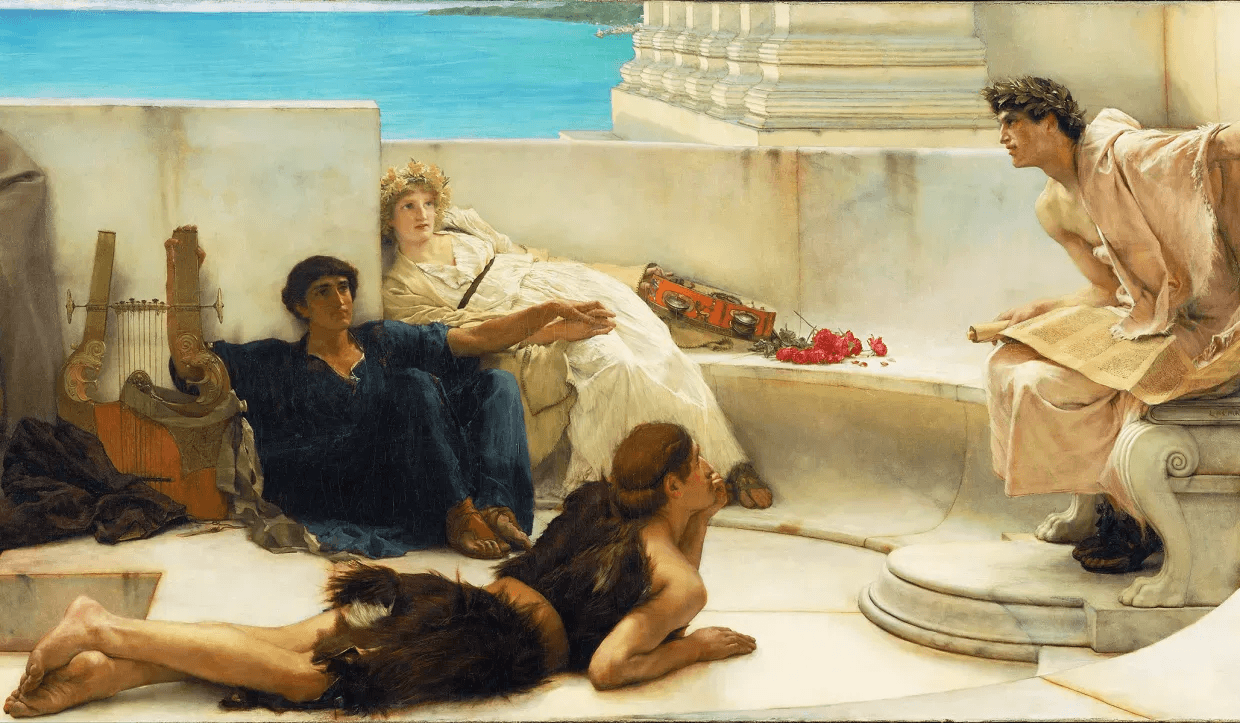
Socrates attracted a large following among young people in Athens. They flocked to him because he would ask them questions, meeting them where they were at and spurring them to test their assumptions about what was really true. They reveled in the way he would show the inconsistencies and folly of the ruling elite of the city. Those apparently wise people would claim to be experts in some area of life—whether politics, education, rhetoric, ethics, physics, etc. Socrates would begin questioning them about the deeper principles of their skill or perhaps about the purpose for which they exercised it. Quickly, it would become apparent that they hadn’t thought through what they believed. Despite their “success,” their lives were lacking.
(It’s the same lack that so many of our kids instinctively recognize in their own education and our society’s obsession with career advancement.)
By starting from a person’s desires and interests and then by leading that person to explore why he believed in that endeavor, Socrates almost always had an engaged audience. He dislodged them from being stuck in their ways. In this receptive state, Socrates could guide his conversation partner to the Good, the True, and the Beautiful—the transcendentals that anchored his life and that all of us long for deep in our souls. Socrates’ students worked hard and grew wise, but they didn’t feel the overwhelming stress and anxiety of students today.
Can we offer our stressed and anxious sons and daughters a more Socratic and less bureaucratic education? A growing movement in the USA and increasingly abroad is doing just that: classical Christian education. Schools in this movement guide their students to the Good, the True, and the Beautiful. They care first and foremost about the souls of their students. Thus, their education is radically personal. Teachers in these schools ask questions. As students are pressed to articulate their deepest held beliefs they grow alive to the world and to ideas. They find out what they really think in community. Socrates-like, their teachers hold deep conviction, but guide their students toward God and good ideas by setting their souls aflame, not by imposing meaningless bureaucracy.
This education is an antidote to the toxic anxiety-ridden, mouse-on-a-wheel system of today. Rather than produce tears of frustration, classical education leads to flourishing and purpose.
Andrew Selby, PhD, is the an upper school humanities teacher at Trinity Classical Academy in Valencia, California, and a national fellow with the Alcuin Fellowship.
Contributing Writer
Andrew is an upper school humanities educator at Trinity Classical Academy in Valencia, CA.
How a Latin grammar lesson can be the key to undying wisdom
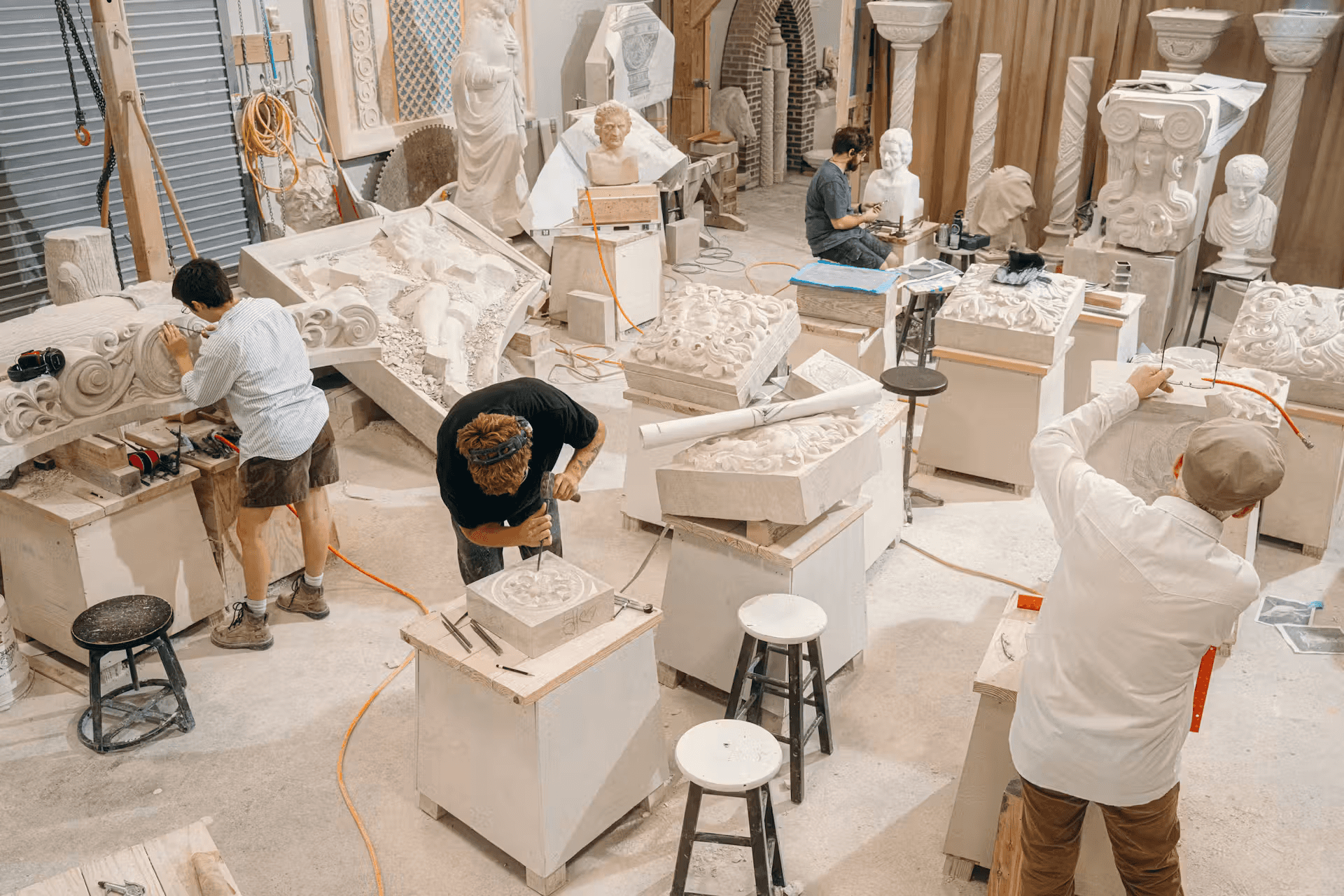
Students at Charleston’s American College of the Building Arts are finding hope for a stable future in mastering crafts like blacksmithing and architectural carpentry.

"Today, President Donald J. Trump welcomes students, parents, and education advocates to the White House to celebrate the start of a new school year. Under President Trump’s and Secretary of Education Linda McMahon’s leadership, this Administration has delivered an unparalleled record of expanding educational freedom, restoring parental rights, returning power to the states, and putting American students first."