Friction, Fire, and the Forgotten Education of the Hands
Details coming soon.
-1400x788_Z1vuGlP.png)
July 08, 2026
Details coming soon.
July 08, 2026
-1400x788_Z7hc0s.png)
Friction, Fire, and the Forgotten Education of the Hands
Subscribe to receive weekly insights from Christopher Hall on classical education, thoughtful parenting, and the formation of virtue—delivered directly to your inbox.
Read on SubstackCrafting fire by friction is miraculous. It’s also incredibly frustrating and inconvenient. With a bow drill under tension and a hearth board underfoot, apprenticeship usually starts with 52 Pickup as you retrieve the pieces that just flew off in all directions…. Through physical adjustment, refinement, and no small struggle with the self, proper mechanics resolve. The knee like this, breathing like so, and then comes the smoke. Not fire, just smoke. You think you’re done, but you’ve just arrived at the ground floor. Only with some additional effort do you advance to a red-glowing coal. Nestling that coal gently into a handful dry grass, fire is then coaxed into being with breath. Slow, and slow, and slow again until the nest bursts into flame, with heat, light, and warmth coming to fruition all at once.
When you see it done by a practiced hand, it looks easy. Then you try it, and it tries you. You flub it. Then you get close. Then you get it. Then refine it. Then master it. There are no commas in that process, only periods: periods of learning, periods of frustration, periods that end in sudden enlightenment or the need to walk away for a minute. Within each step, we return again to flubbing. But that’s part of the learning: failure has its lessons to impart, often more than success.
At some point, you become so accustomed to the craft that you simply know what to do. You are free as an artist not to write your own rules, but to work on the fly, to adjust, to surf the experience. You know what leads to success, and you no longer get in the way of it, you simply guide the givens to fruition. An inheritance of a thousand generations has come into new care with mature ownership. Years later, in the cold rain of a fall afternoon, when you’ve kindled one up under the wind shadow of a boulder and your hypothermia subsides, you know the gift of fire. The gift is immediate in the fire itself, but it’s also made manifest through a long line of learning, refinement, and sweat equity, with no shortage of meaningful blisters.
The process of making fire is similar to learning kickboxing, automotive repair, navigating by map, making a shirt, or baking chocolate chip cookies. Each of these arts has a parallel process of caricature-to-clarity, phases of friction and realization that lead us to learning. Most, maybe all, of the day-to-day arts that we leverage to meet our basic, embodied needs are experienced and learned in these ways. Gardening, working with tools and raw materials, knowing how to defend ourselves, and more fall into this category. Without these skills, we lose our ability to live freely and well in the world.
Called the common arts, these crafts and skills contribute not only to our survival, but to our ‘thrival’: they keep us alive through the provision of goods and services that sustain us, but they also make manifest learning that might otherwise remain abstract and ephemeral, and they bring us together as families and communities. When practiced with mastery, they bring both recipient and craftsperson to a new level of understanding and appreciation that is beyond the baseline of simple survival, continued breathing. There’s something more: we make things, but the process of making things also makes us. The way that we go about making and using these arts shapes our culture, our society, and our lives, family and inner, in profound ways.
Because of the history and dominant philosophies of our educational systems for the past 160 years or so, we have come to think of the common arts as precisely that: common. We have come to elevate the college path, while diminishing the common arts as ‘vo-tech’ or ‘trades’. With the rise of supply chains, our skills with these arts have fallen in proportion: we outsource, pay others to do these things for us, and in the process find convenience but also lost agency. A few decades ago, it was not uncommon for someone in the home to make his or her own clothes, or perhaps preserve summer’s fresh produce. Now, it would be challenging to find many people, particularly in suburban or urban environments, who know how to do these things.
In that substitution, we have lost an understanding of the givenness of nature. As we’ve kept this learning at a distance, we have lost an old, long-cultivated sense of how nature really works. Our ancestors needed that sense to reckon the time of day or the approaching weather. They needed it to find the best wood to make an ax handle or a dinner table, make a wall that wouldn’t fall, repair goods, find medicine, or know when to plant. Now there’s an app for those, and for the rest a readily-available paid contractor. We have come not simply to appreciate those services, but to rely upon them. We stand at a high point of empirical knowledge in science and mathematics, even as we lack a holistic understanding of how what we know manifests and how it connects. The abstractions we encounter as we walk the cram/pass/forget cycle of testing-based education rob us of a certain experience, of seeing the abstractions made real and given full form.
To reclaim this, we simply need to look to our hands. We stand at the leading end of a long tradition of great craft, from cathedrals to family homesteads, and many of us yearn to reclaim what we might otherwise have driven from us in a world that encourages convenience, reliance, and pay-to-play rather than ownership. To unify the skills of our heads, hearts, and hands, all it takes is that we take up to learn once more the common arts. When we do, responsibility returns. We rediscover our agency, that we can do, not simply have done for us, and that gives us freedom to act and operate in the world. We gain respect through capability and experience. Work re-situated is no longer simply for pay, but in service to our art and to the thriving of our communities. As we learn to value the work of our hands, we learn to recognize GOOD work: we begin to see and appreciate the mastery demonstrated by others. We see the math we never learned how to use, the science we crammed to pass, become useful in context. And we reconnect socially through shared craft, meals, and more. “Many hands make light work” is an old saying, and one to reclaim: a family that works together learns to value skills, shared sweat equity, and teamwork.
The common arts provide for our basic needs, but they also provide for our deeper needs, especially at our moment. When machines remember for you, others make for you, and computers reason for you through generative AI, reclaiming the common arts re-roots us to the baseline realities of ourselves and natural law. They bring us agency, connection, and constant reality checks in a world of increasing ephemera. Be inconvenienced, and in so doing become free, reclaim your inheritance, and thrive.
Chris Hall, M.S., is life-long learner and educator with a passion for integrating the liberal arts and the common arts. He is the founder of Always Learning Education and a national fellow with the Alcuin Fellowship.
-1400x788_Z17k0yH.png)
Contributing Writer
Christopher Hall is the founder of AlwaysLearningEducation.net and the author of Common Arts Education.
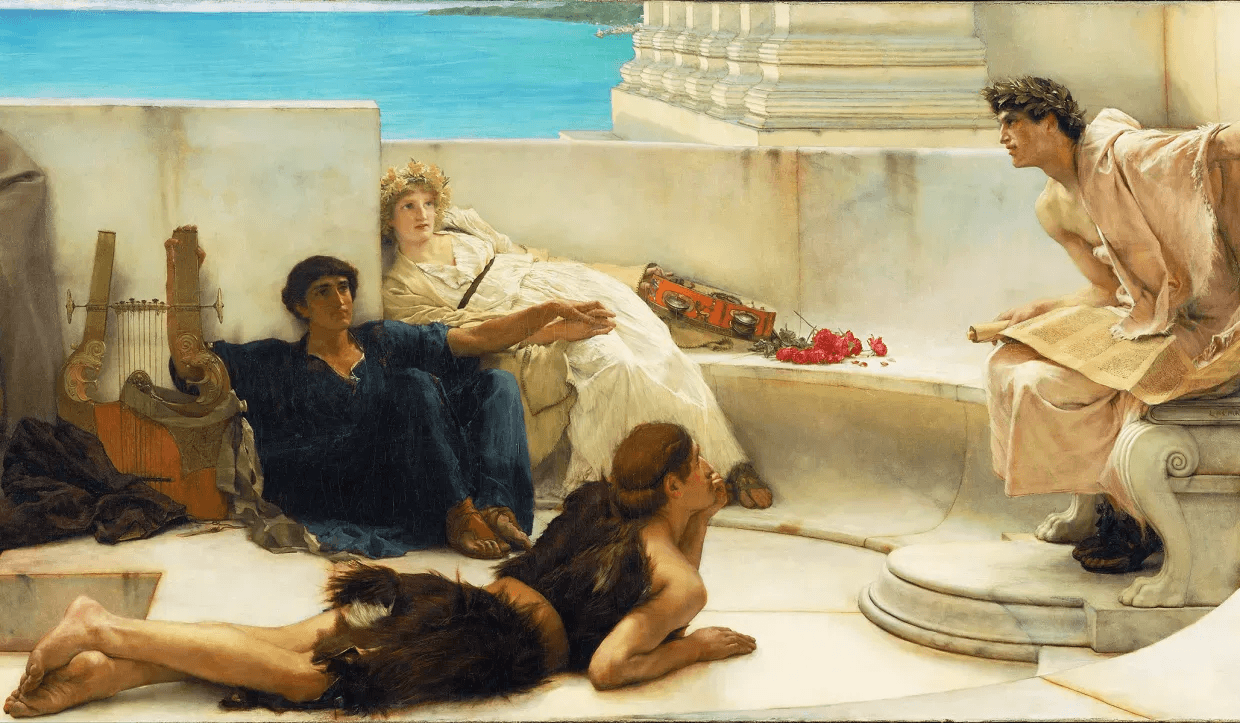
How a Latin grammar lesson can be the key to undying wisdom
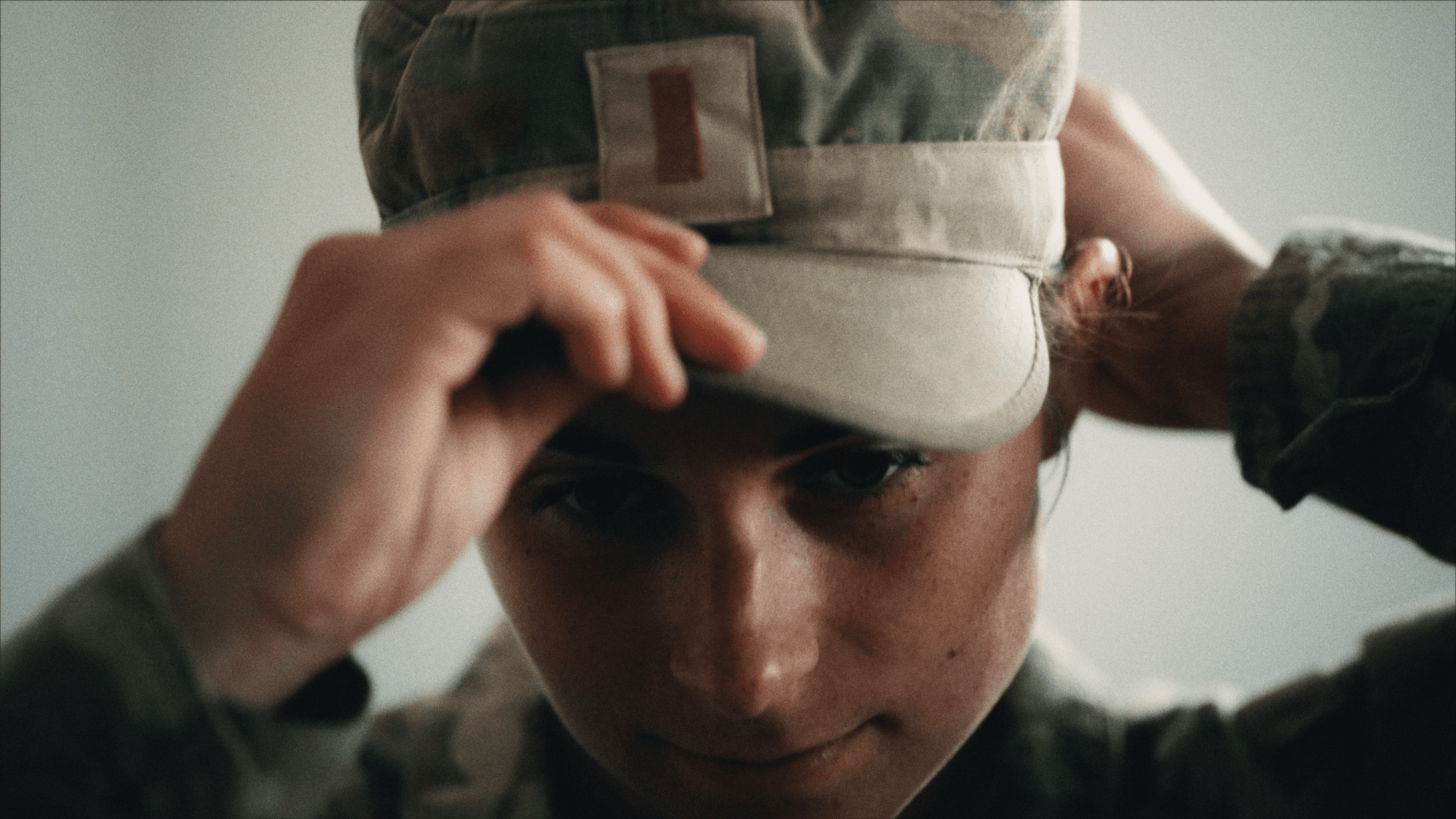
One day at a classical school changed the course of her life.
In seventh grade, Sarah spent a single day shadowing at Jackson Hole Classical Academy. She says she learned more that day than in the seven years of school before it.
What followed was an education in great books, Latin, and poetry learned by heart, including Rudyard Kipling's "If-" Years later, when Sarah arrived at West Point to train as an Army officer, she found that same poem on the walls of the barracks.
Today, Sarah is a West Point graduate preparing to lead a platoon of soldiers. Her story shows what classical education is for: forming young people who know what's right, do what's right, and give of themselves in service to others.
_ZjunIz.png)
What if a flourishing family life depends less on doing more and more on recovering rhythms of work, rest, attention, and belonging? Christine Perrin talks with Dr. Kerry Hasler-Brooks about the life she and her family have built on a small Pennsylvania farm, where agricultural seasons make limits, dependence, and renewal impossible to ignore. Their conversation explores how parents can create room for boredom, Sabbath, reading, meaningful work, and life together, even without radically rearranging their circumstances. Kerry also reflects on technology, simplicity, literature, and the formative power of returning to the same places and texts over time. For families feeling crowded by schedules and competing demands, this conversation offers a hopeful vision of choosing what to value and making space to live accordingly. Along the way, Kerry considers the sustaining power of literature, from Zora Neale Hurston to Emily Dickinson, and the way reading can help us attend more deeply to ourselves, one another, the natural world, and God. Her reflections suggest that formation often happens through ordinary practices repeated faithfully: walking the same ground, rereading a beloved poem, sharing work with children, welcoming others, and protecting stretches of time in which nothing has been planned.