Elizabeth Lynn: It's impossible to learn in a chaotic environment. I think about that in our classrooms all the time. If we don't have order, we don't have learning, and and we don't have beauty either, so we lose all of it. And I'm really proud of our students. There aren't many more things that I find more rewarding than seeing them just express and live their lives to the glory of God.
You know, a concert, a game, just live your life to the glory of God.
Christine Perrin: This is Christine Perrin, host of Composed, A Timeless Way of Living, a podcast of the Humanitas Institute that explores living patterns of virtue, craft, community, and delight, and draws the classical tradition into contemporary times. Elizabeth Lynn, thank you so much for joining me on Composed today.
Elizabeth Lynn: Yeah. Thanks for having me.
Christine Perrin: I'm gonna read a a formal introduction, and then I hope we'll get more, details from you. You joined the Covenant Christian Academy community as upper school dean in 2022. And before that, you taught biblical Greek, bible, and history at another classical school in Arizona. Your focus has been biblical studies and biblical languages as an undergraduate, and then a master of divinity at Gordon Conwell and a doctor of ministry at Denver Seminary. You've been married to to Paul, who's a a chaplain in the military, in the army, and you have five children who've also attended Covenant.
Mhmm. So what a big full life that is. Can you tell us a little bit about what took you to those places? What took you to education from your early years? How was this a consistent or a new pattern for you as a person?
Elizabeth Lynn: Well, in terms of education, I guess if I start where I'm at right now and then go backward from there, it would be just a journey towards classical Christian education, probably happened before I knew it was happening. And I would I would trace that back to reading great books in high school, even at a public school close to here, where I had really inspirational English teachers who were exposing me to, you know, the ideas I would expose students to today. Unknowingly, you know, I didn't realize I was on a trajectory like this. So I I would start there, and then raising my own kids. I I mean, I really thought I would end up in an undergraduate setting, which I'm also in an I do teach an undergraduate course, but I really had expected to do that more on more of a full time basis when I started my education, my my master's degree specifically.
And, yeah, I just really enjoyed study, deep study, thinking deeply, writing deeply, and I was you know, when you're young, you think you're is you're so young, you don't know that you could at some point be of use or value or import to someone who's the age you are at that time. So, you know, I think when you're in your twenties, you're just thinking about the future, and you're looking at these 50 year old women, and you're thinking they have so much wisdom, and I don't have that, and it's hard to know what you can even offer as you're in those early years. So I think I was just focusing on, yeah, just study, thinking about growing a family, and how to make that work together. I had big questions, especially in seminary, about studying the types of material I was studying, and then what that would look like with a family. So we were at the point, I think at that time, thinking about pastoral ministry counseling, the military chaplaincy piece was a little bit on the back of the mind, not so much in the front of us.
So all that to say, yeah, just loving to study early on. Love to study the Bible. I read and and like to think and sing, loved classical music, and was part of those types of performing choirs in the area. So I don't know. All those loves were there Mhmm.
As a teenager. I just didn't know. There was no classical school in Harrisburg, Pennsylvania when I grew up. So coming back home and finding it there is pretty amazing.
Christine Perrin: Well, I I'd love to hear of an early experience that you remember of that deep study or that deep concentration. And it could be with music. It doesn't have to be with books. But something very early on that led you to know that you liked that.
Elizabeth Lynn: Well, I'll tell you what maybe would have pointed me in a different direction was probably reading Wuthering Heights in tenth grade and not doing well on my book report. Right? I remember reading it, and I probably had jumped in a little bit too deep and being a little discouraged. It wasn't until I came back to some of those great works later on, and I think about college. I know I had never read Jane Austen until I was in my college years, and I thought, who where where was this?
Even though I was exposed to great books, thought, where was this? I didn't ever hear of her. Where were these people in my life? They weren't guiding me to this rich, just delightful kind of imaginative literature that it is, and the the conversations that I wanted to the world I wanted to inhabit, so to speak. A world where things seemed maybe, I don't know, maybe a little more pure, a little bit slower paced, and there was something about the slow pace of the stories that I was reading, and I think of Jane Austen in my college years.
It wasn't just about there being some type of a romantic theme. That wasn't my focus. It was more of the the community that seemed to be at work around her, the the, you know, the main characters, their lives that I kind of just really loved. I just wanted to be there.
Christine Perrin: I love that answer. I'm I wanna pick out a couple of phrases that you used. One is the world you wanted to inhabit, the community that formed around her. And I'm thinking about Pride and Prejudice in particular, although it wouldn't have to be that one. But I'm wondering, you know, what felt real in those books that made you think that it could be relevant to your own life?
And then what of that world that formed around her do you think you've tried to reinstate or create conditions so that that could thrive? Because I know, speaking from my own experience, that I will maybe go to another place, and I'll see a rhythm that they have, like walking down the street at 6PM to say hello to all their neighbors. And I'll think, oh, I'm gonna go home, and I'm gonna recreate this. And it never works because it has a culture that made that. Mhmm.
So so I'm interested because I know that as upper school dean, you do culture shape. And, of course, as a mother and a father, we shape culture as well. So anything on the those questions that occurs to you?
Elizabeth Lynn: Yeah. I think there's an aspect of goodness at work, and and you and you named Pride and Prejudice, I would say that was probably one of the first ones I was most interested in. And again, just from a pure, you know, just a pure personal experience of the literature, I wasn't talking about this with anyone. It was more that, like, there's a goodness in here that I want to that's what the world I wanna inhabit. I wanna inhabit a good world where I there's there were, you know, obviously, there's tension in the story, but the main character is is looking to live out a virtuous life and wrestling with how to do that in the parameters of a very small community of people.
And there's something about that part, that that wrestling with how do I live faithfully in this moment with these people under these conditions that it was the intention of the heart, I think, that I was really drawn to. It was like, that's the kind of person I want to be. I want to be a person who's trying to act in a way that's godly and god fearing, but still have all this beauty around me, and joy, that was attending that, that and then the the beautiful relationships, that you would see even between, you know, Elizabeth and her sisters, and the parents, even the father and the daughter relationship. All of those things to me were really vibrant and attractive. How to how to repeat that is another question.
Right?
Christine Perrin: Yes. Maybe we'll take that one more slowly, but I I would love to hear of a certain moment either in Jane Eyre or Pride and Prejudice where you remember distinctly either that pure motive or the wrestling that was a a crux moment that just imprinted itself on you. Or in your own life, when you were wrestling with something and you looked back to Jane Eyre or to Elizabeth Bennett and said, I this is what I'm gonna do, or I'm gonna try to follow them, and and here's how I think that might look.
Elizabeth Lynn: Mhmm. The first thing that comes to mind is the owning of a wrong, your own wrong against someone else, and and being able to be humble enough to admit that to the other person. I think that happens in Pride and Prejudice by both of both, you know, Mr. Darcy and Elizabeth. They both come to that moment where they're able to say, I misjudged you, and I had ideas about you that were unfounded, and they had the humility to to backtrack.
And I think probably, you know, the desire to hold on to our ideas about a person or or a matter are really strong, and I think they're probably deeply ingrained in us to not change direction. Once we've kind of drawn a conclusion about something, it takes some, you know, you're swallowing your pride, is the phrase. So I think the ability to swallow my pride was probably the thing I most needed in those works. Yeah. Just to be wrong.
Christine Perrin: I I That's remarkable.
Elizabeth Lynn: I I could go into personality, you know, how that
Christine Perrin: plays great.
Elizabeth Lynn: I don't know that everyone would have that same, you know, but the the need to be right is just part of, you know, probably part of my personality. Again, I won't go into all those types of boxing in, but other people might I'm I'm sure they would say something very different.
Christine Perrin: I love that. I don't think I've ever heard anyone say that they set off on a pilgrimage to to learn how to be wrong. That's quite compelling, and I think alien in the world that we're in. What strikes me is that you were not handed the kind of package that your students have been handed in terms of this is a classical school, this is what we do here, this is how we understand it. And yet, you assembled a desire for something that you're giving from very fragmentary parts
Elizabeth Lynn: Mhmm.
Christine Perrin: Or disparate parts. Yes. That creates, speaking from my own experience, a certain attachment to what you want to give that I'm really interested in hearing you talk about. First of all, just what you want to get because I I think it's hard when you're growing up. You said, you know, as a young woman, you might not know what you would have to give to others, but it's hard when you're growing up to even know what it is you want, what you want to get, particularly in the area of education where there's so much confusion.
Elizabeth Lynn: Mhmm.
Christine Perrin: So I'm curious about that dawning awareness, what you wanna get, you know, what you were grabbing for or Mhmm. Assembling or composing, and intuiting, resonating with intuitively. And then how it began to be possible for you to see that you wanted to give it as well.
Elizabeth Lynn: And
Christine Perrin: what is the it you wanted to give? You've mentioned great books, and I'd love for you to define that at some point, but it doesn't have to be here at the beginning.
Elizabeth Lynn: Right. I mean, I think even under the surface of the great books was probably just that deep, like, I mean, I grew up with scripture. Right? So I had read through the Bible by the time I was maybe 12 or 13 through a program at the church, and then just, again, loving to read the Bible. So I think those that infrastructure was there, so that when I once I did hit the the literature, it was this expansion on the the good that I was reading in scripture, and kind of an enlivening of that.
So I would say rooted down underneath that would be obviously just this the word of God just was alive in me, and wanting to realize the goodness to be found in the land of the living. Right? I I kind of think I grew up with this idea that the best thing I could potentially do in my life, the the the my purpose, my ultimate purpose should be to, share the gospel with other people so that they would receive it, and then have the gospel, and then go do that again. And there was a lot of glossing over about what it meant to live here in the goodness of the land of the living, and, you know, eternity was in my sights, and and conversion, or and I I I don't like that term in terms of, like, that wasn't in my heart. It wasn't a conversion, you know, emphasis.
It was more of a it was a a love. Like, I want you to know this this good, great God and creator that we have through Jesus Christ. Right? So it was authentic, but I don't know that I understood. I was experiencing good life in my family and my community.
I I it was just handed to me, and I wanted to hand that to my children and have that as an adult myself. But I think I was just looking for how to live this life to the best of my ability. And when you say today, we would use that phrase, you know, the good life, or pursuing human flourishing, we like to say in our circles. Right? Yeah.
It was just a very innate human desire to to live the best life that I could to the glory of God. What does it look like to be faithful in this life and to grow in my Christian character? And I just always that well done. I I wanna get to well done. Right?
Yeah. So I don't remember the question anymore. It was about did I what?
Christine Perrin: You answered it. You answered it. It was about acquiring these good things, particularly in terms of education. I really love the fact that you started with scripture. And I would love to hear I think we probably have a very similar narrative when it comes to that, this early I remember reading through the whole Bible, the for the first time at age 12 Mhmm.
And loving the Psalms and the stories. And I'm wondering if you could tell us a bit about a story that really captured you in your early reading, or even before you read something that people told you that engaged your imagination. Wow. An early story. Of scripture.
In scripture.
Elizabeth Lynn: I don't know if I can pick one. I I just wow. That would be tough. I think today Or
Christine Perrin: it doesn't have to be the most Yeah. Significant. Just
Elizabeth Lynn: I just was always reading. I was I was writing scripture down on cards, and I was memorizing them. You know, I was reading Oswald Chambers at night as a young girl, my devotion, and then I had a scripture that I would memorize. I was just constantly, like, I was intent on hiding God's word in my heart, that I wouldn't sin against him. And it could sound trite, but that's really what I was after.
I really was wanting I wanted to serve the Lord, and I really did feel called to to ministry. I mean, I was by the time I was 14, was like, I really have a sense that I'm called to the work of the church, and I, you know, by the time I'm in college, I thought that would be more of a teaching position, but I there was nothing in me that ever said anything else. Anything that I made up was because I thought it was gonna support the work of some kind of ministry. So What a blessing to know that early.
Christine Perrin: How is the education at a Christian school, particularly one that's trying to go back and find some ancient paths, how is that ministry to those who would say, no. That's I mean, you're just preaching to the choir. That's not anything structural or fresh. That's that's just kinda circling the wagons and staying in your own Benedict Option circle.
Elizabeth Lynn: Right. Yep. I'd say that's a valid criticism to some extent. There is an element of that, especially if you stay inside that. But whatever's inside of there is at some point gonna spill out, and every one of those souls is on some type of a path.
And so I even as I've described myself, being handed something very early on, you don't you don't pick what family you're gonna be birthed into. Right? You don't choose the community that your parents raise you in, or that extended family. So I think of, you know, we all have a lot, a portion that's been handed to us, and it's really up to us to to be faithful with what we've been handed. So I think I I guess in some way, I can relate to these students in terms of, like, you've been handed a very early understanding of scripture, a family that's raising you in the faith, and that's a real it's a gift in in some regard.
It's also you don't have the same struggle and maybe the same type of discovery process that someone else might as they come to faith. And so there's there's something about that that's really meaningful too. It doesn't really matter how that faith works itself out to get on this path, the ancient path, But being inside of a circle where students are handed that early on, yeah, I mean, I just still see it as really meaningful. They still need the same type of formation that anyone else would need at any other age. That community isn't you know, it's never invalid.
You know, it's it's not like you'd get to age 21, and and now you get to have a rich Christian community. So, yeah, I and I think they're being in some sense, I think they they bear a greater responsibility to whom much is given, much is required, or maybe asked of. I don't know if I should apply it that way, but there is a sense that they're being given something that they will be required to at some point. I don't wanna say use. I don't wanna use the word use, but but apply for the common good.
I don't wanna be a uti I don't wanna be utilitarian about it, but I wanna say that there's there's a spilling over that's going to impact other people in whatever sphere they end up in. I love that image of
Christine Perrin: the spilling over. There's a very artificial idea. So that was a devil's advocate question. I think there's a very artificial idea, just like you're saying, of, you know, what is the world? And what does it mean to be safe?
And what does it mean to come into some sort of realm where you're touching people that need it or where you're in some realm where maybe people don't need it. I mean Mhmm. Mhmm. That there's a kind of perilous quality to our lives that is true of each one of us. Mhmm.
And there's also, you know, there I've heard this said by some desert father or mother, something like, you know, seek holiness and thousands around you will be saved. You know, that there's this sense and by saved, not just get into heaven, you know? Right. Their lives will acquire the things that make for goodness Mhmm. In the land of the living.
I love that phrase that you used. So thank you. That's that's really helpful. I also love what you're saying about you don't get to 21 and suddenly acquire, you know, suddenly become ready to acquire a community, and that formation is something that's happening from the time that we're very young. Mhmm.
Jamie Smith has talked extensively about the fact that formation is always happening, whether it's good formation or bad formation. Mhmm. It's always happening. Right. And and it's often tacit.
It's often buried in what's happening and the structures of what's happening. What are some of the things that you think make for a rich life? Particularly, as you look at a school, you came I can't remember if you came to this school first as a parent or first as an administrator teacher. Mhmm. But when you're looking at a school, what would you look look for to say, this is a rich school.
This has some dense patterns that are good.
Elizabeth Lynn: Right. What are those? Well, the first word that came to mind was order, but I don't I would not see order alone. It would be order, which so when we think of the word order, we usually think of something in filing cabinets or in in lineups. Right?
I would think of order as something that brings about beauty, and so even pattern is beautiful. I've been taught by someone dear to me that I didn't ever think about it like that before, and I thought, oh, that is why we do really. We are the eye is pleased when you see a row of the same flowers, right, altogether, and the colors that are matching, and then they're complemented by something. That's order, and the order brings the beauty. And I think that's the type of school that, you know, I would I wanted for my children, that they would be in a place that had order, not because they were being it's a hemming in of of sorts, but it's it's a hemming in of order so that there can be, the beautiful things can take place.
It's impossible to learn in a in a chaotic environment, and I I saw that firsthand in other schools, where the disorder would create just more disorder, and and then there would be no ability or no no opportunity to enter into the the real learning and the forming. And and so I I think about that in our classrooms all the time. If we don't have order, we don't have learning, and and we don't have beauty either, so we lose all of it. So starting with the order piece is really essential, I think. And that's that's not easy to do, because I guess there's a scientific idea.
Right? It all moves to entropy, and that's that's true of any group of people. You put them in a room. I I often laugh because even as a a faculty and staff, you get us in a room, and you wanna start a meeting, and it's just as difficult for a leader to start a meeting of a faculty and staff as it is to get a classroom full of students, you know, to start. You have to have some type of order or and I guess I shouldn't say it's just as difficult, but the human element of wanting to socialize and be together in a space that does not require us to to sit down and apply ourselves to something specific is, you know, sometimes strong, and I don't know, sometimes we're not sure we we were ready for that.
So being ready for whatever's to come next in terms of being applying ourselves to the learning, You know, and of course, teachers and we we have a bare responsibility for what that looks like for a student to, you know, give them the appetite for that, and to offer up the thing that is appealing so that they are more ready to to go ahead and apply themselves to that learning, and to to place themselves in an orderly pattern so that it can happen. And and they know we all know it. We all know what it it is like to sit in an orderly place and to have that happen, and we're like, that was a really meaningful experience. I love some of the things
Christine Perrin: that you're saying and what they know. You're saying that there are conditions that create learning, and one of those conditions is just pure and simple. The space, the room, the rules, the pattern that is laid down that everyone knows about. And then there's this other thing that is a lot more episodic, I guess, and that is an appetite. That is some sort of agency for participation that you can create the conditions for, but the the individual has to find within themselves.
And I'm wondering what that second piece looks like or has looked like for you as either as a student, as a teacher, as an administrator. What you notice about the sparking or the lighting of the fire, the kindling of the appetite towards the good, to or towards these things that we hope students will learn to love and not just endure or obey. Mhmm.
Elizabeth Lynn: Well, if we're if we're talking about a classroom, I guess we're talking about the things that are most apparent. Right? The preparation and the personality of the the teacher, the the love for the subject, the love for the student, you know, the the energy that a teacher brings to a classroom. But I think about surprise too, and the element of surprise, kind of holding that out as a gift to students. I think I think I've seen that done well, where, you know, the teacher doesn't always, I don't know.
It's just I I like order. I like repetition. I I say I like. I think those are helpful. I think that element of surprise is something that really keeps a class on their toes.
So there's there's the liturgy of the classroom, and then that teacher has this gift of a surprise waiting in the background, to delight those students to say, I've been thinking about you, and I've been thinking about how you will experience this as a class. And there's a sense of care in that that I think students really understand. So I don't know if that's in a book somewhere, but I would say the element of surprise is really, really sweet to watch. And I won't go into ex I there's a liturgy that one of our faculty members does, and that is seasonal. They know it's coming up, but there's just this element of even surprise in what it's going to turn out to be that I see the creative aspect of that just enlivens those students.
Christine Perrin: Could you go back and define what a classroom liturgy is? And and then maybe tell us a little bit about these particulars of this this one that you're thinking of, if that's appropriate.
Elizabeth Lynn: Mhmm. Well, classroom liturgy, you know, is I don't I don't wanna use the word repetition necessarily again, but it is repeating so that there's an expectation coming in. It is that orderliness that they're coming in, and they can they have an expectation for it, what whatever that might be. It could be a chant. It could be a recitation.
It could be a patterning of the class so that they can rest, their minds can rest when they enter that room to know that they're gonna be able to apply themselves to whatever it is they're they're studying at that time. The liturgy could also be how they interact with one another. So what are they how what are they being asked to do with one another? At what moments? What are they sharing with one another?
How are they discussing with one another? Is it a group? Everyone's talking at once, or are you pairing off? And how does the teacher use those episodes to advance what they're doing, and not necessarily fill time or or spend time? Right?
How is it integrated really well? And that then it becomes meaningful if it's if it's done well. So liturgy, I guess, would just be, yeah, ordering the class. What types of elements are repeating to bring a sense of rest to the mind of the student? And then how are you structuring it so that they can interact with one another?
Those are all helpful liturgies. Even when we think about the church liturgies, right, there's we're doing things together. So we're reading together. We're singing together. We're moving together sometimes towards the front, or we're receding together.
We're standing. We're sitting. We're doing all these things together in a type of an order so that we can enter into that space together, and we're creating that space by doing it in step together, kind of like a dance.
Christine Perrin: That's so helpful. I love your connection to pattern. I love your connecting rest to pattern, but this is part of what gives us the ability to not be in fight or flight mode.
Elizabeth Lynn: Sometimes
Christine Perrin: they call it feeder breed mode, but learning mode Mhmm. That involves pattern and rest. And then I love your introduction of surprise as holding it out as a gift to the students, almost as if you're saying, I've been thinking about you. This is why we fire pastors who plagiarize and don't say that, you know, who just, like, copy Tim Keller's sermons and and put it on repeat. Because we want to know that as good as that might be, as good as Tim Keller might be, and I feel very sorry for pastors, he was a hard act to follow.
Mhmm. But as good as that might be, we want to know that you're speaking to us. Mhmm. So all the things that you're saying are very helpful. Even as a teacher myself, I'm wishing that I had been formed by you as an upper school dean, because even thinking about elements and and the way that elements in a classroom can advance a purpose is so helpful.
It's such helpful language, and I'm guessing I have two questions that come from that. One is, what would you tell parents looking for a school for their children to look for given what you've been saying? And then the other is, how much of your time do you spend observing teachers and helping them to become aware of these patterns and to establish them or correct them or do more of something that you see being their forte?
Elizabeth Lynn: Mhmm. Well, the first was, I think, just the yeah. The or what what I would look for as a parent, it would be the order and the beauty. And then I would be looking and you you just getting to know those who are on staff, hearing them talk about the ethos of the school, seeing what type of liturgy there is, because even if it's not, you know, what we call our matins or doxology or benediction liturgy in the day, there's some type of liturgy happening in that school, whatever that rhythm is. So I'd be watching those rhythms to see how that's shaping students.
But in terms of spending time with teachers, there's definitely formal observation that happens, and we've got, you know, our guidelines for how often we do that, and how we do that, and here's your formal eval packet, and we're gonna schedule our your formal eval observation. I really and I I love hopping in a class and just observing to be there as a support to the teacher and to taste what students taste. I know early on when I first came to the school, I tried to follow each grade for the entire day. And And, of course, I couldn't do it because I have admin meetings, or I'd be pulled out for some of the responsibility, but I would try to the bet if I can can I go through the entire day the exact way that they they've done
Christine Perrin: it Sure.
Elizabeth Lynn: And enter into that world so I can sense it, because I hear what they're saying. I wanna I wanna experience it too. But our teachers do a lot of collaboration in having conversations over lunch. We we meet weekly. That's a really light hearted way for them to share life together, and to share their their questions.
And it's, you know, it's just like a twenty minute conversation. And I I think it would be easy to dismiss how powerful that conversation is because it's short, but it's that commitment to being there for one another on a weekly basis to have those conversations that I think make a real difference. And then we've got our other formal trainings. But in terms of, yeah, just observing, spending one on one time is probably where I spend most of my time, is with teachers who are new, and walking them through their specific issues because they do differ in how they're approaching a class or what their particular struggles are. So I I spend most of my time doing that, I would say.
I shouldn't say most of my time, but I spend a significant amount of time doing that.
Christine Perrin: I love that you're talking about tasting a class and their experience. It almost makes me think it makes me think of two things. One is the way you can taste the mind of an author by reading not only one of their books, but multiple of their books. And that that is a way of entering deeply into the the world, the aesthetic, the texture, everything they've made. And I love that you're describing a class that way.
It makes me think of the title of the podcast composed because it shows so much respect for the students and that teacher and the community to think that you could actually taste something of a tincture of their experience.
Elizabeth Lynn: Mhmm.
Christine Perrin: It also makes me think of taste and see that the Lord is good, you know, that line in Yeah. Scripture. But also that when you think of evaluating teachers in classrooms, you're thinking of how to support them. Mhmm. That evaluation and assessment is not really primarily to give someone a grade and and either find them wanting or elevate them because they're doing it right, but more to be in relationship, to be at one with them, and to give them what they need Right.
Those seem very different from I hope that there are teachers and administrators listening to this too who will be able to impose that kind of structure and thinking on their own schools, that seems like a school I would want to be a part of. But I'm also wondering what you've learned about people in trying to run a school. You just said that it's very important that they have fellowship and that they
Elizabeth Lynn: Mhmm.
Christine Perrin: Have a community. And maybe this is the place at which we get to that question about community. What do you do? What are the most influential elements or things you can do? Changes you could make that would affect a community?
But also just what do you what have you learned about people that you didn't know before you tried to do this? Oh, what did I learn that I didn't know? Well Or that you knew.
Elizabeth Lynn: I I say things get confirmed. Right?
Christine Perrin: Yes.
Elizabeth Lynn: I think I came into this setting with this I just have a strong sense that people are they want to do well. They're experts in their field. They want to be ex I say experts in terms of, yeah, they just wanna do well. They wanna do their their work excellently. And I think I've seen that a full fuller picture of that in the the faculty and staff that I work with, that they're so intent to do it well, to the point that we can we can want to do our our our work so well that we end up having a hard time seeing that someone else wants to do their work well too.
So we're all sharing space, and so we have there's there's boundaries around what we can do. We have we have limitations. Right? We have limitations of time, and we have limitations of space. And being able to respect one another, and to give each other the time and the space that we we need to do what we're doing well, and I I think of the term efficacy.
Everyone, you want to feel like you're doing what you've been purposed to do well. So if you're it doesn't matter if you're teaching a science class or a humanities class, you want to do that well, and you want to leave at the end of a school year feeling like I did my best to teach these students the things that I set out to teach them. And then I'm serving them well so that when they leave this place and go to the next deeper study, that they've been well prepared. So I think everyone has this really great sense of of wanting to do that. But how do we all do that at the same time, in the same space, with this with a limited amount of time?
That's the that's the question we're always wrestling with, is it's time and space. In the you know, in the in your regular life, you'd say, what's important is time and money. I would say in the school, it's more time and space. Money too. But the space issue is what probably comes up more for us with the limitations that we have right now.
Yeah. What else about people? People are delightful. People are great to work with. I just love I love our team.
My heart is full when I see them doing what they do well, and I'm just really proud of the effort that they put forward day in and day out. And I'm really proud of our students when I see them, you know, a concert, a game. I mean, there there aren't many more things that I find more rewarding than seeing them just express and live their lives to the glory of God. Just live your life to the glory of God, you know? Yeah.
I'm trying to think of other things. You'll have to ask me another question.
Christine Perrin: Well, what do you think are elements that most strongly build or create community? You talked about the Jane Austen books that you saw community gathering around these characters and wanted that. That was a long time ago. You were in college. Now you have five children, and you run a school, and you've lived in multiple places.
What are the key factors? And I know because you've had a military experience too, you think about community a lot. The military is I I spent some years there as a child, famous for being able to form quickly. Mhmm. Because people are always having to do it.
So what are the elements that you think are key to a community? We could say a school community, but maybe it could be extrapolated beyond that. To form and form in a way that's good.
Elizabeth Lynn: Well, when you're in close quarters like we are, you know, I mean, you can do it's it's it's different. The closer you are, the more proximity that you have on a daily basis, I think the more it stretches you just as in, like, a marriage relationship, it's gonna stretch you in a different way where you really have to exercise a full appreciation for the the people that aren't exactly like you. We couldn't be who we are if we were all exactly alike.
Christine Perrin: Mhmm.
Elizabeth Lynn: And there's just a part of me saying, God has created that person to to fulfill that role, and to teach that subject, and to just be that human being, that I just respecting one another is fundamental. And to see the beauty in each one of us that God is, you know, working out. You know, we're not changing the tire while we drive our cars. We are all in a process. We're all growing, and so I think about that with our new teachers.
I really do believe that it's essential that we give them time to grow just as much as we take our seasoned teachers, and we appreciate what they're doing, and and still know that they can grow too. So I think having a a long obedience in the same direction towards one another is really, really essential and powerful. And I I think just, yeah, just bearing one another's burdens well, and bearing with one another well is is important, but delighting in those relationships is what will bring us, yeah, just joy in the journey.
Christine Perrin: Are there practices? Because that that's a disposition.
Elizabeth Lynn: Mhmm.
Christine Perrin: Are there practices that you would say I mean, obviously, you can't just put a practice into place and make something happen. But there are practices that keep a certain value of something in place, and I'm wondering if there are any practices that you've discovered surrounding
Elizabeth Lynn: that aspiration. Goodness. I'm I would I feel like my staff would know that better than I would. I I would say recognition is something I is a practice that I would say I try to keep up with. Naming people.
I know that people are sometimes afraid to name names when they say thank you for things because they're afraid they'll leave someone out. I tend to on the other side where I I like to name names because names are important, and that name is attached to a human being and a soul that I deeply care about. I want you to hear me say your name. And and we pray for students by name, and it's a little tedious. We do it twice a week, and we go grade by grade so that and it's it that's a practice,
Christine Perrin: and that's not my practice.
Elizabeth Lynn: That is a practice. And so there's times when I say to myself, are my staff, is the are the faculty gonna get tired of doing this? Am I asking them to do something that's tedious? Sure. Because this is something that I feel strongly about.
But there's just something about saying the name that I think changes my heart towards a student, and I'm I can't help but think changes their hearts too. So that yeah. So naming people in a recognition, naming them in prayer, you know, not just naming like I said, we pray for our students by grade, regular, every, you know, two days a week, but naming my faculty members going down the hall in my mind, and naming them is a practice. Now again, they wouldn't they wouldn't know that, but that's what I would hope we're all doing for one another. And then being there is a huge practice.
Just being present So is all the there's something about being with someone that says, I'm there for you, and there's a there's a sense of security, and there's a sense of support that I think the faculty will feel in that. And if I'm not there, they'll they'll feel something really different. So being there with them wherever they need to be is really essential too. So, yeah, what other practices would they say? I asked that question, and I think if I say this, am I doing this?
I think I'm doing that. I think I'm recognizing. I I will say the days go really fast. I don't know. You know what it's like to be in a school, but there are so many it's a busy, busy world.
And so staying composed in a space that's it's just like a mom with little ones tugging at the hem of the skirt. That is what it's like. There are a lot of tugs through a school day, so paying attention and stopping and paying attention is a practice that has to be it's you have to in intend to do it. It will not happen on its own. It's easy to let it take you away.
Christine Perrin: It does sound like many of the things that you've committed to are invisible, but they create an atmosphere. You know, these the naming and the being present. Those are not efficient practices. They're not quality time. You know, like, just zoom in for the quality time.
They're much more understanding than the way that that things actually happen on the ground. I'm wondering what you are trying to maybe you just answered this question, but what you're trying to compose or commit to in your own life after doing this in this place for a number of years, but for a number of years, all your life, it doesn't have to be at the school. It could be in some other area of life. Something new or newly apparent to you in some form?
Elizabeth Lynn: Something I'm attempting to commit to? Mhmm. Or compose. Yeah. Compose.
I am I just mentioned that there's a lot of tugs, so I think that I'm constantly recommitting myself to having an inner life that does not allow the tempo of life to dictate my life. Does that make sense? I the tempo of life, it does not slow down for you. And I think even in our this this geographical area, there's there's some living in a lot of different places. Like you said, I've lived in in a lot of different places.
You can't get away from the fact that more traffic and more people creates a different sensibility about your life. And so I think sometimes that that trickles down the tempo that we live, but we we don't actually get to decide that. Right? We we can't say everybody, you know, slow down. Everybody, down.
Let's drive slower, or, let's change all of the schedules. You know? Let's just can we just slow this down? Like, we just don't get to. And, so our culture gets to dictate that, and I think that we are constantly having to recommit ourselves to say, I'm I don't wanna live at that pace because I know that's not the pace that God is asking me to live at, nor is that the life that God is pleased with.
And so it takes, yeah, it really takes that awareness, painfully aware, and thankfully, you know, having a family like my husband and my kids to be be able to say very you know, I was gonna say bluntly, but that's not the right word either. But honestly, that's the word. Very honestly say, hey. Things are going at a really fast pace. We need people like that in our lives to reflect back to us.
Have we allowed ourselves to be pulled into the, yeah, the speed of light that surrounds us, or are we allowing the word of God to pull us back? And and I would say that is the the practice that, if I'm gonna name any practice, if there's a any young person that wants to know how to anchor their life, it it really is the the practice of reading the word of God that is going to bring life over and over and over again. And I know someone might say, start here or start there. I would say, just read. Just read.
Read. Read. And let it get into your soul and into your skin, and it will change the way that you think and the way that you feel as a result. Change the way you think. Change the way you feel.
Christine Perrin: It sounds like that is how you would answer the question of how do you create or continue your own inner life against the temple of life, that that reading scripture has been that for you from a very young age. Yes. Yes. And memorizing Washing.
Elizabeth Lynn: Yeah. Being washed with the word. I I need to be washed with the word. It doesn't it doesn't matter how old I I feel like I'm midlife right now, and I would say, wow, you would think I would figure that out. Nope.
I still need to swallow my pride. I still need to be reminded that I'm wrong. I'm not always right, I don't need to have things my way, and just being humble with the people I live with is really important and work with. I know I would say being in a position where you have to exercise, I say have to exercise, you you are you are serving people well when you exercise some type of ability to lead and make decisions. That's a service to people to be able to do that.
But it can create inside of you a sense of, like, you can do that so quickly, or you can do that without thinking and get to a place where it's like autopilot because it's required of you. Again, you don't get to decide if you wanna make a decision. Like, you need to make a decision. Someone's waiting for you to make a decision, or a decision just simply needs to be made. And maybe it may needs to be made in five minutes, or maybe it needs to be made next week.
But there's a decision to be made, and that can start to, I think, just trick you into thinking that you get to make the decisions. And I wanna say, no. I I might make decisions, but that doesn't mean that it's always right, and that I don't have to go back on some of those decisions, or I don't have to change my mind or listen to the spirit of God at work in me, and just pause and and step back. So anyway, yeah. That's really helpful.
I think to finish off,
Christine Perrin: I I have two questions. One is, who instilled that love of scripture in you? Would you say that the that the scripture itself, you had an encounter with it similar to those on the road to Emmaus, you know, it burned within you? Or would you say that there were people that helped because you saw it alive in them or or both? And then I'm also wondering well, I'll ask that other thing.
Maybe it maybe it combines. Do can you you know, eros, chased eros is described as crazy self forgetfulness. And I'm wondering if you have an experience of crazy self forgetfulness that you can remember and narrate for us. So maybe all those things are tied to each other, maybe not. But the first question is just about how that love and conviction about scripture came to be in you.
Elizabeth Lynn: I don't know. I guess I I I guess I would go back to childhood. Yeah. It's the having scripture as a part of our home. Not so much that we were reading it together.
I I don't know that we really ever did that much, whereas I had a friend whose family that was morning, they would get together and read scripture together in the morning, and I always kind of envied that, which is I always thought, oh, they've got the perfect life. Their parents are doing it. My parents were just they just lived their faith in a very tangible way that I I couldn't escape from it. The reality of being faithful was just at work in them all the time, but it was this very low of love, and support, and care. It was the being there, I think, that I felt most as a child that it made scripture attractive to me because I saw the conditions that it brought about in our home, which were really good, like just good, and there was nothing flashy or, you know, impressive about the way I was raised.
It was a very quiet, godly home, and there was joy, and, play, and faithfulness to one another, and and and serving of other people too. Definitely serving other people all the time, but not in a way that detracted from what was going on in the home. There wasn't a, like, a busyness that took away from the family. It was I think they just did a my parents did a great job of being balanced.
Christine Perrin: Oh. That's the highest compliment. I hope that they get to hear you say that.
Elizabeth Lynn: Yeah. I think they were better at it than I am for sure.
Christine Perrin: I mean, I just wanna say these words again. They're so lovely. A low of love and support. Being there was the thing, and you saw the conditions that it created that's so beautiful, the conditions that it brought about. Oh my goodness.
If anyway, thank you for that. How about mad self forgetfulness?
Elizabeth Lynn: That's an interesting question because how if you forgot yourself, how do you remember it? I don't know. I can think of forced self forgetfulness. What I I mean, I always go back to when you're when my kids were so young, and my world revolved around I say my world revolved around their needs. I when I say tug at the hem, you know, with five children, I knew what that felt like to have the hem tugged and to feel like I was not gonna meet all their needs sometimes, and that was really scary to me that I wouldn't be able to do that because I was outnumbered.
Right? And so self forgetfulness, yeah. I mean, that really happens. I I just talked about that this morning in our assembly, was Mhmm. It happens in humility is what we were talking about, because we're talking about entering into a leisurely life that's full of focal practices.
And in order to do that, one thing you have to do is to forget yourself and to be humble with the world around you. So we we read the poem. It was just like, my my world is my work, which is mostly standing still and learning to be astonished. And sounds abstract, but that's really what our work should be, is to stand still, be astonished, and we talked about just like, how can we know God if we don't know how to be still? If it says be still and know that I am God, we have to learn how to be still to learn to know God and to know God.
So self forgetfulness.
Christine Perrin: Yeah. That's perfect what you said. Would you be able to read us that poem?
Elizabeth Lynn: Oh my goodness. I could. I would have to find it. Let's see.
Christine Perrin: You can find it. I probably do have it here. It sounds like a Mary Oliver poem.
Elizabeth Lynn: It is. So this is Messenger by Mary Oliver. My work is loving the world. Here are the sunflowers. There are the hummingbird, equal seekers of sweetness.
Here are the quickening yeast. There are the blue plums. Here are the clam deep in the speckled sand. Are my boots old? Is my coat torn?
Am I no longer young and still not half perfect? Let me keep my mind on what matters, which is my work, which is mostly standing still and learning to be astonished. The Phoebe, the Delphinium, the sheep in the pasture in the pasture, which is mostly rejoicing since all the ingredients are here, which is gratitude to be given a mind and a heart and these body clothes, a mouth with which to give shouts of joy to the moth and the wren, to the sleepy dug up clam, telling them all over and over how it is that we live forever.
Christine Perrin: Liz, Lynn, thank you so much for talking to me for this hour. It was very good to be with you.
Elizabeth Lynn: It was great to be with you. Thanks for having me.
Christine Perrin: You've been listening to Composed with Christine Perrin, podcast of the Humanitas Institute about composing well lived lives of virtue, craft, community, and delight.
Composed: Timeless Ways of Living
Living Like a Human with Elizabeth Lynn

What helps a child learn, a family flourish, or a community grow strong? Elizabeth Lynn suggests that the answer often begins with things that can seem almost invisible: order, repeated rhythms, presence, attention, and the willingness to delight in one another. In conversation with Christine Perrin, Elizabeth reflects on the “liturgy” of a classroom, the surprising gift of being known by name, and why beauty and rest depend on patterns that make room for genuine learning. She also considers the challenge many families know well: how to cultivate an inner life when the tempo of the world refuses to slow down. For Elizabeth, Scripture has become a lifelong anchor, calling her again and again toward humility, stillness, gratitude, and a life attentive to God and neighbor. Their conversation offers parents and educators a hopeful picture of formation. The small practices of showing up, praying for people by name, making room for wonder, and refusing to let busyness dictate our deepest commitments can slowly shape the atmosphere of a home, classroom, and community. It is a vision closely aligned with the Humanitas Institute’s commitment to education as formation through relationship, beauty, truth, goodness, and wonder.
Contributors

Guest
Elizabeth Lynn
Elizabeth Lynn serves as the Upper School Dean at Covenant Christian Academy (Harrisburg, Pennsylvania) and as an adjunct instructor in Christian Ethics at Messiah University. Elizabeth focused on Biblical studies in her undergraduate program and went on to earn a Master of Divinity from Gordon-Conwell Theological Seminary (South Hamilton, MA) and a Doctor of Ministry from Denver Seminary. She and her husband, Paul, have been married for 32 years and have five children.
Host
Christine Perrin
Podcast Host and Contributing Writer
Christine Perrin is a literature professor, writer, poet, and podcast host. After teaching literature full-time at Messiah University for almost 20 years, Christine arranges her time to write, teach in Italy, and host the Composed Podcast. Christine is a graduate of Johns Hopkins University (BA in Writing Seminars) and the University of Maryland (MFA in Poetry).
Related Resources
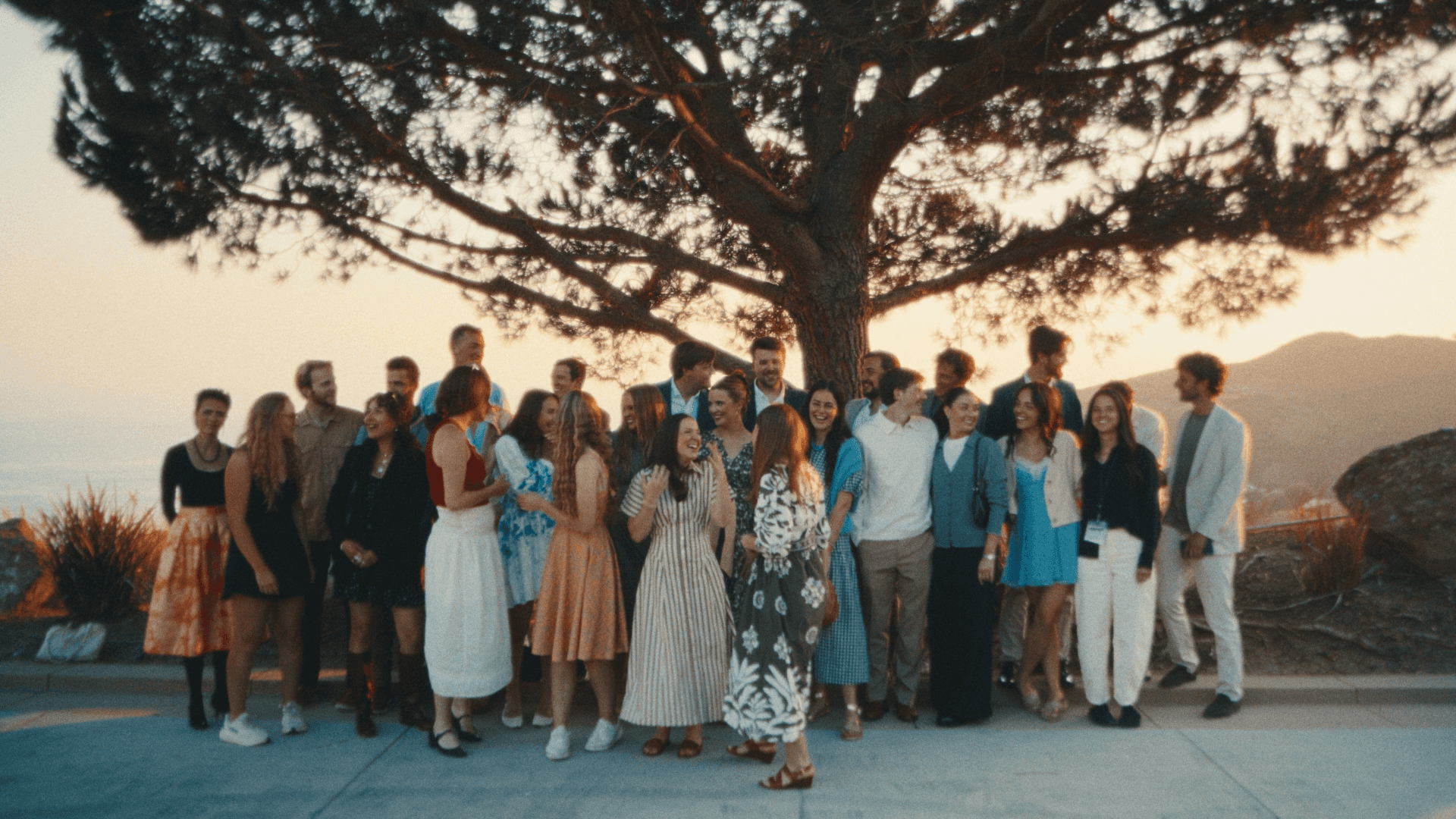
More Than a Résumé: Classical School Graduates on Who They’ve Become
Classical school graduates reflect on who they’ve become and how their education formed them in mind, character, and a lifelong love of learning.
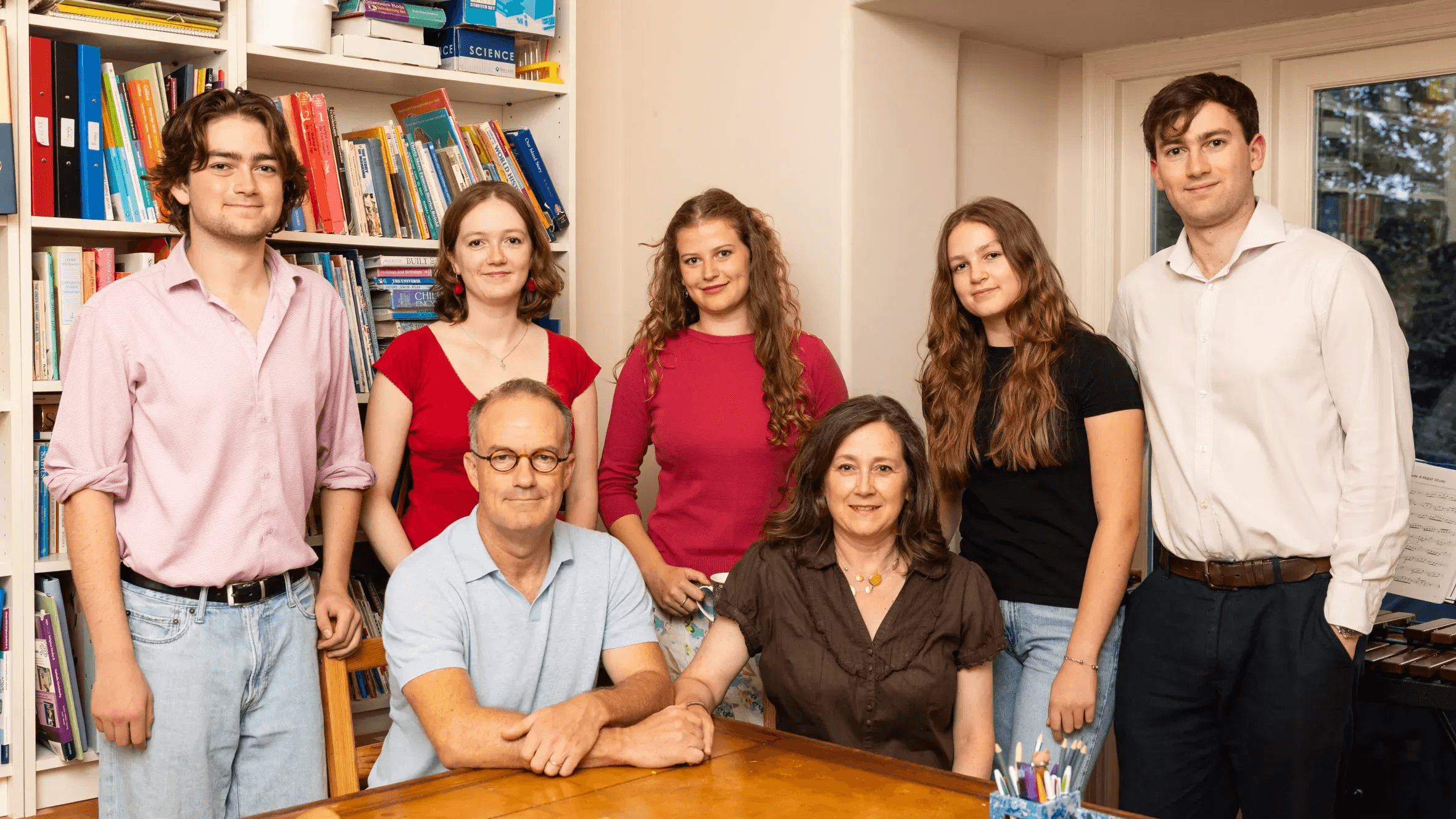
I home schooled my children till 16 — all four got into Oxbridge
This week my son Xavier will start his first term at Oxford University studying maths, my fourth child to get into Oxbridge. His older sisters, Olivia and Felicity, are Oxford graduates in classics and music respectively and his older brother, Max, has a degree in engineering from Cambridge. Two of them had choral scholarships; two had academic scholarships.

School-Choice Tax Credit Gets Big Boost From Treasury
Married couples can donate double, making tax break worth $3,400, not $1,700