Christine Perrin: This is Christine Perrin, host of A Timeless Way of Living, a podcast of the Humanitas Institute that explores living patterns of virtue, craft, community, and delight, and draws the classical tradition into contemporary times. Welcome to Composed. Prescott, it's so good to have you here. Thank you so much. Catherine is an American portrait painter.
She spent her life looking at people and paintings and making them over a great deal of time. So we're gonna talk a little bit about that today. But I wonder if you would just start by telling us a little bit about how you knew to become a painter. What was it that preceded going to art school or to Colorado College that took you that way?
Catherine Prescott: Well, thank you. That's a nice question. I do I do have that unusual background in which I knew when I was little that I wanted to be both an artist and an art teacher. And by the time I was seven or eight, I knew I wanted to be a portrait painter. So, friends of ours had and a cousin of mine had portraits in their home of their children.
And so, I used to just drag a stool over there and stare at those things and say, How do I do that? I want to do that. And it wasn't a matter of I think I was around children who said, Oh, I want to have my portrait painted. And I did not ever even consider that. I wanted to do it.
So, my parents gave me I made things all the time and I drew and made things for my dollhouse and everything. I'm definitely a maker of things all the time from the time I could get a pair of scissors in my hands or a pencil or a crayon or something. Was just working on something. And when I was in high school, I started copying heads on magazines that were in magazines, people's heads, and trying to say how do you make it look like an eye just to myself. So, I learned to look very, very early.
And it was looking at photographs always. I didn't have anybody to model for me and I didn't even think about having a model. I was just so focused on trying to make it look real. So, by the time I was in seventh or eighth grade, that's when I really knew this is it. This is what I want to do.
In between I was choosing other careers, other possible things I would do like being a jazz singer. But in the end, painting was the way I wanted to go. And then also going to visit museums. My parents took me to museums. We lived near Chicago, an hour and a half from Chicago in Wisconsin.
And my parents took me to really good museums so that I would beeline to the portraits in every room. I remember walking into rooms full of paintings, landscapes, buildings, abstraction, whatever they were. And if there was any kind of portrait, just one in that room, that's where I went and stood. So it's just in my
Christine Perrin: head and my heart, I guess. It's just fascinating that you were almost possessed by this zeal to know a certain thing and to see a certain thing. I wanna talk a lot with you about seeing. But let's circle back to that because the thing that seems strange to me is that as a child, would that that seems more normal that you would want to know how to do this. But then that you would want to share it with others and teach others.
You said at a young age you were also knew you wanted to
Catherine Prescott: do that. Where did that come from? I think art teachers.
Christine Perrin: That you had yourself? Yes. I had
Catherine Prescott: one in high school and I had one as soon as I could paint, was allowed to use oil paints since they're toxic. My parents let me have art lessons with an oil painter. And I knew the family of the man that did those portraits with the family that lived near us. And so, I was conscious that that was something you could do with your time.
Christine Perrin: It's so interesting that you set about getting what you needed to do, what you wanted to do. I mean, even just the little map that you're tracing for us of you saw the portraits, you knew the portrait painter, you got the lessons. Do you remember what it felt like to have a teacher open up a skill for you or a vision not a vision, but like a sight that helped you to see something or just an early experience of that?
Catherine Prescott: Well, my mother was a watercolor painter, So, that's huge. But wasn't serious about it. She didn't consider herself a watercolorist. She considered herself a teacher to some extent, but not of writing. So, she liked that a lot.
And she also wrote for the newspaper, the town newspaper, the village newspaper. When she was a student, she would student teach at the high school and she loved that. And also, in terms of art, I think that I just always liked the art class in whatever grade I was in. So, when we had an art lesson, I just really paid attention to the teachers. I had the skills right away, so I won little prizes here and there.
And the kids in the class, the other kids, I'm sure by third or fourth grade, they all thought of me as the artist in the class. So, people got in trouble because they would ask me to do a drawing for them during the class, which I committed myself to in spite of the fact that I was supposed to be doing something else. And sometimes they would get in trouble because they would be passing me notes about, Hey, Porter, draw this. And I think I
Christine Perrin: was considered an artist. You talk in some interviews that I've read about your later art education when you got to college and how in some ways it gave you things, but it was very out of sync with the kinds of skills that you wanted to learn. And I wonder if it seems now, you know, I'm just curious about what your assessment of teaching is, given that really interesting history of yours where you kind of learned to find what you needed. You went to a place that wasn't giving you those skills. And then you went on to give students the skills that you wanted them to have.
How does all that work together in terms of your immediate desire to give something to others about what you had learned? That's interesting. I think that way. I mean,
Catherine Prescott: I think even when I read the Bible or something else that as I'm reading it, I have this urge to memorize it and keep it, hold it, and to share it. I can't just learn it for myself. And it can be a problem because even in praying, I wanna pray with somebody. And I want to, in a way, share it, I guess, that it's for everybody. I don't know what that is.
I really love teaching. And I think one of my friends once said, an artist that I knew very well in college, said, You teach the class that you never had. You want to find what was missing and make that available to students.
Christine Perrin: That is a really remarkable, I think, maybe little compression of redemption to being able to give something that you needed that wasn't given, but that you've discovered and want to give to someone else. I've taught with you in the same place in Gordon, Gordon and Morvieto program. And I've observed that you're very tuned in to the students that are in front of you, what their capacities are, and how you can take what you know to meet them. That seemed particularly important to you. You were revising the syllabus.
You had taught this class multiple times before, but you were revising the syllabus according to who is in front of
Catherine Prescott: you. Well, thank you. I suppose that goes along with sharing what you know. And if you know something that they don't have and if you can see that, then that's 100% I'm with that. Meeting.
Meeting them. Yeah. I certainly want to challenge them, but I don't necessarily want to take them somewhere that they don't need. There's no stepping stone for them. So, you have to get them to that first stone and then the second stone and then the third stone so they can go across.
But I think that's just natural to know your audience when you speak or when you're writing. You have to know your audience to a certain extent. As a poet, do you not think about who's going
Christine Perrin: to read this? Absolutely. And just as a person who cares about relationships, I read that in your interviewing a lot as well. I in fact, I wrote I loved this in what we see of someone's face or hands or way of sitting, there are a thousand clues to the interior behind it, a history of feelings in the presence of a person. So I I both hear in that and see in your work.
There's a desire to go out and meet someone, but there's also a desire to observe in them what is theirs and what that thing in them elicits from you. And that seems to me to be, I would say, a marker of your work. I I do remember the first time I saw your work at Messiah College, then Messiah College, now Messiah University. I I remember, you know, people make a lot about the fact that when you see you see icons, it seems like they're seeing you.
Catherine Prescott: Oh, beautiful.
Christine Perrin: When I was in the presence of your work for that first exhibit that I saw complete, I had this deep sense of your seeing these people and of their interior world that was whole, you know, it was this fabric. I mean, almost the way you're describing yourself as a child, knowing what you wanted, knowing what you needed, going in search of it. That instinct in you, it seems you apply to others. That you assume that we all have these worlds inside of us and that we can glimpse them in someone else and then in your special case, not reconstruct them, but give that glimpse to someone else. And that's fascinating to me.
I love what that says about the human, but I also just love the experience of
Catherine Prescott: looking into another person. That's knowing. That's knowing. Knowing. Yeah.
I think that it's our relationship with a person is well, for for me to paint someone, I have to know them. I get to know them even if it's a portrait. I spend time with them before and talk to them as much as I can before I photograph them or before I paint them. Once someone said to me, it's nice to be known when I was painting them. It was a drawing, I think.
And because I'm I'm looking so intently, I guess, and I suppose I wanna see beyond what's given to me at first, which is more superficial, not to be made fun of or not to be invaded, but because it's just the first layer. And so, what I wanna do is get past that. So, I often when I'm photographing people for a portrait, I tend to wait till they get a little bored with me. They stop thinking about I'm being looked at, and they start looking inside while they're still in position. And then I can connect with their interiority.
I wanna talk more about interiority, but before we go there, can
Christine Perrin: you say more? I mean, in this quote, you talked about face, hands, way of sitting. When you're looking, what have you learned to see? What are the kinds of things that that yield themselves to you? And is there something about this paying attention to a face that we can learn as well, even the non portrait yeah.
Painters that you could spell out for us?
Catherine Prescott: Well, so if you take your eye, you can look at my eye, for example. It's made up of all these lines and shapes and colors. And when you have a brush in your hand, you only have lines and shapes and colors. You don't have an eye. You have a flat surface and there's nothing there.
So, what you have to do is put the pieces together, the right color in the right place in the right shape. And those add up to what you see. What I'm doing is making the most of what I see that shows me what's behind that, that shows me the feeling. So, if you have a line somewhere on your face that isn't because of your history and because of using your muscles a certain way over and over and because of just the way your face expresses things in any kind of thing, which shows that a muscle has been activated a lot, is more common to you, then I'm gonna pick the things that are most common and that are most expressive and ignore the things that don't do anything for what I'm after. So the face is full of all kinds of stuff going on there.
If you painted every detail, it would be pretty boring, both to you. If you're bored, the person looking at it is also bored. So those things don't say anything. So, I'm after the things that speak. So, does this person look sideways when they're about to say no?
Or does this person tend to raise one eyebrow a little bit just because they're by something that you said? Or is this person do they make their mouth tight when they wanna smile before they smile? Or something like that. So if I'm trying to make a portrait that is about the most close to who that person is, I wanna make the most of those things that I can see that show me what's going on inside.
Christine Perrin: Do you ever feel that there's so much information even just in your normal discourse with people Mhmm. In a day and that you almost can't shut it down? Like, you're getting so much from what you're looking at. Or is it more of a mining excavating experience that you you don't trust your first sight and you because you've talked about relationship and needing to know the person, and you you sort of see it as a layered experience that you have to kind of go back and back to in order to really know what you're seeing, or do both things happen?
Catherine Prescott: Sure. Well, I think that I'm always looking for more. And I think that the more I look in a desire to know, then the more they feel known. They know they're known, and they're not alone, and I'm not alone then. So, that's the relationship.
And that I want to make the most of. So, I think that the amount of information that's there is negligible when I'm choosing. I'm always choosing. When I'm looking at something or someone, I'm drawing it in my head, always. And when I think about something, I have to have an image in my head to comprehend it.
Again, when I pray, Ted and I recently talked about this, that we decided we wanted to share, and it won't happen very often, but to share when we're praying together, to share the image that we had of Jesus or of God, whichever member of the Trinity it is at that time. There is an image in our heads, and it's often from paintings from art history. So, we spend a lot of time in front of paintings looking at them. So, we have these images and they change. And so, it's a matter of connecting with an image.
When I stop photographing a person and they walk away and I'm left with my photographs be it 100 or 50, usually closer to the 100, then I'm to choose little by little by little what I want, what I see as their nature, their interiority. I'm gonna choose the things that show that and that they do over and over that I can see. So then, that's making the most of what I gather and pick. Cherry pick.
Christine Perrin: I Because cherry it's a story. You mentioned it as a concept, but I also think of it as the story of a face.
Catherine Prescott: That's right. Story of the face. Inner life
Christine Perrin: as it's reflected.
Catherine Prescott: Right. And the older they are, usually the more choices they are.
Christine Perrin: Do you know where your confidence in interiority came from? I mean, can you remember anything about that growing up or thinking about people's inside lives?
Catherine Prescott: Don't think interiority is a term that I used until about ten years ago probably. But I think I've always heard artists talk about what's behind the eyes and things like that. I didn't think that was very interesting because I thought it was kind of a cliche, kind of empty, like, Oh, I'm going in deep. I'm not trying to again invade or psychoanalyze at all. I'm trying to get at the reality, the truth.
Does that answer your question?
Christine Perrin: It's a very interesting answer to the question. It's also recalling to mind that you mentioned Genesis one
Catherine Prescott: Oh, yeah.
Christine Perrin: In terms of knowing and making and seeing. Can you connect that for us? How Genesis one, and the work of the painter yourself are related to each other? Or the work of knowing in the way
Catherine Prescott: that you've just described is related? Well, God certainly knew what he was after when he worked. I think I have to jump a little further out into Genesis one, two, and three because the knowing invites a question about knowing what, and the question is knowing good from evil. So, a lot of my interest in books, which we've been writing a little bit back and forth about, books that tell us enough about evil that makes us reach for the good. So, the knowing something has to do with making choices.
So when God made the sun, he made a choice about the color, the intensity of it, where it sits, why it's there, what we will know of it. I mean, he knows everything everything about it. So when he chose, he chose it. It's not only a result of him knowing what he's after, but making the most of what he wants. So, there's a wanting, and then there's just how I'm gonna make this.
And it's deep mystery, of course, but it's a lively one. It's very active.
Christine Perrin: It's such a lively one, and I see how it mirrors the process that you're describing, or your process mirrors it. The way that even just that sense that what we can know about another person or about a phenomenon is fragmentary, but yet it's still so full. That's not a poverty. I love what you say also about not psychologizing because I I think we're just so prone to that. I mean, it's almost instinctive in us.
In
Catherine Prescott: our culture, it's
Christine Perrin: Yes. Overdone. So for somebody who almost, you know, I I read what you wrote about social media. I was very interested in that. You you mentioned how lonely it is and how, in a sense, impersonal it is.
You're trying to get people's attention by sharing yourself because you're not seen essentially. At least I can read you the quote. But before we talk about that, I think I'd be interested in let's say someone's listening to us and they don't almost even know how to conceive of knowing a person outside of psychologizing them. And yet you've spent your whole life looking at faces, trying to know that person free of that, free of the psychology and free of the the sentimental and the political you also mentioned in your interviews. Can you say what a beginning step is to that discipline of looking at someone and knowing someone without psychologizing them?
I mean, it sounds like it's very instinctive to you now because it's been a habit. But I don't think it's a habit that most people have.
Catherine Prescott: Well, psychology is part of interiority and history together. Also, feelings, reactions to things. Those are all part of what's going on inside somebody. Definitely the psychology is there. But I'm not trying to analyze it.
I'm not trying to walk in there and mess around. I don't want to. They can give me as much as they want. And sometimes people give much more than they expected. I've had people say to me when they come back to see a finished painting, OMG, that looks like my father.
Christine Perrin: Oh, interesting.
Catherine Prescott: Yeah. Just like him. So, I've never seen the father. I don't know anything about the relationship of the son to the father. And I don't know anything about not only their history, but his feelings about his father.
So, it's not that. But it does have psychology to it just because that's a part of it. And it is a piece of it. It's not certainly not the whole thing.
Christine Perrin: One thing that interests me so much about your method that you describe, and, I would refer people to your website, prescottpaintings.com, where you can see so much of Catherine's work, but you can also read interviews and writing about her work. It's just tremendous.
Catherine Prescott: Thank
Christine Perrin: you. One thing that you described that's so interesting is the way that art history and classical realism tutored you by itself. This seems to me another facet of you going out and and, like, seizing, finding what you need, excavating
Catherine Prescott: For sure.
Christine Perrin: What you needed.
Catherine Prescott: For sure.
Christine Perrin: And I love this. I mean, it actually gives me hope for myself and for human beings that this is possible. We don't have to be spoon fed everything. You know? We don't have to be.
But what you describe is, you know, your art history professors sending you out to the books. And then you also describe going to Spain and learning what you loved from these other portrait painters and imitating their gestures and their composition. And even I loved the phrase that you said of you go back again to remember what you love. I wonder if you could just tell us a little bit about that teacher that you've had and the process of that growing in you. And even just what would it do to a student to have a teacher say more or less, I can't really teach you this.
Go look at those paintings. Yeah.
Catherine Prescott: And even beyond that, I mean, not only can I not teach you about it, but it won't be where you're headed? I can't know where you're headed, so I can't feed that and don't need to. That's not my part. So, I respect a teacher like that that would say, Go look at art. Go to the library.
And also, I think when you release a student from your class, and I did this once, it was probably a mistake, a vast mistake. But I finished the class after just pretty much pounding a of work into their heads to get them to understand things and what to do here and what to do there and how to see this and how to see that. And yet, when I finished the last day of the class, said, Okay, that's just my ideas. You go find it. Go get them.
And it was true, but they were like I mean, they looked kind of horrified. They they were supposed to not just ingest what I said, but never walk away from it. And my experience was to have to 100% walk away really of what I was taught as a college student in my art classes. Because not the art historians, excuse me, but the painters and the, let's say, that was a sculpture teacher that sent me to look at books. All of the teachers, it was all abstract at the time.
It was all completely outside of my interests, my purviews. Not my interests, really. Love abstract art, and I learned a lot from it, as I probably said in an interview. But I wanted to paint portraits. And so, would stay up late at night and go down to the studio and bring a friend and have them model for me and draw large charcoal way over life size drawings of these students that would sit for me.
They were really good drawings. And nobody else in the school was doing it, not the teachers or the students or anybody. And I had to do it kind of literally in the dark. And so, when it came time for me to have a senior show, I had these terrible abstract paintings and these marvelous, really strong drawings. They showed my drawings without saying, Oh gosh.
We never taught her this. Maybe we got you wrong in some way. Or I mean, it was just all there was in contemporary art world. So, it was in the galleries. Was the '60s.
So for me, then I tried to find a graduate school where I could be doing what I wanted to do. And I started at the University of Wisconsin because it was less expensive. And I enrolled in some classes there and started doing a self portrait, a large self portrait. And they said, You can't do that. And I said, Well, I want to paint portraits.
They said, You can't do that. That's not art. You can't do that. You can't come here and do portraits. So, I left.
Christine Perrin: And when they said, That's not art, how do they explain themselves?
Catherine Prescott: Don't think they literally said that. That's not fair to them. I think they said, You can't do it. I know they said that because I questioned it. Naturally what I said is, But I am doing it.
So, back away, Jack, for that time.
Christine Perrin: Yeah. I mean, because you had at that point gone to Spain and gone
Catherine Prescott: to the Prague. I had.
Christine Perrin: And how did you reconcile that you can't do that and then the falling in love with these paintings where obviously people had done it?
Catherine Prescott: Oh, yeah. That's a very long, slow process. Okay. Yeah. No, not to explain it, but to do it because you have to kind of erase as you're going.
You have to take a thought that's in your head and chuck it off. You have to be able to say, That's not what I'm after. That's not what I want.
Christine Perrin: Without anyone really supervising that. You're the Nobody
Catherine Prescott: could supervise it. Just people in art history. Just people in museums. Can you tell us a little
Christine Perrin: bit about how you feel about those painters? I mean, they sound like intimates of yours. You know, they sound
Catherine Prescott: You mean the ones on the walls?
Christine Perrin: Yes. That you came to love and that were your teachers.
Catherine Prescott: They were intimates. Alright. They were. They are still. I look at paintings.
Yeah. We do imitate what we see. We have to choose what we see. We do imitate what we hear. We have to choose what we hear.
And that's the same with we imitate how people walk, our parents. And we walk like that. So, it's not very hard. It's not a big jump, but it's kind of releasing yourself. I guess the most common way that people say it is to give yourself permission psychologically, I guess, to change what you were taught.
To take what you see in one place and replace what you were taught with what you have seen in a different place.
Christine Perrin: It just strikes me as such a combination of desire and will, you know, because you were so led on by desire. And then so much of the actions that you had to perform were willful actions,
Catherine Prescott: you know, to It's a matter of desire. It's definitely Painting is about desire. I think so. A great teacher and friend told me that much later. A sculptor, really.
Christine Perrin: And so the desire is sort of the engine for that precision. I mean, you've you mentioned several times precision is where passion begins. A lot of people seem to think that desire on its own is enough. But I hear you saying that desire is like an engine that drives you towards precision. Oh, for sure.
And does that transfer to other domains of life? As in disciplines? I mean, it's just this combination of desire leading and precision meeting that passion, that desire. It's John Updike. Mhmm.
Witches of Eastwick. Is that Yeah.
Catherine Prescott: Terrible book.
Christine Perrin: You said it was the only one you didn't like of his.
Catherine Prescott: Yeah. Probably. I don't think I could stomach couples again. But I love what he says and what he does with words. And I love what he says about good and evil.
Christine Perrin: What does he say about good and evil?
Catherine Prescott: Well, he's able to agree with the evil. It's there. It's real. We can't walk away from it. And to agree with it makes him reach for the good.
Christine Perrin: You've said that now twice. I I'd love to hear more about that because I know you've reading has been a great passion of yours. You've read novels voraciously. And that seems like a good companion art to portrait painting.
Catherine Prescott: It is. I think so.
Christine Perrin: I wanted to read this quote. Persons with any weight of character carry like planets their atmospheres with them in their orbits. Written by Thomas Hardy, quoted by you. That seems to describe novels as well, this weight of character.
Catherine Prescott: For sure. That's about it. Yeah. I mean, Thomas Hardy, he's the best. He is my favorite nineteenth century writer.
You know, he wrote that book God's Funeral. I mean, that poem. You know that poem. I don't know that poem.
Christine Perrin: Should I look it up and we can read it? No.
Catherine Prescott: You could read it. It's the image of a train, a locomotive, which is kind of the newfangled thing in the culture. And inside it is a coffin, and God is in the coffin. And it's an image of the loss of God in the culture. It's quite amazing.
But anyway, so you're asking me you're asking me about knowing
Christine Perrin: Well, I'm asking about your reading life Oh, the reading. In novels and the way that I think that has just fed into your life as a writer and as Oh, for a sure. Definitely. Yes. I mean, your life as a painter, I said writer.
But
Catherine Prescott: Well, I can tell you that I I recently had a new insight into that, into the relationship between what kind of reading appeals to me, why? My question was, I was reading I Went to Heaven. It was about a man who went to heaven during a coma. And so, it's one of the part of the literature, I guess, of near death experiences, which I have read quite a few things about. In fact, last night, I watched a podcast with Ross Dothat, and I can't name the other person.
But it was in front of students. They were talking about Christianity versus no religion in the other case. The man is an atheist questioning himself all the time. But a Christian. And Douthat said that he had read quite a bit of and so did the other man.
Quite a bit of the literature on near death experiences. And so I read one. I read this one recently that my sister gave me. And it is a book about the experience of being in heaven and what he saw, what the guy saw, streets of gold and palm trees because he loves Florida. And I kinda yes, I had to laugh.
The whole thing was about things that he likes. So, he went to heaven and he saw things that he likes, even things that he's read in the Bible that he likes and things that are just based like a baseball game. He went to a baseball game in heaven. So, I was pretty skeptical about that. And maybe that means that a near death experience is something that is about what we would like to see.
Also Rorschach test or something. Yes, exactly. But it also is about finding yourself up on the ceiling looking down in the Operating Room and seeing it from above, seeing what the doctors are doing and even being able to say details about what's in that Operating Room that nobody would know, would be able to say unless they saw it. So, I'm very interested in things like that. And to hear Douthat say it kind of interested me because I've also read a lot of books about captivity narratives.
And they're awful. Mean, they're just awful. So, what is it about me that wants to read the awful things? And what is it about me that makes me interested in, for example, the recent movie Nuremberg? I had read a book called The Rat Line.
And it's a book about The rat line is a term that's used for the Nazi criminals that escaped and weren't hanged at Nuremberg. And there have been many, many attempts to find them. And maybe they were found after they were dead somewhere else. A lot of them have made it to South America, Central America, and are hiding. But the ratline is a term that describes those ropes on a ship that are like a ladder, and they go all the way up the mast.
So, that's where the rats go when the sinking ship is happening. Interesting. Yeah. I just love the term so much. I ran across it just looking for a book, and I thought, The Rat Line, that is an interesting title.
I gotta see what this is. And it's about people that are Nazi criminals that have escaped. And this movie Nuremberg recently. And I've read a number of books about just about dark, hard things. World War II, I've read quite a few books on war, especially World War II because I myself have the big Auschwitz book, big picture book of Auschwitz.
And I don't look at it very often anymore, but I did for a long time. And what is it? Am I sick? You know, that I would wanna read these kinds of things. And so I went back in my mind to things that I really loved in high school, and they were Kafka and Camus and Dostoevsky.
And so, Metamorphosis, I love The Scarlet Letter. Well, Hawthorne's not considered the category that I became interested in. But reading back through titles that I loved, books. I loved The Metamorphosis, The Kafka, and The Plague by Camus. And I loved Dostoevsky's Crime and Punishment.
I loved Tess of the Durbivilles. And they're all things that are kind of battling between good and evil and mostly dominated by despair and evil and darkness and sadness and pain. Again, what is it about me that would make me gravitate toward those books? And then I've read very recently, this book about the man that went to heaven and the streets of gold. And even though it talked about the fact that he was in a coma because he was very, very sick, he had COVID, and they thought he was dying, Pretty much did die.
He was in a coma for six weeks, which is unheard of. So, there were miracles happening. And he was in heaven enjoying himself during this. But even just reading that much about someone's idea about heaven and all the miracles involved in keeping him alive, actually said to myself, I gotta go read some John Epdike. This is too much for me.
And so, I did. I started looking for an Updike book and I found one I've never read, which was a memoir. And I absolutely love it because he he does see he really labels and defines and explores all the darkness and the evil, but there's always a place where he's pointing to glory, where he's he's letting it into the picture. And he's using it to remind us that he's not in fact what I discovered was an existential interest that I had. I looked up these other books and a lot of them were existentialists.
Some of them were just Victorianists who were precursors to the official existentialist movement. But, OpDijk is really considered a Christian existentialist. So, of course, I wanted to know what that is. And I think maybe it's me. It's that I wanna know the darkness.
I wanna know evil. I wanna know good from evil, just like Adam and Eve. Back to Genesis, I wanna know what happened, but I know that's not the whole story at all. It's not the story. In fact, I can look to the real story in the Bible, and it's always there.
Christine Perrin: It strikes me that when you have darkness and Flenner O'Connor writes about this a lot. But when you have darkness in the picture that's true Mhmm. Whatever light there is is also true. But the light without the darkness is cloying. There's something about it that doesn't Yeah.
Tell the
Catherine Prescott: Yes. It doesn't tell the truth. It doesn't give us the whole picture. And we we have to agree with the darkness.
Christine Perrin: We do. We know it's true.
Catherine Prescott: We know it's true. We experience that it's true every day. And if we don't know that it's true, why would we reach for God? Why would we long for God? Why would we say to ourselves?
When I first read the Bible, I got to Genesis three and I said And I was an atheist, really, up until that time. I was 26. And I started in Genesis. People had been evangelizing us. I thought, Well, okay, I'll read the Bible.
And I started in Genesis and I got to three, four, five. And I said, Oh, is that what happened? That's why I'm this way. That's why the world is this way. And that's why I want God.
Because he is the only one that has it.
Christine Perrin: I've heard people call that the explanatory power of the gospel Yeah. Of the That it does hold the weight that we encounter. But I love hearing your story of it. And I know that from that encounter was tied to your insistence on being willing to be a a portrait painter, being willing to follow through with that.
Catherine Prescott: Exactly. I think that's what my paintings are about.
Christine Perrin: Can you spell that out for us a little bit more? Because connecting those dots seems like an abstract painting. You know, I mean, reading Genesis, reading Scripture, being told you couldn't be a portrait painter, finding that the truth of the gospel made that made you sense that you could actually follow this path. I it's a fascinating link to me that isn't
Catherine Prescott: intuitive. Well, think being told I think that whole era in which portrait paintings were taboo, just like flower paintings and even landscapes, is because they're considered what was the word you just used? Ploying. Sentimental, empty, just skill, just a matter of skill. And they don't show us anything that was thought.
It was thought that they don't show us anything about truth and reality, which abstraction does. That's all it shows us about. That's what it purported to be, truth, because it's something we've never seen before.
Christine Perrin: That's fascinating.
Catherine Prescott: And that's how you get to life and truth. You can do a painting that no one's ever seen, but portraits are the common fair. Bricklayers can do It's skill. So it's bourgeois, yes, but it's also empty. So once I was a Christian, I had a dual understanding, but I really was doing paintings.
I now still am doing paintings that I always wanted to do even before I was a Christian. I wanted to do paintings that were about the truth, the truth we're talking about, and that were also beautiful.
Christine Perrin: Had you been instructed that truth couldn't be beautiful? Pretty much.
Catherine Prescott: Yeah. I would say yes.
Christine Perrin: What's fascinating to me is that you had this in your timeline, this very distinct break and change of, you know, the explanatory power of Scripture and becoming a Christian. And yet there's so much continuity in your story, even the awareness of darkness as a teenager reading those existentialist novels. The awareness of darkness and the desire for light only that could be sustained with the true representation of darkness. Looking back, it seems like this unbroken path, and yet it had such a a break, such a change for you. But there was so much continuity.
And I wonder if you could describe what that change felt like, what it felt like to read that and have it approximate your sense of the world, but also a response to the world that you could build your life on.
Catherine Prescott: To read what? Read in Genesis? Genesis. Oh, Oh, it answered all the questions that were there, that were always there. Why?
Is that that doesn't answer your question. No.
Christine Perrin: I mean, that's a wonderful answer. I mean, I'm just thinking about I'm thinking about the people that might be listening to us who didn't know what the questions were. And,
Catherine Prescott: Oh, that's the thing.
Christine Perrin: You know, like how that's
Catherine Prescott: How do the you even know what the questions are?
Christine Perrin: Because you say it answered all the questions. Answered all my questions. But obviously, you had them. You had been building them up.
Catherine Prescott: Oh, yeah. For sure. So, how did I make that jump? It took a while, but it when I saw it, when I reached for God finally, to use the term I've just used a couple times now here today, I was desperate. I was very sad.
I was very hurt. I was in a lot of pain. I was extremely depressed, horribly depressed, suicidal, wrecked. Yeah. And I think people in a way I don't like that to be the reason because the reason was always there anyway.
I mean, like you say, I always knew the dark side. I am just like that. Why isn't really the question anymore.
Christine Perrin: For the same reason loved faces. Mean, you can't explain it.
Catherine Prescott: I knew that. I knew it was dark. Well, mean, these books, the existentialist books, reinforce that 100%. So, even something like Tess of the Durbovils, and I looked that up, and yes, Hawthorne is not an existentialist, because Tess knew, because she came back. She was innocent, was ruined, and then was innocent again.
So that is a very different oh, that's Hardy. Sorry. Right. Thomas Hardy. Yeah.
So, he's not quite an existentialist. She knew all the way through good from evil. She knew it. And she knew it the minute she lost her innocence, the instant. And she had to walk in that.
She had to agree with it. And then she comes back to this incredibly naive view of God. Have you read it?
Christine Perrin: I haven't.
Catherine Prescott: And she marries a man who wants to make God rational, believe in God rational. And she says, but can't you just love it? And it was bang. So there's where I would kind of go in that direction toward knowing the evil for a long time without God. I don't want the reason I say I'm reluctant to even make that connection because some people say you were this or that.
You were depressed or you were, I don't know, you were sick or you were Special category. Yeah. Some kind of special category that would make somebody desperate for God. But I wasn't always depressed. I always saw the dark side.
I always. So, I read the captivity narratives, I wonder, What am I doing reading these one after another? And sometimes going back and reading them again. I think they're important literature, really important literature, important novels, important history. They're not soap operas.
There's a break, and I made a break. Mean, was instantly joyous the same day when knelt before God and said, You call the shots from now on. And that is the way I felt almost immediately. Mean, between the time that I knelt and the time that I stood up, I saw joy.
Christine Perrin: It strikes me that it's a captivity narrative. Your own story. I mean, this Oh. This captivity and this release is a very Yes. It's a pattern that you're describing for Well, probably.
Yes. And the release encompassing your artistic life, which of course it would because that was your life. The same. And yet it has always struck me as remarkable that that God allowed your personality and your loves to be refreshed and met in the same motion that he gave you a relationship to himself. It just strikes so much tenderness towards your personhood.
Oh,
Catherine Prescott: he's in fact, I I sometimes wonder how he gets around it. How do you get around this, God? I mean, I know the answers. I know the correct answers. I know the theology around having to be obligated to the dark, around having to agree with it.
Christine Perrin: Having Allowing it on the it present in the deep history of our
Catherine Prescott: Well, if you forget Jesus on the cross, you have nothing. If you forget the suffering and the suffering that he gets around it with, that he I mean, he really it was so awful. And if you can't read that and know that we are there, that we are suffering, and that there's no option to suffering, then how can you I mean, the only way that God gets around it is by sending his son to the cross. Joining him. It's joining him.
Yeah. So, think even when I was told that you can't paint portraits, and literally told that, and when I learned abstraction, I tried so hard to learn it. I would do paintings and cut them up in pieces and try to put them together. It was so sad. Had things on the floor, you know, trying to paste them together and stuff.
Just trying to paste together the story that wasn't mine was partly, I guess. And there's a lot of metaphor in there. But when I did become a Christian, I wasn't painting at the time. So, we went to La and studied. It took a while to get back to painting, but the first thing I did when I did paint, the first painting I did was to sit out on the hills.
La Brie, where we studied the Bible, my husband and I, is in Switzerland. And so it's just like being Heidi. In the spring, waves of color completely flooding a mountainside with one color, purple, and it's this particular little flower. And then later, it's a pink the same you go by a yellow mountain. It's magnificent.
And I went out with a tiny canvas this big like this. And I sat down in those flowers.
Christine Perrin: And I painted it. What you wanted to paint because it was beautiful.
Catherine Prescott: And it was it was it was it was probably a year after we became Christians. But to be able to say, this is a painting, and this matters.
Christine Perrin: And it's worth my time and my skill. I feel so grateful. I just feel so grateful that that that opened in you because it has it's very precious to me and to the world.
Catherine Prescott: Me too. And Thank you.
Christine Perrin: It might not have happened. You might have been cutting things up and pasting them back together.
Catherine Prescott: You know? Yes.
Christine Perrin: And it strikes me as so remarkable that we're so thirsty now for the things that you've held on to from the beginning. You know, the world has kind of exhausted itself in those ways. We're tenacious enough to hold on to them until they could be loved again and appreciated and received again. And your story is very it touches me so deeply that all the parts that you've that you've described that who you were in the beginning was honored. You honored it and God honored it.
And and it's come back to it's come to a kind of fullness that was there were so many hazards and obstacles for that to happen.
Catherine Prescott: But everybody has that. Yes. Every dentist. Yes. Every bricklayer.
Yes. Has it and has the capacity for it. And I think the desires. Not exactly for that, but not exactly what I did and had. But I mean, not everybody fights for it like that.
But God fights for it. He really, He fought for it again on the cross. He hated it. Again, it's very, very, very important to say that the darkness, we have to agree with it because it leads us to the cross. That's why I became a Christian.
You can't pretend You can't pretend.
Christine Perrin: That it's not there. You can't. And most lives don't let us pretend. I mean, I think it sooner or later in a lifetime, it does Yeah. Hit you in the forehead.
Yes. But the existentialists let that be the case.
Catherine Prescott: Let it stay. Let it stay.
Christine Perrin: I think that's a really good place for us to end. But I do have one more question that's mundane compared to that. But just as someone, you know, you're looking back at your life, and it's been such a full life. And I'm wondering one of our mutual friends gave me this question. How has your view of work and family life changed over seasons?
What you've described to us, and also just want to mention here that your work has been in the context of your husband's work as well, Prescott, and of being artists together and teachers together, Christians together, students together. So much of your life has been shared with each other. But I think it would be very helpful for people to hear. We've heard about the beginning of your, you know, your childhood and your education. And we've heard about that, you know, almost like BCAD moment for you.
That's right. And then we, you know, we see the culmination of your work. But can you fill in just a little bit in between in terms of how you were just a human person, you know, living life with family and community
Catherine Prescott: and, you
Christine Perrin: know, and doing work and maybe how those things changed over time or how you would help us to think about what it means to be in the midst but to have different seasons of life.
Catherine Prescott: By seasons, you mean raising children or?
Christine Perrin: Or even just times when you can focus on this passion, times when the focus is less. Yeah. Times when you're caught up in the business of, I don't know, you know, babies or sending people to school or just renovating a house or something like that, and how the vision that you're talking about, I guess, interpenetrates that daily life and the different periods of daily life that we go through. You don't have to speak of it comprehensively, but just anything that occurs to you.
Catherine Prescott: Yeah. Mean, one thing I should say is that I'm not a very happy person when I'm not painting.
Christine Perrin: That's a good thing to
Catherine Prescott: know about don't yourself. Go well for very long when I can't paint, except when I had babies. With each of the two most beautiful things I've ever seen, those babies, I just held them for the first year. I just didn't paint. I didn't need to.
So there's that. Well, I
Christine Perrin: think that alone is a beautiful thing. It makes me think of Thomas Merton saying that whenever he went to liturgy, he didn't need to write poetry afterwards. And it's a similar having a baby, having a beautiful creature. It's enough to not make anything for a year. That making is itself so Exactly.
Catherine Prescott: That's exactly right. Yeah. That that making is full.
Christine Perrin: I think I wanna end there. Alright. Thank you, Catherine,
Catherine Prescott: so much for sharing
Christine Perrin: your life with us. Thank you so much. Was great. Such a pleasure.
Catherine Prescott: Love you so much.
Christine Perrin: I love you. You've been listening to Composed with Christine Perrin, a podcast of the Humanitas Institute about composing well lived lives of virtue, craft, community, and delight.
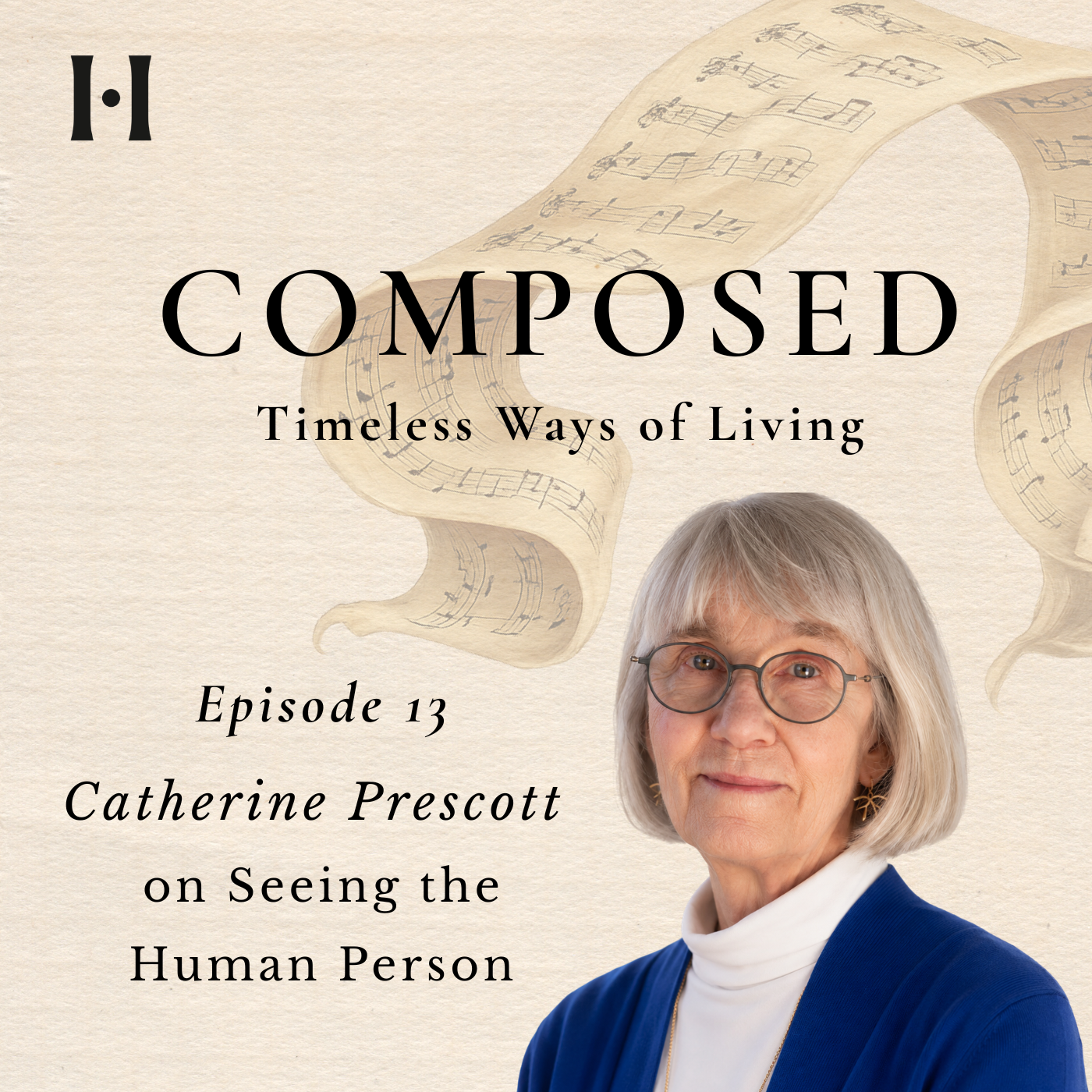
Composed: Timeless Ways of Living
Catherine Prescott on Seeing the Human Person

What if learning to see another person clearly is one of the first steps toward wisdom? In this episode of Composed, Christine Perrin speaks with portrait painter Catherine Prescott about attention, beauty, vocation, and the dignity of the human person. Catherine’s life and work invite us into one of the central hopes of classical Christian education, to recover a way of seeing the world that is truthful, humane, and alive to goodness. Through stories of childhood, artistic formation, resistance to abstraction, conversion, motherhood, and the long labor of portrait painting, this conversation reminds parents, teachers, and students that education is not merely the transfer of information. It is the formation of vision, desire, patience, and love. Catherine reflects on the mystery of interior life, the discipline of looking without reducing or invading, and the way darkness, honestly faced, can make us reach for the light. Her story offers a deeply human picture of what it means to compose a life around beauty, truth, family, work, and faith.
Contributors
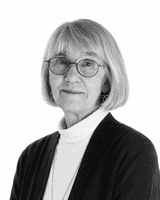
Guest
Catherine Prescott
Catherine Prescott is a painter known for her expressive portraits, still lifes, and landscapes. Her work has been exhibited nationally, including twice in the Outwin Boochever Portrait Competition at the Smithsonian’s National Portrait Gallery, which also holds one of her paintings in its permanent collection. In 2018, she completed the official portrait of Governor Tom Corbett for the Pennsylvania State Capitol. Catherine has exhibited widely in museums and galleries and has received numerous honors from organizations such as the Portrait Society of America and the Salmagundi Club. She taught painting and drawing at Messiah College for twenty years and continues to teach in Gordon College’s Orvieto, Italy program. She lives and works in Mechanicsburg, Pennsylvania.
Featured Links
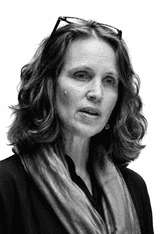
Host
Christine Perrin
Podcast Host and Contributing Writer
Christine Perrin is a literature professor, writer, poet, and podcast host. After teaching literature full-time at Messiah University for almost 20 years, Christine arranges her time to write, teach in Italy, and host the Composed Podcast. Christine is a graduate of Johns Hopkins University (BA in Writing Seminars) and the University of Maryland (MFA in Poetry).
Related Resources

Not All ‘Classical’ Schools Are Created Equal
The most consequential differences are often the least obvious.
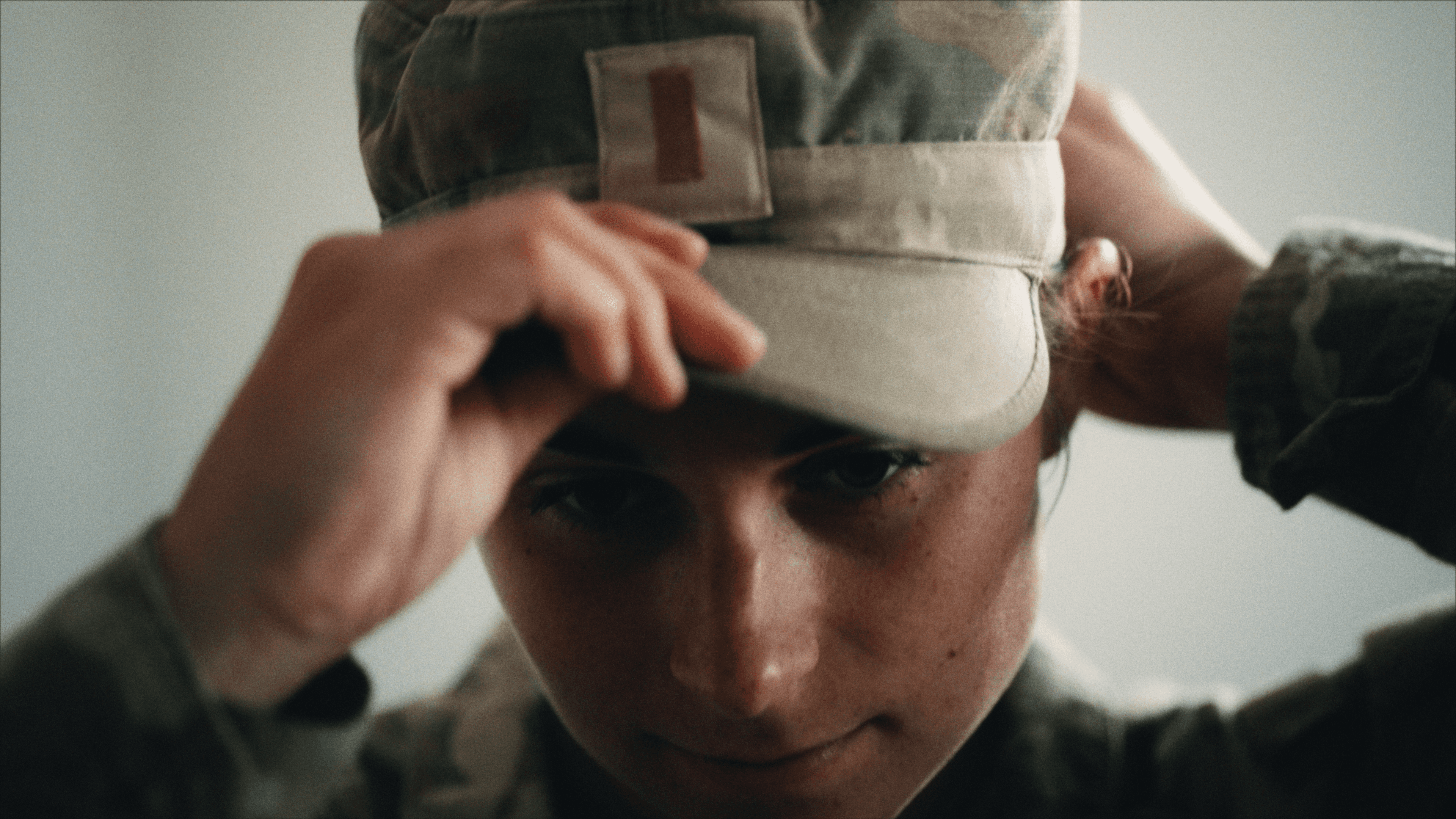
Something Bigger Than Myself
In Sarah’s words, her teachers taught her “how to know what’s right and how to do what’s right.” That is what we mean when we say a classical education prepares young people for real life.
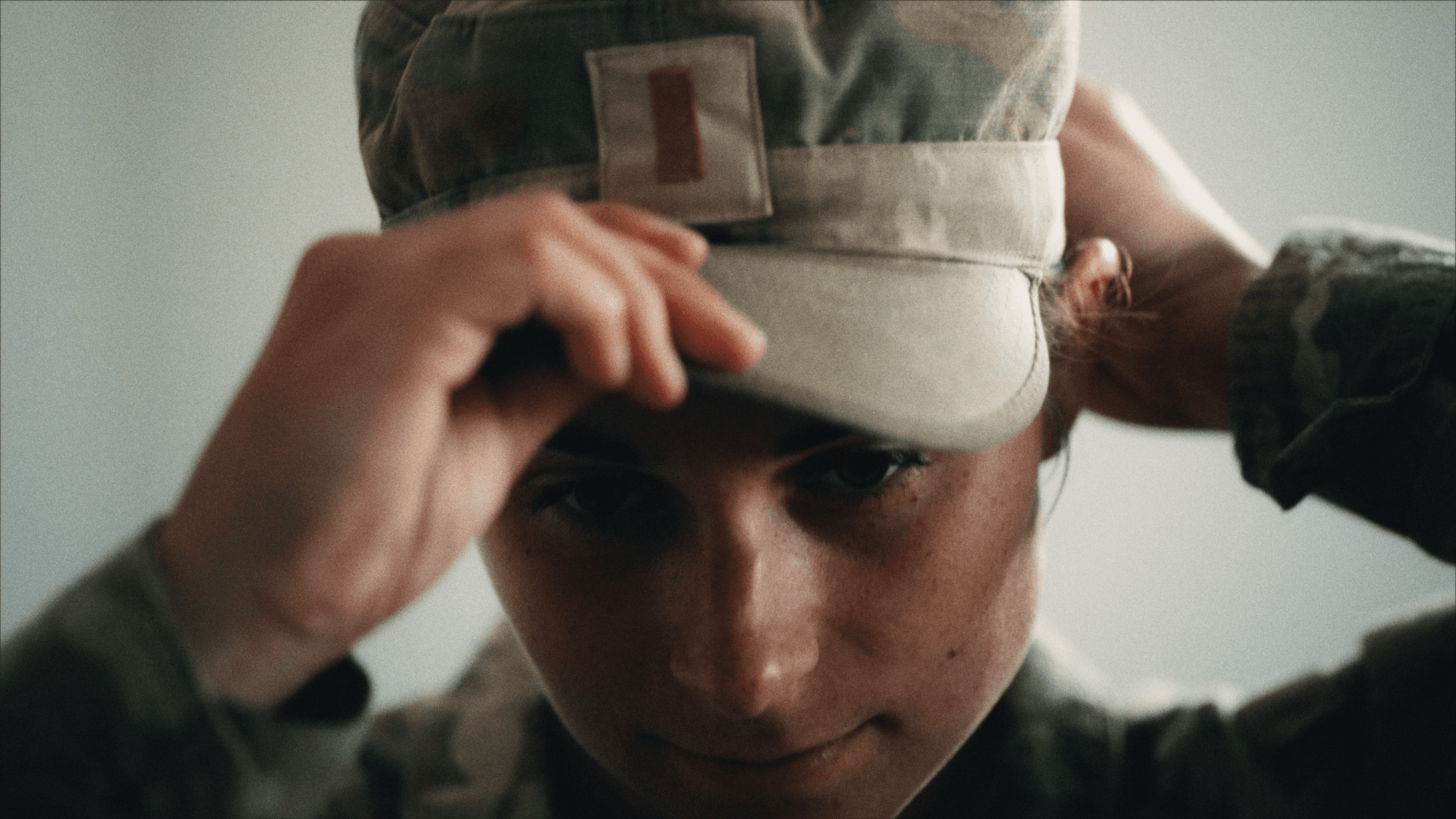
Grit, Loyalty, and Poetry: How Classical Education Shaped a Future Army Leader
One day at a classical school changed the course of her life.
In seventh grade, Sarah spent a single day shadowing at Jackson Hole Classical Academy. She says she learned more that day than in the seven years of school before it.
What followed was an education in great books, Latin, and poetry learned by heart, including Rudyard Kipling's "If-" Years later, when Sarah arrived at West Point to train as an Army officer, she found that same poem on the walls of the barracks.
Today, Sarah is a West Point graduate preparing to lead a platoon of soldiers. Her story shows what classical education is for: forming young people who know what's right, do what's right, and give of themselves in service to others.