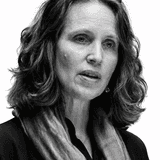
Christine Perrin is a literature professor, writer, poet, and podcast host.
After teaching literature full-time at Messiah University for almost 20 years, Christine arranges her time to write, teach in Italy, and host the Composed Podcast. Christine is a graduate of Johns Hopkins University (BA in Writing Seminars) and the University of Maryland (MFA in Poetry).
A new generation of parents has arrived, people who love their children more visibly, more anxiously, and more attentively than perhaps any generation before them. They read the books, they watch for the warning signs, and they would lay down almost anything for the good of the child in front of them. Yet many of these same parents struggle to tell the difference between play and scholé , or between protecting a child from cruelty and protecting a child from difficulty. These are not the same acts of love. One forms a soul while the other, however tenderly intended, can quietly deform it.
Classical Christian education in Africa is not a cultural import or a luxury reserved for the materially secure. It is a humane education that equips students to think, speak, serve, and flourish within their own communities.
What does it mean to be human? The history of two ancient words points us both upward toward wonder and transcendence and downward toward the earth beneath our feet—a vision of human nature that can help education form children who are fully alive to both.
We have a problem with reading in the 21st century. When we discuss reading as a society, we are not merely talking about a pastime disappearing such as kids no longer collecting baseball cards or playing marbles, we are talking about the loss of access to the treasures of wisdom from our shared tradition. We are—without fully understanding the ins and outs of the reality—lamenting the loss of reading as a loss of virtue in our culture.
Poetry is humanity's essential inheritance—a discipline that awakens us to full awareness and connects us across time. Beyond aesthetic pleasure, poems serve as witnesses to history, preserve meaning through crisis, and transform our relationship with language itself. Through memorization and embodied engagement, poetry provides shared vocabulary for naming experience, reminds us of our fellowship with others living and dead, and rescues us from "Life in Death"—the state of having a heartbeat without being fully alive. Rather than decorative, poetry is fundamental: it teaches us that beauty and truth cannot be separated, that metaphor is our primary way of knowing, and that language is material rather than merely functional. By living with poems, we gain precise tools for recognizing and naming the particular moments that comprise our days.
Why the Study of Music Can Be far More than We Imagine
Modern music education focuses narrowly on instrumental performance, composer biographies, and concert-hall repertoire from the past 300 years—treating music as extracurricular refinement or a tool for boosting test scores. Classical and medieval thinkers from Pythagoras to Augustine understood music differently: not as content to memorize but as a fundamental mode of thinking essential for all students. Boethius codified this vision through three categories of music: musica instrumentalis (heard music and its study), musica humana (the harmony of body and soul—rightly ordered loves and relationships), and musica mundana (the ordered cosmos revealing God's attributes). Like studying Euclid transforms geometric thinking rather than merely teaching formulas, true musical study develops ways of perceiving reality—understanding truth, goodness, and beauty in relationship, time, and motion. Music education should cultivate this comprehensive vision rather than reduce music to pragmatic utility or aesthetic appreciation.








.png?v=20260221163025-hqqh)
.png?v=20260221163025-hqqh)
.png?v=20260221163025-hqqh)
%20(3).png?v=20260221163025-hqqh)
%20(1).png?v=20260221163025-hqqh)
.png?v=20260221163025-hqqh)
.png?v=20260221163025-hqqh)
%20(1).png?v=20260221163025-hqqh)