News

Toward a Renaissance of American Jewish Education

n his commentary on the Talmud — a body of Jewish learning that represents one of the greatest models of cultural preservation in the history of mankind — the medieval philosopher Moses Maimonides pointed to the rabbinic idea that "the world is sustained only by the breath of schoolchildren." His insight is a deep one: that the fate of every civilization depends, over the long term, on the work of perpetuation and transmission.

Eric Cohen & Steven Price photo By Eric Cohen & Steven Price

September 21, 2026

hero image

Toward a Renaissance of American Jewish Education

NationalAffairs.com • Eric Cohen & Steven Price

What happens when a community rediscovers education as a work of cultural and spiritual inheritance? Looking to the growth and challenges of Jewish day schools—and their convergence with classical education and school choice—this piece explores how renewing teachers, schools, and enduring traditions could help form a new generation rooted in both faith and civic life.

Eric Cohen & Steven Price photo

Eric Cohen & Steven Price

NationalAffairs.com

Related Resources

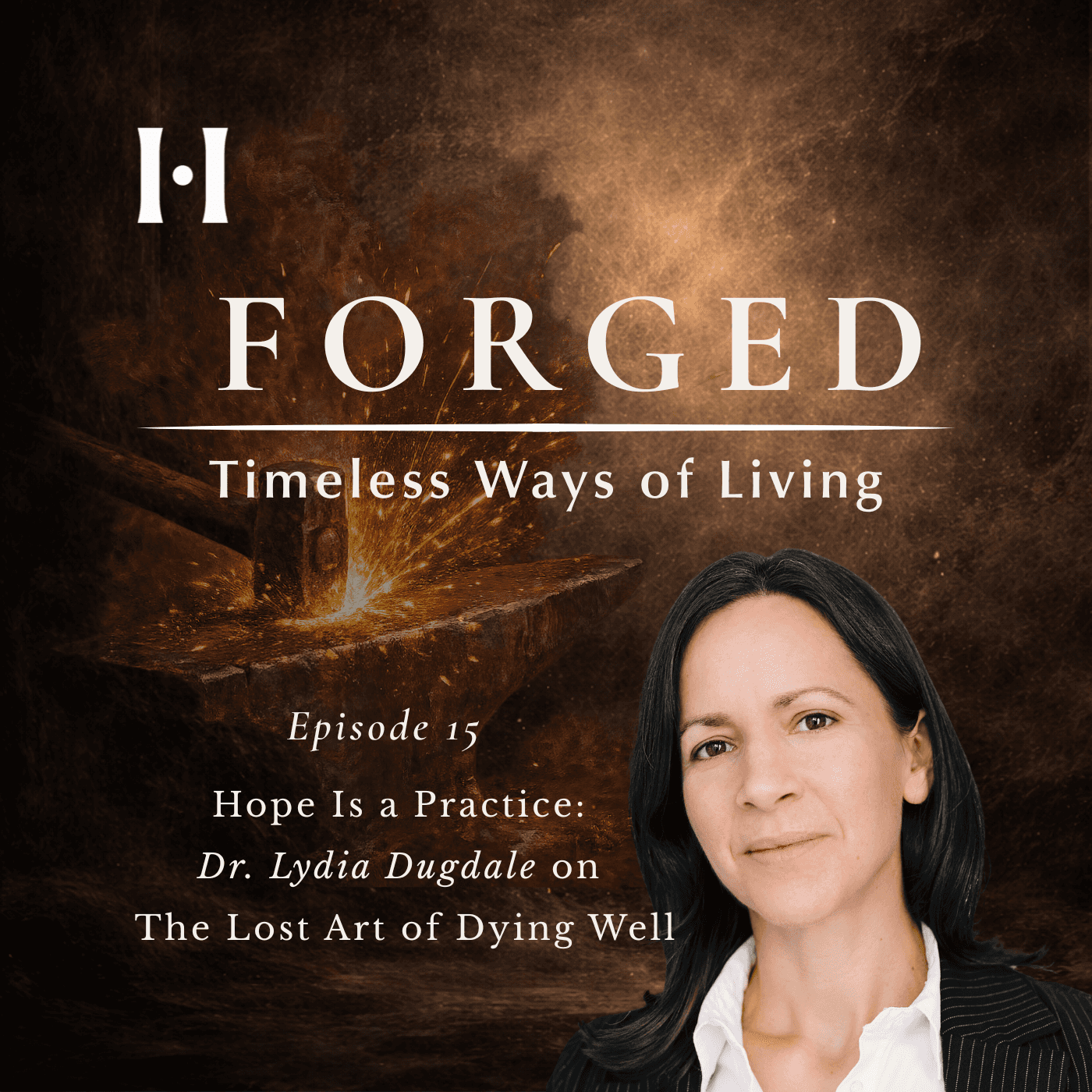
Podcast Hope Is a Practice: Dr. Lydia Dugdale on The Lost Art of Dying Well

August 10, 2026

Forged: Timeless Ways of Living


Hope Is a Practice: Dr. Lydia Dugdale on The Lost Art of Dying Well

How can we prepare for death without becoming consumed by it? And what might the lost art of dying teach us about living with greater wisdom, agency, and hope? Dr. Lydia Dugdale joins Brian Williams to recover an older vision of mortality, one in which preparing for death meant tending to our relationships, forming our character, asking ultimate questions, and learning when medical technology helps or harms. Their conversation offers a practical invitation: rather than leaving our final decisions to fear, haste, or unfamiliar institutions, we can begin now to live the kind of life that makes dying well possible. Lydia and Brian discuss hope as a virtue that can be practiced rather than a feeling we must wait to receive. Lydia identifies five practices that help us resist despair: lament, endurance, imagination, confidence formed through gratitude, and the sustaining love of community.

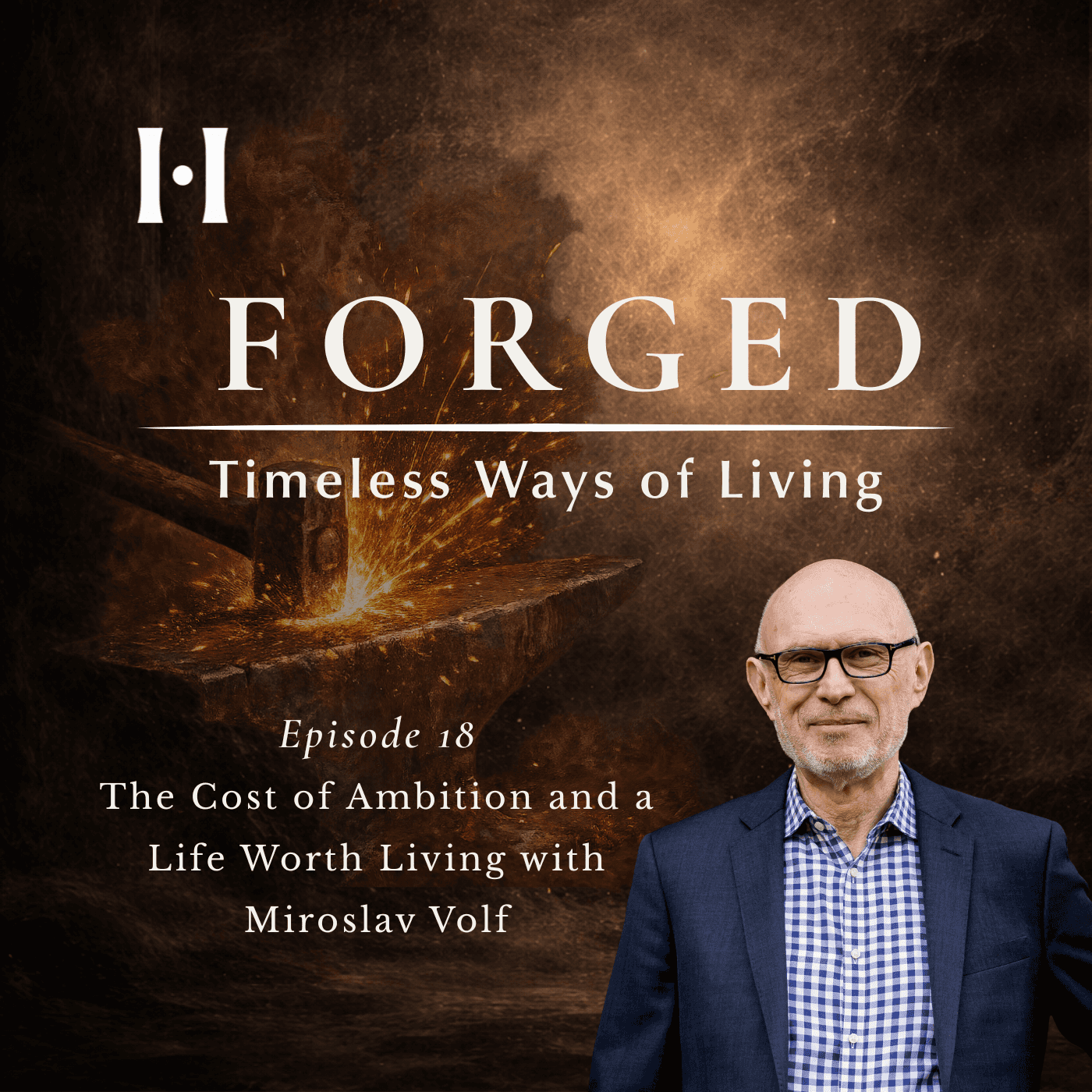
Podcast The Cost of Ambition and a Life Worth Living with Miroslav Volf

September 21, 2026

Forged: Timeless Ways of Living


The Cost of Ambition and a Life Worth Living with Miroslav Volf

What happens when your sense of worth depends on being better than the people around you? And what changes when you stop asking how you rank and start asking what kind of life is actually worth living? Brian Williams talks with theologian Miroslav Volf about the difference between excellence and superiority, the fragility of a self built on achievement, and the possibility of receiving our lives as gifts rather than projects of endless comparison. Drawing on Life Worth Living and The Cost of Ambition, they consider education, vocation, place, gratitude, contentment, and the communities that help us discern what we are for. Listen for a hopeful account of how we can pursue meaningful work and genuine excellence without making success the measure of our worth. Along the way, Volf reflects on growing up in Yugoslavia as the son of a Pentecostal minister, discerning his calling as a theologian, the disciplines and delights that sustain his ordinary life, and the writers who have helped him think about contentment, vocation, and hope.

Podcast What the Seasons Can Teach Us About Work, Rest, and Raising Children with Kerry Hasler-Brooks

September 14, 2026

Composed: Timeless Ways of Living


What the Seasons Can Teach Us About Work, Rest, and Raising Children with Kerry Hasler-Brooks

What if a flourishing family life depends less on doing more and more on recovering rhythms of work, rest, attention, and belonging? Christine Perrin talks with Dr. Kerry Hasler-Brooks about the life she and her family have built on a small Pennsylvania farm, where agricultural seasons make limits, dependence, and renewal impossible to ignore. Their conversation explores how parents can create room for boredom, Sabbath, reading, meaningful work, and life together, even without radically rearranging their circumstances. Kerry also reflects on technology, simplicity, literature, and the formative power of returning to the same places and texts over time. For families feeling crowded by schedules and competing demands, this conversation offers a hopeful vision of choosing what to value and making space to live accordingly. Along the way, Kerry considers the sustaining power of literature, from Zora Neale Hurston to Emily Dickinson, and the way reading can help us attend more deeply to ourselves, one another, the natural world, and God. Her reflections suggest that formation often happens through ordinary practices repeated faithfully: walking the same ground, rereading a beloved poem, sharing work with children, welcoming others, and protecting stretches of time in which nothing has been planned.